
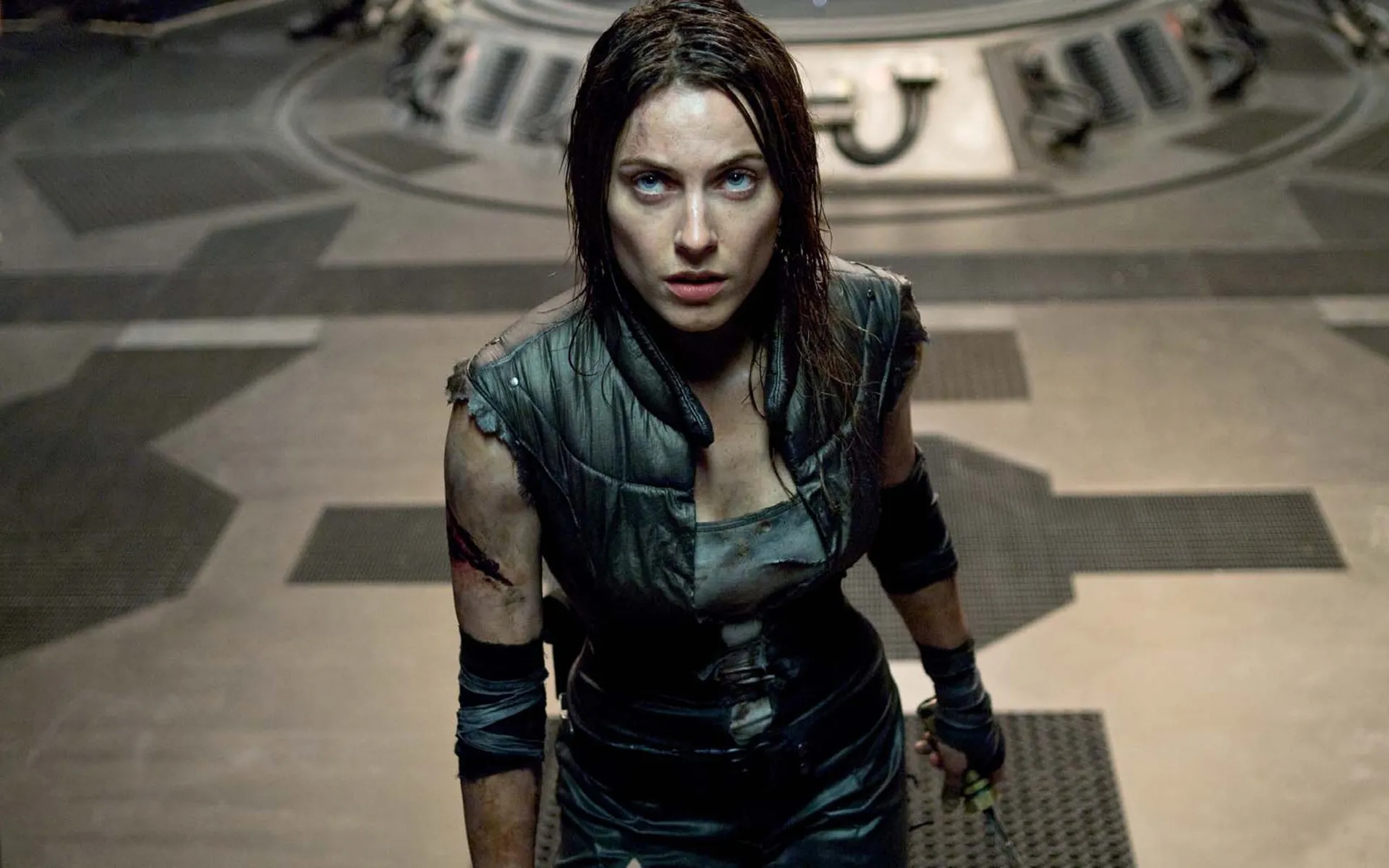
Hey there everyone! Welcome back to Movie Soapbox, the little corner of the internet that only you and I and that guy sleeping in the corner over there know about. This is the place where we find underappreciated indie films and we make sense of them. Today? We are doing a deep dive on Pandorum, a movie so quietly, stubbornly clever that the suits who greenlit it probably spent the entire marketing cycle trying to figure out how to make it look like something else.
Look, before we go any further, you should know that everything from this point forward is going to ruin Pandorum completely and without apology. Every twist. Every reveal. The ending. All of it. If you haven’t seen it yet, close this tab, find the movie, watch it in a dark room where no one can bother you, and come back. It will be worth your time. It really will. We’ll be here.
Still with me? Good. Let’s get into it.
What the Pandorum Film Had to do to Survive
A movie like Pandorum lands in a very specific spot in the studio ecosystem, and that spot is not a comfortable one. It’s a mid-budget genre picture with a real concept at its core, which means it was expensive enough that somebody in a tower somewhere had opinions about the ending, but not expensive enough that a star’s attachment could protect the director from those opinions. You can feel, in certain stretches of the first act, the fingerprints of notes that asked for more action before the ideas were fully established, a faster pace, something to grab the four-quadrant audience before they check their phones. The creature sequences in the ship’s corridors have that quality, that sense of a movie being told to prove it belongs in the multiplex before it’s earned the right to be strange. What’s remarkable is how much strangeness survived anyway. When a film at this budget tier and this genre classification gets to land the ending Pandorum lands, with actual thematic weight intact, you’re watching something that clawed its way through a development process that statistically should have sanded it smooth. It didn’t get sanded smooth. That matters.
The Setup: Earth Is Gone, and So Is Your Memory
Earth is failing, the kind of failing where there’s no coming back from it, and the last play humanity has is a generation ship called the Elysium carrying 60,000 sleeping colonists toward Tanis, a planet roughly 123 light years out that somebody back home decided was worth the bet. The crew rotates in two-year shifts, each team responsible for waking the next, briefing them, handing off the watch. Simple enough, on paper.
Bower, played by Ben Foster with the particular physical intelligence Foster brings to everything he does, wakes up inside a locked sleep pod with no memory of who he is, where he is, or how long he’s been under. This isn’t a dramatic choice, it’s a documented physiological consequence of extended hypersleep, the kind of detail the film drops in early and then earns later in ways you don’t see coming. Bower is crew, specifically an engineer on flight team five, and when he pieces that much together and manages to get out of the pod bay, he finds the ship in a condition that doesn’t match any reasonable estimate of where they should be in the voyage. The power is failing. The corridors are dark. Something is very wrong with the timeline.
Shortly after, Payton wakes, played by Dennis Quaid in a performance that’s doing more work than the film initially lets on. Payton is command rank, sharp enough to orient faster than Bower, and the two of them establish a split dynamic that runs through the whole film: Bower moves through the ship trying to physically reach the reactor coupling and restart it before it cascades into a catastrophic failure, while Payton stays behind at a temporary command post, guiding him through the ship’s layout by radio. Two men, two halves of the problem, one of them walking into the dark and one of them watching the monitors. Or so it seems.
The Ship Has Tenants Who Did Not Board in Passenger Class
What Bower finds in the corridors of the Elysium is not what anyone designed the Elysium to contain. The ship is infested, the word barely covers it, with creatures that are fast and savage and hunt by sound and movement, swarming the pod bays and feeding on the colonists still in hypersleep. They are disturbingly human in their basic architecture, which the film uses to make them more unsettling rather than less, and for a long stretch of the runtime Bower is simply trying to survive long enough to do his job.
He eventually picks up two other survivors: Manh, played by Cung Le, a colonist who has been awake long enough in this nightmare that he’s adapted to it the hard way, and Nadia, played by Antje Traue in the film’s most underrated performance, a geneticist who turns out to hold the key to understanding what the creatures actually are. Both of them are hostile to Bower at first in the way that people who have been surviving alone in a killing field are hostile to anyone new, and both of them shift as the film goes on. The three of them together make a push toward the reactor.
Payton, Gallo, and the Thing the Film Is Actually About
Back at the command post, Payton is not alone for long. Another survivor works his way through the ship’s infrastructure and emerges, and his name is Gallo, and he is played by Cam Gigandet with the right kind of coiled, off-center menace. The way Gallo arrives into the scene, squeezing through cables and conduit, covered in fluid, is filmed as a birth image, deliberately, and the film wants you to sit with that image and feel uneasy about it before it explains why.
Pandorum, the illness the film is named for, is a psychological condition specific to extended hypersleep and deep space isolation. It starts with tremors, with small breaks in perception, and it progresses into a complete dissociation from reality, a full shattering of the self. Crew members who develop Pandorum have historically become a threat to everyone around them, turning violent, irrational, dangerous in the specific way that a person with authority and weapons and a fractured grip on what is real becomes dangerous.
Gallo is not a separate person who found his way onto the ship. Gallo is Payton. A younger version, specifically, a memory of who Payton was when he first developed Pandorum, manifesting as a separate personality that Payton’s fractured mind has externalized and is now literally arguing with, fighting with, trying to suppress. The birth imagery was exact. Payton didn’t find a survivor. Payton gave birth to himself. The commanding officer who has been calmly guiding Bower through the ship, the steady voice on the radio, the authority figure of the whole first act, is a man who cracked under Pandorum long before the movie started and has been holding it together with the specific, terrible competence of someone who doesn’t know how far gone they already are.
It’s a genuinely elegant structural move. Dennis Quaid sells it because he’s playing two things simultaneously the whole time, the reliable anchor and the thing that is fraying underneath the reliable anchor, and if you go back and watch his scenes in the first act knowing what you know, the performance gets richer, not cheaper.
The Timeline, Broken Down
The central assumption of the film, the one you carry through the whole runtime, is that the Elysium is somewhere in a 123-light-year transit, probably less than halfway, and the crisis is about rescuing a mission that is still in progress. The ship is damaged, the power is failing, the creatures are a problem to be contained, and the crew is racing against a ticking clock to get back on course.
Every one of those assumptions is wrong.
The Elysium arrived at Tanis roughly 800 years ago. The ship’s automated systems completed the landing sequence without a functioning crew, which is what they were designed to do, and the ship came down at the bottom of an ocean. Not catastrophically, not in a crash, but in a controlled descent into deep water on a planet that was habitable, is habitable, is right there, has been right there for eight centuries. The colonists have been sleeping at the bottom of an alien sea on the planet they were sent to save humanity on while the clock ran out on the people who were supposed to wake them.
The creatures in the corridors are human. They are the passengers and crew who woke early, whether by accident or design, and found themselves alone on a ship at the bottom of an ocean with no guidance and no context, given a steady drip of the genetic-adaptation medication that was in the hypersleep system to prepare colonists for Tanis’s specific atmospheric and biological conditions. Eight hundred years of adaptation, of the medication working on bodies that were awake and metabolizing and breeding in the dark, produced something that was no longer quite human in behavior or physiology but was still, underneath everything, descended from the people who left Earth. The monsters are the colonists who got there first. The horror of that lands retroactively across every creature sequence you’ve already watched.
When the windows on the bridge crack open near the end and water begins to press in, the darkness outside isn’t space. It’s ocean. They’re not lost. They’ve been home for 800 years and nobody left to open the door.
The Theories: What Did Gallo Actually Do?
The film is clear about the broad strokes but deliberately loose about one question, and it’s generated enough forum argument to be worth laying out fairly.
Pandorum Theory one: Gallo, in his Pandorum state, deliberately sabotaged the wakeup cycles when he was the commanding officer of an earlier crew rotation. His motive, as he articulates it in his confrontation with Bower, is a kind of grandiose evolutionary nihilism, the idea that the creatures represent a valid new direction for the species and the hibernating colonists are an old model. He is not wrong that he did something. The question is how much of what he says about his own actions is true versus how much is the self-mythologizing of a man whose mind has been broken for longer than most civilizations last.
Pandorum Theory two: The cascade of failures was mostly systemic and the crew rotations simply broke down organically, with Gallo’s Pandorum accelerating a collapse that was already happening. On this read, Gallo is a symptom, not the cause, and the film’s deeper horror is that the mission was fragile enough to fail without anyone needing to destroy it.
Pandorum Theory three: The ending is genuinely hopeful and the 1,300 survivors are enough. Humanity makes it. New world, new start, the math works.
Pandorum The counter to theory three: Nadia explains that the creatures are the product of the adaptation medication working on people who woke up. The 1,300 survivors who surface at the end are going to live on Tanis. Their children will grow up there. The medication was in the hypersleep system, not the planet, so there’s an argument that the surface population won’t undergo the same transformation. But the film leaves this open, and the reading that the happy ending is a slow-motion repetition of the tragedy, 800 years compressed into a question mark, is absolutely supported by the text.
Moviesoapbox’s Pandorum Movie Preferred Theory
Gallo sabotaged the wakeup sequence. The film earns that reading and wants you to sit with it. What Gallo is describing when he talks about his motivations isn’t a madman’s incoherent rambling, it’s a coherent ideology that Pandorum produced in a man who had too much time and too much authority and too little left to lose, and the specific nature of the damage, targeted, systematic, not random, points to a decision rather than a deterioration. The horror of Pandorum isn’t that the mission failed. It’s that someone in command decided it should.
On the ending: I think those 1,300 people are walking into 800 more years of the same story. The adaptation medication is baked into the colonist biology now. The planet is going to do what the ship did. The film gives you the sunrise and the open water and the survivors gasping fresh air, and it gives you every reason to believe that’s not the ending, it’s the beginning of the next cycle. That’s not a flaw in the writing, that’s the writing doing its job.
The 1,300 survivors are the next batch of monsters. They just don’t know it yet.
What This Film Was and What Almost Happened to It
Pandorum came out in 2009, made somewhere in the range of $20 million worldwide on a production that clearly cost more than it should have been allowed to cost for what it was trying to do, and then it went away. No sequel. No franchise. No extended universe. A Dennis Quaid sci-fi horror with a genuine structural idea at its center, and the market looked at it and shrugged. Factory Hollywood was busy that fall with something that had a logo on the poster and a release date built around an existing fanbase, and a movie that asked you to sit with its weirdness until the weirdness paid off was not the priority. Pandorum is the kind of film that needs a decade to find its audience, and it’s finding it, slowly, in the way that ideas find people when they’re ready for them. Ben Foster knew what he had. Quaid knew what he had. The director knew what he had. Sometimes that’s enough to get it made and not enough to get it seen, and the distance between those two things is where most of the interesting films in this genre live.
That’s Pandorum. It’s a different movie on the second pass. Thanks for spending some time here at Movie Soapbox, we’ll see you on the next one.
🎬 If You Liked This…
- Life — a crew in a confined space dealing with something that shouldn’t exist and is hunting them with complete indifference to their survival, same claustrophobic sci-fi horror of realizing the ship is not safe
- The Signal — waking up somewhere unfamiliar with no memory of how you got there, an institution hiding the truth about what actually happened, the reveal arriving in layers that keep recontextualizing everything before it
- ARQ — the same disorientation of waking up inside a situation you don’t understand, the truth about what is actually happening and how long it has been happening arriving slowly and hitting hard when it lands