
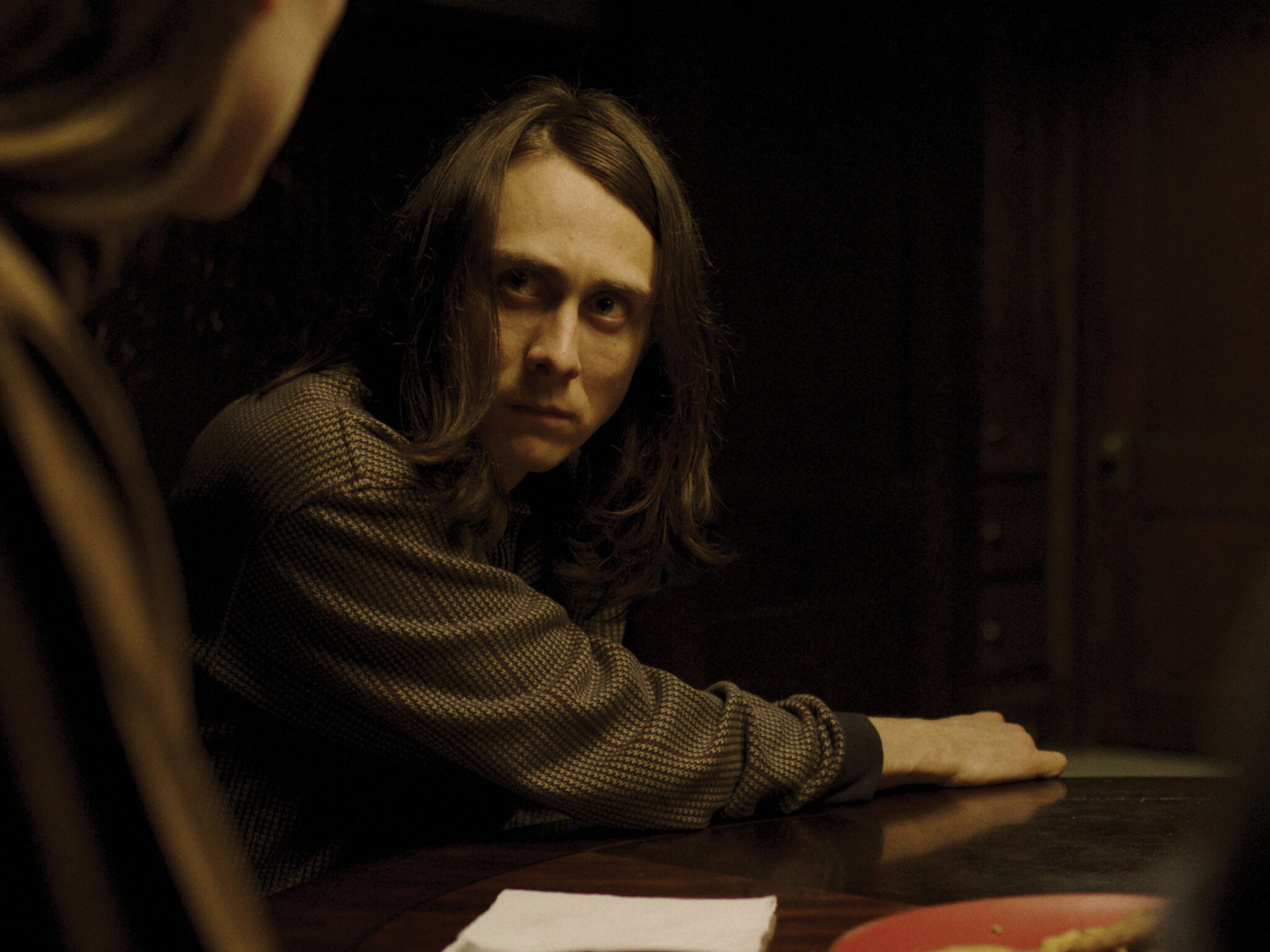
Hey there everyone! Welcome back to Movie Soapbox, the little corner of the internet that only you and I and that guy sleeping in the corner over there know about. This is the place where we find underappreciated indie films and we make sense of them. Today? We are doing a deep dive on My Heart Can’t Beat Unless You Tell It To, a movie so quietly, devastatingly precise about what it feels like to watch a family member die in slow motion that the vampire premise isn’t even the disturbing part.
Fair warning before we go any further: everything after this paragraph is a spoiler. Every beat, every killing, the ending, what it all means. If you haven’t watched it yet, go find it on YouTube or AppleTV, come back here after. You’re going to want this conversation when it’s over. Trust me on that one.
My Heart Can’t Beat Unless You Tell It To Walkthrough
Now. There’s a thing that happens to films like this one at the budget level Jonathan Cuartas was working at, which is that nobody at the studio level cares enough to ruin them. That sounds like a backhanded compliment and it absolutely is. When you’re shooting a film this sparse, this nocturnal, this deliberately airless, the suits who would normally descend in post with their twelve competing notes about likability and third-act momentum never show up, because there’s no IP to protect and no franchise to seed. The film gets made the way it was written. And what that means for you as a viewer is that every single oppressive, suffocating, pace-crushing choice you’re going to feel over the next ninety minutes was intentional. Nobody asked for a lighter touch. Nobody asked Cuartas to give Dwight a redemption arc that lands cleaner. The discomfort you feel watching this film is the film working exactly as designed, and that’s a rarer thing than it should be.
The film opens in the dark, because of course it does, and stays there. Not stylistically dark the way a studio horror film is dark, all blue-gelled backlighting and dramatic shadows that make sure you can still see everyone’s faces clearly enough for the trailer. Dark like someone taped black construction paper over most of the frame and forgot to take it off. Heavy. Oppressive. Like the movie itself is exhausted before the first line of dialogue.
Then we meet Dwight.
Patrick Fugit plays Dwight as a man who has forgotten what the word “option” means. He offers a homeless man a burrito, walks him home, and then beats him to death with a baseball bat and drains his blood into a vat. And the reason this scene lands so hard, the reason it doesn’t play as shocking gore but as something closer to domestic routine, is because Fugit plays it as domestic routine. There’s no adrenaline, no hesitation, no moral crisis visible on his face. This is Tuesday. This is just what Tuesday looks like now.
His brother Thomas, played by Owen Campbell, is sick. And when I say sick, I mean the movie is using the word “vampire” the way medical dramas use the word “terminal.” Thomas requires blood to survive. Sunlight blisters his skin within seconds of exposure. He lives on the couch, cared for around the clock, a gravitational center of need around which the entire household orbits and cannot escape. Thomas is a vampire the same way a hospice patient is a vampire: consuming the living energy of every person close enough to love him.
That’s the whole movie. Right there in the title, if you read it slowly enough. My heart can’t beat unless you tell it to. Not a poetic flourish. A literal description of the dynamic. Thomas’s continued existence is a continuous, active choice being made by other people on his behalf, at enormous cost to themselves, every single day.
Jessie, the sister played by Ingrid Sophie Schram, is the one who has metabolized this reality completely. She’s past grief, past moral ambivalence, past the phase where any of this registers as wrong. She’s in pure logistics mode. When Dwight comes home without Eduardo and with a screwdriver in his leg instead, she doesn’t ask how he’s feeling. She goes and gets the blood herself. The prostitute Pam. Kills her, drains her, and while she’s doing it, pulls out Pam’s gold tooth because she noticed it when she smiled. That detail. That one detail is doing more work than ten jump scares. Jessie isn’t monstrous because she’s evil. She’s monstrous because she ran out of the ability to feel monstrous a long time ago, and she just kept going anyway.
Dwight is the one who hasn’t gotten there yet. And that gap, that distance between where Jessie is and where Dwight still is, is the entire emotional engine of this film. He feeds Eduardo while he’s locked in the shed. He lets the neighborhood kid go when Jessie would have killed him without breaking stride. He gave Thomas his own blood to tide him over, a moment the film lets breathe for exactly as long as it needs to, because what it means is that Dwight is willing to literally open his own veins before he’ll stop trying.
The ending comes at you sideways, the way this whole film does. Dwight comes home to find Thomas feeding on Jessie’s corpse. He removes the body. He buries her in the backyard. He gets in the car and drives away. Then he comes back. Thomas says he didn’t think Dwight would return. Thomas asks him to open the window. Dwight opens it and walks out of the frame.
The Ending of My Heart Can’t Beat Unless You Tell It To
A lot of people land on “Thomas dies in the sunlight” as the read here, and structurally that’s where the camera leaves you. But hold that interpretation loosely, because the film is careful not to confirm it. What it confirms is this: Dwight opens the window. Dwight walks away. Whatever happens next, Dwight made a choice to stop being the one who decides. That’s the whole film resolving. Not in violence, not in a clean death, in an act of release.
The Theories to Explain This Crazy Movie
My Heart Can’t Beat Unless You Tell It To Theory #1 – Camp one says Thomas dies. Dwight opens the window, sunlight comes in, Thomas is gone, and Dwight is finally free. This reading is satisfying structurally and it gives Dwight’s arc a clean conclusion. He spent the whole film unable to let go, and the final act is him learning to. Jessie’s death is the thing that breaks the spell, her total consumption by the caregiver role becoming literal the moment Thomas consumes her, and seeing that is what finally frees Dwight to stop.
My Heart Can’t Beat Unless You Tell It To Theory #2 – Camp two says Thomas survives and the cycle continues without Dwight. The window is ambiguous. Thomas has lived through near-death before. Dwight leaving doesn’t mean Thomas dies, it means Dwight stopped being responsible for whether he does. This reading is darker and, I’d argue, more honest to what the film is actually about, because hospice doesn’t end clean. People die on their own timeline, not on the caregiver’s emotional arc.
Cuartas has said publicly that the film comes directly from his family’s experience with his grandmother’s hospice, and the fractures it opened between family members who were ready to let go and family members who were not. He’s not hiding the metaphor. He built the whole structure around it.
Moviesoapbox’s Personal Read On Which Way This Film Is Going
My read is camp two, and here’s why. If Thomas dies in that final scene, the film is ultimately about Dwight finding his way to a decision. If Thomas survives, the film is about something harder: that the caregiving system doesn’t need Dwight specifically. It just needs a Dwight. Jessie was one version. Dwight was another. The machine keeps running until there’s no one left to run it. That’s what all those murders in the background were. Hundreds of them, the film implies, before we arrived. The machine has been running a long time. Dwight leaving doesn’t stop it. It just stops Dwight.
That’s the film. That’s what Cuartas got onto the screen on what was clearly a micro-budget, shooting at night, with a cast that understood exactly what they were making and committed to it fully. No studio note was ever going to produce this. No greenlight committee was ever going to approve a hospice metaphor this uncompromising and this unwilling to give its protagonist a clean exit. This film exists because nobody with enough money to ruin it was paying attention, and because Jonathan Cuartas had something real to say and said it before anyone could tell him to soften it.
Watch it in the dark. You’ll feel the weight.