
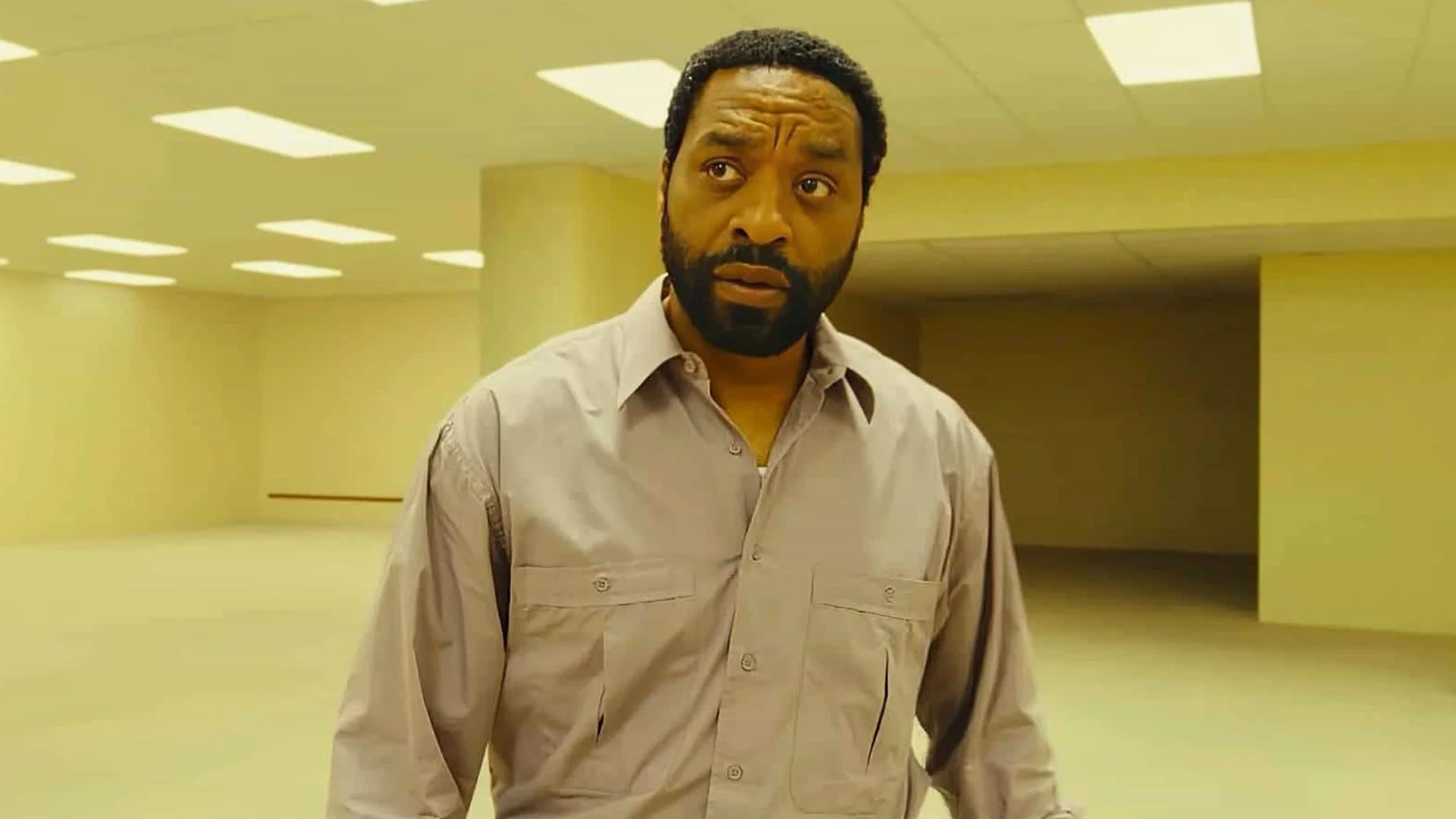
Hey there everyone! Welcome back to Movie Soapbox, the little corner of the internet that only you and I and that guy asleep in the back booth know about. This is where we dig into the films that actually cost somebody something to make, and we figure out what they were really trying to say. Today? We are building the complete, unified, start-to-finish timeline of the Backrooms universe, spanning Kane Parsons’ original YouTube series and the 2026 A24 feature film, a world so carefully constructed that a twenty-year-old kid managed to hand a Hollywood studio a mythology it could actually live inside without breaking a single rule he’d already laid down.
Before we go any further: everything from this point forward spoils both the YouTube series in full and the film completely, every death, every reveal, every ambiguous ending, all of it. If you haven’t watched Kane’s episodes and you haven’t seen the movie, close this tab and go do both of those things. Come back when you’re ready to understand what you just watched.
Still here? Good. Let’s map the whole thing.
The Entire Backrooms Series Timeline
One thing you need to understand before the first timestamp lands: the A24 film did not arrive as a standalone piece of horror cinema that borrowed a creepy internet aesthetic. It arrived as a carefully placed chapter inside a continuity that had already been running for years. Kane Parsons built a found-footage archive documenting a shadow research organization called Async and their decade-long obsession with a dimensional rift they cracked open by accident in 1989. The film’s events, Clark’s furniture-store collapse, Mary’s desperate search, the entity that used to be a man, all of it, drop into a very specific window: 1990 into 1991, running directly alongside incidents the YouTube series had already logged. You want the picture that makes the movie hit harder? You need both tracks running at once.
What separates this project from most “shared universe” attempts is the thing that usually gets bought and committee-noted out of existence before the camera rolls: restraint. A development executive at a major studio, given the Backrooms IP and a greenlight, would have demanded an origin story, a mythology dump, a scene where someone explains what Async actually wants. Kane’s series never gave you that, and the film, to its very significant credit, never blinked and gave you that either. You can tell when a director has been handed a franchise bible and told to dramatize it. The exposition sequences feel like somebody reading index cards. This film does not have that scar. What it has instead are two broken people embedded in an institutional catastrophe so vast and so old that they will never even know the full shape of what consumed them. That compression, that withholding, is a creative decision that almost certainly survived some very uncomfortable conversations about audience accessibility. It should have been killed in notes. It wasn’t. That matters.
Backrooms 1982 – The whole thing starts here, and it starts boringly, which is the entire point. May 10, 1982: Async demonstrates a tested magnetic-field prototype engine. No monsters, no yellow rooms, no bodies. Just a research company with expensive hardware and the kind of institutional ambition that never asks whether it should. The gap between this mundane demonstration and the horror that follows is most of the series’ tragedy, and Kane understood that making you watch the boring beginning was the only way to make you feel the full weight of the disaster later.
Backrooms 1988 – A press conference in April 1988 by an Async figure named Ivan Beck, the company managing its public image, polished and controlled. Then July 2, 1988: Test Three of the magnetic-field threshold. It fails. The series shows you the failure deliberately because a clean, first-try discovery would suggest genius. What Async actually ran was years of grinding, classified, expensive trial and error. They were digging toward something they couldn’t fully define, and they kept digging because that’s what institutions with classified budgets do.
Backrooms 1989 – October 17, 1989 – File that date. Test Six succeeds, and Async opens an entrance to the Backrooms for the first time. Everything bad that happens to every person in both the series and the film traces back to this single morning in a classified lab. The episode title is “First Contact,” and it is doing enormous work in two words.
Same day, same date stamp: a news report in the series covers the Loma Prieta earthquake, the real, historical quake that hit the Bay Area on exactly October 17, 1989. The implication is quiet and it is devastating. The filename is collateral.mov. The series never states directly that the threshold experiment caused the quake. It just puts them on the same timestamp and names the file “collateral” and lets you sit with that. That is the move of a filmmaker who trusts his audience, and it is also the move that gets cut when twelve VPs start asking why the earthquake subplot isn’t explained more clearly.
Backrooms 1990 – February 3, 1990 – an investigation inside the Backrooms turns up a dead body. February 5, 1990: the autopsy finds decaying anomalies in the corpse. Whatever the Backrooms does to a person, it doesn’t stop when they die. The place changes matter at a level that persists after death, and Async’s response, two days later, is to file a report and keep going.
Backrooms February 29, 1990 – Async releases an informational video introducing KV31 and a set of exploration safety protocols. February 29, 1990 is a date that does not exist. 1990 was not a leap year. Kane plants impossible dates throughout the series as a signal that time itself is becoming unreliable around the Backrooms. The corporate-speak safety video landing on a day that cannot exist is the whole joke and the whole horror simultaneously.
Backrooms March 5, 1990 – Async builds an outpost inside the anomaly, a forward operating base, which tells you everything about the institutional psychology here, and motion sensors immediately detect unidentified entity movement. They are not alone in there. May 6, 1990: first real entity encounter in the lower levels. Same day, the encounter gets formally reported up the chain, the dangerous area gets confined, and the outpost keeps running. The institution does what institutions always do: it doesn’t pull out, it doesn’t warn anyone, it locks the dangerous section behind a door and calls that risk management.
Backrooms June 19, 1990 – here is where the film first touches the timeline. The movie’s cold open is a recovered tape from this date, an Async field researcher separated from his team, stalked and killed by the entity deep in the Complex. Async reviews the footage afterward. This casualty sits right inside the series’ 1990 outpost activity. The movie is not telling a parallel story. It is putting a face on one of the bodies the series logged in the aggregate under the clinical heading “Missing Persons.”
Around this same period, the disappearances stop being isolated incidents and start being a trend line moving in the wrong direction. And then the anomaly that should change how you read everything that comes after: an exploration-team member goes into the Backrooms and gets pushed forward in time, emerging to find the outpost abandoned and empty roughly two years later. Time does not run straight inside the Complex. The series states this directly. Tuck it away.
Backrooms 1991 – Spring 1991 – the film’s human architecture opens. Clark, the failed architect running a dying furniture store called Captain Clark’s Ottoman Empire, freshly removed from his marriage, is in therapy with Mary. The film spends real time here, before any monster appears, and the horror audience contingent that wanted immediate scares hated those scenes. They were wrong. You cannot feel what the Backrooms takes from Clark unless you first understand what he had left to lose, which was almost nothing, which is exactly why he kept going back.
Backrooms June 1991 – Clark finds a gap in reality inside his own store and starts slipping into the Backrooms, alone, compulsively, day after day. The failed architect has finally found a structure worth mapping. He doesn’t report it. He doesn’t tell Mary. He just keeps going back, which is the most Clark thing he could possibly do, and the film knows it.
Backrooms June 29, 1991 – Clark gets logged on Async’s surveillance cameras inside the Complex. The date is the thing: June 29, 1991, exactly five days before the most famous event in the entire Backrooms universe. The movie and the original viral tape are about to nearly collide in the same location, in the same week, between two people who will never meet.
Backrooms June 1991 – [on the series side] Async compiles a photographic archive package. The filename references March 11, 1990, but the compilation date is June 1991. The chronology around the Backrooms material has been scrambled for long enough that even Async’s internal timestamps no longer cohere. Separately, a piece of no-clipping footage exists in the archive with no reliable date attached, its title an ISBN number, a literary Easter egg buried in the series. “Date unknown” is the only honest label available for anything that goes near the Complex long enough.
Backrooms Early July 1991 – the film turns merciless. Clark recruits his two employees, Bobby and Cat, for a deeper descent into the Complex. Both of them die down there. Clark, given every possible offramp, every reason to leave and grieve and take responsibility, refuses. He stays. And the Backrooms rewards that refusal by consuming him entirely, transforming him into “Captain Clark,” a towering entity wearing his own furniture-store-mascot face over the shape of the man he used to be. The architecture of that image is doing everything: the man became the monster, and the monster is wearing the sign from the failing business that was already his coffin before he ever found the gap in the wall.
Backrooms July 4, 1991 – the big one. The video that started everything. A teenager, implied to be Kane, accidentally no-clips into the Backrooms while filming. The footage that birthed the entire internet mythology, and now you know it happened five days after Clark first appeared on Async’s cameras. Same location. Same week. Two people who never crossed paths, both about to be consumed by the same machine.
Backrooms July 1991 –, the film’s final movement: Mary realizes Clark is gone, searches the abandoned store, gets pulled into the Complex, survives a direct encounter with the entity Clark became, and is captured and processed by Async at the threshold facility. Whether she escaped or simply traded one kind of confinement for another, the film declines to answer, and that refusal is the correct creative choice even though it is also the choice that generated the most negative reviews from audiences who wanted resolution. She slots into the same institutional machine that has been processing bodies since 1982, another name on the trend line.
Backrooms September 23, 1996 – the series’ final image, and the one that pulls the whole temporal-displacement thread tight. The teenager from the July 4 found footage, or more precisely his camera, reappears in the sky above the entity’s attack site, more than five years after he vanished. He fell into the Backrooms in July 1991. He fell back out of the sky in September 1996. The gap between those two dates is the entire horror of the place compressed into a single image, and no studio note ever asked Kane to explain it more clearly, because Kane made it himself, on his own timeline, without anyone’s permission.
Why the Full Timeline of Backrooms Changes Everything
Once you see both tracks laid side by side, the movie stops functioning as a standalone mood piece and becomes something considerably harder: a single human tragedy embedded in a decade of institutional negligence so deliberate and so documented that “negligence” is almost too kind a word for it. Clark and Mary are not the story of the Backrooms. They are two names added to a missing-persons trend line that Async watched tick upward from 1990 onward and chose, at every decision point, to keep studying instead of stopping. The company that opened the door in 1989 was still running the outpost in 1991 when Clark walked through it. The machine was already running. He just wandered into it.
Kane Parsons built a continuity dense enough that a feature film can be placed inside a YouTube series without contradicting a single frame of established lore. He was twenty years old. The film that resulted is exactly the kind of thing that should not survive contact with a studio development process, a horror IP with no conventional protagonist until the second act, a villain that is an institution rather than a person, an ending that refuses catharsis on principle. It survived. Whatever conversations happened to keep those choices intact, somebody in that room held the line. That is the whole game, and most of the time, nobody wins it. This time, somebody did.