
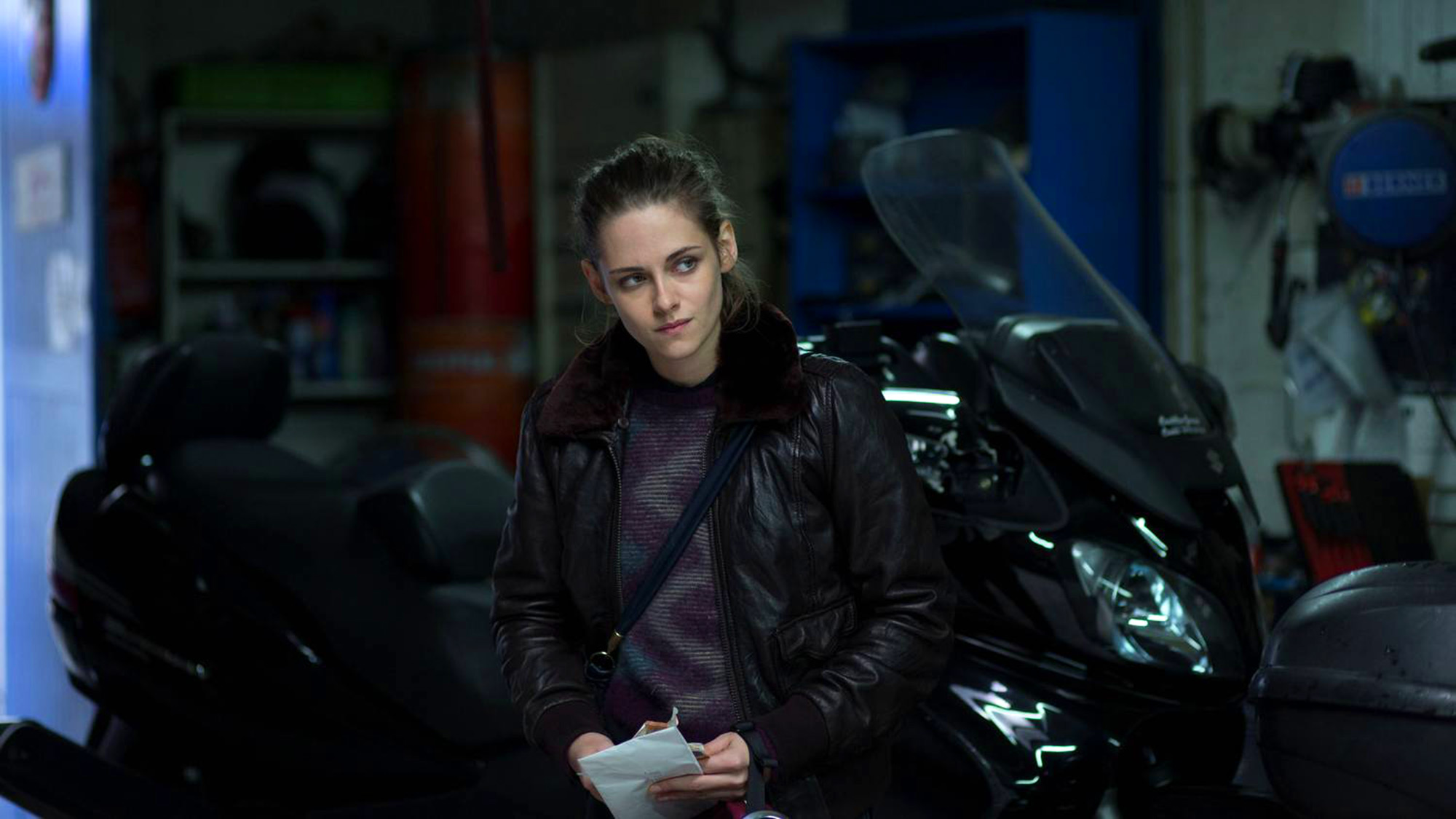
Hey there everyone! Welcome back to Movie Soapbox, the little corner of the internet that only you and I and that guy sleeping in the corner over there know about. This is the place where we find underappreciated indie films and we make sense of them. Today? We are doing a deep dive on Personal Shopper, a movie so quietly, methodically unsettling that the suits who greenlit it probably thought they were getting a European fashion thriller and only figured out what they actually had somewhere around the second cut of the edit.
Here is the trailer, so you know what we are walking into.
Alright. From this point forward we go deep, and we go spoiler-heavy, and if you have not seen this film yet I am genuinely asking you to stop, go watch it, bookmark this page, and come back. Because the ending we are about to dissect lands completely differently if you already know what happens, and you deserve to have it land clean. That said, if you keep reading anyway, that is on you, and I will not feel bad about it even a little.
The Making of The Personal Shopper
So. Personal Shopper. Olivier Assayas, 2016, Kristen Stewart, and one of the more underestimated paranormal films to come out of the last decade. A film that got booed at Cannes and then won Assayas the Best Director prize at the same festival, which tells you everything you need to know about how divisive and genuinely difficult this film is to categorize. You want to know what that sound is? That is the sound of a movie that refused to be what anyone needed it to be for marketing purposes.
What most people do not know, or do not register consciously, is what a film at this budget tier and this level of European arthouse credibility usually looks like after it gets touched by a distributor nervous about American audiences. The standard move is to sand the ambiguity down in post, to add a score cue that tells you how to feel in the final scene, to let the last frame linger just long enough that you go home with a clean answer. Assayas did none of that, and the fact that he didn’t is either because IFC Films trusted him completely, or because the film was far enough outside the commercial conversation that nobody with the leverage to interfere thought it was worth fighting over. Either way, what survived is genuinely strange and genuinely unresolved, and that is not an accident of art-house indifference. A film this precisely constructed earns its ambiguity scene by scene, and someone had to fight to keep every unanswered question in the final cut.
The Movie Personal Shopper Walkthrough
Maureen Cartwright is a personal shopper for a high-profile celebrity named Kyra in Paris, a job she describes and treats with exactly the contempt you would expect from someone who took it entirely as a placeholder. She is not there for the job. She is there because her twin brother Lewis died recently, and before he died they made a pact: whoever goes first sends a sign back. Lewis was a medium, or at least something adjacent to it, and Maureen is hovering in Paris in a kind of suspended grief, waiting for a knock on the wall of the universe. She even has the same congenital heart condition that killed him, which means she is not just mourning Lewis, she is watching the clock on herself.
The film opens with Maureen alone in a large, empty house outside Paris, and this is the scene that establishes every rule the film will play by. There is a smear in the air. There is a sound. Something is there. And then it is over. Assayas is not building tension toward a reveal here, he is just showing you that the membrane between Maureen and whatever is on the other side is thin, and porous, and she can feel through it even when nothing definitive comes back. The ghost is real in this scene. We are not being asked to wonder about that yet.
Maureen returns to the house a second time, curls up on the floor, and this time what she gets is not ambiguous. A spirit, female, materializes and vomits something viscous and then slashes through her sketchbook and across the table. This is not Lewis. Whatever that was, it is not the brother she is waiting for, and the film does not tell you that directly but Maureen knows it, and you know it, and the film moves on without explaining the gap.
The other life running parallel to all of this is Kyra’s world, which Maureen inhabits professionally without inhabiting at all personally. Kyra is a particular kind of celebrity, the kind that exists entirely in the space between her image and her audience’s appetite for it, and Maureen shops for her and delivers things to her apartment and occasionally runs into Ingo, Kyra’s boyfriend, who is waiting in the apartment on the day Maureen meets him because Kyra is about to break up with him and he is not ready to be done. He does not love Kyra, the film makes that clear, but he is also not leaving without a fight. Tuck that away.
Then the texts start. An unknown number. Playful at first, then probing, then intimate in a way that should be alarming but Maureen is already so primed to receive contact from the other side that she leans into it instead of stepping back. She asks outright, in text, whether she is talking to Lewis. The reply does not confirm or deny. The texter knows where she is going. Knows when she lands back in Paris. Pushes her to do things she is afraid to do, including, in one of the film’s most genuinely transgressive sequences, wearing Kyra’s clothes and jewelry in Kyra’s apartment while Kyra is away. This is the scene Stewart was made for. The way she moves in those clothes, the mix of hunger and guilt and performance for no audience, is a better piece of acting than most films manage in their entire runtime.
And then Maureen returns from a buying trip in London to deliver things to Kyra’s apartment and finds her dead. Violently, specifically dead, in a pool of blood, and throbbing lights pulsing at the end of the hall. Maureen runs. And the film does exactly what you would expect from a movie this grounded: Maureen running makes her look guilty, and the police treat her accordingly, and when the missing Cartier jewelry turns up in her apartment the frame is nearly complete.
Then the texts come back, urgent this time. I AM COMING NOW. I AM STANDING OUTSIDE. The terror of this sequence is not supernatural at all, it is just the feeling of a phone in your hand that will not stop, from a person you cannot identify, who knows where you are. Maureen gets a message to go to a specific hotel room. She goes. Finds nothing. Leaves. And then the camera stays in that hotel room and watches the elevator open and no one get out, and the front door open twice as if someone is passing through it, and the second door close behind an invisible presence. Something leaves that hotel room after Maureen does. Then Ingo arrives, leaves, runs into two cops outside, and shoots them.
So Ingo was the texter. Ingo was the killer. He killed Kyra rather than be left, used Maureen’s grief and her spiritual vulnerability as cover, planted the jewelry to frame her, and used the texts to manipulate and terrify a woman he knew was already half-convinced the dead were speaking to her. The frame collapses with Ingo in custody and Maureen is free.
But the film does not end there.
Maureen goes to visit Lewis’s former partner, now with someone new, and while she is staring out toward the kitchen we watch a figure pass through it and a glass drop from the counter to the floor on its own. Nobody acknowledges this. Then Maureen flies to Oman to be with her boyfriend, and in the final scene, alone in the house, she encounters a presence. Knockings. And she asks it questions.
Is it Lewis. One knock.
Are you at peace. Silence.
Do you mean harm. Something, maybe a knock.
Is this coming from me. One knock.
And then she says, out loud: “Then what are you?”
Cut to black.
Now. The theories.
Personal Shopper Movie Theories
Theory One: Maureen is traumatized to the point of unreliable perception. Everything we see is filtered through a woman in profound grief who also carries a death sentence in her own chest and who has been trained by her brother to look for signals in noise. The ghosts are real to her. The claw marks, the broken glasses, the apparitions, all of it is her mind doing what minds under that kind of pressure do, which is fill in the silence with something, anything, rather than nothing. The flaw in this theory is that the film shows us things Maureen is not present for, specifically that invisible presence leaving the hotel room. The camera is not inside Maureen’s head in that moment. Assayas cuts to it independently. You cannot explain that away with trauma.
Theory Two: Maureen dies in the hotel room and what we watch afterward is her ghost. I am including this because the source material raised it and because it is almost right in the way that a theory can be structurally correct and factually wrong at the same time. The emotional logic is there, the woman who was waiting for her dead brother to send a sign ends up as the one sending the sign, that is a beautiful irony, but the film’s visual grammar does not support it and the timeline makes it impossible. She leaves the hotel physically. Ingo arrives after. There is no murder. The theory is poetic and broken.
Theory Three: The wrong spirit answered. This is the one that holds. Go back to the beginning. The spirit Maureen encounters in Lewis’s house is female, violent, and not Lewis. The film never shows us Lewis. Run the credits: nobody is credited as Lewis. The figure who passes through the kitchen in Paris, the presence in Oman, none of it is confirmed as Lewis by anything except Maureen’s need for it to be Lewis. What we actually see, across the entire film, is a woman so visibly hungry for contact from the other side that she is broadcasting it, and the spiritual world, like Ingo, sees someone who is an easy mark. Ingo manipulated her through grief. Whatever knocked back in Oman is doing the same thing, just without a body.
The last knock, the one that answers “is this coming from me,” is the one that matters. It is either the spirit confirming that Maureen’s own psychic energy is generating the contact, or it is the spirit lying to her the way spirits in this film have been doing all along, or it is Assayas giving you a trapdoor out of the supernatural interpretation entirely. He leaves all three doors open simultaneously and then cuts to black before you can choose.
Moviesoapbox’s Preferred Theory
My read is the third theory, the wrong spirit, compounded by that final ambiguity. Lewis never answered. What answered was something that sensed the frequency she was broadcasting and tuned in. The grief was real. The contact was not. And the film’s real horror is not the vomiting apparition in the house or the threatening texts, it is the possibility that the thing Maureen most wanted, the one confirmation that would make everything survivable, never came, and that she has been mistaking noise for signal the entire time.
That is a bleak ending. It is also, against every pressure a film at this level faces to resolve cleanly, exactly the ending this film earned. Most movies like this get notes somewhere in the third act that push toward a legible answer. Personal Shopper got to keep its question mark, and that is the whole ballgame.
Go watch it again. You will find something different the second time. That is what real films do.
🎬 If You Liked This…
- Clouds of Sils Maria — the other Assayas and Stewart collaboration, same blurring of identity and role, same sense of a woman disappearing into the spaces between who she is and what she’s performing
- A Ghost Story — grief as a literally haunting presence, the dead refusing to leave the spaces they occupied, same meditative register of a film that sits with loss rather than resolving it
- Starfish — a woman alone in a space haunted by the loss of someone she loved, receiving messages she cannot fully decode, the grief and the horror completely indistinguishable from each other