
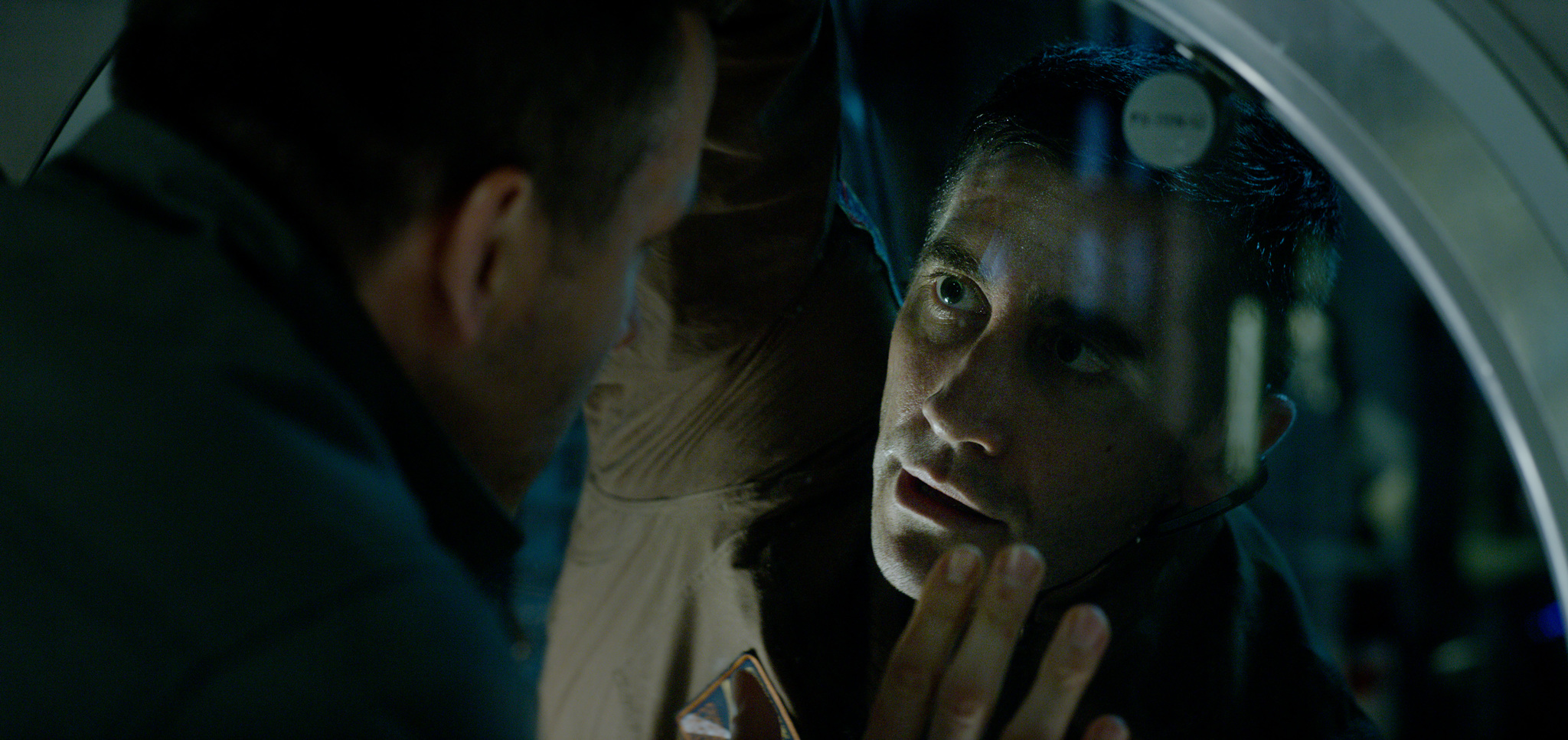
Hey there everyone! Welcome back to Movie Soapbox, the little corner of the internet that only you and I and that guy sleeping in the corner over there know about. This is the place where we find underappreciated films, dig into the ones that got away, and make sense of the ones that tried to slip something past you. Today? We are doing a full deep dive on Life, the 2017 sci-fi horror picture so quietly ruthless in its final ten minutes that most people walked out of the theater still processing whether they actually watched the villain win, or whether they missed something. You didn’t miss anything. The villain won.
Alright. Everything from this point forward is a full spoiler walkthrough. The ending, the twist, what it means, why it works, all of it. If you haven’t seen this film yet, close this tab and go watch it, because the ending is the kind of thing that only hits hard if the movie has earned it with you first, and it has earned it. Go. Come back. We’ll be here.
Still here? Good. Let’s get into it.
Movie Life Deep Dive Walkthrough
There is a specific kind of studio note that kills movies like this before they ever reach you, and Life has the fingerprints of a film that survived at least a few rounds of it. The note goes something like: “The ending feels horrible! I’ve got an idea… Kill the monster!” You see the scar of that note in a dozen studio creature features every year, the last-second survivor, the door left open, the monster stopped just short of total victory. What’s remarkable about Life is that Rhett Reese and Paul Wernick, the writers, held the line. A film at this budget tier, with a cast this recognizable, does not usually get to end the way this one ends. Directors don’t retain that kind of leverage unless someone up the chain decided the writers’ track record bought them some rope. Reese and Wernick had Deadpool on their résumé by the time this went into production. That matters. That is the kind of currency that gets you a bleak ending instead of the soft landing some VP in a glass office wanted to give you.
So. From the top.
The Setup: You Always Invite the Monster In
The entire first act of Life is executing one of the oldest structural requirements in horror, which is that someone with good intentions has to open the door. The International Space Station receives a soil sample returned from Mars, the crew’s xenobiologist Hugh Derry identifies a dormant single-celled organism inside it, and then, because that is what scientists do and because the movie would be forty minutes long if he didn’t, Hugh starts poking at the environment until the cell wakes up. More glucose. More CO2. A little warmth. The cell moves. Earth goes insane with joy. A kid names it Calvin, after her school. Sweet moment. Wrong organism to name after a school.
The film moves fast from here. Calvin, once awake, is immediately strange in ways that separate it from every other screen alien you’ve watched shamble around a corridor. It is not a creature that wants to hide. It learns. It adapts specifically to whatever you throw at it. When Rory Adams, Ryan Reynolds’ character and functionally this film’s most expensive fake-out, decides to go into the containment pod to pull Hugh out after Calvin attacks, you are watching the movie establish its rules. The biggest name in the cast dies in the first thirty minutes, his insides liquefied, and the film does not apologize for it. That is the film telling you it is serious. A lesser version of this script keeps Reynolds until the third act for the emotional gut-punch. This version kills him early so you spend the rest of the runtime knowing that nobody is safe and the rules you assumed do not apply.
Calvin feeds on Rory, grows, and the shape of it, loosely octopoid, fluid in zero gravity, is a genuinely smart design choice. It moves like something that evolved in an environment without a fixed up or down. Every limb is a tool, every tool is a weapon, and it gets stronger every time it feeds.
The Three Firewalls
This is the structural spine of the film and you need to have it clear in your head before the ending makes full sense. Before the mission launched, someone with enough foresight and enough institutional paranoia to think worst-case built a three-stage containment protocol into the mission’s DNA.
Firewall one was the sample box. Breached when Calvin woke up and got loose in the pod.
Firewall two was the lab. Breached when Calvin made it out into the wider station systems.
Firewall three was the station itself. The moment Calvin is loose in the full ISS with no contained zone left, Earth’s calculus changes completely. The station is no longer a rescue mission. It is a quarantine wall, and the people on it are the wall.
Miranda North, the CDC quarantine officer played by Rebecca Ferguson, signed off on this before she left Earth. She knew. Part of her job, the part nobody talked about at the pre-launch press conference, was to make sure that if all three firewalls failed, the station and everyone on it went out into deep space rather than home. When Earth sends up a Soyuz capsule and the crew thinks it’s a rescue, Miranda knows it isn’t. She reads it correctly. It’s a push. Earth is trying to shove the ISS into a trajectory it doesn’t come back from.
Now. The Soyuz having enough fuel to meaningfully alter the ISS’s trajectory is the one engineering liberty the film takes that you have to either accept or it’ll bother you the whole third act. Accept it and move on. The logic of what Earth is trying to do is sound even if the specific mechanism is a little convenient.
The Final Twenty Minutes, Piece by Piece
Everything in the climax happens fast and layered on top of itself, which is exactly how a real cascading systems failure would feel, and it is easy to lose the thread of which decision caused which consequence.
Crew member Sho, who has been sheltering in a sleeping chamber, panics and starts moving through the station, opening compartments as he goes. This is the cascade trigger. Every hatch he opens is another vector for Calvin. Calvin, which at this point has already been feeding on Hugh’s leg without Hugh knowing, because Hugh is paralyzed below the waist and couldn’t feel it, that detail is one of the better pieces of quiet horror writing in the film, tracks Sho and engages him. The fight between Calvin and Sho disrupts the Soyuz burn, the capsule goes sideways, impacts the station, and now the controlled push that Earth planned becomes a chaotic degrading orbit. The ISS is going to hit atmosphere in roughly ninety minutes. The crew’s oxygen situation is already critical.
David Jordan, Jake Gyllenhaal’s character, has been the film’s most survival-minded crew member from the beginning, the one most adapted to long-duration isolation, the one least eager to go back to Earth. He is, in a specific way, the right person to volunteer for what he volunteers for. His plan is to use oxygen sticks as bait, lure Calvin into one of the two remaining escape pods, get in with it, seal the hatch, and launch manually out toward deep space. Miranda takes the other pod and goes home. One of them carries Calvin out into nothing. One of them carries a survivor back to Earth.
The plan works, up to a point. David lures Calvin in. He gets in the pod. He seals it. He launches. Miranda launches simultaneously.
The Ending of the Movie Life Explained
You watch both pods travel parallel for a moment. Then they diverge. One arcs down toward Earth. One arcs out toward deep space.
Inside the pod heading down, we see David, barely alive, hand on the manual override, fighting to keep the trajectory going outward. And we watch Calvin force his arm. Force the controls. The pod heading for Earth carries David and Calvin. The pod heading out into deep space carries Miranda alone, lights going red, alarms firing, her scream the scream of someone who has just understood that the malfunction means she is not going home.
The pod with David and Calvin hits the ocean. Fishermen motor out to investigate. They look through the porthole. David, barely conscious, is shaking his head. No. Do not open this. His expression is not ambiguous. He knows exactly what is in the pod with him and he is begging these men, who have no context for the begging, to please not open the hatch.
They open the hatch.
Cut to black.
The Movie Life and The Theories
There are a few competing reads on what the ending actually means and what it’s setting up, so let’s run through them honestly.
Theory one: David is still alive and Calvin is dormant. Some viewers read David’s slow head-shake not as a warning about Calvin but as a man in shock who doesn’t want to be moved. Under this read, Calvin may not be actively threatening in the immediate moment inside the pod, the creature having perhaps calmed or gone into a brief rest state after the chaos of the capsule landing. This theory tends to argue that there’s a short window, maybe seconds, before the situation becomes irretrievable.
Theory two: David is dead or functionally dead, and the head-shake is involuntary. Some people watch that final movement and read it as a death rattle rather than a warning, muscle spasm, not communication, and the fishermen opening the hatch are simply opening a capsule they have no reason to fear. Under this read, the tragedy is complete, nobody is left to warn Earth, and Calvin is loose before anyone on shore has any idea what they’re dealing with.
Theory three: The ending is a direct Venom/symbiote setup, intentional franchise architecture. The writers went on record saying they saw Calvin reproducing in an ocean teeming with life as the obvious sequel engine. Under this read, the ending is less tragedy and more a very dark first chapter, Calvin has reached the most target-rich environment in the solar system and the question of “how does Earth fight back” is the movie that was supposed to follow this one.
Moviesoapbox’s Take on the Movie Life
David is conscious. The head-shake is deliberate. He survived the landing, barely, because the film has spent two hours establishing him as the crew member physiologically most adapted to endurance, and it is not going to let that characterization mean nothing. He knows Calvin is in the pod with him. He knows those fishermen have maybe four seconds to make the right decision and no information with which to make it. His last functional act as a human being is to try to warn them, and it fails, and that failure is the entire point of the movie.
The film is not interested in leaving you with ambiguity about whether Earth is in danger. It is interested in showing you the exact mechanism by which good people with good intentions failed to stop something, right down to the last possible moment, and then showing you a completely ordinary man in a fishing boat doing the completely ordinary human thing of opening a door. Calvin wins because the fisherman is not a villain. He is just a person who doesn’t know. That is the whole film in one image.
Reese and Wernick held the ending. In a climate where test-screening audiences will reliably ask for a survivor and a studio will reliably provide one, these two writers looked at their bleak last scene and kept it. You can respect that even if the film never got its sequel, even if the franchise architecture they laid out in interviews never got built, even if Life ended up being a standalone film that most people have half-forgotten. What almost happened to this ending is what happens to most endings like it. It didn’t happen here. That’s worth noting before you close the tab.
Thanks for coming by Movie Soapbox. See you on the next one.