
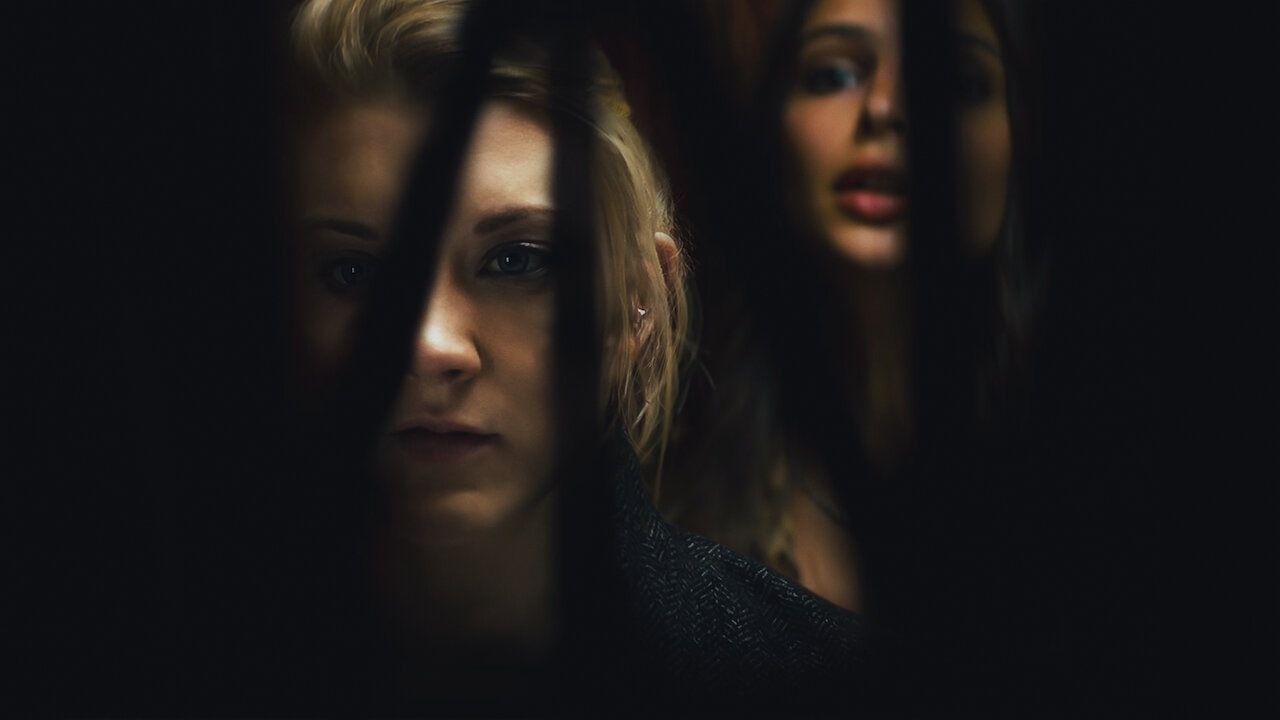
Hey there everyone! Welcome back to Movie Soapbox, the little corner of the internet that only you and I and that guy sleeping in the corner over there know about. This is the place where we find underappreciated indie films and we make sense of them. Today? We are doing a deep dive on In Darkness, a movie so quietly brutal and so committed to its own central deception that the marketing department clearly had no idea what to do with it, which, honestly, is about as good a sign as you are going to get.
Alright. If you have not seen In Darkness yet, this is where you get off. What follows is a complete, spoiler-forward breakdown of everything this film does, why it does it, and what it cost to pull it off. You have been warned, and I am not going to be gentle about it.
Before we get into the scene work, let me tell you something about what kind of movie this actually is, because the mixed reviews make a lot more sense once you understand the machinery underneath it. In Darkness is a film built around a single, load-bearing secret, the kind of secret that, in a normal development pipeline, would have been “fixed” by the third round of studio notes. You can feel the shape of the pressure that must have come down on this script, because a thriller whose entire emotional architecture depends on a protagonist who has been lying to the audience since frame one is exactly the kind of concept that makes a room full of VPs nervous. “But will the audience feel cheated?” They always ask that. The answer, when the filmmaking is disciplined enough, is no. Anthony Byrne, who directed and co-wrote this with Natalie Dormer, kept the secret. That is rarer than it sounds.
In Darkness Movie Deep Dive Explained
The film opens on Sofia, a blind woman working as a pianist scoring films, and the irony of a blind woman creating the emotional soundtrack for images she cannot see is doing real work from the very first frame. Her neighbor Veronique falls from the roof of their apartment building. Assumed suicide. The police come. Sofia is interviewed. And right there, in that first conversation with the detective, Sofia is evasive in a way that the film frames as trauma-response, as a blind woman’s fear of getting involved in something dangerous. You read it as vulnerability. You are supposed to.
Then the movie hands you the backstory on Veronique’s father. Radic. A man credibly accused of war crimes during the Bosnian conflict, now living clean in London behind the kind of wealth that makes accusations evaporate. The film does not linger on the atrocities because it does not need to. It just needs you to understand that this man has blood on him going back decades, and that the people who could prove it keep ending up dead or silent.
In a flashback, we see that before she died, Veronique slipped Sofia a thumb drive. Financial records, transaction logs, the kind of documentation that could theoretically drag Radic into a war crimes tribunal. She tells Sofia the password is the name of her perfume. Liquid Gold. And here is where the film knows exactly what it is doing with its weakest piece: the thumb drive is absolutely a MacGuffin, a plot engine dressed up as evidence, and the script does not pretend otherwise. It just needs to give the dangerous men a reason to come looking for Sofia, and it serves that function cleanly and without apology.
Marc arrives. He is presented as a love interest, which is the oldest cover in the genre and the film leans into that knowingness. He is smooth, he is attentive, he maneuvers himself into Sofia’s life with the kind of careful patience that reads, in the moment, as genuine attraction. Later you will reassemble every scene with him and see the calculation underneath. That reassembly is the film working exactly as designed.
Now. Sofia’s real history. This is where the movie earns its twist, or fails to, depending on how you feel about the mechanics. What the film eventually reveals, through flashbacks and Niall’s careful exposition, is this: Sofia grew up in Bosnia with her family. Her mother was raped by Radic. That rape produced Sofia, and very likely her sister as well. The two girls grew up not knowing the identity of their biological father. Radic’s men came for the family. They killed everyone. The two girls hid in an armoire. The killers shot into it blindly, the way men do when they are being thorough and careless at the same time, and one sister died and one survived. The sister who survived was the one who could see. And the seeing sister, emerging from that armoire into a house full of her dead family, made a choice. She began performing blindness. Not as a tactical decision, not yet, but as something closer to a trauma response that hardened, over twenty-four years, into a weapon.
So for the entire film, Sofia can see everything. Every room she walks into. Every face. Every threat. She has been performing vulnerability as her primary survival strategy for two and a half decades, and the film has been performing it alongside her for you.
The detective starts pulling on the thread. The nose job detail is the one that keeps nagging at him, and it is the right detail to pull, because who gets reconstructive surgery and then jumps off a roof. Veronique’s death starts looking less like a choice and more like a removal. The pressure on Sofia increases from multiple directions at once, Radic’s organization pushing in from one side, the investigation tightening from another, and Marc sitting right in the middle of her life with his careful hands and his unclear loyalties.
The climax is Radic in Sofia’s apartment, and the film’s thesis statement as an action sequence. He believes he is strangling a blind woman. He is in fact being handled by someone who has been rehearsing this confrontation in her head for most of her life, and who can see every centimeter of the room. Sofia gets the upper hand. She has a shard of glass and she is about to end it, and then Marc throws Radic out the window onto the wrought iron gate below. He gets there first. He takes it from her. And then he is mortally wounded and he realizes she can see, and in the few minutes he has left he tells her to not let him watch her go.
She ties Veronique’s scarf around his eyes. She walks away.
Now, the theories. There are a few ways to read what Sofia’s performance of blindness actually means at the thematic level, and they are not mutually exclusive.
In Darkness Movie Theories
Movie Explanation Theory #1 – A Tactical Theory
Sofia knew from relatively early on that she was Radic’s biological daughter, knew that Veronique was her half-sister, and constructed the entire blind-pianist identity as a long-game approach vector, a way to get close to the man’s world without registering as a threat. On this reading, the blindness is espionage from the beginning, and Niall’s role as her protector fits into a deliberate, years-long operation.
Movie Explanation Theory #2 – A Psychological Theory
The blindness started as dissociation, as a child’s mind refusing to process what her eyes had just shown her, and it calcified into identity. Sofia has been blind, functionally, emotionally, for so long that the performance and the self are no longer separable. The revenge is almost incidental. What she has been doing for twenty-four years is surviving the original wound.
Movie Explanation Theory #3 – A Tale of Revenge
The third read, which the film’s ending seems to endorse, is the one where the revenge was always the point but the grief was always underneath it, and Sofia does not actually feel relief when Radic dies, she feels absence, because the thing she has organized her entire adult life around is gone and she did not even get to be the one who ended it.
Moviesoapbox Preferred Explanation
Here is where Movie Mike plants his flag. The second and third reads are both true, and the first is also true, and the film is good enough to hold all three without collapsing into any single one of them. Sofia’s blindness is survival mechanism and tactical tool and identity and grief all at once, because that is what a trauma response that has been running for twenty-four years actually looks like. It becomes indistinguishable from the self. The film understands this. That is why the reveal works.
The editing choice the film makes around Sofia’s recognition of Marc, the security-camera footage of her reacting to his wanted poster, is the one real scar on the final cut. The montage of her “finally” understanding who he was plays as surprise, but if she had already seen that poster and registered it before the film’s timeline catches up, the surprise is either a performance or a continuity mistake. I think it’s a performance that the editing accidentally made legible as a mistake. A tighter cut would have saved it.
But that is a small thing against everything this film got right. Natalie Dormer is doing genuinely difficult work here, sustaining a performance-within-a-performance for an entire film’s runtime without ever letting the seams show at the wrong moment. The music, built by Niall Byrne around the premise of a blind woman’s relationship to sound and image, is doing more thematic lifting than most scores bother to attempt. And the film, which easily could have been neutered into a standard-issue revenge procedural with a twist bolted on at the end, retained its central strangeness all the way through.
Most films built around a secret this load-bearing do not make it to the screen with the secret still intact. Somebody usually blinks. Somebody decides the audience needs more reassurance, more foreshadowing, more relief valves to keep them from feeling manipulated. In Darkness did not blink. That alone is worth your two hours.