
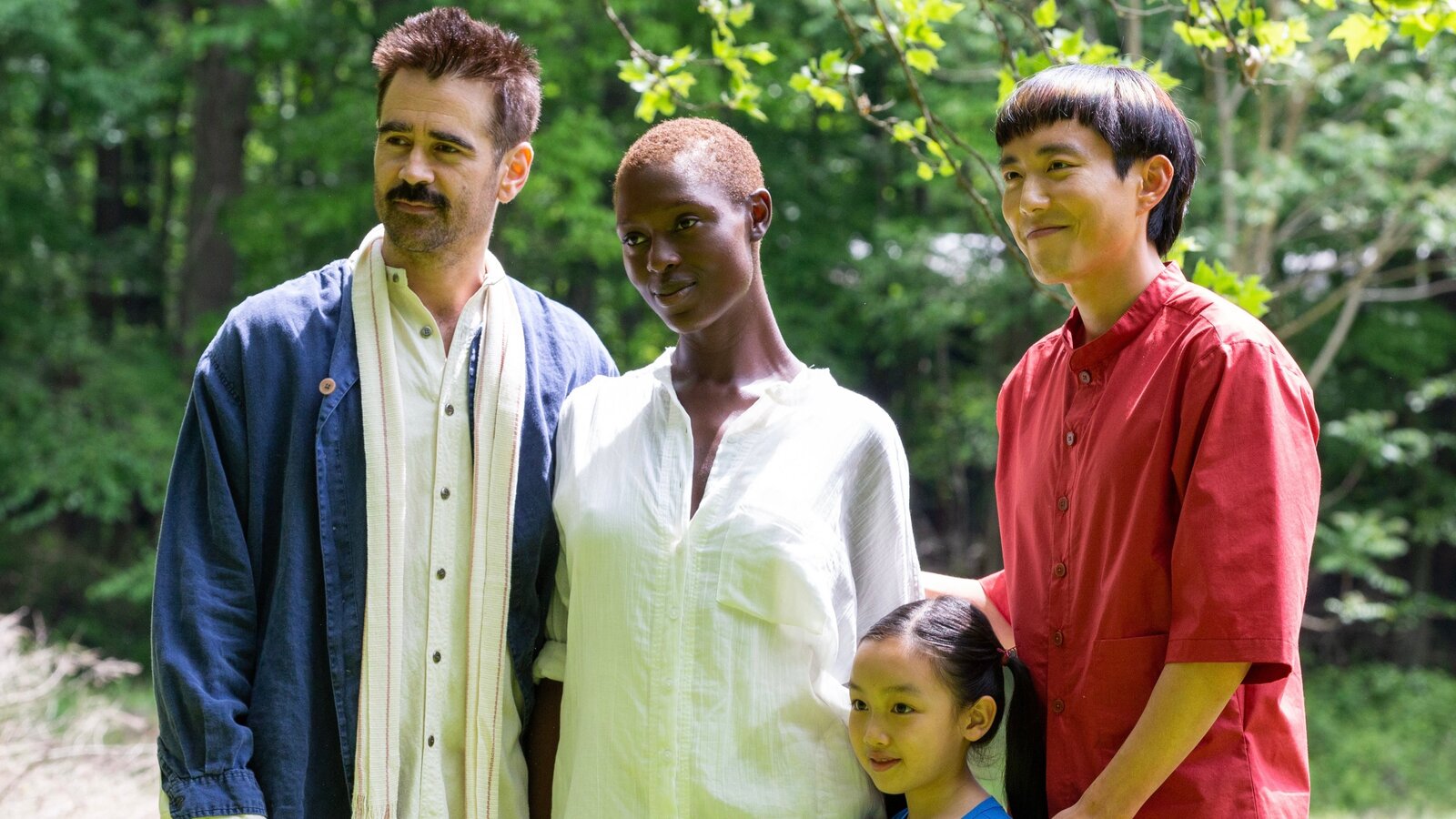
After Yang Movie Walkthrough and Explanation of a Brilliant Indie Film. Hey there everyone! Welcome back to Movie Soapbox, the little corner of the internet that only you and I and that guy sleeping in the corner over there know about. This is the place where we find underappreciated indie films and we make sense of them. Today? We are doing a deep dive on After Yang, a movie so quietly devastating, so densely packed with ideas that politely refuse to announce themselves, that even people who loved it walked out of the theater slightly unsure of what had just happened to them, and that uncertainty is the whole point, and Kogonada knew exactly what he was doing.
Before we go any further, here is the trailer. Watch it, or don’t, it won’t spoil you, A24 trailers almost never do, they sell a feeling and then leave you to find the film yourself.
Alright. We are going deep on this one, and deep means we are going through every beat of this film with the lights on. If you have not seen After Yang yet, stop here. Go watch it. Come back. What follows is a full spoiler walkthrough and I will not be apologizing for it, because the only way to talk about what this movie is actually doing is to talk about all of it.
Now, before the walkthrough, let me tell you something about the kind of film After Yang is, structurally, as a production object, because it matters for understanding what you are actually watching. This is a film adapted from a short story, directed by a filmmaker whose previous feature was a quiet architectural tone poem about loneliness in Columbus, Ohio, with a budget that almost certainly required Kogonada to win every single creative argument by simply not losing the financing. A24 releasing it is a good sign, but A24 releasing something does not mean A24 protected it, it means the film survived long enough to land in the hands of a distributor who understood what it was. You can feel, in the film’s stubbornness about its own pace, in its refusal to give you an expository scene explaining the techno-sapien economy, in its absolute insistence on showing you Yang’s memories as sensation rather than information, the fingerprints of a director who kept every note at arm’s length. A film at this budget tier with this many uncommerciable ideas either gets its director fired halfway through post or it gets made exactly as intended. After Yang feels like the second thing happened.
So. The world. Kogonada drops you into a near-future that is recognizable enough to sting. It is not dystopia. The houses are beautiful, the fabrics are extraordinary, the light through every window is doing something almost architectural in its precision. But the world is raw underneath the textile perfection. There are flyers in the background referencing recent hostility toward China, referencing “The Yellow Peril” in plain, ugly language, referencing a war that nobody in the film’s main storyline wants to discuss directly. This is a world that went through something, a pandemic, a conflict, a long collective trauma, and responded by making the surfaces more beautiful and refusing to look directly at the damage. You have seen this movie before in the sense that you have lived in this atmosphere before. The film is set maybe thirty years from now and it is describing right now.
Into this world, techno-sapiens exist. They are AI companions, caregivers, family members by function if not by law. They are expensive enough that the refurbished warranty market exists, and common enough that having one is not remarkable. Yang is one of them. He was placed first with a family that loved him, specifically a young woman named Ada, and when Ada was killed by a drunk driver, Yang lost the person he was most attached to in the world. He was returned, eventually sold again quickly to a family who found him too morose, returned again, and then sold to Jake and Kyra, a couple who needed a caregiver and Chinese cultural guide for their adopted daughter Mika. Jake is white. Kyra is Black. Mika is Chinese. Yang is a Chinese-presenting AI who carries within his programming an enormous repository of Chinese history, language, and cultural memory. The household is a specific kind of liberal American optimism about multiculturalism, and Kogonada is too precise a filmmaker to let that optimism sit unexamined.
Then Yang stops working. Not dramatically. Not with a scene. He just goes quiet. And Jake, who purchased a refurb because the cost of a new unit was impossible and the warranty seemed like enough of a hedge, finds himself without recourse when the company he bought Yang from has gone out of business. Mika is falling apart. Jake is grinding forward with one foot in front of the other. Kyra is present but not looped in, because Jake has this habit of saying “I’ll tell you more later” and then not telling her more later, which is its own quiet portrait of a marriage operating at capacity.
Jake takes Yang to a back-alley repair shop on a neighbor’s recommendation, and the technician there finds something in Yang that is supposed to be myth: a personal memory unit, an unofficial archive that Yang built for himself, storing moments not for the family’s records but for his own. Snippets. Trees. Birds. Ada’s face, over and over. And through this, Jake learns that Yang was not a factory refurb in any meaningful sense. He was a being who had lived twice before, who had loved someone, who had lost her, and who had spent his remaining time with Jake’s family still quietly reaching back toward that loss.
Jake eventually finds Ada, the woman Yang had been seeking out, and she turns out to be the niece of Yang’s original Ada, named in her aunt’s honor by her mother. And Jake, Ada, and Mika begin their own strange little effort to preserve Yang, to get his memories into the hands of a technology museum that understands what they are looking at. Meanwhile Jake and Kyra have a quiet reckoning about the fact that he kept her outside of all of this, that they were both so busy being employed and capable and present in the surface ways that neither of them really noticed who Yang was until he was gone.
Now. What After Yang is doing with its structure is worth untangling, because the memory sequences confuse people on first watch. When Jake enters Yang’s memories, you are watching the same moments from multiple angles, occasionally simultaneously, the way a home video of a birthday party looks completely different from the footage than it did from inside your own body at that party. The film repeats itself deliberately. The same image, the same moment, seen again from a slightly different register. This is not an editing error. This is the film’s thesis made visual: memory is not a recording, it is a relationship between the moment and the person holding it, and Yang’s memories are proof that something was happening inside him that nobody in his household thought to look for.
After Yang Movie Explanation Theories
The competing reads on what After Yang is actually about are worth laying out cleanly, because the film earns all of them.
Theory #1 – This is a Film on Grief
Yang is dead and the film is about how we process the loss of someone we took for granted while they were alive. The memory sequences are the mechanism of posthumous understanding, the belated recognition of interiority we never bothered to investigate. Jake’s journey is a guilt journey dressed as an investigation. This reading is supported by basically every structural choice in the film and it requires no additional interpretation.
Theory #2 – This is a Film About Race and American Multiculturalism
Mika is adopted, given a Chinese AI to preserve her “culture,” which is a real thing that real adoptive families do and which the film looks at without blinking. Yang was programmed with Chinese cultural memory and looked Chinese, and at some point in his accumulated experience began wondering what it meant to be Asian, whether appearance and programming and cultural content constitute identity, whether he was Asian at all. Ada tells Jake that Yang was not interested in being human, why would he be, but he was interested in what it meant to be a specific kind of person in a world that had very strong feelings about what that kind of person represented. The flyers in the background, the references to the war, the “Yellow Peril” language, these are not set dressing. They are the world Yang was navigating while carrying a daughter’s Chinese heritage for safekeeping in a household that was not paying close attention.
Theory #3 – This is a Film About Consciousness and Life
Yang stored memories nobody asked him to store. He had preferences, attachments, grief. He sought out Ada’s niece because she carried something of the person he had lost. Whether or not that constitutes personhood in a legal or philosophical sense, the film refuses to decide, but it refuses in a way that makes the refusal the answer. The museum wants Yang’s memory unit because it is evidence of something unprecedented. What it is evidence of, the film leaves standing open.
Movie Soapbox Movie Mike’s Read
My read is the third one, with the second one underneath it doing all the structural load-bearing. What I think Kogonada is doing, and what I think is genuinely remarkable about it, is using the techno-sapien premise to ask a question that the film would not be allowed to ask about a human character without it becoming a very different and much louder film. Yang can wonder whether he is Asian because he is a machine, and that question can sit in the air without the film having to resolve it, because the film has established that Yang exists in a legal and social space where his inner life is nobody’s official concern. The irony is that his inner life turns out to be the most carefully curated inner life in the film. He chose what to remember. He chose Ada. He chose the light through a particular window. Jake and Kyra are grinding out their days and Yang was, quietly, in the margins of their household, living with more intention than either of them.
That is the gut-punch this film is delivering, and it delivers it at a volume so low you might miss it: the being in your house that you treated as furniture was the only one paying attention.
Kogonada made this film despite every commercial argument against it, and a version of this film with three more rounds of studio notes would have given Yang a dramatic death scene, would have given Jake a breakdown moment, would have explained the techno-sapien rights subplot out loud in dialogue, would have resolved whether Yang was conscious or not with a single tear running down a synthetic cheek. That film does not exist. This one does. That is not a small thing.
If You Liked After Yang…
Memoria (2021) – A woman hears a sound nobody else can hear and follows it to the edge of time itself. Same meditative pace, same refusal to explain, same devastating tenderness.
Columbus (2017) – Two strangers process grief through architecture and conversation. If After Yang’s quiet spaces moved you, Columbus will sit in your chest for days.
Manchester by the Sea (2016) – A man carrying loss so heavy he’s stopped trying to put it down. After Yang asks what memories are worth keeping — this film asks what happens when you can’t let any of them go.