
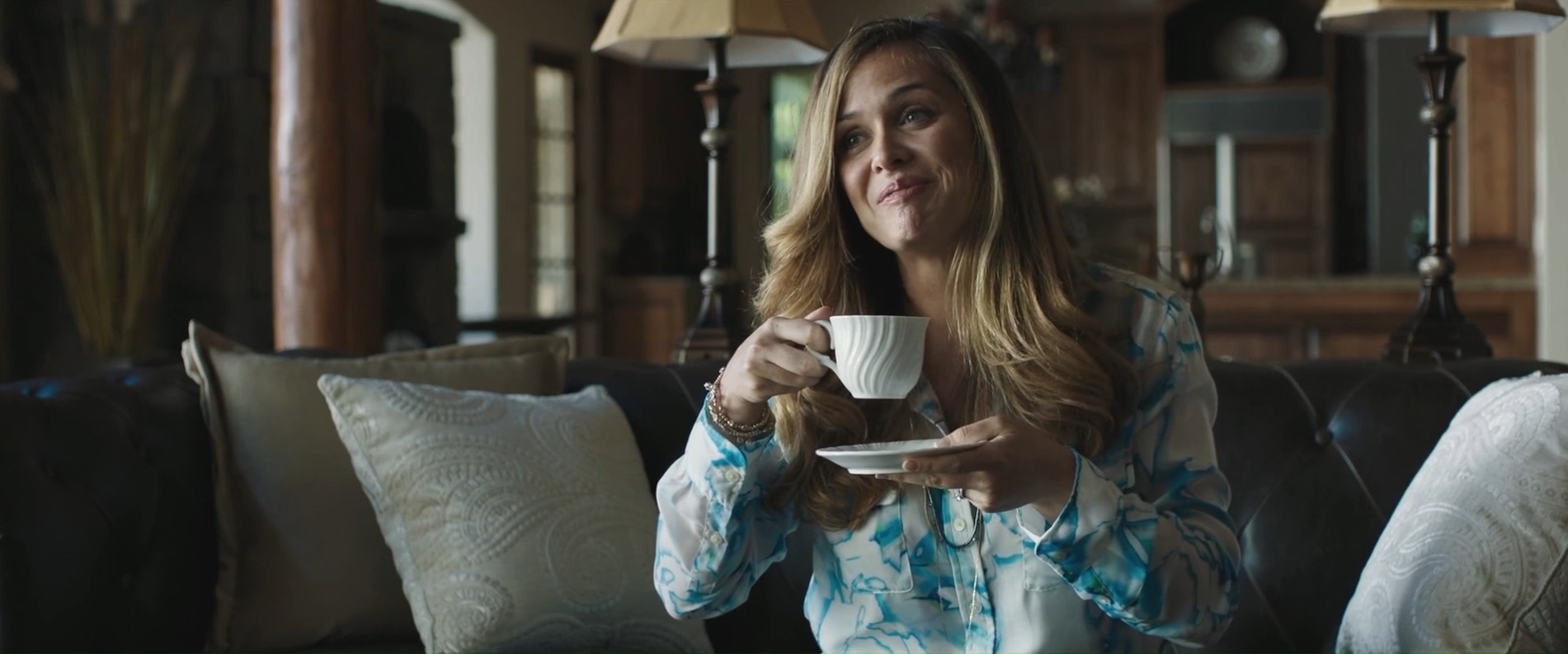
Hey there everyone! Welcome back to Movie Soapbox, the little corner of the internet that only you and I and that guy sleeping in the corner over there know about. This is the place where we find underappreciated indie films and we make sense of them. Today? We are doing a deep dive on I Don’t Feel at Home in This World Anymore, a movie so quietly ferocious, so committed to its own weird logic, that it won the Grand Jury Prize at Sundance and then promptly got buried on Netflix where most people scrolled past it twice before finally clicking play at midnight on a Tuesday and immediately regretting that they waited this long.
Alright, fair warning: everything from this point forward is spoilers. Full, unrepentant, scene-by-scene spoilers. If you haven’t seen this film and you keep reading, that’s on you, and honestly, that’s a little bit on the machine that made it so hard to find in the first place.
Because here’s what you need to understand before we go a single frame further into the plot. This film, directed by Macon Blair, a guy whose entire career up to this point had been in front of the camera for Jeremy Saulnier’s films, not behind it, this is the kind of directorial debut that gets quietly strangled in development at every major studio before it ever makes it to a camera. A middle-aged woman protagonist. No franchise hook. No sequel infrastructure. A story that pivots from dry social comedy to genuine Tarantino-tier violence without pausing to ask the audience’s permission. The only reason a film like this makes it out alive is because it goes through Sundance instead of through a greenlight meeting where twelve VPs are trying to figure out if it fits next to their existing IP slate. Blair got final cut precisely because nobody with real money thought it was worth fighting over. That is not an insult. That is the entire reason it works.
Deep Dive Walkthrough for I Don’t Feel at Home In This World Anymore
Ruth is done. She has been cut off in the parking lot one too many times, someone let a door swing shut in her face one too many times, and then her house gets broken into and something in her just stops tolerating it. The film opens as a catalogue of small social cruelties, the kind that accumulate in a person over years until the weight of them becomes unbearable, and Melanie Lynskey plays that accumulated weight without ever announcing it, without a single scene where she explains herself to you. You understand Ruth because you recognize her. Not because the script tells you to.
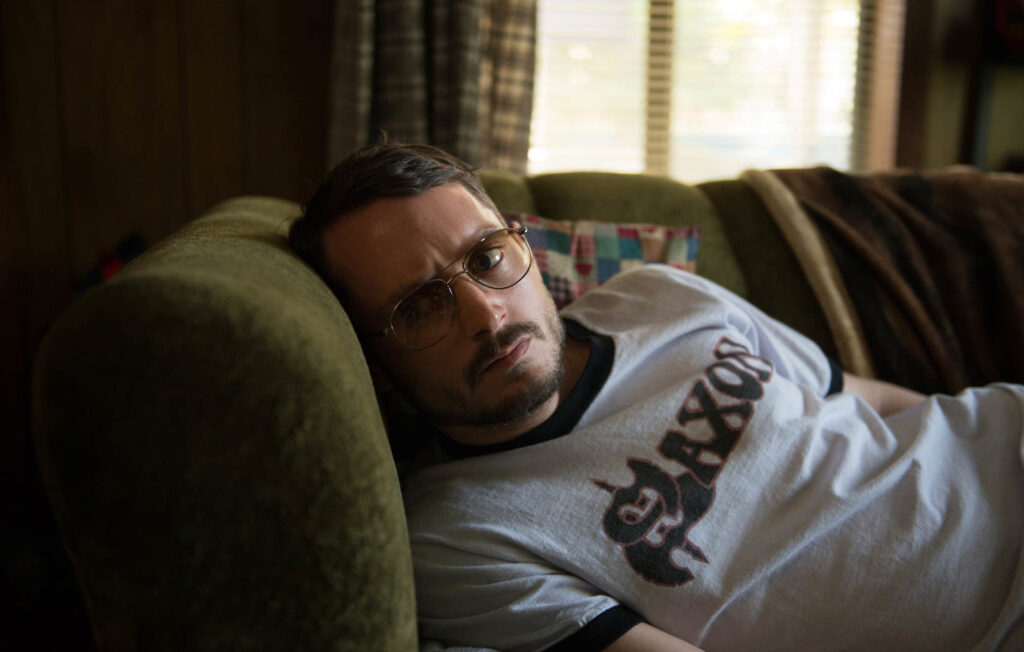
After the break-in, the police do exactly what you expect them to do, which is nothing, or close enough to nothing that the difference doesn’t matter. And Ruth decides she is going to find who took her things herself. This is where she meets Tony, played by Elijah Wood with a throwing star collection and a social awkwardness that reads less like a quirk and more like a man who has genuinely never learned the difference between the way he experiences the world and the way everyone else does. They are not a natural pairing. They are two people who want the same thing at the same moment, which is as much chemistry as this film needs.
What they stumble into is this: the guy who robbed Ruth, Christian, is the son of a local mob figure named Chris Rumack. Christian and his two associates, Marshall and Dez, are not just petty thieves, they are also in the middle of planning to rip off Christian’s own father. These are not smart people making a calculated play. These are volatile people with weapons and no particular regard for consequences, which is a combination that the film treats with exactly the kind of respect it deserves, meaning it treats it as genuinely dangerous in a way that a lot of crime comedies refuse to do.
Christian ends up dead, crushed by the internal logic of his own bad decisions and then, more literally, by a bus. Before that happens, Ruth breaks his larynx in a confrontation that is both horrifying and absurd in equal measure. Dez bludgeons Ruth and throws her in a van. Marshall and Dez’s solution to losing their third for the Rumack heist is to simply draft Ruth as a replacement. She killed Christian. Tag, she’s it.
The climax is worth mapping because it moves fast and it does not pause to explain itself. Mrs. Rumack gets taken hostage. Chris comes out with a pistol. Dez blows his gun hand off. Marshall kills Chris’s muscle. Ruth vomits, which is the most honest reaction anyone in this film has to anything. Tony hits Dez in the face with a throwing star, which is both completely absurd and completely in character. Dez tries to shoot Tony and the shotgun explodes in her hand. Marshall kills Chris. Tony protects Ruth and gets stabbed by Dez. Ruth and Marshall grapple. A gun goes off, ricochets, and hits Dez in the head. Ruth takes Marshall’s gun and knocks him out. Mrs. Rumack runs. Ruth and Tony take a boat out into the wetlands with Marshall behind them. Ruth hits Marshall in the head with a rock. He goes into the swamp. A snake handles the rest. Ruth takes Tony out in the boat.
Marshall crawls off.
The film ends at a cookout. Ruth is still morose, still carrying the weight she came in with, because nothing that happened in the third act was a cure for anything. And then there is Tony, standing at the grill, cane in hand, a faint halo of afternoon light around his head.
Theories to Explain I Don’t Feel At Home In This World Anymore
Two questions get asked about this ending constantly. First: is Tony actually alive, or is Ruth seeing what she needs to see? The cane is the answer. Blair put that cane in the frame deliberately, a prop that belongs to recovery, to the physical world, to healing that takes time. A hallucination doesn’t need a cane. A dead man doesn’t need a cane. Tony is alive, and the cane is Blair grounding him in the real without having to say a word about it.
Second: why does Ruth leave Marshall in the woods instead of finishing it? Because she is done. The mission was never actually about Marshall. The mission was about whether the world could be made to give a damn, whether you could force it to reckon with its own casual cruelty, and the answer the film lands on is something close to no, not really, but you can survive it, and the people next to you can survive it, and maybe that is enough to get out of the woods.
The competing reads on this film are roughly three. One: it is a straight revenge fantasy dressed in indie clothing, Ruth as a working-class wish-fulfillment figure, and the violence is cathartic rather than critical. Two: it is a critique of that exact fantasy, a film that shows you what actually happens to ordinary people who decide to take matters into their own hands, and the answer is that Tony gets stabbed and nobody wins and Marshall crawls off to do it again somewhere else. Three, and this is Blair’s own stated read in interviews: it is a crime movie where the detective is chasing the idea that people could maybe, just maybe, be slightly less of an asshole to each other every day, and the violence is what happens when that hope collides with the actual texture of the world.
The third read is the right one, and it earns it precisely because it refuses to resolve cleanly. Ruth doesn’t fix anything. The world is exactly as indifferent at the end as it was at the beginning. But she is still here. Tony is still here. The cane is real. That is not a triumph. It is something more durable than a triumph.
Macon Blair made this film because the machine doesn’t make films like this, and the machine would have fixed it if it got the chance, softened the violence, given Ruth a cleaner arc, made Marshall more comprehensibly evil so the ending felt earned in a more comfortable way. The fact that it exists in this form, unsmoothed and genuinely strange, with a middle-aged woman as the center of a crime thriller and a cane as the most important prop in the final scene, is entirely because it went through Sundance and landed at Netflix before anyone had time to ruin it. Watch it like someone almost did.
🎬 If You Liked This…
- Blue Ruin — a man with no skills and no plan attempts a revenge killing, everything that follows is the consequence of that gap between intention and competence
- Galveston — same bruised working-class register, same sense that everyone in the frame is one bad decision from a situation they cannot get out of
- Come to Daddy — starts as awkward domestic drama, pivots hard into something much darker, Elijah Wood at his most usefully out of his depth