
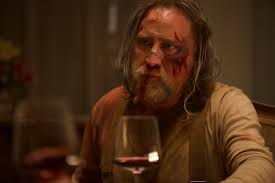
Hey there everyone! Welcome back to Movie Soapbox, the little corner of the internet that only you and I and that guy sleeping in the corner over there know about. This is the place where we find underappreciated indie films and we make sense of them. Today? We are doing a deep dive on Pig, a movie so quietly devastating, so committed to its own strange frequency, that the suits who greenlit it probably still aren’t sure what they actually paid for.
Before we go any further, let me be direct with you: everything from this point forward is a spoiler. The ending, the pig, Lori, Darius, the tape, all of it. If you haven’t watched this film yet, close this tab, find the movie, watch it cold, and come back. If you keep reading and something gets ruined for you, that’s on you, not me. This film deserves your undivided, unspoiled attention. Go get it.
Still here? Good. You’ve seen it. Let’s get into it.
So, the trailer drops and reads like a revenge film. Nicolas Cage, beard like a shipwreck, somebody stole his pig, he is going to make them hurt. And if you watched more than eleven seconds of that trailer you were probably bracing yourself for something in the John Wick family tree, maybe a little dirtier, a little more Pacific Northwest, but the same basic skeleton: beloved animal, grieving man, escalating violence, cathartic bloodbath. What you actually got was the most disciplined piece of misdirection a low-budget indie has pulled off in years, a film that walks right up to the revenge genre, looks it dead in the eye, and walks away. Films that do this, that weaponize genre expectation against itself, they only survive to the screen when everyone with a greenlight and a test-screening questionnaire somehow fails to strangle them in development. And you can see, if you look for it, exactly where the pressure was applied to Pig, and exactly why it didn’t work.
Here is the thing about a film at this budget tier with this specific cast configuration: a name like Nicolas Cage, post-reputation-rehabilitation arc, attached to a first-time feature director in Michael Sarnoski, on a story this resistant to genre comfort, the distribution pressure to clarify the premise in the marketing is enormous. Someone, somewhere in that process, absolutely wrote an email suggesting that the audience needed to understand what kind of film this was before they bought a ticket. The trailer reads like a negotiated document. You can see where the thriller-ish footage got foregrounded and the quiet devastating middle of the film got buried, because that middle does not cut into a ninety-second sizzle reel without lying about what the movie is. The fact that the film itself emerged intact, that Sarnoski’s actual vision survived from script to screen without a reshoot-scar third act where Rob exacts brutal vengeance on Darius, tells you something about how far a certain caliber of committed performance can function as a shield. Cage being genuinely, terrifyingly good in this is not just a creative gift to the audience. It is almost certainly what kept the wolves off the edit.
What Actually Happens, Beat by Beat
The film opens on Rob (Nicolas Cage) in the Oregon wilderness, living in a shack that functions less as a home and more as a deliberate act of subtraction. He has removed himself from everything except two things: his cooking, which he pursues with a quiet, private seriousness that the film asks you to simply observe and absorb, and his pig, a truffle-hunting animal he moves through the forest with in a way that communicates years of mutual understanding without a single line of dialogue explaining it.
Amir (Alex Wolff) arrives once a week in a car that costs more than the shack, picks up the truffles, and drives back to Portland. Oregon truffles, if you don’t know, are genuinely valuable commodities, Oregon black truffles around $800 a pound, Oregon whites historically selling for stratospheric numbers, which is exactly why Amir has built this little business around Rob’s particular talent. The relationship is transactional and both of them know it, but there is something else developing in the margins of it that neither of them would call friendship yet.
Ten minutes in, tweaked-out truffle poachers break in, beat Rob unconscious, and take the pig. And the film pauses here, right at the exact moment where it could become something much louder, and makes its decision. Rob does not reach for a weapon. He does not begin training a montage. He washes his face, he bleeds, and he asks Amir to drive him into the city.
The search moves through the truffle-hunting community, which is apparently a real and feral ecosystem of its own operating on the edges of the Oregon food world. Rob knows the topology of this world because he used to be someone inside it. Specifically, he used to be Robin Feld, one of the most celebrated chefs in Portland, a name that still opens doors and ends conversations twenty years later. They find out the pig was moved to Portland, and Rob knows exactly what network of people to work through to find out where.
The restaurant fight sequence is the film’s one concession to genre energy, and even there it refuses the release valve you expect. Rob enters an underground fight ring run by Edgar, takes a deliberate beating for sixty seconds without throwing a single punch, stands up covered in blood, and says, quietly, “I’m looking for my pig.” It is the most Nicolas Cage scene Nicolas Cage has ever filmed, and what makes it work is that it is not about toughness. Rob is not proving he can take a punch. He is paying a currency, accepting a cost, to get a piece of information. The distinction matters.
The Fenway Scene, and What Robin Feld Is Actually Doing
This is where the film reveals what it actually is, and it does it through a dinner conversation.
Rob needs access to Darius Rath (Adam Arkin), Amir’s father and a significant player in Portland’s food world. Getting to Darius means getting a reservation at Fenway, his preferred restaurant, which Amir can theoretically arrange but cannot bring himself to do because it means confronting his father’s existence directly. Amir eventually pulls it off, they get seated, and Rob asks to speak to the chef.
Derek comes out. And Rob says to him, with no cruelty but no softness either, didn’t you want to open an English pub? What happened to that? And Derek has no answer, because the answer is obvious. He is cooking what the room wants. He abandoned the thing he actually cared about to perform competence for people who will never see him clearly. Rob tells him this directly: “Every day you will wake up, and there will be less of you.”
This is the center of the film. Not the pig. Not Darius. This conversation.
Rob is not a man on a mission to recover stolen property. He is a man who already solved the problem that Derek hasn’t solved yet, that Amir is failing to solve, that Darius solved in the worst possible direction. He stepped out. He went to the woods. He kept what mattered and let the rest dissolve. And the film is asking you, quietly and without insisting, whether you have done the same calculation, and whether you like your answer.
The Mechanics: Who Did What and Why
If you left the film with any confusion about the chain of events, here is the clean sequence.
Amir, desperate for his father’s approval, mentioned to Darius that he had cultivated a relationship with Robin Feld, the legendary chef who had vanished. Darius, being Darius, identified the truffle-hunting pig as a valuable asset and hired the two poachers to steal it. The pig was then injured or killed in the process, which Darius knows when Rob comes to confront him. Darius offers $25,000. Rob does not want the money. The pig is already gone.
Amir’s mother is not dead. She is on life support, the result of a suicide attempt that Darius has essentially refused to process, burying himself deeper into ambition and control as a response to grief he will not feel. Amir is doing the same thing from the other direction, performing competence and business success to earn a love from his father that his father is structurally incapable of giving.
Rob’s restaurant, the one he abandoned when Lori died, has been turned into a bakery by a former student who kept it open as long as she could, hoping he would come back. He didn’t come back. He is not going back. The city he was once central to has moved on, and he let it, because he understood that the city was never the point.
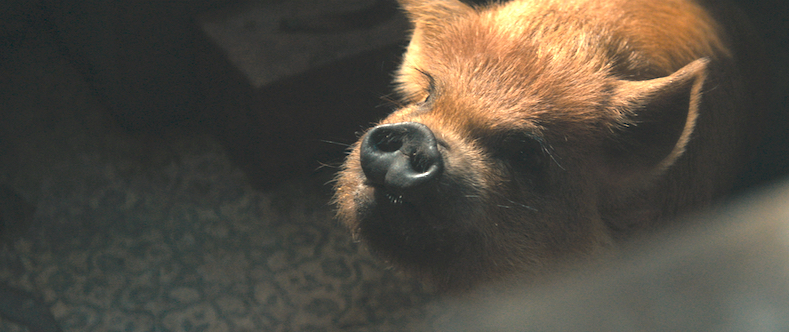
Pig Movie Theories to Explain This Crazy Movie
There are a few competing reads on what this film is ultimately doing, and they are worth laying out fairly.
Theory Number 1 to Explain Pig –
The first, and most common, is that Pig is a grief film wearing genre clothing, a movie about loss (Lori, specifically) that uses the truffle world and the missing pig as the mechanism to bring a grieving man briefly back into contact with the world he retreated from, allowing him to finally listen to the tape at the end. On this read, the pig is almost a MacGuffin: the real journey is Rob learning to sit with Lori’s absence rather than run from it.
Theory Number 2 to Explain Pig –
The second read is more thematic and less personal: the film is a philosophical argument about authenticity and proximity to what matters, using Rob as a kind of exemplar and Amir as the audience surrogate, the person who is still in the middle of getting it wrong. Rob has already graduated. Amir is in the first semester. The film is Amir’s class, not Rob’s.
Theory Number 3 to Explain Pig –
The third read, a minority position but not an uninteresting one, is that the film is quietly scathing about legacy and reputation, that Robin Feld’s name opening every door twenty years after he walked away is itself a kind of indictment of the world he left. The food world didn’t need him to stay. It needed to be able to invoke him. His absence made him more useful to them than his presence ever was. Darius stealing the pig is, on this read, the food world’s final attempt to monetize the one thing Rob refused to monetize.
Moviesoapbox’s Preferred Reading of the Movie Pig
The grief reading is real, and the authenticity reading is real, but I think both of them are in service of something simpler and harder to say out loud, which is that the film is about the cost of clarity.
Rob Feld is not a happy man. He is a clear man. Those are not the same thing. He is living in a shack, bleeding from a fight he didn’t win, riding a stolen bicycle to confront a man who has his pig, cooking a twenty-year-old meal from memory in a stranger’s kitchen at midnight, not because any of it will work out, not because the pig will be returned or Darius will be punished or Portland will welcome him back. He does it because the pig mattered. Lori mattered. Those things were real. Everything else was performance, and he stopped performing.
Amir crying in the car at the end is not just guilt. It is the specific vertigo of realizing you have been optimizing for something that doesn’t love you back, and that in doing so you have damaged one of the few things that might have. His father doesn’t care. His father will never care. And in trying to make his father care, Amir handed over the pig, which handed over the only thing Rob had left after Lori, which means Amir’s desire for approval from a man who cannot give it has now touched and diminished every real thing in the immediate vicinity.
That is the film’s argument. Stated plainly, without the poetry of the Oregon light and the tape and the meal. You will pay the price of the wrong priorities in real things, not in abstract ones. And when you finally see it clearly, you will sit in a car and cry, because there is nothing else to do.
What This Film Had to Survive
A film this quiet, this genre-resistant, this insistent that Nicolas Cage not throw a single punch or shoot a single gun across ninety-seven minutes, does not get made easily and does not get distributed easily. Films pitched as “Nicolas Cage revenge thriller” that turn out to be meditations on grief and authenticity do not typically emerge from the test-screening process with their third acts intact. The fact that Pig ends the way it ends, with Rob walking home, with Amir alone in a car, with no confrontation and no catharsis and no violence, means that somewhere in the process someone held the line.
Most films like this don’t make it. Most films like this have a version in a drawer somewhere where Darius gets hurt, where there is a scene that gives the audience the release they were primed for. That version of Pig would have been forgettable. This version will last.
Hey, thank you for hanging out with me here at Movie Soapbox. If this film hit you the way it hit me, tell someone about it, not with a trailer link, just with the words: watch it cold, trust it, stay with it. We’ll be back next time with another film that earned its existence the hard way. Until then, if you liked Pig here are a few movies similar you might want to check out.
🎬 If You Liked This…
- Leave No Trace — a man who cannot live inside the world trying to protect someone he loves from it, quiet and devastating in exactly the same register
- Beatriz at Dinner — someone who operates on a completely different moral frequency than everyone else in the room, and what happens when those worlds collide at a dinner table
- In Bruges — grief underneath dark comedy, a man trying to figure out what he’s still alive for after doing something he cannot undo