
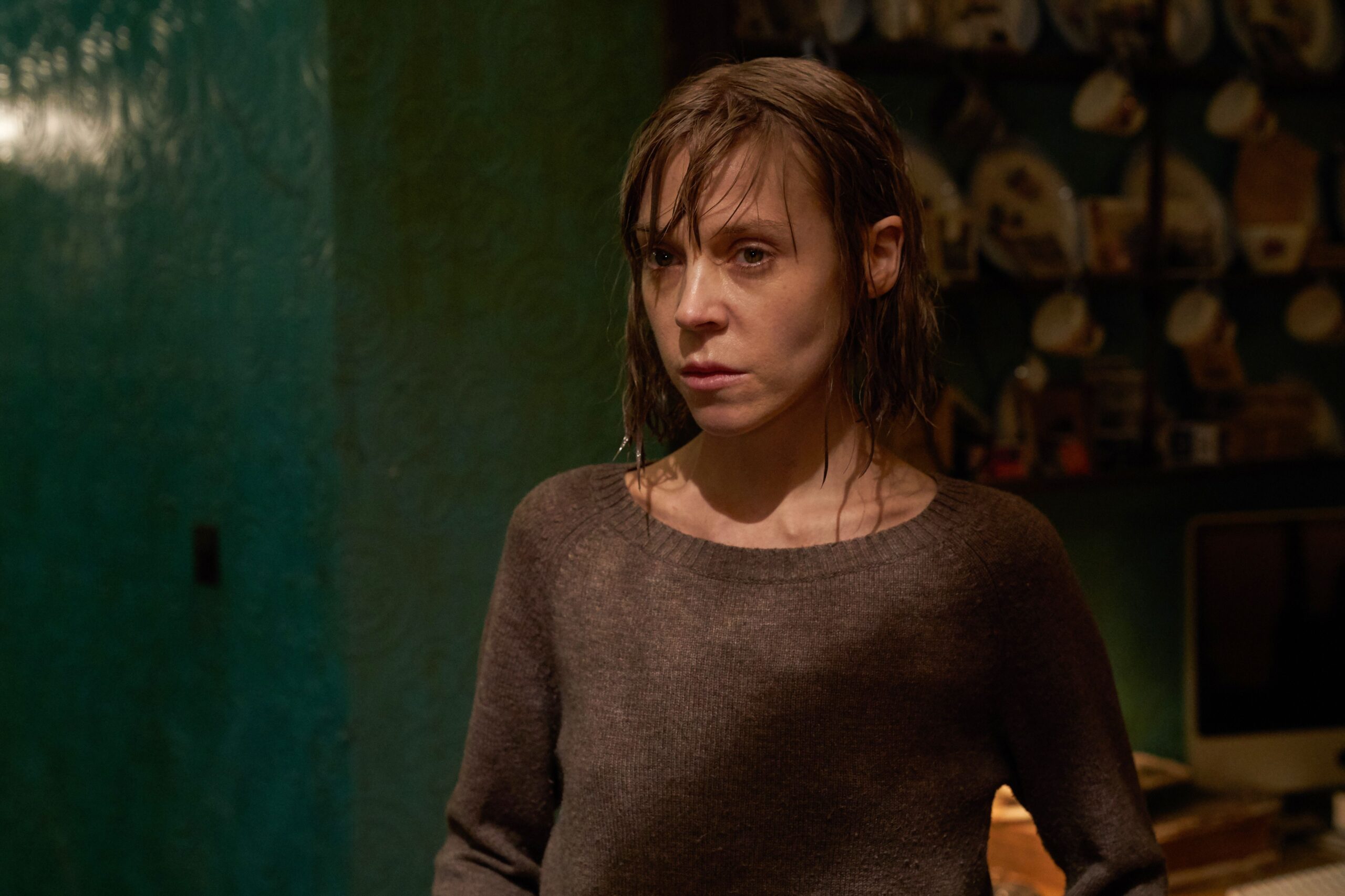
Hey there everyone! Welcome back to Movie Soapbox, the little corner of the internet that only you and I and that guy sleeping in the corner over there know about. This is the place where we find underappreciated indie films and we make sense of them. Today? We are doing a deep dive on Cordelia, a 2019 psychological slow-burn so quietly devastating that the studio suits who distribute films like it probably couldn’t tell you the title without checking their release slate first.
Alright. If you haven’t seen this film yet, stop here, go watch it, come back. I mean it. Everything below is a full walkthrough of the entire film including the ending, what Frank actually is, what the 7/7 bombing does to the architecture of the story, and why that final phone call is one of the more honest gut-punches a film this small has delivered in recent memory. You’ve been warned. We’re going in.
Cordelia Move and The Making Of
Before we get into the scene-by-scene, let’s talk about what kind of film Cordelia is, because it matters for how you read every single thing in it. This is a movie with a budget that almost certainly meant the director had one shot at every setup, a lead actress who co-wrote the screenplay and is playing two roles simultaneously, and a distributor that almost certainly had no idea what to do with it, which is why you found out about it three years after it came out on a blog at midnight. Films at this budget tier, with this level of psychological ambiguity baked into the premise, almost never survive the back half of post-production intact. Somebody always gets nervous. Somebody always wants the ending clarified, the threat made literal, the monster shown. The fact that Cordelia ends on an unresolved phone ring and a missing body is a minor miracle of stubbornness. You can feel the version of this film that had two more minutes of explanation tacked on, and you should be grateful every frame of it got cut.
The Movie Cordelia Detailed Movie Walkthrough
The film opens on the Underground. Lights flicker, darkness drops, and there’s a man, a specific man, whose face will pull itself back up through Cordelia’s life like a splinter that never got all the way out. We don’t know yet what happened on that train. The film knows we don’t know, and it is completely unbothered by that. All we get in those first minutes is the shape of the damage: she can’t sleep, she can’t leave, she is held together by the thinnest possible thread of daily routine, and even that thread has started fraying.
Then we get Caroline. Cordelia’s twin sister, and here is where you need to pay attention to the blocking, because Antonia Campbell-Hughes is playing both women and the only way the film tells you that is through the painstaking, almost theatrical precision of where each character stands and how she moves through a room. If you missed it, go back. The film never announces it. It just shows you, quietly, and then moves on. That choice alone tells you exactly what kind of filmmaking this is: the kind that respects you enough to leave work for you to do.
Caroline is everything Cordelia isn’t. Dating, mobile, oriented toward the world. She’s here to visit, she’s worried, and she’s also, in the way that people who’ve outrun a shared catastrophe sometimes are, a little impatient with the one who didn’t. They fight. Cordelia says the thing that people in her condition sometimes say out loud and immediately wish they hadn’t: that it might have been better if she hadn’t survived at all. Caroline leaves for Bruges with a new boyfriend. And Cordelia is alone.
Enter Frank. The cellist upstairs, always playing, the kind of detail that in a lesser film would be a meet-cute and in this one is already unsettling before you can fully explain why. He engineers a run-in at a cafe. He invites her to a bar and then vanishes out the back when his phone rings. And then Cordelia finds, on his phone, photographs of herself and her sister. Not one. Both of them. And later, on his walls, prints he took through the floorboards of the apartment below. Of them in the bath.
The film is not being subtle about Frank. Frank is a predator, or Frank is a symptom, and the entire tension of the second act is that Cordelia knows this and cannot make herself leave. She tells him: you’re half living. You’re the same as me. And she’s right, or she believes she’s right, which in a film like this functions as the same thing.
The phone calls start around here. A landline, constant, no voice on the other end, and then eventually questions. Is Frank playing for you. Did you close your curtains. Is he your boyfriend now. Cordelia traces the calls back to Frank’s number. She doesn’t leave. The film understands something true about people who’ve been catastrophically damaged, which is that familiar danger registers as comfort in ways that safe situations never quite manage.
Then she finds the bathtub photos. She confronts him. He tells her she’s tormented by guilt, and something in that specific word, that specific accusation, detonates something in her. She stabs him. Not a fight, not a chase, just a sudden terrible decision. And she says: it’s not my fault that I’m here. She runs. She hides. And Frank is gone. No body. No blood trail that leads anywhere useful. Just handprints on a wall and silence, and then the phone ringing as the credits come.
Now let’s talk about the 7/7 bombings, because this is the load-bearing fact underneath all of it. Cordelia was on the Tube during the 2005 London bombings. She survived because she gave up her seat to another passenger. That passenger died. She didn’t. The man she keeps seeing in her nightmares, the one from the opening sequence, is that man. The one who took her seat. The one who is dead because she stood up at the right moment for the wrong reason.
Survivor’s guilt is not a metaphor in this film. It is the engine. Everything, Frank, Caroline, the phone calls, the stabs, all of it is running on the fuel of one unbearable fact: she lived when she believed she shouldn’t have. She says it herself. She assumed she was fated to die and somehow slipped past it. That’s not a feeling that resolves. That’s a feeling that reorganizes your entire nervous system around itself.
Now, the theories. There are three serious ways to read this film and I’ll give all of them fair ground before I tell you which one I think is right.
Cordelia Movie The Literal Reading: Cordelia survived a bombing, developed severe agoraphobia and PTSD, and Frank is a real person who genuinely stalked her. He took the photos. He made the calls. He is a predator who found a vulnerable woman and moved toward her the way predators do. She stabbed him in a moment of panic and he escaped, injured, and is still out there. The final phone call is him. He survived and he’s calling to let her know. This reading is internally consistent. It also makes the film’s ambiguity feel like a gimmick rather than a statement, so I have limited patience for it, but it’s there and it’s clean.
Cordelia Movie The Dissociation Reading. Cordelia shattered on the Tube. Not literally into two people, but psychologically into the person who survived and the person who was supposed to die. Caroline is the functional half, the half that dates and plans trips to Bruges and pretends the world is navigable. Cordelia is the remainder. Frank is a manifestation, a projection, something her fractured mind built to externalize what’s wrong with her so she could locate it in a room and maybe kill it. The bathtub photos are her own obsessive self-surveillance. The phone calls are her own voice. The stabbing is an act of self-harm directed outward. And the phone ringing at the end means she already knows it didn’t work. You can’t kill a manifestation. They don’t stay dead.
Cordelia Movie The King Lear Reading. The film doesn’t bury this reference, Cordelia is literally playing the role of Cordelia in King Lear during the film’s timeline. Lear’s Cordelia is the daughter who tells the truth and gets destroyed for it. She refuses to perform love on command and is exiled, comes back with an army, and is executed anyway. The parallel the film is drawing is about a woman who is fundamentally good, or was, who cannot perform normalcy on demand, and whose every attempt to do the right thing, give up her seat, connect with Frank, confront him when she finds the photos, ends in catastrophe. She is her own Lear, issuing impossible tests to herself and failing them all, stripping away everything she had through the sheer force of her own paranoia and guilt. The kingdom she’s burning is her own mind.
The Moviesoapbox Take? I personally believe that the dissociation theory is the most honest answer to what the film is actually doing, but it doesn’t fully displace the Lear reading, it runs alongside it. Cordelia is a woman whose self has split under pressure, and the Lear framework is how the film gives that split a shape that has weight behind it. She is not going mad arbitrarily. She is going mad in the specific, literary, ancient way that people go mad when they cannot reconcile what they survived with who they believed themselves to be. Frank exists in the film as a real enough threat to generate genuine dread, and also as something too conveniently matched to her specific pathology to be entirely real. The film holds both. That’s the point.
The phone rings at the end because it was always going to ring. She thought that if she could find the source of the wrong thing and remove it, she would be free. She stabbed Frank and he disappeared, which is exactly what a manifestation does when you try to make it concrete, it stops being locatable. The calls will keep coming. The man from the train will keep appearing. The guilt doesn’t have a body you can kill.
Cordelia is a film that almost certainly got zero notes from the distributor, not because the distributor respected it, but because it arrived too quiet and too strange for anyone to bother fighting over it. That’s the only version of how a film this uncompromising gets made at this budget level and comes out looking exactly like itself. Antonia Campbell-Hughes wrote a film about the thing that happens when survival breaks a person, and then she got it made, and then almost nobody saw it. That’s the part that should bother you when the credits roll. Not whether Frank survived. Whether films like this one do.
🎬 If You Liked This…
- They Look Like People — the same question of whether the threat is genuinely out there or being generated by a mind that has been through something it hasn’t fully processed, the horror living in the gap between those two possibilities
- Take Shelter — a person convinced of a danger nobody else can see, the film withholding the answer to whether they’re right until the very end and even then not fully committing, same unbearable ambiguity
- Run Rabbit Run — trauma pressing through into the present as something that looks like external threat, a woman who cannot tell the difference between what is happening and what her past is making her see