
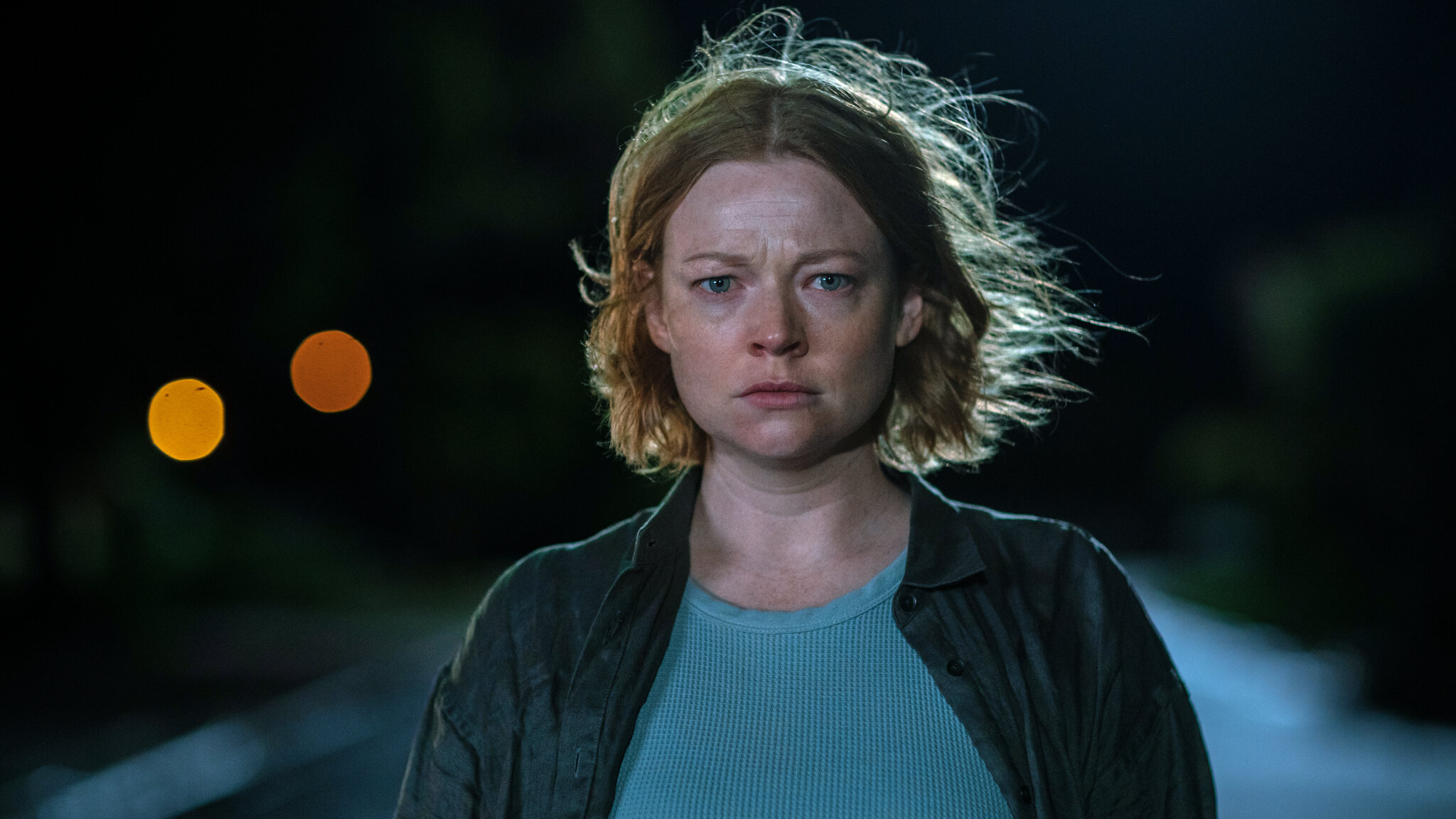
Hey there everyone! Welcome back to Movie Soapbox, the little corner of the internet that only you and I and that guy sleeping in the corner over there know about. This is the place where we find underappreciated films and we make sense of them. Today? We are doing a deep dive on Run Rabbit Run, an Australian psychological thriller so relentlessly committed to staying inside a broken woman’s skull that by the time it’s over you genuinely cannot be certain what you watched was real, and the film does not care even slightly that you feel that way.
Before we get into it, here is the trailer. Watch it, or don’t, but know that nothing in the trailer really prepares you for what this film actually does.
Alright. Full spoilers from this point forward, for everything, including the ending, the reveal, the theories, all of it. If you haven’t watched it yet and you’d like to remain unspoiled, go watch it and come back. It’s on Netflix. It’ll take you about an hour and forty-five minutes. I’ll be here.
Still with me? Good. Let’s get into it.
Run, Rabbit Run Movie Walkthrough
Sarah, played by Sarah Snook, is a fertility doctor raising a daughter named Mia on her own. The film opens with the death of Sarah’s father, which is the crack in the dam, the thing that starts letting the water through. Because grief is inconvenient like that, it doesn’t ask permission before it drags everything else up with it. And what comes up for Sarah is decades of compressed, industrial-grade repression around a sister named Alice who disappeared when they were children, a mother who never forgave her, and a wound she has spent her entire adult life building a wall around.
Mia starts behaving strangely. She begins insisting her name is Alice. She knows things she shouldn’t. She draws things she shouldn’t. There are photographs appearing on walls. There are nosebleeds. There are noises. And Sarah, who has spent her whole life being a very controlled, very sealed-off, very functional person, starts losing the thread.
Now, before we go any further into what the film is showing you, here is the thing you need to understand about what kind of film this almost certainly was on paper versus what it is on screen. A script like this, built around unreliable perception and a protagonist whose interiority is the entire architecture of the plot, is exactly the kind of material that gets note-sheeted into incoherence the moment a streaming platform with international distribution ambitions gets involved. You can tell when a project like this has been pressured to clarify too much because the horror stops landing and starts explaining itself. The fact that Run Rabbit Run never fully tips its hand, never cuts away to confirm or deny what Sarah is experiencing, means someone in that edit bay held the line when the instinct to overexplain was almost certainly screaming at them. Directed by Daina Reid, with a screenplay by Hannah Kent, this film exists at a budget and visibility tier where directors frequently lose final cut battles over exactly this kind of ambiguity. The fact that this ending survived intact is not nothing.
Back to the film. The repressed truth comes out in pieces. Flashbacks, nightmares, hallucinations, the film doesn’t really distinguish between them because Sarah can’t distinguish between them, and she is the only camera you have access to. What gradually assembles itself is this: as children, Sarah locked Alice in a cabinet during a game of hide-and-seek. Alice panicked. It escalated. They ended up near a cliff. And Sarah pushed her. Alice died. Sarah’s mother has known, at some level, for decades, and it is the reason their relationship is a ruin. Sarah suppressed it with a thoroughness that borders on surgical. And now, through Mia, it is coming back.
The moment the film’s mechanics crystallize most clearly is when Sarah accidentally injures Mia’s hand and then, deliberately, traps her own hand in a car door. Sit with that for a second. That is not grief. That is not guilt in any ordinary sense. That is a psyche that has been under pressure for so long it has started enacting its own punishment rituals, ritualized self-harm dressed up as empathy, an attempt to merge with the pain she caused because she cannot find any other way to make restitution. That’s the film telling you, plainly, that Sarah is not well. Has not been well for a long time. Is in fact quite badly unwell.
Run Rabbit Run Movie Ending Explained
The night before the final sequence, Sarah gets into bed with Mia and strokes her hair in a way that reads as tender, but Snook plays it with a quality that isn’t quite right, something slightly too deliberate about it, too final. In the morning, Mia sees a white rabbit and follows it. When Sarah wakes, she finds Mia gone. She goes outside and sees Mia walking toward a cliff with another girl, a girl Sarah sees as Alice.
Three theories. Here they are, laid out cleanly.
Theory one: coincidence. Some other child, completely unconnected, happens to wander by and lure Mia toward a cliff. The film isn’t playing with coincidence. This theory doesn’t survive contact with what the film is actually doing, and I’m not going to insult you by spending more time on it than that.
Theory two: Alice came back. Alice, killed at that cliff by her sister decades ago, has been waiting. She found a child to inhabit, or to manifest through, and she used Mia to finish the circle. There is a version of this film in which the supernatural reading is the correct one, and the film is careful enough about its genre ambiguity that it never fully closes that door. If you want to read it as a ghost story about the dead collecting their debts, the text supports you. The rabbit has been a recurring symbol throughout, appearing at moments that feel less like coincidence and more like summons. I understand the appeal of this read. It’s emotionally satisfying in the way that revenge narratives are emotionally satisfying.
Theory three: Sarah did it herself. This is where I’m putting my money, and here is why. When Sarah wakes up that morning, Snook’s performance is doing something very specific. There is a quality of stiffness, of someone waking into a reality they have already moved through, not someone waking up fresh. The film has spent its entire runtime establishing that Sarah’s perception of events is compromised, that she experiences things as happening to her that she may be causing herself, that the wall between her actions and her awareness of her actions has significant structural damage. The most coherent reading of everything the film has built is that Sarah, in a dissociative state, walked Mia to that cliff herself, returned to bed, and is now watching herself do it through the scrim of her own psychosis, projected outward as Alice because that is the only shape her mind can put on what she has done. The girl she sees as Alice is herself. The thing she cannot stop is herself. And she cannot stop it because on some level she has already done it.
The film ends on Sarah unable to intervene, watching the thing happen, which is exactly where a woman this thoroughly severed from her own interior life would end up. Not causing it in the present tense. Watching what she already caused. Horrified. Unable to connect the horror back to its source.
What the film is really about, underneath all the grief machinery, is the cost of refusing to talk about the thing that happened. Suppression is not resolution. It is storage. And storage under pressure finds its own exits, whether you authorize them or not. The saddest version of this story is that none of it was inevitable. A counselor. One honest conversation with her mother. One moment of allowing the truth to exist in the air between two people instead of locked inside one skull. That is all it would have taken. She had none of those things. And she had them by choice.
Sarah Snook is doing something here that most actors can’t do, which is playing a character who is lying to herself in real time, moment to moment, without ever letting you see the seams. Every small physical choice she makes is calibrated to show you a woman maintaining a surface that is costing her everything she has. It is a performance that deserved more noise than it got, and the fact that it arrived on Netflix in a limited release window rather than a theatrical platform it could have built a word-of-mouth audience from is the kind of distribution decision that quietly buries films like this every year.
There are films that need to survive the machine to exist at all, and there are films the machine was never really interested in protecting. Run Rabbit Run is the second kind. It got made anyway. It stayed dark anyway. That is worth something.
🎬 If You Liked This…
- Amulet — a buried secret that won’t stay buried, the past physically manifesting in the present in ways the protagonist keeps refusing to accept, same slow horror of a woman who cannot outrun what she did
- The Blackcoat’s Daughter — a young girl as a conduit for something the adults around her cannot process, the same quiet dread of a child who knows something she shouldn’t and a parent who cannot hear what the child is saying
- I Am The Pretty Thing That Lives In The House — grief and repression as the engine of horror, dread built entirely through atmosphere and the sense that something is already in the house and has been for a very long time