
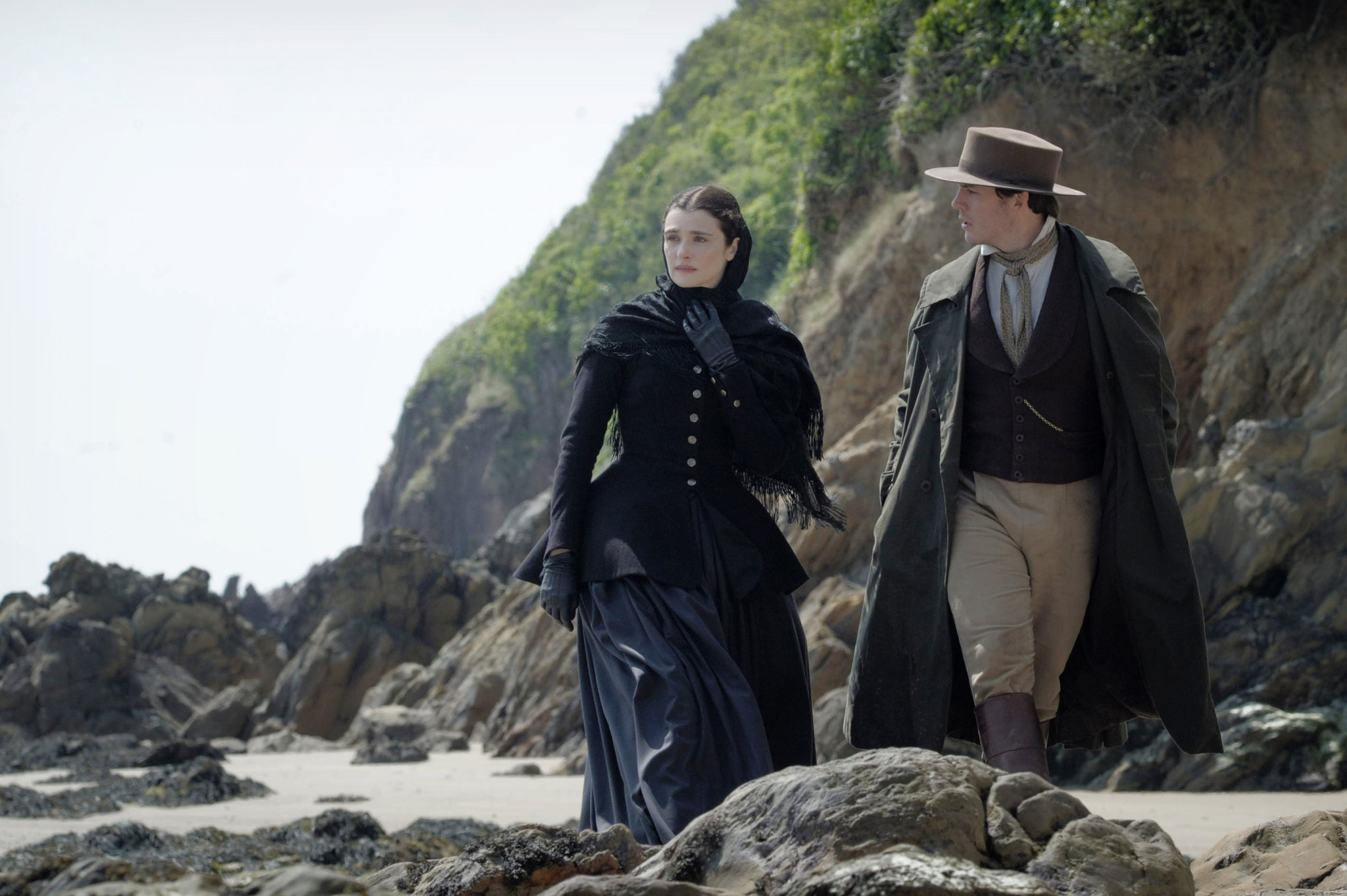
Hey there everyone! Welcome back to Movie Soapbox, the little corner of the internet that only you and I and that guy quietly losing his mind over a cup of suspicious herbal tea know about. This is the place where we find underappreciated films that the algorithm buried under a pile of franchise slop, and we make sense of them. Today? We are doing a full deep dive on My Cousin Rachel, a movie so deliberately, infuriatingly balanced on the edge of its own blade that by the time the credits roll you realize you’ve been holding your breath for two hours waiting for a confession that was never coming.
Before we go any further, here’s the trailer so you know what we’re dealing with.
Alright. If you haven’t seen this film, close the tab, go watch it, and come back. Everything from this point forward is a full spoiler, every card face-up on the table, no exceptions. You’ve been told.
What This Film Had to Survive
Before we get into what actually happens in My Cousin Rachel, take a second and appreciate what kind of film this is trying to be, and what normally happens to films trying to be this thing. A period piece with no action set-pieces, no clear villain reveal, no cathartic moment where the audience gets to feel smart together in unison, anchored almost entirely on two performances and the unbearable tension of not knowing which one of them is lying. You know what a development executive reads when they get a script like this? They read forty-five minutes of setup and a third act that refuses to resolve, and somewhere around page ninety they write the note: audience needs clarity on Rachel’s intent by end of act two. That note, in some form, kills movies like this every single year. The fact that this film made it to a finished cut that still preserves its central ambiguity intact, with Rachel Weisz and Sam Claflin doing the kind of slow-burn work that requires a director who told his cast to never tip their hand once, tells you that somebody on this production had enough leverage to hold the line when that note came in. And it did come in. It always comes in. The films that survive it are the ones worth talking about.
What Actually Happens: The Full Walkthrough
The setup is Ambrose Ashley, a Cornwall estate owner, lifelong bachelor, who takes in his orphaned cousin Philip and raises him. Ambrose gets ill, heads to Italy to recover, and proceeds to do the one thing nobody who knows him would have predicted: he falls in love. The letters he sends back to Philip start warm, then get strange, then get frightened. Then Ambrose is dead, and the woman he married, his cousin Rachel, is gone from the Italian villa before Philip can even get there to confront her. Philip arrives, finds nothing, heads home to Cornwall carrying a full head of steam and absolutely zero actual evidence of anything.
Then two things land: a death certificate listing a brain tumor as cause of death, and confirmation that Ambrose never changed his will in Rachel’s favor. Philip is still the heir. He should be relieved. He is not relieved. He has decided Rachel is a killer and he is about twenty minutes of screen time away from being completely undone by her in person.
Because Rachel comes to Cornwall. And Philip, who has spent his entire life on an estate with virtually no experience of women, meets a poised, warm, quietly devastating Italian widow who apparently knows exactly what she’s doing with a cup of tea and a meaningful glance, and he is gone. Completely gone. His godfather Nick has a daughter, Louise, who has been quietly orbiting Philip for years, who is clearly what a sensible version of Philip’s future looks like. Philip does not see Louise. Philip sees Rachel, and he sees Ambrose’s ghost behind her eyes, and he makes every catastrophic decision available to him at speed.
On his twenty-fifth birthday, the day he takes full possession of the estate, he gives Rachel everything. The jewels. The property. A financial allowance he had already been extending, which she had already been overdrawing, sending money out of the country to an Italian associate named Rainaldi, who Philip has decided is either her lover or her accomplice or both. Philip builds in one clause: if Rachel remarries, the estate reverts to him. He does this because he assumes, with the unshakeable confidence of a man who has never once read a room correctly, that Rachel is about to marry him and the whole thing will be moot.
She is not about to marry him. He proposes. She leaves. Philip falls ill. Rachel nurses him back with her teas, the same teas that appear throughout the film, the same teas Ambrose mentioned in those frightened letters. Philip, flat on his back and feverish, arrives at his conclusion: she is poisoning him the same way she poisoned Ambrose. He recovers. He has decided what she is. And when Rachel prepares to leave for London and asks which path she should take for her morning ride, Philip directs her to the cliff path. The one he knows is unstable. Rachel and her horse go over. She dies.
Final scene: Philip and Louise, married, prosperous, riding through the estate in a carriage. Fade to black.
Philip’s Version of Events
From inside Philip’s head, the whole thing is airtight. Ambrose wrote it down. His own hand. The letters were proof: Rachel was careless with money, Rachel was giving him something in those teas, Rachel had this Italian in the background whose role was never explained to Philip’s satisfaction. She arrives and Philip is temporarily bewildered by her, yes, he’s human, but he comes back around. She refuses his marriage proposal even after he’s handed her the estate, which to Philip’s read means she already has what she wanted and has no further use for him. He gets sick. The teas. It all fits. She is a predator who moved through Ambrose and is now moving through him, and the only logical conclusion is to stop her the way he can stop her. The cliff path. Done.
That version is internally consistent. Philip could tell you that version without a single tremor in his voice. That’s what makes him so frightening.
Rachel’s Version of Events
Rachel was in Italy with her friend Rainaldi, her villa, her garden, her teas made from plants she knows and loves, living a life that was hers. Ambrose arrives, ill, pale, clearly in need of care. She cares for him. He falls in love with her. They marry. Ambrose gets worse, she does everything she knows to do, she calls doctors, she makes teas from the herbalist knowledge she has, and Ambrose still dies of the brain tumor that was always going to kill him. She comes to England because she is a widow who has just watched the man she married deteriorate and die, and she wants to see the place he loved.
Then this boy, this pouty, intense, inexperienced boy who looks uncomfortably like Ambrose, falls in love with her too. She doesn’t encourage it. She accepts kindness because kindness is being offered. She overdrew her allowance because she has a life that existed before Cornwall and obligations that don’t disappear because she’s now standing on English soil. Rainaldi is her friend, her gay friend, her only real point of continuity from her prior life. Philip doesn’t ask. Philip decides. She refuses his proposal because she is a grown woman who just buried her husband and is not going to be a solution to a boy’s inheritance clause. Philip gets sick, she nurses him, the teas are what she always uses because they’re what she knows. And then she asks which path to take for her ride, and Philip tells her the cliff path, and that is the last decision anyone makes for Rachel in this film.
The Theories to Explain My Cousin Rachel
Two camps, with a messy middle that some viewers land in and most eventually leave once they sit with the ending long enough.
The pro-Philip camp takes the letters as hard evidence. Ambrose wrote those words. He was frightened. The financial behavior is suspicious. Rainaldi is suspicious. The teas are suspicious. Philip’s illness is suspicious. The whole pattern points at a woman who knows exactly what she’s doing with a slow-moving plant-based compound and a warm smile, and Philip’s paranoia is just accurate perception dressed up as madness.
The pro-Rachel camp says: look at what Rachel actually does or doesn’t do. She doesn’t redirect the estate. She doesn’t build a will that cuts Philip out. She doesn’t abscond with the jewels. She doesn’t accelerate Philip’s illness when she has every opportunity. Every active thing she does is either neutral or caring, and the only active harm in the final act of this film is Philip sending her to the cliff path. Rainaldi is gay and nothing he does in the film supports the conspiracy Philip builds around him. The brain tumor killed Ambrose. The same inherited madness, the same tumor or something biologically adjacent to it, is what is unraveling Philip. He’s not seeing clearly because he may not be able to.
The messy middle says: maybe Rachel loved Ambrose and inadvertently hastened his death with teas that weren’t malicious but weren’t medically sound, and maybe Philip caught something real underneath all his paranoia, and the film is just honest enough about human beings to refuse to let either reading be clean.
Moviesoapbox’s Take on My Cousin Rachel
Philip killed her. Full stop, no hedge. Every piece of structural evidence the film gives you at the end points the same direction: the estate is intact, Rainaldi was never a threat, Rachel built nothing against Philip in the time she had every legal tool to do so, and the one person who commits a deliberate, premeditated act of violence in this entire film is the man the audience has been traveling inside of for two hours. The final carriage scene, Philip and Louise warm and prosperous, is a horror image dressed in period finery. Louise is sitting next to a man who directed a woman to her death and has reorganized his entire memory of events to make himself the victim of it. The brain tumor framing isn’t incidental, the same thing that killed Ambrose is eating Philip’s perception, and the film is asking you to consider that the frightened, accusatory letters Ambrose sent from Italy might have been written by a man in the same deteriorating state Philip is in by the end. Which means the letters aren’t evidence of Rachel’s guilt. They’re evidence of a hereditary unraveling that neither of these men could see coming from the inside.
Rachel walked onto that cliff path because the one person she asked for guidance sent her there. She was never the predator in this story. She was the last person to trust the wrong man.
That is what good filmmaking costs and what factory Hollywood would have taken from you. A clean villain. A solved mystery. A third act that lets you off the hook. My Cousin Rachel refused all three, and it is a damn better film for it.
🎬 If You Liked This…
- The Last Duel — the same “did she or didn’t she” question told from three completely different unreliable perspectives, the truth about what a woman did filtered entirely through the men who have decided what she is
- Downton Abbey — the same English country house world where desire moves underneath rigid social convention and the house itself has as much power as any of the people inside it
- Knives Out — the same country house murder mystery structure, a woman at the center of suspicion that may or may not be deserved, and an audience that keeps changing its mind about what actually happened