
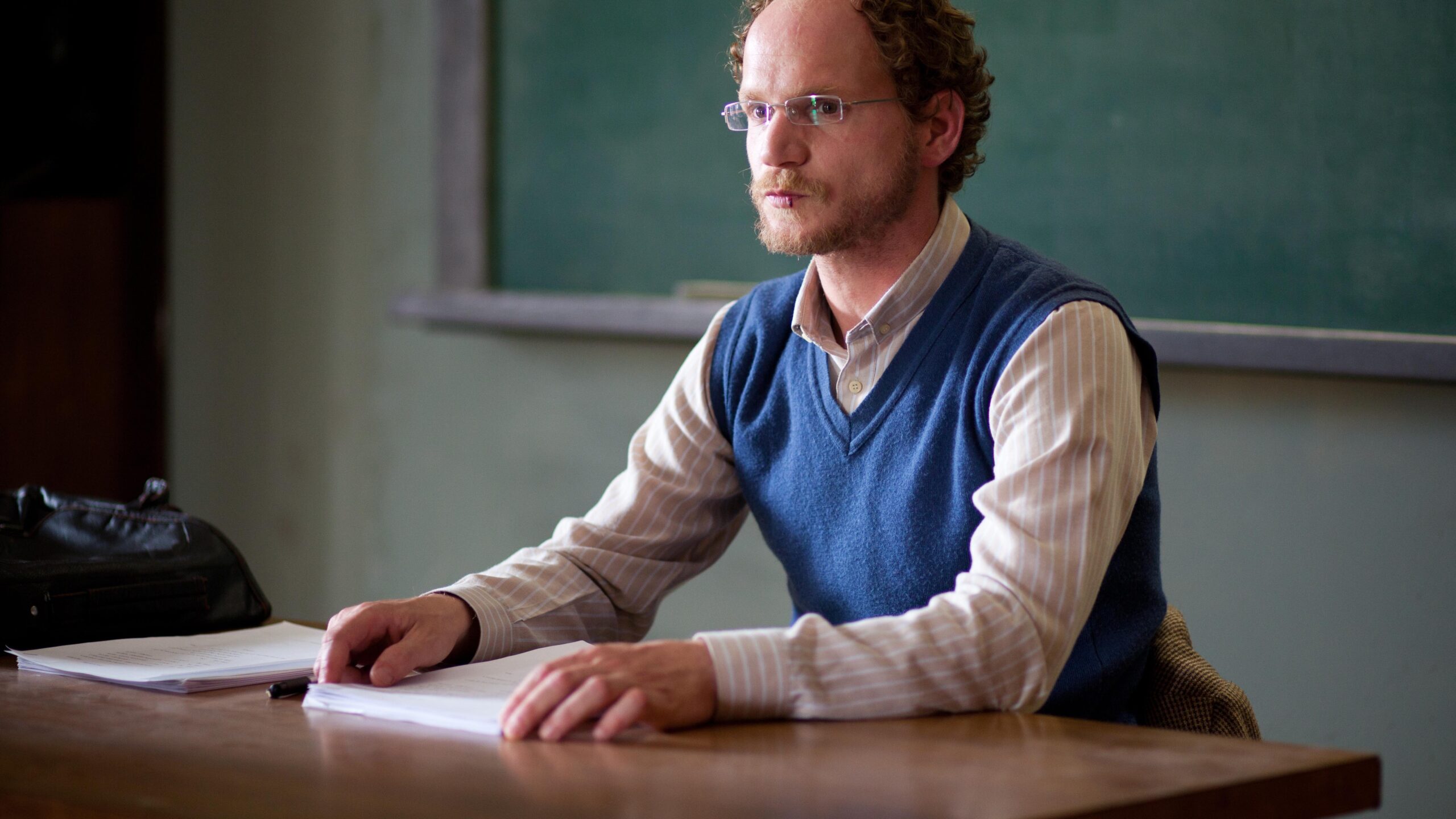
Hey there everyone! Welcome back to Movie Soapbox, the little corner of the internet that only you and I and that guy nervously checking the door over there know about. This is the place where we find underseen, undersold, undersupported films and we make actual sense of them, not the algorithm-approved takes, the real ones. Today? We are doing a deep dive on Big Bad Wolves, the 2013 Israeli film so brutally precise in what it is doing that most first-time viewers shut it off convinced they watched something morally incoherent and only figured out they were wrong about three days later in the shower.
Fair warning before we go any further. This movie only works if you don’t know what is in that basement, and what is in that secret room, and what is in that cake. So everything that follows is a full spoiler walkthrough. If you haven’t watched it yet… Go. Come back. We’ll be here. But if you already watched it and you’re standing here with that specific look on your face, the one that says you’re not sure whether you just watched a masterpiece or a crime, then pull up a chair because we have things to sort out.
The Big Bad Wolves The Walkthrough
The setup is deceptively simple, the kind of simple that a certain tier of studio executive would have greenlit in a heartbeat for exactly the wrong reasons. A suspected pedophile serial killer named Dror is fingered by a young girl who witnessed something near an abduction. Cops pick him up. They rough him up. Their boss shuts it down, cuts Dror loose, and even compensates him for his busted bike, which is the kind of detail that tells you this film is not going to reward you for rooting for any institutional process to work correctly.
Micki, the detective running the investigation, gets fired for the roughing-up. He’s told he can keep looking into Dror as a private citizen, just don’t get caught. Meanwhile Gidi, the father of the most recently murdered girl, whose daughter’s head has not been recovered, has decided he is long past waiting on institutional processes. These two converge on Dror in a parking lot. Micki is there to abduct Dror. Gidi is there to abduct both of them. So now you have a torture basement with three people in it: a grieving father with a blowtorch and a purpose-built restraint chair he apparently already had bolted to the floor, a fired cop who came equipped with a stun gun and increasingly complicated feelings about due process, and Dror, tied to that chair, losing toes.
Here is where the film earns its keep. Because Gidi’s elderly father shows up to check on his supposedly sick son, takes one look at the situation, and volunteers to assist. And then, in what is either dark comedy or an indictment of how revenge ideology replicates across generations, probably both, he sits down and has some cake. Which is a problem. The cake was drugged. Dror brought it. We will come back to why he had it.
Micki, while the old man sleeps off the sedative, bolts. Gets to a phone. Finds out his own daughter has been taken. The math changes instantly. Whatever his doubts about Dror’s guilt, whatever moral positioning he’d been slowly constructing in that basement over the last several hours, none of it matters anymore because his kid is gone and the only man who might know where she is has a hacksaw at his throat. He runs back. He gets there in time to stop the killing, just barely, just enough to shove a pen and paper into Dror’s hands and beg him to write down where the girl is. Dror doesn’t write anything. Dror dies. Everyone in that basement loses. Roll credits.
What This Film Had to Survive to Exist
There is a specific kind of studio note that kills films like this one, and you can identify it by what it asks for. It asks for clarity of sympathy. It asks the filmmaker to make sure the audience knows who to root for, because test screenings came back confused, because the distributor’s acquisitions guy got uncomfortable, because somebody in a conference room used the phrase “unlikeable protagonists” as a synonym for commercial poison. Directors Aharon Keshales and Navot Papushado were working in an Israeli industry that, for all its genuine artistic tradition, does not have the infrastructure to absorb that kind of pressure the way a Sundance darling with a name producer attached might. A film at this budget tier, in this market, with this subject matter, survives on the strength of the filmmakers just being too stubborn and too specific to be talked out of their choices before anyone with leverage notices. When you watch the tonal control in this film, the way it holds black comedy and genuine horror in the same frame without letting either one cancel the other out, you are watching the product of people who understood that the second they softened one edge, the whole thing collapsed. That discipline is not an accident of talent. It is a survival behavior.
The Clues You Probably Missed the First Time
The film is playing fair with you from the beginning. Going back through it, once you know the ending, you realize the breadcrumb trail is right there in plain sight, which is either great filmmaking or a mild cruelty depending on your mood.
The bike. When Dror comes home after his first release, he hangs his bike on the wall. A wall that is, it turns out, a door. A secret door to a hidden room. The camera doesn’t linger on this. It just shows it to you. You are allowed to notice or not notice.
The bag in the trash. Just before Dror is grabbed again, we see him walking his dog, returning home, putting a bag in the trash. That bag is Gidi’s daughter’s head. The thing everyone in that basement is going to spend the next ninety minutes demanding to know the location of is already in the neighborhood trash. Dror has been handling it like a grocery run. That detail is not played for horror. It is just shown. Which is somehow worse.
The cake. This is the one that reframes everything. We see Dror outside a ballet class, watching the children, holding a birthday cake. The film lets you assume he is watching his own daughter dance. He is not. There is no daughter. The cake is drugged. The child he is watching is Micki’s daughter. By the time Micki finds out his daughter is missing, you should already have the information to know exactly how it happened. It was given to you. You just weren’t ready to receive it yet.
The title. Not The Big Bad Wolf. Big Bad Wolves. Plural. The film is announcing its thesis in its title and trusting you to sit with the discomfort of applying it correctly.
What Is Actually Confusing and What Isn’t
The piece of the film that generates the most genuine confusion is the long middle section where Dror’s guilt seems genuinely uncertain. The torture is so excessive, so clearly disproportionate to the evidence on hand, a single child’s eyewitness account, that the film appears to be building toward a wrongful-accusation reveal. Micki, the one character with investigative instincts, starts to doubt out loud. You follow his doubt. That is the intended response.
What the film is actually doing is something more uncomfortable. It is asking you to notice that the uncertainty about Dror’s guilt doesn’t change the behavior of anyone in that basement at all. The torture continues regardless of the doubt. The father cannot stop because stopping would require him to hold the possibility that his certainty is wrong, and that possibility is not survivable for him. Micki cannot stop because he needs information about his own daughter and Dror is the only available source. The grandfather cannot stop because the logic of what his son is doing has been explained to him and it makes a kind of sense that older men who have seen injustice go unpunished can find themselves nodding along to.
The secret room at the end, the dead girl hidden behind the false wall, resolves the factual question. Dror did it. The film is not ambiguous about that. What it refuses to resolve is whether that confirmation redeems any of what happened in that basement. It does not, and the film knows it does not, and it ends before you can fully argue yourself into a comfortable position about it.
The Competing Reads
There are roughly three ways people come out of this film, and all three are defensible from the text.
The first read is that this is a revenge thriller that validates its own premise retroactively. Dror is guilty. The men who tortured him were right about him even if they were wrong about their methods. The audience’s discomfort was a manipulation, a Kafkaesque false trail, and the reveal of the hidden room is the film giving you permission to exhale and accept that the right guy died.
The second read is that the ending is a trap. The discovery of Dror’s guilt does not retroactively justify the process. It only confirms that this particular instance of extrajudicial torture happened to land on a guilty man, which is the most dangerous possible outcome because it will be used as evidence that the process works. The film ends not with resolution but with the ideology of the wolves validated and intact and ready to be applied again to the next suspect, who may or may not deserve it.
The third read is that the film isn’t making an argument at all. It is documenting a type. These men exist. This behavior exists. The film is not interested in condemning or excusing it. The title isn’t a judgment. It’s a taxonomy.
The Theory that Moviesoapbox Lands On
The second read. Without hesitation. The ending is a trap and most audiences walk straight into it.
The film earns the third-act guilt reveal not to let anyone off the hook but to demonstrate exactly how self-confirming this kind of violence is. Gidi tortured a man to death and the man was guilty, so the lesson Gidi walks away with, the lesson the grandfather walks away with, the lesson the audience is tempted to walk away with, is that the torture was therefore correct. That is the most chilling thing in the film and it happens after the credits start rolling, in the quiet space where you’re deciding what you just watched. The wolves don’t see themselves as wolves. They never do. That’s the whole thing.
Keshales and Papushado made a film that is genuinely funny in places, genuinely horrifying in places, and politically serious in a way that it never stops to announce. They made it in a country with a complicated ongoing relationship to extrajudicial detention and interrogation and they titled it with a plural. You are allowed to draw the line they drew. They drew it clearly enough.
The Send-Off
Most films that try to do what Big Bad Wolves does get sanded down before they get to you. Some producer along the way decides the tone is too unstable, or the protagonist needs to be more clearly sympathetic, or the ending needs to land somewhere the audience can feel okay about. This one didn’t get sanded down. It got to you intact and strange and genuinely unsettling in the way that only films made outside the committee structure can be. That is what it cost. And that is exactly why it still has teeth.
🎬 If You Liked This…
- Funny Games — another film where the question of who deserves what keeps shifting under your feet, and the violence forces you to examine why you came to watch it in the first place
- Blue Ruin — vigilante justice pursued by someone with no competence and total conviction, the moral rot underneath revenge laid out without the genre’s usual clean resolution
- Frailty — a father convinced he’s doing God’s work, children who have no choice but to participate, same queasy moral territory where you’re never sure who the monster actually is