
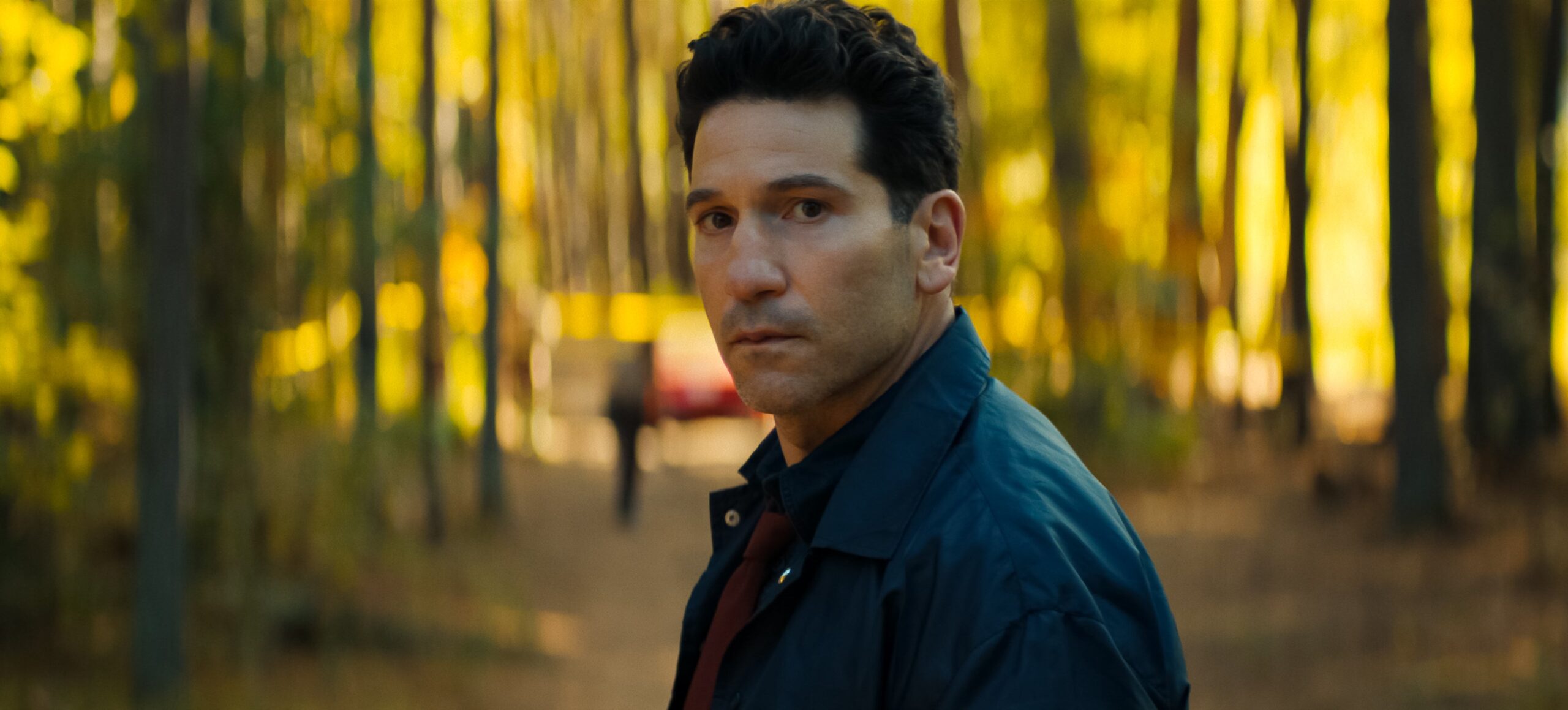
Hey there everyone! Welcome back to Movie Soapbox, the little corner of the internet that only you and I and that guy sleeping in the corner over there know about. This is the place where we find underappreciated and underseen films and series and we make sense of them, one twist at a time. Today? We are doing a full, spoiler-forward deep dive on His & Hers, a limited series so committed to its misdirection that it spends five and a half episodes building toward a killer, then pulls the floor out from under you in the last ten minutes with a completely different one.
Fair warning before we go any further: everything that follows is a spoiler. Every twist, every body, every gut-punch reveal, including the one that comes in the form of a handwritten letter from a woman everyone assumed was losing her mind. If you have not finished all six episodes, close this tab, go watch it, come back. You will want the full context for what we are about to get into.
Still here? Good. Let’s talk about what this show actually is underneath all that small-town Georgia atmosphere and Alice Feeney plotting.
His & Hers stars Tessa Thompson as Anna Andrews, a former Atlanta news anchor who has been off the grid for a year when a body turns up in the Chattahoochee National Forest, and Jon Bernthal as Detective Jack Harper, who is also Anna’s estranged husband, which you understand immediately is going to be a problem for everyone involved. The show is adapted from Feeney’s novel, and whoever shepherded this thing through the development process deserves credit for one thing above all else: they kept the ending. A show with this cast, on a platform with metrics to answer to, running a story that withholds its real killer until the final ten minutes of a six-episode run, that is a show that survived some version of a conversation where someone in a conference room said the words “audience satisfaction curve.” That it made it through with the Alice reveal intact tells you either the showrunner had final cut language, or the executives genuinely did not see it coming either. Both explanations are plausible. The behavioral fingerprint of a committee-softened finale looks very different from this one, and this one does not have that fingerprint. What it has instead is a structural gamble that the source material demanded and that television almost never lets through.
His & Hers Episode 1: The Body in the Woods
Rain. A woman dying on top of a car in the middle of the forest. The show opens exactly the way it intends to continue, which is to say it gives you atmosphere and then withholds every useful piece of information for as long as it can get away with.
Anna Andrews is in Atlanta, frantically cleaning her apartment with a face swollen from an infected tooth, a woman clearly trying to hold herself together through the sheer force of physical activity. She has been out of the public eye for a year. Something happened. The show will make you wait on the specifics. Simultaneously, Detective Jack Harper wakes up at his sister Zoe’s house, good cop, good uncle, and, we will learn, Anna’s estranged husband. Jack and his partner Detective Priya Patel get called out to the body in the woods. Victim stabbed multiple times. A message carved into her fingernails: “two-faced.” Jack’s first instinct, looking at the wedding ring, is that she was having an affair. He wants to be the one to inform the husband.
Anna, back in Atlanta, pitches herself to her news director Jim as a field reporter on this exact case, in her hometown of Dahlonega. She specifically requests Richard Jones as her cameraman. Richard is married to Lexy Jones, Anna’s workplace rival, the woman who took her anchor spot while she was gone. The specific request of the rival’s husband is a detail the show drops and lets sit. It will matter.
At the crime scene, Anna finds a camcorder tape from her 16th birthday party. On it: her old friend group. Rachel, Zoe, Helen, and a girl named Catherine Kelly. Rachel is painting Catherine’s nails red. They go to some ruins in the woods. Anna also finds a handmade friendship bracelet, and at that exact moment the medical examiner pulls an identical bracelet from the victim’s mouth.
The victim is Rachel Hopkins. Anna goes live and names her, exactly what Jack told her not to do. He’s furious. The episode closes on a flashback: Jack was having sex with Rachel in his truck. Anna was watching from outside.
His & Hers Episode 2: Secrets and Suspicions
Jack’s investigation and his personal exposure start pulling in opposite directions. He is trying to keep the affair buried while standing inside the murder case the affair connects him to, and Priya is sharp enough to notice the seams in his story before he is ready to explain them.
Anna’s digging turns up evidence that Rachel was blackmailing someone, text messages referencing money and secrets, and that she had been making contact with people from her past, including Helen Wang and Zoe, who is Jack’s sister. That overlap, Jack’s affair, Jack’s sister, Jack’s estranged wife returning to report on the case, is the kind of geometry that looks very bad for Jack and the show leans into that impression hard.
The birthday party flashbacks sharpen. Rachel was the center of gravity in that friend group. Anna documented everything. Helen and Zoe followed Rachel’s lead. Catherine Kelly was the outsider they periodically tormented. In one scene Rachel offers Catherine a drink at school and then publicly announces she contaminated it. Catherine runs out humiliated. The show is establishing the wound that will become the motive, and it is doing it carefully.
Someone is following Anna. Threatening notes appear. The episode closes on Jack finding evidence that implicates Anna in Rachel’s death, and sitting with the question of what a detective does when his wife is a suspect.
His & Hers Episode 3: The Second Body
Helen Wang turns up dead at St. Hilary’s, their old high school. Anna discovers the body and claims Helen called and invited her there. Phone records will later prove that call came in after Helen was already dead.
The investigation reveals Helen and Rachel were blackmailing someone with the initial “C.” They had the photos from Anna’s birthday party and were using them for leverage. Priya is now running a parallel track on Jack himself, his affair, his connections, his behavior. When she confronts him, he says he is trying to protect Anna. He won’t say from what.
The birthday party flashbacks get darker. The girls are drinking in the woods. Rachel has arranged something. Men arrive. The show cuts before showing you what happens, a restraint that is doing a lot of structural work.
Anna visits her mother Alice, who appears to be suffering from dementia. She wanders. She forgets. Anna worries about assisted care. The show frames Alice as a problem to be managed, a fragile background presence. That framing is the lie the entire series is built on.
His & Hers Episode 4: The Town Hall
Two murders, both connected to Anna’s old friend group, and the town wants answers. Anna pushes for a televised town hall and positions herself as the reporter covering it. Priya clears Jack on timeline, barely, but the affair is now out in the open between them.
The critical development: Priya starts looking for the fifth member of Anna’s friend group. The yearbook photo shows four girls with bracelets, but Helen had referenced five people who knew the secret. The fifth person was Catherine Kelly. The girl in the photo. The one who took it.
Priya discovers Catherine Kelly lost a significant amount of weight after high school, changed her appearance, and took her husband’s last name when she married. Twenty years later, no one who knew her then would recognize her now. The epiphany is forming. The episode cuts before she can share it with Jack.
His & Hers Episode 5: The Third Victim
Jack comes home to water dripping through his kitchen ceiling. He goes upstairs. Zoe is dead in the bathtub. His sister. One of Anna’s old friends. He is covered in her blood when Priya arrives, and from Priya’s angle, this is damning in a way that can no longer be explained away.
Anna and Richard are working late when Richard suggests they finish at his in-laws’ lake house. Anna is suspicious, can’t quite name why, agrees anyway. At the lake house, looking at family photos on the walls, her blood goes cold. Catherine Kelly is in those photos. Catherine Kelly is Lexy Jones. The awkward, bullied outsider lost the weight, changed her name, married Richard, and has been working alongside Anna for months without Anna ever recognizing her. Lexy recognized Anna the moment she walked back into the building.
Anna calls Jack in a panic. She tries to leave. Richard blocks the door, his whole affect shifting. The episode ends with Anna trapped, waiting for Lexy to arrive, understanding she has walked directly into the trap.
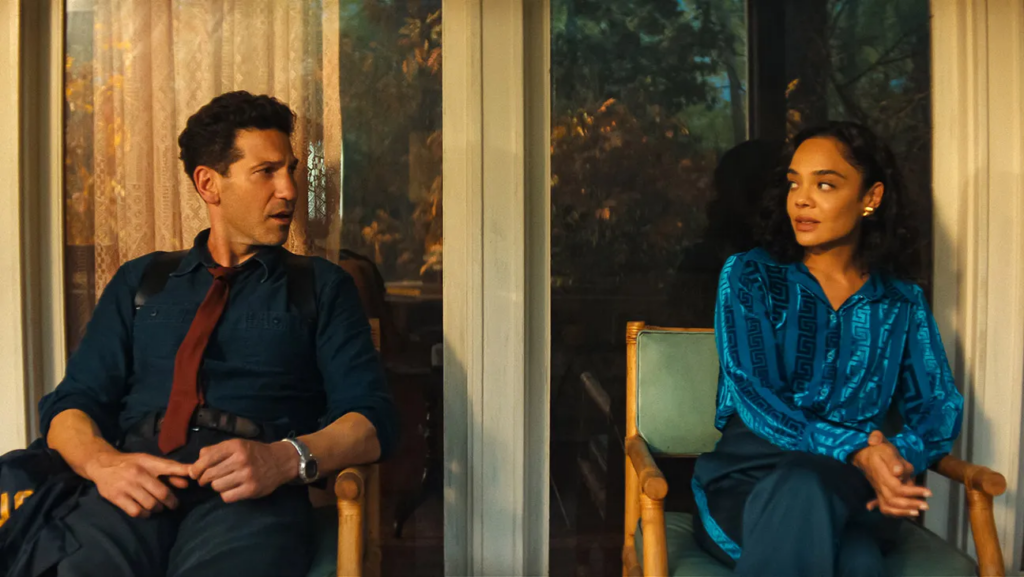
His & Hers Episode 6: The Double Twist
The finale opens in the past. Teenage Catherine Kelly at her family’s lake house with her parents and her sister Andrea. Andrea is cruel, relentless about Catherine’s weight. Before a boating trip, Andrea asks Catherine to bring her inhaler down to the dock. Catherine empties it first. On the water, Andrea has an asthma attack. She dies before they reach shore.
So before anything happened at Anna’s birthday party, before any of this, Catherine Kelly had already killed someone. The show lands that information without fanfare and moves on, which is the right call. It reframes everything about the motive the series has been building.
Jack is trying to reach Anna. Priya pulls her weapon on him. She is convinced he is either the killer or an accomplice, and at this point the evidence against him is substantial enough that her read is reasonable. Jack knocks her unconscious and takes off for the lake house. It is the least defensible thing an innocent man could do, and the show understands that.
At the lake house, Lexy arrives and the pretense drops. She believes Anna set her up at that birthday party, invited her, befriended her, only to orchestrate her assault in the woods. She has spent twenty years building toward this. What follows is a genuinely brutal fight, Thompson and Rebecca Rittenhouse fully committed, furniture and glass coffee tables and the whole brutal architecture of a twenty-year-old grudge coming apart at once. Lexy gets the gun. She pulls the trigger. The chamber is empty. Anna fired the last rounds at Richard before Lexy arrived.
Priya, conscious again, having pieced together that Lexy is Catherine Kelly, shoots through the window. Lexy is dead.
Sunrise. Jack and Anna on a bench. Anna tells him, finally, what actually happened at her 16th birthday party. Rachel arranged for older men to come to the woods. She had sent them photos of the girls. The men started attacking Catherine. Anna intervened, tried to protect her. Catherine ran. The men turned on Anna instead. Rachel, Helen, and Zoe stood there. They sang “Happy Birthday.” Anna never told anyone, not her mother, not Jack. She buried it and tried to live on top of the burial site.
The case closes. The evidence at the lake house ties Lexy to everything. Richard is arrested as an accomplice. One year forward, Jack and Anna are back together. Anna is pregnant. She visits Alice, who has a caretaker now because the dementia has worsened. Anna goes to her old childhood bedroom and finds a letter on the desk. She starts reading it. We realize, as she reads, that we have been hearing fragments of this narration throughout the entire series. We just did not know what it was.
It is a confession. From Alice. To Anna.
Alice was the killer.
After Charlotte died and Anna disappeared, Alice spent months cycling through grief. She started watching Anna’s old VHS tapes, five minutes a night, working through them one by one. She saved the 16th birthday tape for last. She watched it. She saw Rachel set up the attack. She saw Catherine run. She saw the men turn on Anna. She saw Rachel and Helen and Zoe watch and sing while her daughter was violated.
Then, separately, she fell asleep at Charlotte’s grave one night and woke to find Jack and Rachel in his truck. She had the full picture. Rachel who orchestrated it. Helen and Zoe who watched. Jack who was sleeping with the woman who set it in motion. And the one advantage no one ever accounts for: everyone in town saw a confused, frail old woman with dementia. No one was watching her. No one was tracking her movements. She was invisible.
She killed Rachel. Then Helen. Then Zoe, Jack’s sister, because Zoe had stood there singing. She never intended to kill Catherine. She planted the evidence at the Kelly lake house specifically to frame Lexy for all of it, a woman with a documented history of violence, a clear motive, and the additional benefit of being the person who took Anna’s career. The scapegoat was already assembled. Alice just pointed at her.
The series ends on Anna standing outside, watching Alice with Jack and Meg. Alice looks at Anna. Anna looks back. The letter is in Anna’s hands. What she does with it is not shown. The screen cuts to black.
His & Hers – Untangling the Mechanics
A few things worth clarifying because the finale moves fast and some of the logistics get compressed. The “dementia” is entirely performed. Rewatch any of Alice’s episodes with that knowledge and watch how Crystal Fox never fully surrenders the alertness behind the eyes. The wandering gave Alice cover and alibi simultaneously. No one accounts for the movements of a woman everyone is worried about losing. The phone call Helen supposedly made to Anna after she was already dead is the show’s clearest signal that someone else is managing the evidence, someone with access to the phones and knowledge of how to muddy a timeline. The friendship bracelet in the victim’s mouth is Alice connecting the murders to the birthday party, pointing toward the friend group, steering the investigation toward Lexy without putting herself in the frame. Every piece of staging was deliberate. Every moment of apparent confusion was a performance.
His & Hers The Competing Reads
The internet landed in two camps on the Alice reveal and both camps have a case worth hearing.
The case for the twist: it recontextualizes the entire series in a way that holds up on rewatch. Alice’s gentle fragility reads completely differently once you know what she is doing. The thematic weight lands hard, maternal love as the thing that both protects and destroys, a mother who saw what no mother should see and decided the law was too slow and too indifferent to be trusted with it. Crystal Fox’s performance, on a second viewing, is extraordinary in a way that is invisible on first. The show earns it on theme even when the logistics strain.
The case against: the reveal is compressed into a window too small to process it before the credits roll. The Lexy confrontation is built and staged as a climax, and structurally it functions as one, which means the Alice reveal lands as a second climax in a space that cannot hold two. The mechanics of how an elderly woman overpowers women decades younger requires the show to hand-wave several questions it does not have screen time to answer. And the dementia performance, however well-acted, required a degree of sustained deception across multiple caretaker interactions that the show asserts rather than demonstrates.
Moviesoapbox’s flag is planted on the fact that the twist is genuinely bold and the theme behind it is earned, but the finale needed either twenty more minutes or an earlier planted seed that Alice was not what she appeared. A single scene, one moment where her eyes stayed sharp a beat too long, would have been enough. Without it, the reveal is a gut-punch that leaves you slightly breathless, not because the air was taken from you cleanly, but because you are also trying to reconstruct the architecture of the whole series in real time before it ends. Shows that stick their landings give you a half-second to breathe before the credits. This one does not quite get there.
What the Performances Are Doing
Tessa Thompson is carrying the weight of a woman who has been performing wholeness for twenty years and has almost convinced herself it worked. The scene where she finally tells Jack about the assault is the kind of acting that happens when a performer trusts the material enough to let silence do the heavy lifting. Thompson trusts it completely.
Bernthal does what Bernthal does, which is bring a physical intensity that never tips into performance, it just sits in his body and radiates. The scene where he finds Zoe is real grief, not telegraphed grief, and the distinction matters.
Fox is the technical achievement of the series. The dementia performance that conceals the performance of dementia is a double-layer problem that most actors do not solve. Fox solves it by never playing Alice as absent, always as present but choosing how much to reveal. It is a quiet, precise piece of work that will read entirely differently the second time through.
The Closing Word on His & Hers
His & Hers is the kind of limited series that gets greenlit because the IP has a recognizable cast attached and the source material has an audience, and then survives the development process because whoever was protecting it kept the thing that makes it worth protecting: an ending that trusts the audience enough to withhold the real answer until the last possible moment and then hand it to them in a handwritten letter from a woman everyone dismissed. That is a genuine swing. Factory television does not take genuine swings. It takes optimized swings, swings that have been tested and adjusted and tested again until the surprise is technically present but emotionally defanged. This one still has teeth. Whether the bite lands cleanly or leaves you slightly off-balance depends on your tolerance for a twist that earns its theme before it fully earns its logistics. Either way, you will not forget Alice looking at Anna across that yard. And you will understand why Anna does not walk back inside to call the police.
If You Liked His & Hers…
I Will Find You (2026) – Another Netflix series where every episode peels back a new lie. If the His & Hers twist rewired your brain, this one will finish the job.
The Invisible Guest (2016) – A relationship built on secrets, a crime nobody saw coming, and a twist that restructures every scene you already watched.
Cordelia (2019) – A psychological thriller where the person closest to you might be the one dismantling your reality. Quiet, unsettling, and that ending will haunt you.