
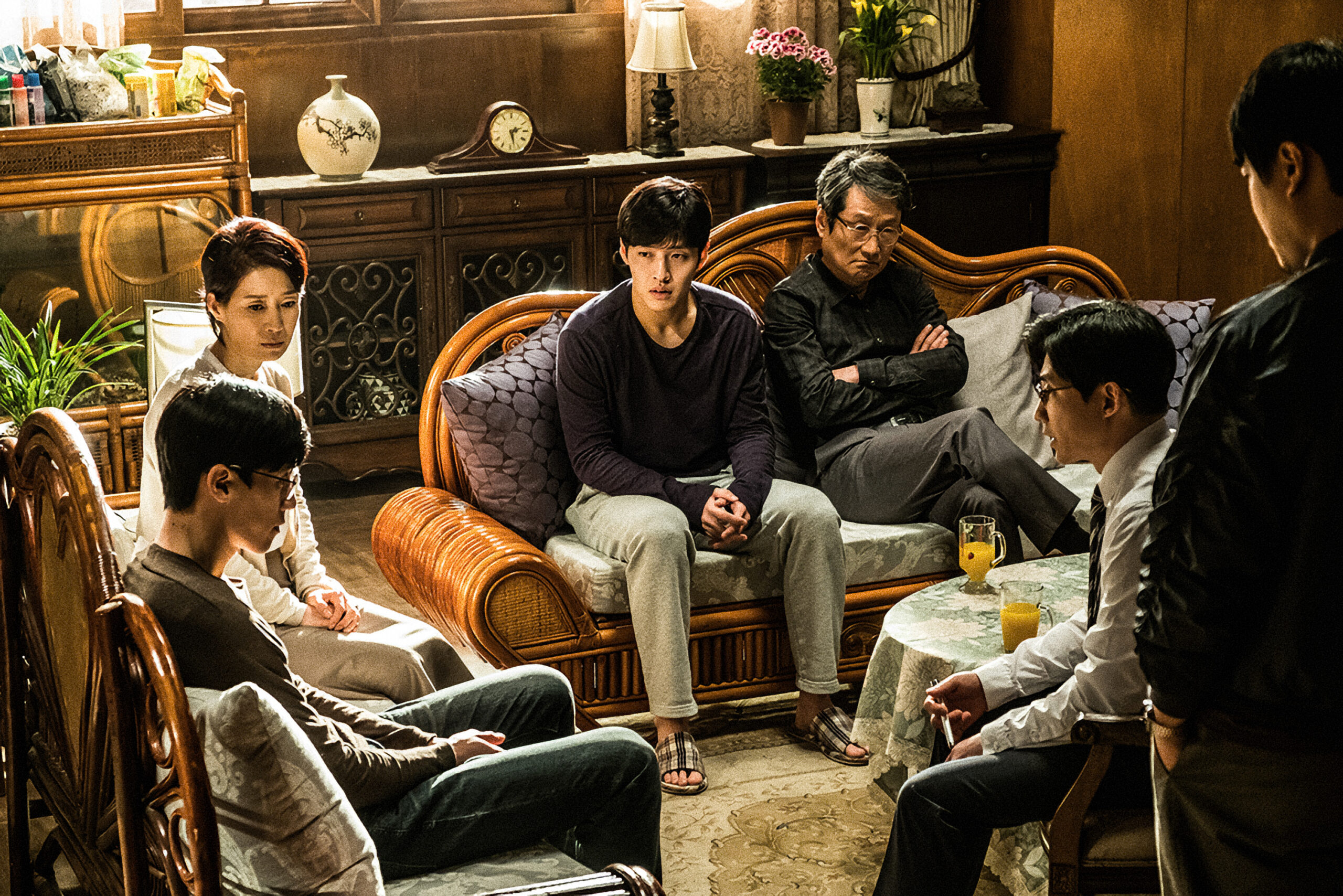
Hey there everyone! Welcome back to Movie Soapbox, the little corner of the internet that only you and I and that guy in the back who keeps rewinding the last twenty minutes know about. This is the place where we find the films that slipped through the algorithm, or survived it, or got chewed up by it and still somehow landed a gut punch on the way out. Today we are doing a full deep dive on Forgotten, the 2017 Korean thriller currently on Netflix, a movie so committed to lying to your face with a warm smile that by the time it tells you the truth you’re not even angry, you’re just sitting there in the dark taking stock of your life choices.
Alright. If you have not seen Forgotten yet, you need to close this tab right now, go watch it, and come back. What follows is not a discussion, it is a full-autopsy, and I am not going to be careful with the scalpel. Every twist, every misdirect, every moment where this film looked you dead in the eye and told you something it knew was false, we are going into all of it. You have been warned. The rest of us? Let’s go.
The Forgotten Movie Making Of
Before we walk through what actually happened, let me tell you something about the shape of this film that the plot summary won’t give you. Forgotten is a psychological thriller built around a structure that gets greenlit in Korea partly because Korean genre cinema still has enough rope to hang itself with, creatively speaking. A film like this, with a protagonist who turns out to be the monster, with a revenge architecture this cold and this patient, with an ending that refuses to let anyone walk out clean, that film does not get made in the American studio system in 2017. It gets noted to death in development. Some VP with a whiteboard writes “audience identification problem” and the whole thing collapses into a redemption arc. The fact that director Jang Hang-jun shot this with the ending intact, the real ending, where the math on human suffering just does not balance out and everybody pays, tells you everything about why Korean genre cinema was eating Hollywood’s lunch that decade. This film survived because it was made somewhere the notes didn’t fully reach it.
Now. The chronological truth of what actually happened, because the film gives it to you scrambled and you deserve it straight.
The Movie Forgotten in Chronological Order
It is 1996. Jin-Seok and his brother Yoo-Seok lose both parents in a car accident. One year later, the Korean economic crisis hits, and Yoo-Seok needs surgery or he will die, and Jin-Seok has nothing, no money, no options, no floor left to fall through. An anonymous contact online, who calls himself Blue Beard, offers Jin-Seok cash to kill a woman at a specific address. Jin-Seok takes the job because what else is there. He goes to the house, loses his nerve, and then through a chain of events that is the specific kind of awful that real tragedy runs on, ends up killing both the mother and the daughter. The young boy in the house he tells to hide. He leaves. The father, who turns out to be Blue Beard, the man who hired Jin-Seok to kill his own wife for the insurance money, confronts Jin-Seok at the hospital. They fight. The father falls. Dies.
The boy survives. He grows up in an orphanage after the relatives absorb the insurance payout. He grows up knowing something happened to his family and that the official investigation went nowhere. He grows up building a file. And when he finds Jin-Seok, he doesn’t call the police. He builds something more elaborate than that, because he also needs to know whether his own father ordered the killing, and Jin-Seok, locked in dissociative amnesia, doesn’t remember any of it. So the boy, now a man, assembles a team. Rents the house where it happened. Convinces Jin-Seok, using Barbital and hypnotic conditioning, that it is 1997 again and that this assembled group of people are his family. The plan is to recreate the conditions of the original trauma and force the memory back up.
That is where the film begins. Jin-Seok waking up in a car. Moving into a new house. A family around him that is not his family. A room he is told never to open.
The operation nearly works. But the man playing Yoo-Seok, the orphaned boy himself, gets grabbed by the people Jin-Seok actually does know from his real life, people who think something strange is happening to him, and the nineteen days he’s gone are the crack in the whole structure. When he comes back, Jin-Seok has been paying attention in that specific low-grade way that a man who is not fully sure of his own reality pays attention, and the details don’t add up. No limp. The limp is wrong. He follows the thread.
Everything unravels the way a con unravels when the mark is smarter than the con accounted for. Jin-Seok makes it to a real police station. The year is 2017. He has been living inside a constructed 1997 for the entire film. The memories come back. He knows what he did.
The final sequence of this film is what separates it from the pack of twist-architecture thrillers that were getting made in that era. Because the orphaned boy, now face to face with the man who killed his family, asks one question. He wants to know if his father hired it done. He has the insurance documents. He knows. He just wants Jin-Seok to say it. Jin-Seok won’t. Whether that is mercy or guilt or something there is no clean word for, he won’t pin it on the dead doctor. The boy lets him live. Then goes to the roof. Jin-Seok, in the hospital, takes the syringe. Both of them gone. The accounting is complete and it does not balance and that is the whole damn point.
A few things this film leaves in the fog that are worth pulling into the light. The locked room houses the team running the operation, the people monitoring Jin-Seok’s condition, managing the dosing, keeping the simulation intact. They are the infrastructure of the con. The reason the film doesn’t show you how the surviving boy tracked Jin-Seok down across twenty years is not a plot hole, it is a budget and runtime decision, and an honest one. At a hundred minutes this film is already asking a lot of you structurally. The investigation that led from the orphanage to Jin-Seok’s door could be its own film. Jang Hang-jun chose not to make that film, he made the one that starts at the end of the investigation, and that choice is why the pacing holds.
Theories to Explain the Movie The Forgotten
On the question of what this film is really about underneath the architecture, there are a few ways to read it.
The Forgotten Theory #1 – The first is that it is a film about the specific cruelty of economic collapse, that the 1997 IMF crisis is not backdrop, it is the engine, Jin-Seok commits the original sin because a financial system failed and a boy was going to die and there was no other door.
The Forgotten Theory #2 – The second read is that it is a film about the inheritance of violence, how what a father does, in this case a doctor who hired a man to kill his own family for insurance money, gets paid forward to everyone downstream in ways that cannot be stopped or redirected, only absorbed.
The Forgotten Theory #3 – The third read, and this is the one the ending supports most cleanly, is that the film is about the impossibility of justice when the truth is too ugly to be useful. The boy gets his answer and it destroys him anyway. Knowing changes nothing except that now he knows.
Moviesoapbox’s Movie Preferred Theory – My read is the second one, with the third one baked in as the payload. The doctor is the original sin and everyone else in this film, Jin-Seok, the boy, the fake family, all of them are just the blast radius. The reason the ending hits the way it does is that the film has been a revenge narrative the whole time and it delivers the revenge completely and on schedule and it means absolutely nothing. The boy gets everything he planned for and it still ends on a roof. That is not a twist. That is a thesis.
Compare this to what a studio note cycle would have done with that ending and you understand why this film matters. Five more rounds of notes and Jin-Seok confesses in the hospital, the boy steps back from the ledge, and they both get to keep living inside the knowledge of what happened. Catharsis delivered, audience sent home intact. Jang Hang-jun didn’t make that film. The film he made says that some debts don’t have a version where everyone survives the payment. That’s a hard thing to get past a committee. It got past this one.
🎬 If You Liked This…
- The Invisible Guest — the same structure of a film that uses every scene to set up a revelation that recontextualizes everything you just watched, the twist arriving with enough force to make you want to rewatch from the beginning immediately
- Mirage — another non-English puzzle-box thriller where the timeline isn’t what it appears and the protagonist can’t trust what they’re being told about their own situation
- The Believer — the other Korean thriller that plays its hand close until the very end, the slow reveal of who the real players are and what the game actually was landing with the same satisfying devastation