
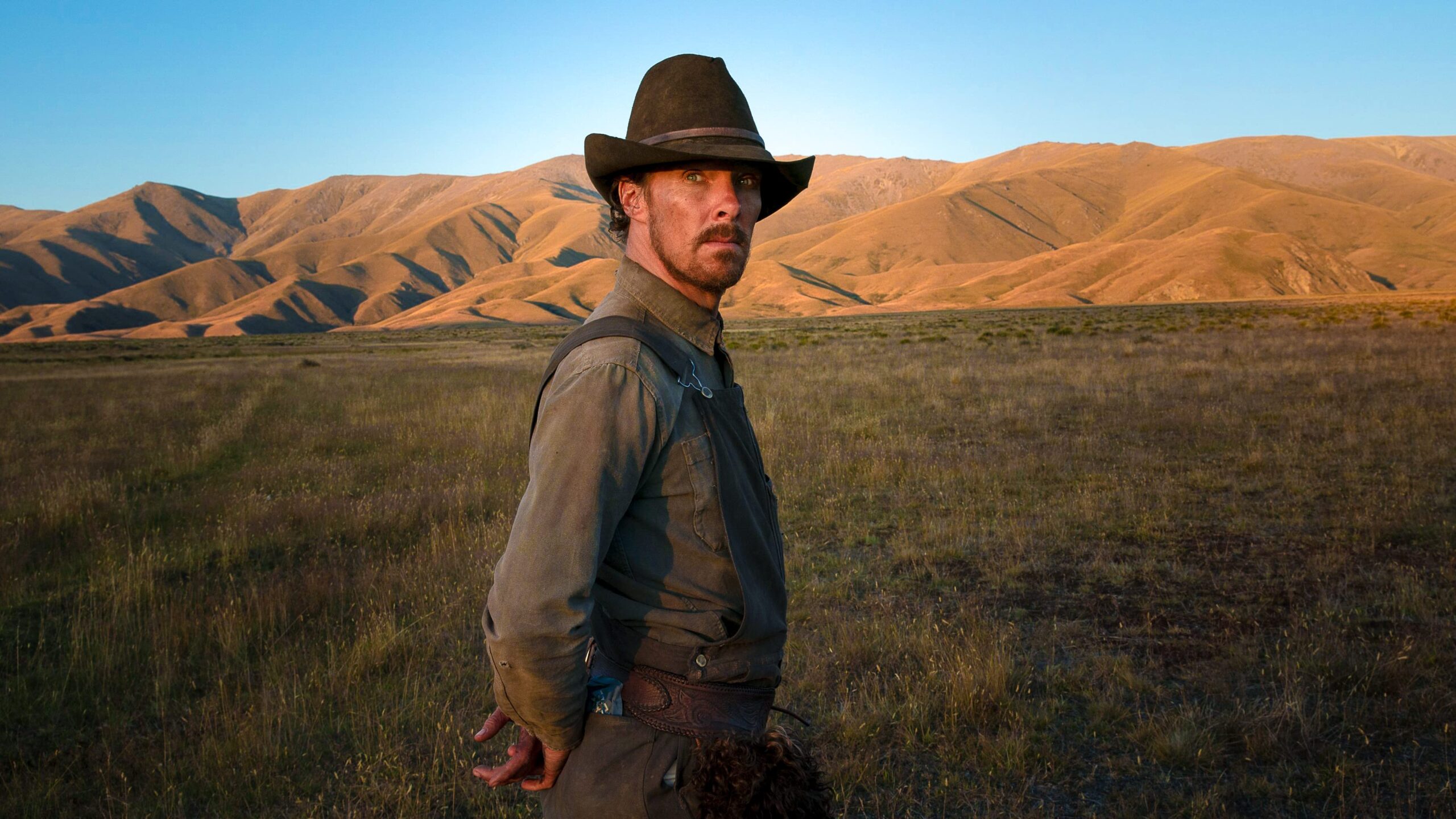
Hey there everyone! Welcome back to Movie Soapbox, the little corner of the internet that only you and I and that guy in the back who hasn’t slept since the Campion retrospective know about. This is the place where we take the films that got buried under franchise trailers and algorithm-optimized thumbnail bait, and we actually reckon with what they were trying to do. Today we are doing a full deep dive on The Power of the Dog, a movie so patient and so cold-blooded in its construction that the first time you watch it you think you’re watching a slow burn romance and the second time you realize you were watching a premeditated murder and somehow missed it completely.
Here is the trailer, take a look if you need a refresher before we get into it:
Alright. I need you to understand that everything from this point forward is going to be talking about exactly what happens in this movie, including the ending, including the mechanism, including the thing Pete does that the film only shows you in pieces and trusts you to assemble yourself. If you have not seen The Power of the Dog, stop here, go watch it on Netflix, come back. I will be here. Phil Burbank will still be dead. Nothing is going anywhere.
Still with me? Good. Let’s get into it.
Power of the Dog Movie Detailed Walkthrough
Montana, 1925. Rose Gordon runs a hotel restaurant with her son Peter, a quiet, precise, unsettling kid who makes paper flowers and studies the insides of dead animals with the focused calm of someone who already knows what he wants to be when he grows up. Into this walks Phil Burbank, cattle rancher, Yale-educated classics scholar, sadist of the casual variety, a man who burns a kid’s paper flower at the dinner table and calls it pointing out a fact. His brother George falls for Rose, marries her against the family’s unspoken rules, and brings her into a social world that wastes no time reminding her exactly where she came from. She starts drinking. Pete watches all of this. He keeps making notes.
The Making of The Power of the Dog
Now, before we go any further, you need to understand something about the context this film was walking into when it landed. Jane Campion shot this in New Zealand, in Otago, and made it look more like 1920s Montana than anything that’s actually been filmed in Montana in twenty years, which is already a small miracle. But the bigger miracle is what she did with the budget tier and the Netflix release structure she was working inside. A period western with no action set pieces, no third-act confrontation in the conventional sense, no score-swelling redemption moment, built around a protagonist who is a closeted gay man being slowly, methodically poisoned by a teenager, is not a film that survives ten rounds of studio notes. You can hear the phantom notes this film didn’t get: give George more scenes, make Phil’s sexuality more explicit earlier, let Pete have a breakdown so the audience knows what he’s feeling. Campion ignored all of that. The restraint in this film, the way it withholds confirmation until the final minute, reads like a director who went to the mat for every single cut. Films at this budget tier, with a streaming-first release, usually show the scar tissue of that fight. This one doesn’t. That is not luck.
The Power of the Dog Walkthrough Continued
So Pete comes back to the ranch from school, he’s pre-med, he’s methodical, and he accidentally finds Phil’s private place, the hidden pond, the magazine of men, the silk scarf Phil keeps out there in the sun. He understands immediately what he’s found and what it means. Phil, who knows Pete has found it, does something unexpected: he offers to teach Pete to ride, and says he’s going to make him a rope. And this is where most audiences start reading the film as a story about two damaged, possibly queer men finding an unlikely tenderness. That reading is wrong. Or rather, it is exactly the reading Pete wants Phil to have.
To make a rawhide rope you need two things: hide strips and water to soften them. Pete delivers both. He has already ridden out alone, before any of this warmth with Phil develops, and collected material from a dead anthrax-infected cow. He knows what anthrax is. He is studying to be a physician. He puts it in the water. Phil, who has been so careful to avoid the infected cattle that his hands stay consistently gloved in every other context, works the wet rawhide with his bare hands because he is alone, because this is his private project, because the rope is for Pete and that makes it something tender and unguarded. Phil Burbank, the man who survived everything Montana could throw at him, is killed by the one moment he let his guard down. The shakes, the convulsions, the death from anthrax that nobody in that doctor’s office quite understands, that is Pete. That was always Pete.
The thing the film needs you to hold in your head, and this is where people get lost, is the timeline. Pete’s solo ride to collect the dead cow material happens before Phil extends any warmth toward him. He wasn’t reacting to abuse. He had already decided. The friendship, the rope lessons, the evenings finishing the braid together, those were Pete’s delivery mechanism, not a relationship that went wrong. He needed Phil to let him close enough to handle the materials. He engineered the whole thing.
Power of the Dog Movie Theories
Now, the theories, because they exist and you have probably encountered them in various corners of the internet.
Power of the Dog Theory one – the one the film is deliberately gesturing toward before it corrects you: Phil and Pete are kindred spirits, possibly both queer, drawn together despite the cruelty, and Phil’s death is either accidental or ambiguous. This reading leans on the genuine tenderness in those evening scenes and on the film’s visual language, which is warmer during the rope-making sequences than anywhere else. It is a real reading. The film earns it as a misdirect. But it requires you to ignore the flashback to the solo ride, and it requires you to believe that Pete’s interest in dissection and his pre-med studies are incidental, which is almost offensively naive given how the film has been calibrated.
Power of the Dog Theory Theory two – the one I believe, is the one the text supports if you watch it twice: Peter Gordon planned a murder, executed it with precision, and the final image of him watching his mother and George return to the ranch together is the image of a young man who has done the calculation and is satisfied with the result. He is not haunted. He is not ambivalent. He opens the Bible to Psalm 22 because he means it. The power of the dog is gone. He delivered his mother from it. That is the movie.
The question of whether Pete is gay is, in my view, completely beside the point and the film knows it. Phil assumes Pete is gay because Phil is gay and reads softness through that lens. The audience is invited to make the same assumption because the film is generously offering you a familiar genre frame, the queer subtext western, and then pulling it out from under you. Pete’s precision, his detachment, his focus on mechanisms rather than feelings, these are not coded sexuality, these are the traits of a person who decided to solve a problem and solved it.
Moviesoapbox’s Read on the Power of the Dog
My read, stated plainly: this is a revenge film wearing a prestige western costume. Pete Gordon killed Phil Burbank and the film admires him for it, not in a lurid way, but in the flat, documentary way that Campion films everything, with the same patience she gives to Rose’s deterioration and Phil’s private tenderness and George’s quiet dignity. Everyone in this film is exactly what they are. Pete is a killer. The film is not troubled by this. You probably shouldn’t be either.
What Campion put on screen here is a film that trusts you to catch up rather than flagging every revelation. The factory version of this movie has a scene where Pete looks at the anthrax water and hesitates. The factory version has a score cue when he rides out to the dead cow. The factory version gives you something, some emotional permission structure, to make the ending comfortable. This one gives you nothing except the evidence, laid out in the sequence it was laid out for Pete, and lets you reconstruct the logic afterward. That is a film that survived its development process intact. Most films like it don’t.
Go watch it again. You’ll catch the ride. You’ll catch the gloves. You’ll catch exactly how long ago Pete made his decision. It’s all there. We will see you back here next time, in this little corner of the internet, talking about the films that almost didn’t make it out.
🎬 If You Liked This…
- Nocturnal Animals — the same slow burn of menace underneath beautiful surfaces, a cruel man whose power over others is the entire subject, an ending that arrives like a door closing quietly on everything that came before it
- Godland — the same hostile masculine energy in a vast hostile landscape, a man whose cruelty expresses itself through control and humiliation, same meditative pacing in service of something building inexorably toward damage
- Monos — the same question of what masculine dominance structures do to the people caught inside them, gorgeous cinematography in a landscape that dwarfs and indicts the human violence happening within it