
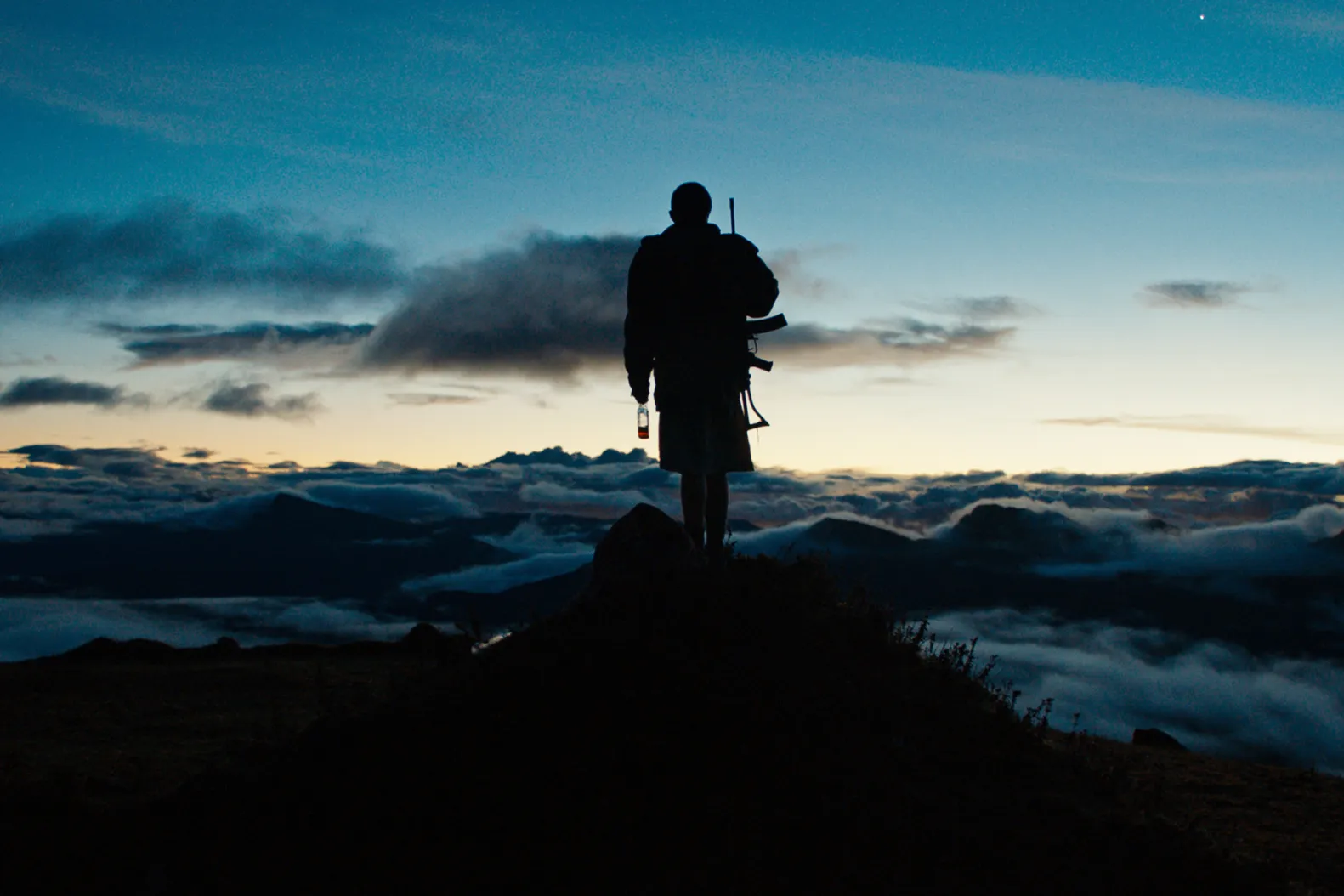
Hey there everyone! Welcome back to Movie Soapbox, the little corner of the internet that only you and I and that guy sleeping in the corner over there know about. This is the place where we find underappreciated films and we make sense of them. Today? We are doing a deep dive on Monos, a movie so relentlessly uncompromising that it makes you wonder how it got a distribution deal at all, let alone the festival run it had, let alone the fact that you can actually stream it right now on a platform that also carries superhero movies.
Before we get into it, here is the trailer. Watch it, or don’t, because nothing in it will actually prepare you for what this film is.
Alright. Everything from this point forward is a full spoiler. The ending, the escape, the radio, all of it. If you have not seen Monos yet and you stumbled in here by accident, close this tab, go find the movie, watch it in a dark room with no phone, and then come back. I will be here. For everyone else, buckle in, because this one takes some untangling.
What This Film Had to Survive to Exist
You can feel, watching Monos, the shape of the film it was not allowed to become, and that is actually a compliment, because Alejandro Landes held the line in places where most directors would have folded. A movie at this budget tier, built around non-professional child actors, shot at thirteen thousand feet on a Colombian mountaintop and then dragged into a jungle, with no clean protagonist, no redemption arc, no explanation of the conflict, and a hostage who escapes by drowning her captor, a movie like that gets notes. It gets a lot of notes. It gets notes that say things like “can we understand who the good guys are” and “the third act needs more resolution” and “audiences will be confused about the allegiances.” The fact that Monos came out the other side still refusing to answer any of those questions is either a miracle of financing structure or a director who understood that the moment he answered them, the film would die. You can tell when a film has survived that conversation intact, the ambiguity has a certain hard-won quality to it, it does not feel lazy, it feels defended. Landes defended every inch of this.
The Monos Movie Walkthrough
The movie opens on a Colombian mountaintop, around thirteen thousand feet, where a group of child soldiers operate under the loose authority of a paramilitary organization referred to only as “the Organization.” They train, they goof off, they watch over a woman they call Doctora, played by Julianne Nicholson, an American doctor they are holding hostage. A figure called the Messenger arrives, delivers a milk cow on loan that must be returned intact, and appoints a kid called Bigfoot as the new squadron leader. Two of the kids, Lady and Wolf, consummate their relationship while the rest of the group fires weapons into the air in celebration. During this, a kid called Dog accidentally kills the cow.
Wolf, knowing the punishment coming his way, kills himself. The group has to figure out how to report this up the chain. They decide to cover for Dog, radio back that Wolf killed the cow and then killed himself over it, and move on. That lie does not stay buried.
The mountaintop gets attacked. Swede is assigned to guard Doctora and tells her flatly: if rescuers come, she dies first. In the chaos, something strange and terrible happens between Swede and Doctora, a moment of proximity that reads like Stockholm Syndrome accelerated by gunfire, they share a kiss, Swede laughs it off, and the film moves on without explaining it, because that is what this film does. It refuses to explain the things that most films would stop and underline for you.
After the battle, Bigfoot moves the group into the jungle. Doctora escapes, follows a river, gets caught in a mudslide, wakes up with a destroyed eye, gets recaptured, and gets chained to a tree. The radio gets damaged. The Messenger comes back in person, forces a reckoning, and what follows is essentially the Salem witch trials in a jungle clearing: Rambo tells him Dog killed the cow, Rambo tells him Bigfoot and Lady have been sleeping together without authorization, Smurf tells him Bigfoot wanted to go independent. Every secret comes out at once. The Messenger tries to take Bigfoot back to the superiors. Bigfoot shoots him in the back off a boat and watches him sink into the river. The group goes rogue. They start robbing passing motorists. This is the section of the film where you feel the Apocalypse Now DNA the most, the slow, inevitable drift away from any recognizable structure toward something older and more violent.
Then Swede takes Doctora to bathe in the river, still chained by the neck. Doctora drowns her. Steals boots from Smurf. Runs.
Monos the Ending, Untangled
Two things are happening simultaneously at the end of this film, and keeping them separate is how you understand what Landes is doing.
First: Doctora makes it. She escapes, reaches civilization, gets picked up by authorities. The TV report confirms it. She survived. And yes, the film is aware of what it is doing with that, an American woman, white, a doctor, the one person in this entire story with the kind of legibility to outside institutions that allows those institutions to recognize her as someone worth saving. She gets the helicopter. She gets the news report. She gets out. File that away.
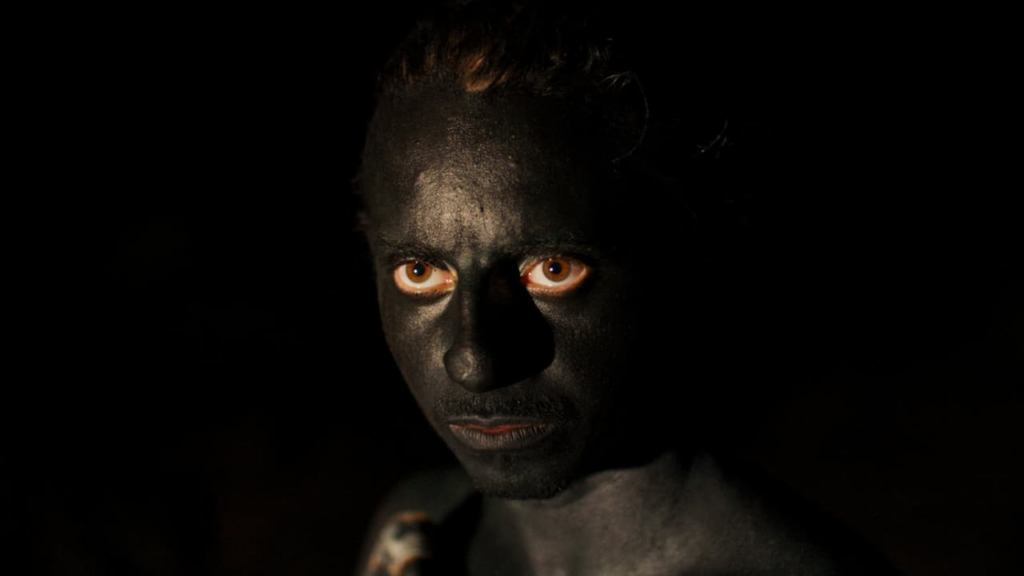
Second: Rambo. After the chaos of the group going full rogue and attacking the family of a gold diver who showed her nothing but kindness, Rambo ends up in the river, unconscious, pulled out by a military chopper. And the film ends not on resolution but on a radio call: unidentified person recovered, requesting guidance, what do we do with this child. Rambo stares down the camera barrel, terrified, as the credits roll.
What Landes is doing there is making the question literal. The radio operator is asking what he is actually asking. Society, the state, the military, every institution that failed to prevent this child from becoming what she became, is now holding her, and has no idea what she is. She is not a prisoner of war in any framework they have paperwork for. She is not a civilian. She is a child who has killed people, who has been failed by every adult in her orbit, and who is now staring at you from inside a system that does not have a category for her. The film ends on that stare because there is no answer to the radio call. There is no guidance coming through.
Monos the Movie Theories
There are essentially three ways people read this film, and they are not mutually exclusive, which is part of why the conversation around it is still worth having.
The first is the specific Colombia read. Sixty years of civil conflict, shifting allegiances, FARC, peace agreements that dissolve before the ink dries, children handed weapons because the organization needs bodies and children are available. Landes has said repeatedly in interviews that this was the root impulse, Colombia specifically, the particular shape of a war without fronts or flags or clearly legible sides. Under this read, everything in the film maps to something real and ongoing, and the film is an indictment dressed up as a myth.
The second is the universalist read. Landes has also said, in those same interviews, that when Nicholson pushed him for Doctora’s backstory and motivations he told her to let it go, that the film was myth, not realism, not a specific conflict but a shape of chaos that is proliferating globally. Syria. Everywhere that battles happen without lines. Under this read, the eight kids are not Colombian child soldiers specifically, they are the children of any place where the institutional world has collapsed and something older has moved in to fill the vacuum.
The third read, which gets less airtime but is worth sitting with, is the Lord of the Flies read stripped of its English-boarding-school gentility and made actually brutal. The film is about what children do when adults give them weapons and walk away. Not what happens to children in war, but what war makes children become, and whether the thing they become is as monstrous as the adults who created the conditions insist on believing it is. Bigfoot goes rogue. But the Messenger was going to execute Dog for a dead cow. The Organization was already monstrous. The kids are just its most honest product.
Moviesoapbox Has a Definite Opinion on Monos
All three of those reads are operating in the film at the same time, and I think Landes knew that and built it that way deliberately, but if you make me plant a flag, I am planting it on the third one. The first two get most of the critical oxygen because they are legible, they let you process the film as being about something out there, something geopolitical, something you can read a Wikipedia article about and feel you have grasped. The third one is harder to sit with because it implicates the audience. You spend the whole film watching these kids become something terrible, and then the film ends with Rambo staring at you while a radio operator asks what to do with her, and the thing Landes is actually asking is whether you have an answer, because the institutions do not, and the institutions created her, and the radio is still going, and nobody is responding. That last shot is not ambiguous. It is an accusation with the camera pointed outward.
What Almost Happened to This Film
The editing is imperfect and I will not pretend otherwise. There are cuts in this film that feel less like choices and more like gaps, the moment Doctora breaks free after drowning Swede being the clearest example, one frame she is chained and the next she is not, and the film moves on like it happened. In a Hollywood production that gets flagged in the rough cut and someone spends two weeks and a hundred thousand dollars fixing it. In a film like this, sometimes you are just out of time and coverage and you cut through it and hope the momentum carries the audience past the seam. Sometimes it does. Sometimes you feel it. The motorist robbery sequence, which should be the most viscerally awful stretch of the film, lands closer to a montage than a scene, and that is a genuine loss, because the potential there was enormous.
But here is the thing you have to hold onto: this film exists. It got made, at altitude, with non-professional children, with a director who refused to give it a clean moral framework, and it came out the other side still recognizable as the film he set out to make. The version of Monos that got five more rounds of notes and a test screening in Burbank does not exist because nobody with the power to demand those notes had any leverage over Landes. That is what the independent model is supposed to protect, and here it actually did. The seams show. The film is still worth every minute of your time.