
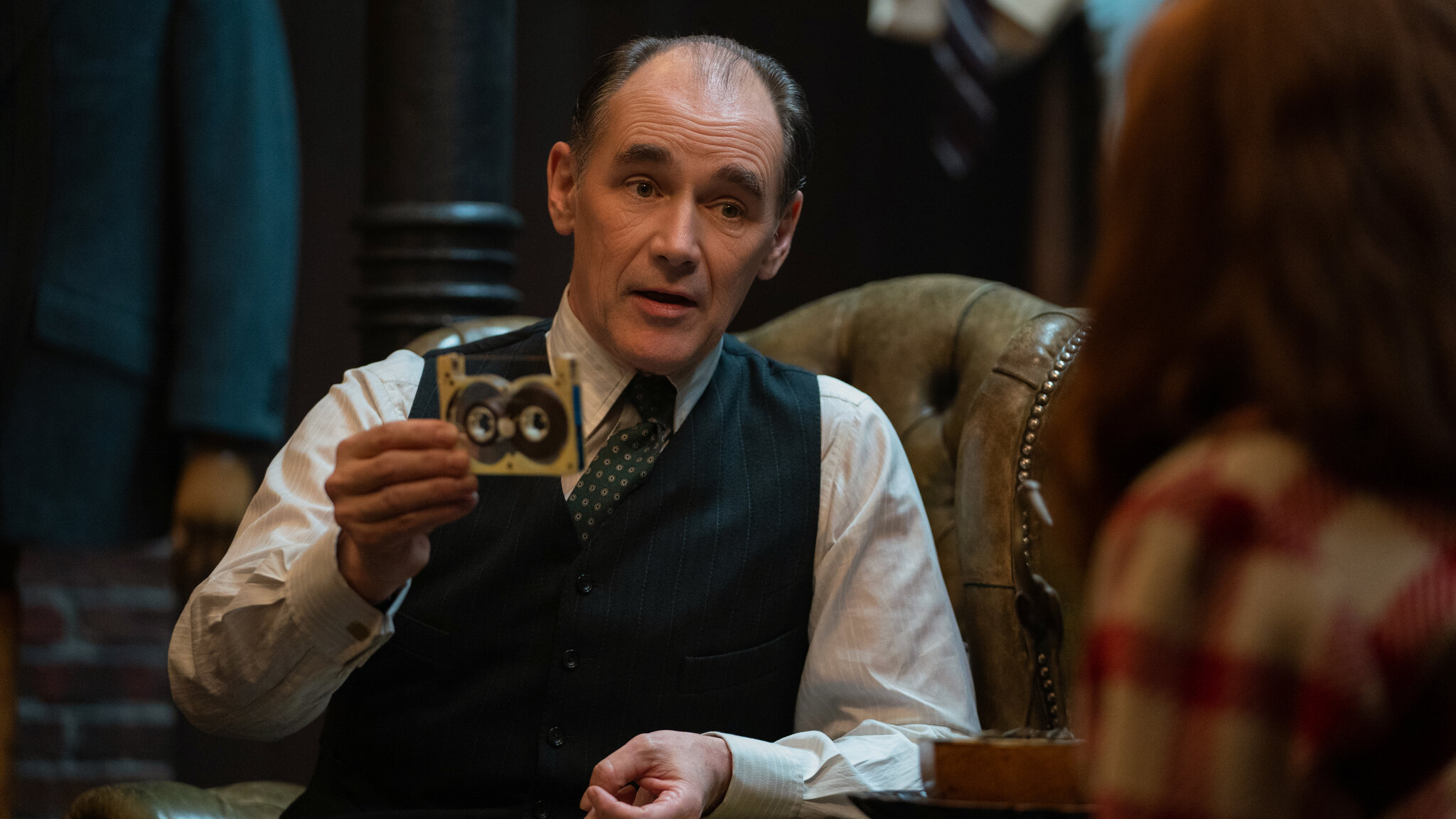
Hey there everyone! Welcome back to Movie Soapbox, the little corner of the internet that only you and I and that guy nodding off in the back row know about. This is the place where we find underappreciated films, the ones that slipped through the cracks or got buried under whatever franchise event was eating the multiplex that weekend, and we make sense of them. Today? We are doing a deep dive on The Outfit, a movie so tightly wound, so deliberately, almost aggressively small in scale, that half the people who watched it are still not entirely sure what they saw, and the other half are pretty sure they missed something important in the first twenty minutes.
Before we go any further, here is the trailer. Watch it if you haven’t. Then come back, because we are going all the way in.
Alright. If you have not seen The Outfit yet, stop here. Everything from this point forward is a spoiler, not in the vague, hand-wavy sense, but in the sense that I am going to walk you through every beat, every turn, every layer of the con Leonard has been running since before the movie even bothered to introduce itself to you. Go watch it. It’s on streaming. It runs under two hours. Come back. We’ll be here.
The Outfit Movie Deepdive Walkthrough
Now. Chicago, 1956. A single room. A man with shears and a measuring tape and a very, very long memory. Let’s talk about what this film actually is and what it cost to stay that way.
Because here is the thing you should understand going in: a single-location film with no car chases, no gunfights until the last ten minutes, and a lead character whose primary weapon is conversation does not get made the way this got made without somebody at the financing level either not reading the script carefully enough or trusting a first-time feature director more than the math suggested they should. Graham Moore had won an Oscar for writing The Imitation Game, which gave him leverage, but leverage at that tier usually gets you a bigger budget on a bigger canvas, not permission to shoot a chamber piece. Films at this budget level with this cast attached, Mark Rylance, Zoey Deutch, Johnny Flynn, Dylan O’Brien, they tend to arrive at picture lock with at least two studio-mandated action sequences that weren’t in the original script and a third act that field-tested better in Phoenix. The fact that The Outfit ends the way it ends, quiet, interior, a man walking out of a burning room he built for himself, means someone held the line somewhere. You can feel that in the film. It doesn’t move like a movie that got committee-noted into submission. It moves like a play that was allowed to be a play. That is rarer than it sounds.
Now. Back to the walkthrough.
Leonard Burling is a British cutter, and the film makes a point of the distinction, a cutter being the senior craftsman, the one who takes measurements, makes cuts, fits the suit to the man. He runs a small clothier in a Chicago neighborhood that is effectively owned by Roy Boyle, the head of a mid-tier Irish mob family. Roy was Leonard’s first customer in America, his patron in the old sense, and in exchange for that patronage Leonard lets the Boyle outfit use his shop as a drop point, a place where dirty money moves in and out with the respectability of a bespoke suit ticket attached to it.
Roy’s son Ritchie is the heir apparent and he knows it and hates knowing it, because knowing it means he is always performing for an audience that isn’t impressed. Francis is Roy’s enforcer, physically enormous, sharp enough to be dangerous, and he has been quietly undermining Ritchie’s confidence for what appears to be years. The shop also employs Mable, Leonard’s receptionist, who has large dreams, specifically a plan to travel the world, and a very specific and unspoken reason for staying close to this particular family for as long as she has.
The plot engine kicks in when Francis arrives with a wounded Ritchie, who took a bullet in a clash with the La Fontaines, a rival French criminal organization that has been encroaching on Boyle territory. Francis also brings a briefcase containing an FBI recording of the Boyle family’s operations, a tape that was passed to the Boyles by a shadowy clearinghouse organization called The Outfit, a real historical entity loosely associated with the Capone infrastructure, framed here as a kind of underworld oversight body that monitors the health of its member families. The tape’s existence implies there is a mole somewhere inside the Boyle organization feeding information to the FBI, and that mole needs to be identified.
Francis leaves to handle something. Ritchie is lying on Leonard’s table, blood loss making him suggestible. And Leonard, quietly, with the precision of a man who cuts things for a living, begins to work.
He plants a seed in Ritchie’s head that Francis is the mole. Not overtly. Obliquely, the way you do when you want someone to reach a conclusion that feels like their own. When Francis returns, Leonard runs the same play in reverse, suggesting that Ritchie’s blood loss has made him paranoid and unstable and possibly dangerous. Francis, already carrying his own long-running resentment of Ritchie, hears what he wants to hear. When Ritchie snaps, Francis kills him. Now Francis has a dead boss’s son on the floor and a live boss on the way, and he needs Leonard to help him survive the next hour.
What follows is a series of improvised moves, Francis hiding the body, cleaning up, spinning a story for Roy when he arrives, and then pivoting to frame Mable as the mole when Roy starts asking uncomfortable questions. The frame isn’t baseless, Francis claims he found Ritchie’s blood in Mable’s apartment. Roy authorizes torture. Leonard interrupts with a story about his wife and daughter dying in a fire in London, a story that functions on two levels, as stalling tactic and as partial truth. Then Leonard answers a ringing phone and performs a conversation designed to make Roy believe Ritchie is alive and waiting for him elsewhere. Roy leaves to find his son. Francis almost leaves, then doesn’t, because he’s smart enough to realize that leaving two potential witnesses alive behind him is a problem.
And here is where the film tips its hand, or rather, where Leonard tips his.
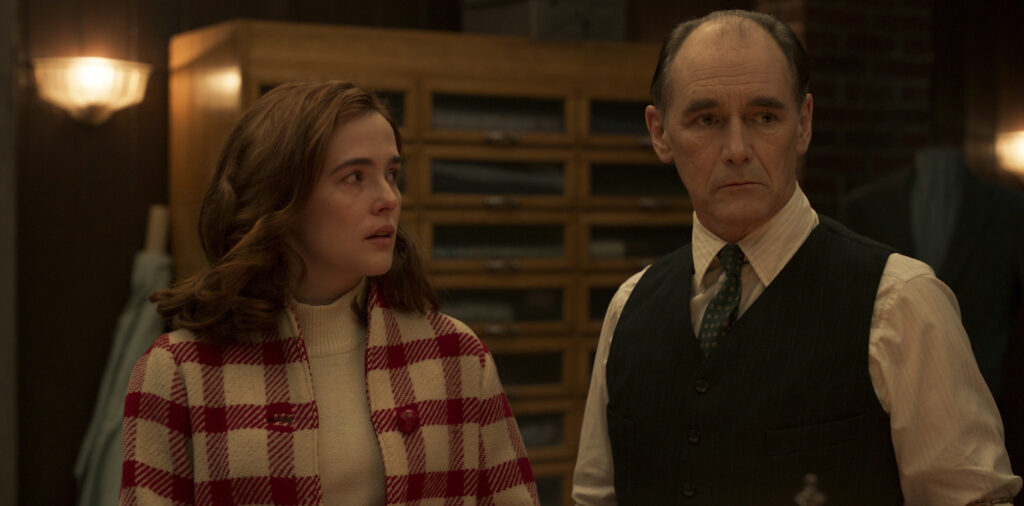
Mable is actually the FBI informant. She admits it. She was dating Ritchie to get close to the family. She blames the Boyle organization for her father’s death. Her goal was never really the travel money, or not only the travel money, the money was the shape her revenge took when revenge alone stopped feeling like enough. Leonard already knew this. He’s known for a while. And rather than expose her or protect himself from her, he’s been running a long con designed to get both of them out alive.
Leonard has been forging messages from The Outfit. Fabricated intelligence, fake mole alerts, disinformation fed to the Boyle family over time, creating exactly the paranoid internal pressure that would eventually make this family destroy itself. He has also been bugging his own shop, recording the Boyles’ conversations when they asked him to step outside so they could talk privately. The actual FBI tape, the real one, the one that could burn the Boyle family to the ground, Leonard has had it all along.
He brokers the endgame. He tips off the La Fontaines to where Roy and his goon are going. Violet La Fontaine ambushes Roy and kills him. She comes to the shop to collect the tape from Mable, pays her in cash, leaves. Francis, who has been hiding in a closet waiting to kill the La Fontaines and take the briefcase, is shot twice by Violet’s bodyguards. Leonard warns them in time. Francis goes down. Leonard tells Mable the tape she handed over was a fake, the real tape is hers, and he sends her out into the world with her money and her evidence and her life.
Then he sets the shop on fire.
Francis comes back from what should have been a fatal wound, shoots Leonard in the arm, and his gun jams. They fight. And in the fight, Leonard tells Francis, and tells us, the rest of his history. Before he was a cutter he was what Francis is, an enforcer for a gang in London. When he was asked to do something he couldn’t live with, he ran. Built a new life. Married. Had a daughter. His old gang found him, killed his family, burned his shop. He’s been restarting ever since. He kills Francis with his shears and walks out of the burning building into whatever comes next.
So what actually happened, stripped to the mechanism: Leonard saw Mable setting herself up to get killed by a family she was trying to burn from the inside, recognized the pattern because he had lived a version of it, and decided the only way to keep her alive was to burn the family himself, faster and more completely than she could. Everything, the forged Outfit messages, the wire in his own shop, the escalation between Ritchie and Francis, the tip to the La Fontaines, all of it was Leonard engineering a situation in which every dangerous person in his orbit destroys every other dangerous person, and the two people who didn’t deserve what was coming to them walk out. One of them does. The other leaves yet another burned building behind him and goes wherever Leonard Burlings go when they run out of lives to restart.
The Outfit Movie Theories and Explanations
The competing reads on this film are actually pretty narrow, because Moore’s script is precise enough that the ambiguity is mostly in the emotional register rather than the plot mechanics. The main interpretive question is about Leonard’s motivation. One read is purely protective, he’s a man who lost a daughter and found a surrogate in Mable, and the entire con is an act of fatherhood. Another read puts more weight on the revenge angle, that Leonard has been waiting for a family like the Boyles to walk into his shop since London, and Mable’s situation gave him the trigger and the cover. A third, darker read suggests Leonard is not a reformed man who relapsed out of love but a man who was always exactly this, a strategist who uses other people’s emotions as levers, and the tenderness toward Mable is real but it coexists with a coldness that never fully went away.
The film is careful not to collapse these. Every scene with Rylance is doing all three at once.
Moviesoapbox’s Personal Take on the Film The Outfit
Leonard is both things and knows he is both things and has made his peace with it. The moment he tells Francis his history, he’s not confessing, he’s explaining. There is a difference. A man who is ashamed of what he is doesn’t explain himself to the man he’s about to kill. He just kills him. Leonard explains because he wants Francis to understand that they were the same once, and Leonard chose differently, and it cost him everything, and he chose it again anyway. That is not the speech of a man who thinks redemption is available to him. That is the speech of a man who thinks the choice still matters even when it doesn’t save you.
That reading is why this film works as well as it does, and it’s the reading that a studio-noted version of this script would have sanded off entirely in favor of something cleaner. A man who is simply a good person protecting a surrogate daughter is a movie. A man who is irredeemably capable of the worst things and chooses against them anyway, again and again, with no expectation of reward and no illusion about what it costs, that is something harder to greenlight and much harder to forget.
The Outfit got to be that second thing. Not every film like it does. Remember that when you’re rewatching it.
🎬 If You Liked This…
- 10×10 — same single location, two people, a power dynamic that keeps inverting until the person who appeared to be in control discovers they never were
- Exam — same closed-box pressure cooker where information is the only weapon, everyone in the room hiding what they know, and the person who controls the reveal controls everything
- The Party — same single-set one-night format, everyone arriving with an agenda they haven’t disclosed, the social veneer dissolving as the night progresses until what’s underneath is all that’s left