
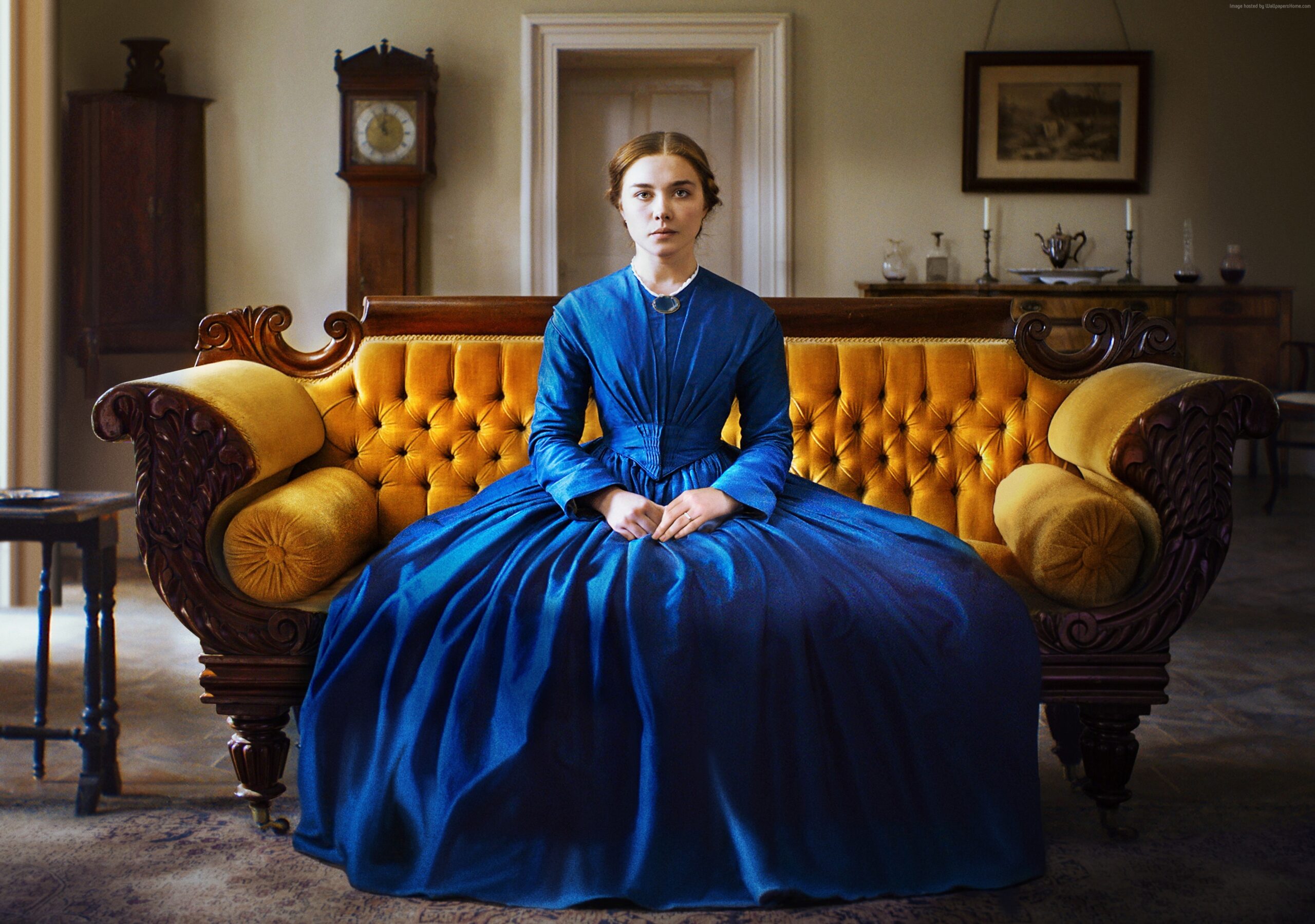
Hey there everyone! Welcome back to Movie Soapbox, the little corner of the internet that only you and I and that guy sleeping in the corner over there know about. This is the place where we find underappreciated indie films and we make sense of them. Today? We are doing a deep dive on Lady Macbeth, a movie so quietly, methodically, cheerfully evil that it makes most prestige thrillers look like they were written by a committee that had never once done anything wrong in their lives, which, honestly, they probably hadn’t.
Before we get into it, here is the trailer. If you have not seen this film yet, I will say this once: go in blind. Come back after. The trailer does the film no favors and no disservices, it just cannot prepare you for what it actually feels like to watch Katherine Lester dismantle every person who gets in her way with the calm efficiency of someone filing expense reports.
From this point forward I am going inside the film and I am not coming back out until we have turned every scene over and looked at what is underneath it. If you have not watched Lady Macbeth yet, close this tab, find the film, watch it, then come back. Everything that follows is a full spoiler walkthrough and I will not be apologizing for that.
Still here? Good. You have seen it. Let’s talk about what you actually watched.
Lady Macbeth Movie Context Before We Start
A quick piece of context before the walkthrough, because this is the thing most people coming to this film miss entirely. Lady Macbeth is not a Shakespeare adaptation. The Shakespeare connection is a title and a thematic rhyme, nothing more. The actual source is a Russian novella, Lady Macbeth of the Mtsensk District, written by Nikolai Leskov in 1865 and published in Fyodor Dostoyevsky’s literary magazine Epoch. Leskov’s Catherine is not a secondary character egging on a more powerful man. She is the primary engine of destruction, and Leskov wrote her that way in 1865, which tells you something about how radical this story was, and still is, and how much the film had to trust that radicalism rather than soften it into something more palatable for a multiplex audience.
Now, films that adapt difficult 19th-century literary source material with a female antihero who commits multiple murders and feels no redemptive arc land in a very specific budget tier, which means a very specific amount of creative leverage for the director. William Oldroyd was making his feature debut here. Florence Pugh was not yet Florence Pugh in the cultural sense. A film like this, at this tier, with this subject matter, typically arrives on a distributor’s desk already braced for the note that says the ending needs to breathe more hope into it, that the audience needs a way back to liking her, that the boy scene might be too much. You can watch this film and feel where those notes could have landed, and feel, with genuine relief, that they did not. The third act of Lady Macbeth does not flinch. That is worth calling out before we walk through it, because it did not have to go that way.
Lady Macbeth Movie Walkthrough
The film opens with a wedding night that is not a wedding night. Alexander, Catherine’s new husband, tells her to take off her nightdress and then stands across the room and looks at her like she is a piece of furniture he is not sure he wants in the house. He does not touch her. He goes to sleep. This will be the pattern. The marriage was arranged, Catherine was poor, and the transaction was completed. She is now property that happens to breathe.
The cinematography in these early scenes earns every frame of praise it got. Static shots. Oppressive interiors. Catherine sitting in rooms doing nothing because she has been told to sit in rooms and do nothing, the camera holding on her face long enough that you start to understand this is a woman accumulating pressure with nowhere for it to go. The trailing dress trains along those banisters are not aesthetic flourishes, they are a visual argument: she is being followed by her own confinement everywhere she moves.
Alexander’s father Boris is the first person to underestimate what he has installed in this house. He is demanding, condescending, and entirely confident that Catherine will remain domesticated by the simple fact of his authority. Alexander leaves to tend to some property crisis, and Boris settles in as the household’s resident patriarch and casual tyrant.
Sebastian enters. He is a farmhand. The scene with the pig scale and the other servants is the film establishing the texture of cruelty that Catherine lives inside daily, the casual degradation of it, so that when she turns toward Sebastian it reads less like lust than like oxygen. He is the one person in this environment who treats the situation between them as something that belongs to both of them.
Boris finds out. He does the tut-tutting that men of his position do when the household arrangements stop being convenient for them. Catherine poisons his mushrooms and locks him in a room and he dies, and the servant who witnessed the relevant portions of this goes mute, which in the film functions as both a practical plot convenience and one of the most quietly chilling details in a film full of quietly chilling details. That woman swallowed everything she knew and it destroyed her from the inside, and the film is not unaware of that.
The funeral happens. Alexander does not return. Catherine and Sebastian begin living openly in the house as if they own it, because Catherine has decided they do, and for a stretch of the film they are right. Then Alexander rides back up the lane, slips inside, and very nearly catches everything. Catherine wakes fast enough to hide Sebastian, and the belt she was not supposed to have she claims she found in a field, and for a moment you think she might be able to hold this together through sheer nerve.
She cannot. Alexander knows. He has heard things. And Catherine’s response to being caught is not panic, it is escalation. She brings him out. She and Sebastian beat him to death. Sebastian buries him. Catherine takes his horse out and shoots it, and yes, throws some dirt on it, and if that detail seems perfunctory that is because it is, the film is showing you that the violence has become procedural for her, the horse is a loose end and it gets tied off the same way the others did.
Now the film shifts into its second problem. Agnes arrives with a boy named Teddy, who is apparently Alexander’s ward, the result of some prior entanglement, and Agnes has papers. In the source novella, Leskov is explicit that this boy is the rightful heir to the estate, which makes him an existential threat to everything Catherine has built. The film keeps this somewhat implicit but the stakes are the same. If Teddy is legitimate, Catherine owns nothing.
Catherine does what Catherine does: she befriends them. She is warm, she is accommodating, she is performing normalcy with the same precision she has applied to everything else. Sebastian goes into hiding because Agnes knows about the affair and is already suspicious about Alexander’s death. In the book, Sebastian’s concealment and Catherine’s warmth toward Agnes and Teddy corrodes him. The film compresses this but the corrosion is still there.
The boy disappears near a waterfall. The town searches. Sebastian finds him, or presents himself as finding him, and here is the question the film drops into that scene and then walks away from: did Sebastian put Teddy in the water and then pull him out to look like a hero, or did he genuinely come upon the boy and rescue him? The film does not answer this. The behavior is consistent with either reading. Sebastian is a man who has followed Catherine into multiple murders and is now trying to find a way to be sympathetic, and the waterfall scene might be his one genuine good act or his most calculating performance. We will come back to this in the theories section.
Agnes sends Sebastian away. She does not trust him and she is not wrong. That night, Catherine offers to watch Teddy so Agnes can sleep. Agnes, making the only mistake she makes in the film, accepts. Catherine lets Sebastian in. They suffocate the boy.
The bruises from the waterfall are on his wrists and ankles. They look like restraint marks. The body tells a story that Catherine and Sebastian did not write but that works against them anyway, and Sebastian, finally, breaks. He walks in and confesses everything in front of the constables.
She suffocated him. She’s a disease.
Catherine holds a pause so long it becomes its own statement. Then she pivots completely. Sebastian killed Alexander because Alexander had beaten him. Anna picked the mushrooms. She wanted no part in any of this. She and Alexander were happily married. What motive could she possibly have had?
And the film ends with Sebastian being taken and Catherine watching from a window, alone in the house, and the film does not give you a catharsis beat, does not give you justice, does not give you so much as a furrowed brow from Catherine to suggest she feels the weight of what she has done. She won. She won by surviving everyone around her and discarding them when they became inconvenient. The film respects its own story enough to let that be the ending.

The Ending of Lady Macbeth Dissected
Now, a few things the film leaves genuinely ambiguous that are worth untangling. The mute servant, Anna, who witnesses Boris’s murder: her silence is never fully explained as a choice versus a psychological break. In the source material, the servants’ complicity and fear is more explicitly developed. In the film, she functions as a haunting background presence, the woman who absorbed the cost of knowing and paid for it in a way no one will ever officially document.
Whether Teddy is legally the heir in the film’s specific setting versus simply Agnes’s claim: the film does not establish this clearly, which matters because it affects how rational Catherine’s calculation actually is. If Teddy’s claim is solid and documented, killing him is strategically necessary from her perspective. If Agnes’s papers are shakier than she presents them, the murder is an overreaction, which makes it more disturbing.
And the waterfall. Always the waterfall.
There are broadly two readings of this film that circulate, and I want to lay them out fairly because both have genuine evidence behind them.
The Theories That Explain Lady Macbeth’s Ending
Theory Number one for Lady Macbeth – The first reading is Catherine as a product of her environment, a woman so completely trapped by an arranged marriage in a society that gives her no legitimate avenue to autonomy or self-determination that her violence is the only form of agency available to her. Every person she kills is, in some structural sense, standing between her and basic personhood. Boris is the patriarch who enforces her captivity in Alexander’s absence. Alexander is the husband who treats her as property. Teddy is the heir who would strip her of the only material autonomy she has achieved. This reading asks you to feel the tragedy of a woman whose considerable intelligence and will had no acceptable outlet and turned inward into destruction.
Theory Number two for Lady Macbeth – The second reading is simpler and colder. Catherine is not a product of her environment, she is a predator who found an environment that gave her room to operate. Her warmth toward Teddy before the decision is made is performance. Her final betrayal of Sebastian, the person she most convincingly appeared to care about, is the proof of concept. She is not radicalized by oppression into violence. She was always this. The oppression just gave her a target-rich environment and a cover story.
Both readings are textually supportable. The film is smart enough to know that and does not tip its hand.
Moviesoapbox’s Leaning on the Explanation for Lady Macbeth
My read is the second one, and I hold it with both hands. The betrayal of Sebastian is the tell. If Catherine were a woman whose violence was reactive, contextual, driven by confinement and desperation, Sebastian represents her one genuine human attachment, the one relationship she entered voluntarily, the one person she moved toward rather than away from. Sacrificing him to save herself at the moment of maximum pressure is not the act of a woman who was pushed past her limits. That is the act of someone for whom other people were always just variables in a personal survival calculation. She liked Sebastian. She liked him the way a chess player likes a particularly useful piece. When he stopped being useful she traded him without a second’s hesitation, and the pause before she did it was not grief, it was a woman doing fast arithmetic on her odds.
The film Leskov wrote in 1865 and that William Oldroyd put on screen in 2016 has no interest in making Catherine sympathetic in the way contemporary prestige drama reflexively does with its female antiheroes. It gives her intelligence, specificity, and a face you can read, and then it lets her be exactly what she is, which is genuinely, completely, unflinchingly evil. In a world where every difficult female character gets softened into a wound before the credits roll, Lady Macbeth let Katherine Lester keep her teeth. That is what this film survived to be. That is what makes it worth an hour and a half of your life and however long you spend afterward staring at the ceiling trying to figure out if you were rooting for her. You were. That is the point.
🎬 If You Liked This…
- Downton Abbey — the same rigid English class system Lady Macbeth is suffocating inside, except Downton asks you to find it charming rather than monstrous
- Level 16 — women trapped inside an institution that controls every aspect of their existence, and what happens when two of them decide they’ve had enough of surviving within the rules
- The Survivalist — the same moral ruthlessness, the same willingness to do whatever the situation requires, stripped of Victorian setting but identical in its refusal to judge what survival demands