
Hey there everyone! Welcome back to Movie Soapbox, the little corner of the internet that only you and I and that guy sleeping in the corner over there know about. This is the place where we find underappreciated indie films and we make sense of them. Today? We are doing a deep dive on The Cured, a movie so quietly devastating, so morally loaded, that the fact it exists at all as a finished film playing on your screen right now is something close to a small miracle of independent filmmaking.
Before we go any further, understand that from this point forward we are walking through every beat of this film. Every reveal. Every gut-punch. If you have not seen The Cured yet, close this tab, go watch it, and come back. What follows will dismantle the movie completely and you will not be able to put it back together the way the filmmakers intended. You have been warned, and Mike does not do warning twice. And this movie thinks thoughts and elevates its brilliance to levels rarely seen in other films. You do not want to ruin this one.
The Cured Movie Setup That Should Have Made a Hundred Suits Rich
A global zombie outbreak. The world eventually contains it. Scientists find a cure. Seventy-five percent of the infected are successfully treated, returned to full cognizance, and placed in containment facilities to await reintegration into society. The other twenty-five percent remain resistant, untreatable, still feral, still locked up, awaiting a different kind of resolution. And the Cured, the ones who made it back, remember everything, every kill, every person they consumed, every moment they stopped fighting the thing inside them and just let it happen.
That is the premise, and you need to sit with it for a moment, because that is not a zombie premise, that is a guilt premise, a reintegration premise, a what-does-society-owe-the-people-it-failed-and-what-do-those-people-owe-society premise, dressed up in genre clothes so that a nervous financier could point at it and call it a horror film and feel comfortable signing the check. That is a movie premise worthy of a catechism course – a philosophy syllabus all its own – and an introductory college level poetry course.
This is what writer-director David Freyne pulled off with this film, and before we go scene by scene, you need to understand the specific gravity of that achievement. A movie like this, with this kind of moral weight and this kind of political subtext layered across an Irish context with an A-minus cast, lands in a very specific and very dangerous zone in terms of how development actually works. It is ambitious enough to attract real talent. It is literary enough to scare off the greenlight committee. It is low-budget enough to survive without studio interference, and yet just commercially shaped enough as a genre film that it could theoretically get distribution, which means the moment it gained any traction, the notes started coming. You can feel in the finished film the places where someone pushed for more zombie action and Freyne held the line. The third act has the shape of a film that was asked to escalate and found a way to do it while keeping the actual story intact. That is a specific kind of discipline that does not come from a committee. That comes from one person knowing exactly what film they were making.
The Cured and the World They Come Back To
The Cured are released in waves, and the third and final wave is what we’re watching, and if you think this is a subtle allegory about post-conflict Ireland and the IRA and what it means to reintegrate men who did terrible things in the name of something they believed in, then you are paying attention, and also you are watching a film that has the nerve to ask those questions without ever answering them cleanly, which is the only honest way to ask them.
They get parole officers. They get the worst jobs, cleaning and hauling and the kinds of work that signals to everyone around you exactly what category of person you have been assigned to. They get told that if they comply and obey and make themselves small enough, eventually everything will be fine. And meanwhile, the twenty-five percent who couldn’t be cured are still in the facility, and the political winds are shifting, and the direction those winds are blowing is toward extermination. There is no ambiguity in what Freyne is doing here. The only question is which specific historical atrocity he wants you to map it onto, and the answer is all of them, every one, take your pick, they all fit.
What the Memories From the Cured Actually Cost
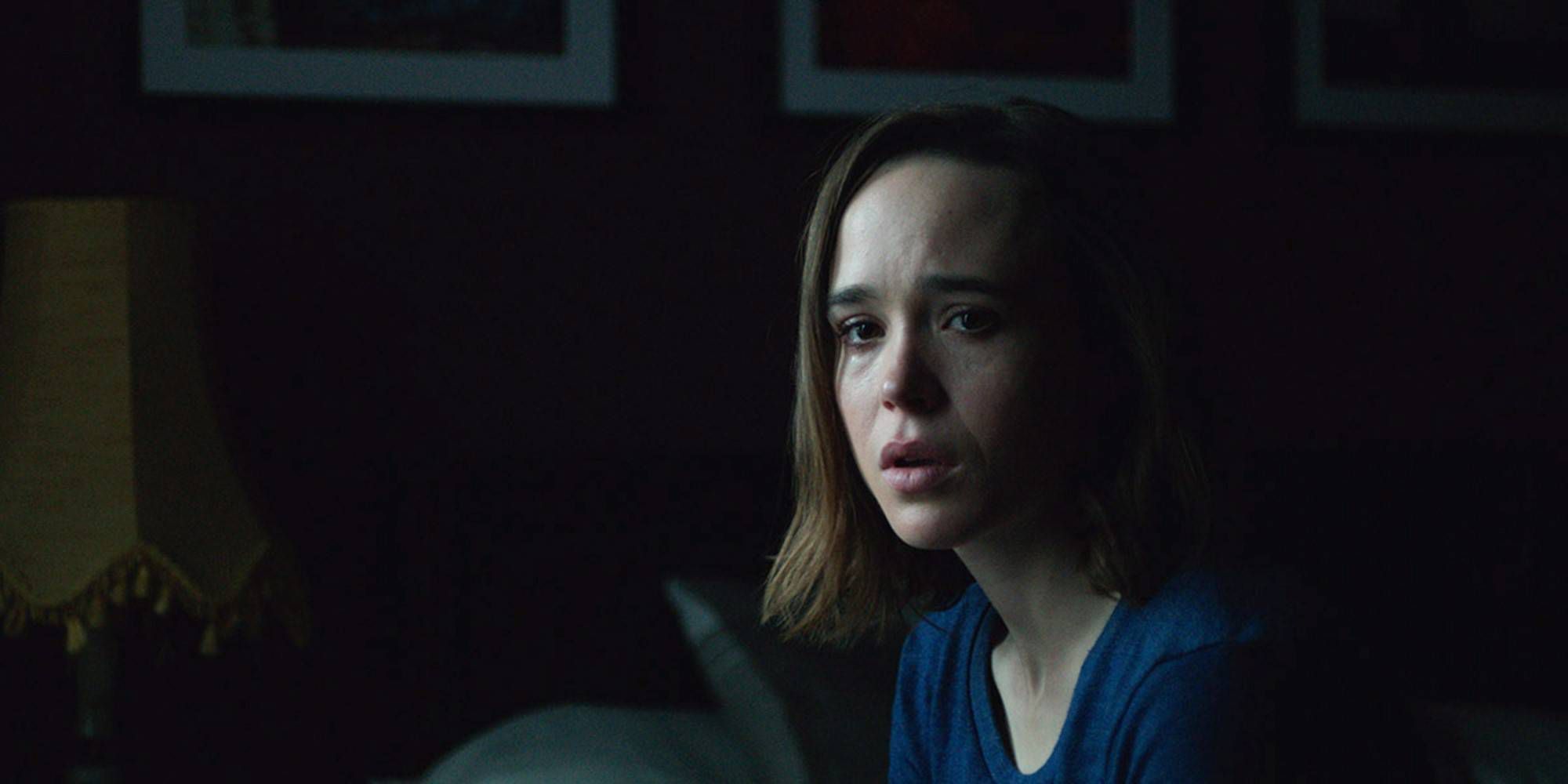
Senan, played by Sam Keeley with a specific kind of collapsed-inward exhaustion that you cannot manufacture with a good performance note, is the film’s narrator and our entry point. He is picked up on release by his sister-in-law Anna, played by Ellen Page, whose husband was killed during the outbreak. Killed by Senan. She does not know this yet. He does. He has known it every second of every scene they share together, and Keeley plays that weight without ever telegraphing it, without any of the actorly signaling that a studio note would have demanded to make sure the audience tracks the irony.
The device at the center of this film, that the Cured remember everything, is the thing that makes it work as more than a genre exercise. While they were infected, while they were killing and consuming, they were conscious. Trapped. Watching. And then they stopped fighting it, and they stopped watching, and they just went with it, and they remember that moment too, the moment of choosing, and they carry that with them now. Conor, a former barrister now scrubbing floors, tells Anna that the fighting was hell. He does not complete the thought. He does not have to. You already know what the end of that sentence sounds like.
Every human being walking around has a version of this. A memory that surfaces without permission, that T-bones you in the middle of an ordinary Tuesday, that makes you understand exactly what you are capable of and what you did with that capability. The Cured are just carrying a more literal version of what the rest of us already know about ourselves. That is Freyne’s actual thesis, and he gets there through zombie horror, which is the kind of move that makes you want to find whoever tried to talk him into adding twenty more minutes of action in the third act and explain to them quietly that they almost killed a real film.
The Science Thread and Why It’s the Right Kind of Red Herring
Senan is assigned to work at the research facility where Dr. Lyons is still working on the resistant strain, still searching for the second cure, and there is a specific female zombie there who commands unusual attention from the doctor. The reveal, that she is the doctor’s partner, is handled with zero sentimentality and complete efficiency, which is the right call, because the movie is not about this relationship, it is using this relationship to show you what the stakes of the resistance are for a real human being, not a political category.
The science plot is a World War Z-adjacent frame, the researchers trying to solve the problem, the bureaucrats deciding what to do with the people who can’t be solved, and in any other version of this film it would be the whole movie. In this version it is scaffolding. The actual building is the question of what you owe someone you have wronged beyond any reasonable capacity for forgiveness, and whether grace is something that can be earned or whether it is only something that can be given.
The Uprising and What It Actually Means
The resistance movement that forms among the Cured is the machine the plot runs on, and it is also where the film refuses to let you root cleanly for anyone. The Cured have been treated as less than human since the moment they were returned to human consciousness, and the anger is legitimate, and the organizing is legitimate, and then Conor leads them to a plan that releases the resistant zombies en masse into the city and 8,000 people are killed or turned. The political grievance was real. The response was monstrous. Both of those things are true simultaneously and the film does not flinch from either one.
Conor is the film’s key piece of moral architecture. He remembers what he did during the outbreak, and it does not haunt him the way it haunts Senan, and the film is very precise about what that means. The absence of guilt is the tell. The Cured who are building toward a livable future are the ones who are still wrecked by what they remember. The ones who have made their peace with it by deciding the peace was unearned anyway, those are the ones who end up releasing 8,000 zombies into a city.
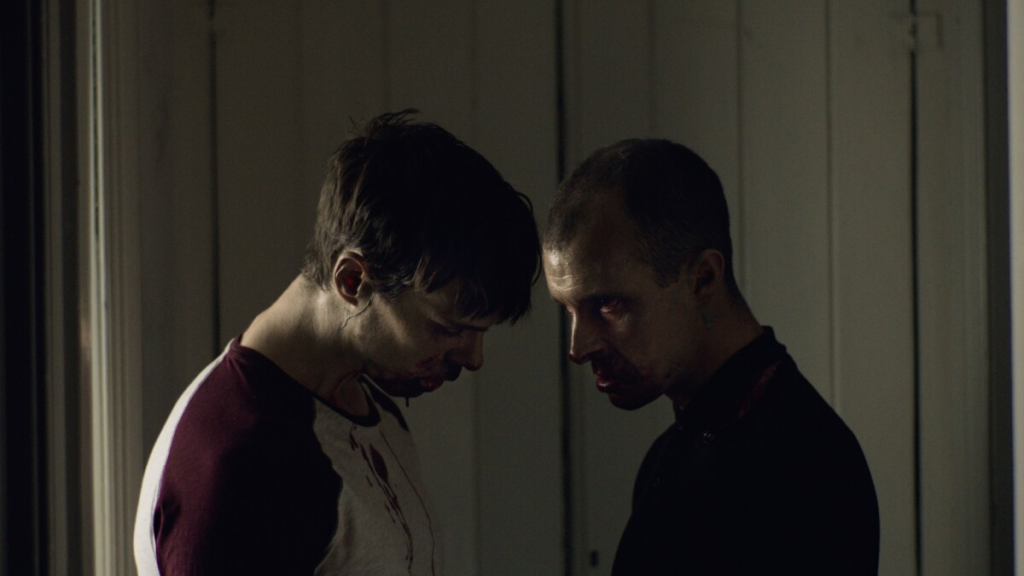
Senan gets recruited into the plan and goes along until he understands what it will cost Anna and her son, and then he tries to walk away, and then Conor forces him back, and this is where the film shifts from allegory into something more like a reckoning. Senan killed Anna’s husband. Anna does not know. The outbreak Conor engineers means that Senan has the opportunity, maybe the last opportunity, to do the one thing that might begin to address that weight.
What Actually Happens at the End and Why the Field Matters
The ending confused a lot of viewers on first watch because it is delivered with an almost perverse restraint for a film that just let zombies loose in Dublin, and that restraint is entirely correct.
Anna’s son Cillian is bitten during the chaos. Senan gets him back to Dr. Lyons’s lab, where the cure for the resistant strain was completed in the film’s cruelest ironical beat, Dr. Lyons finishes the cure, her partner is cured, they reconnect, and then Dr. Lyons is killed by an attacking zombie in the same moment. Cillian gets the treatment. He survives.
The political situation after 8,000 new infections means that remaining in the city is impossible for anyone associated with the Cured. Anna has to return to quarantine to survive the immediate chaos. And when she comes back to the house later, she finds it empty except for maps on the walls, marked routes, marked destinations, a message that is also a promise. Senan took Cillian out of the city. Cillian is alive. Anna now has a direction to walk toward.
The two of them in the field are not a hopeful image in any easy sense. They are two people who survived something, one of whom carries the specific knowledge of what he did to get there. The field is not resolution. The field is the distance between where they are and where grace might eventually be possible, and the film is honest enough to show you that distance without collapsing it.
The Competing Reads
There are a few ways people have interpreted what The Cured is actually about at its core, and they are worth laying out cleanly.
The first and most explicit read is the post-conflict Ireland lens, the film as an allegory for IRA demobilization, the specific question of how a society reintegrates men who committed political violence and whether rehabilitation is a civic obligation or a moral impossibility. Freyne is Irish, the film is shot in Dublin, the political texture of how the Cured are treated maps onto this context with a specificity that is not accidental.
The second read is broader, the film as a meditation on incarceration and reentry, the way societies create underclasses from people they have labeled and then are surprised when those people do not successfully dissolve back into the fabric. The parole officers, the menial jobs, the constant reminder of what you were, this works as a critique of carceral logic entirely outside the Irish context.
The third read, and the one the film pushes hardest in its final act, is the most personal, the film as an argument about guilt, grace, and whether forgiveness is something that can be transactionally earned or whether it is only something that one human being extends to another freely, outside any accounting. Senan saving Cillian does not cancel what Senan did. Anna extending any future toward him is not justice. It is grace, the unearned kind, and the film knows that is the only kind that actually functions.
Moviesoapbox’s Read on The Cured
The third read is the right one, and it contains the other two rather than competing with them. The political allegory works because it is grounded in the personal psychology of guilt and the human need for restoration, and if you strip the political context out you still have a film that is doing something true about what it means to live inside a specific memory of a specific wrong you committed and to carry that and to keep moving anyway because the alternative is Conor, which is to let it go in the wrong direction entirely and become something worse than the thing you were when you did the damage.
What Freyne understood, and what the film communicates through Senan’s arc with a precision that most films with five times this budget cannot manage, is that guilt is not the enemy. Guilt is the mechanism that keeps you human. The Cured who are struggling are the ones worth saving. The Cured who have found their peace are the ones about to release zombies into a crowd. That is a real moral argument, stated through genre filmmaking, by a first-time feature director working in a tradition that has exactly zero interest in making it easy for you.
This film should not exist, in the best possible sense. It is too morally serious for its budget tier and too genre-shaped for the awards circuit and too specifically Irish for American distributors to know what to do with it and too universal in its actual concerns for any of those objections to matter. It survived anyway. And it is absolutely brilliant in every way.
🎬 If You Liked This…
- Monos — what happens to people who have done terrible things inside a system that sanctioned those things, and whether reintegration into ordinary life is even possible after that
- The Survivalist — a post-collapse world where the old categories of human and monstrous have been dissolved by necessity, and everyone is negotiating the same impossible question of who gets to survive
- We Have Always Lived in the Castle — outcasts living on the boundary of a society that has decided to fear them, the psychological weight of being defined entirely by what the community outside your door has decided you are