
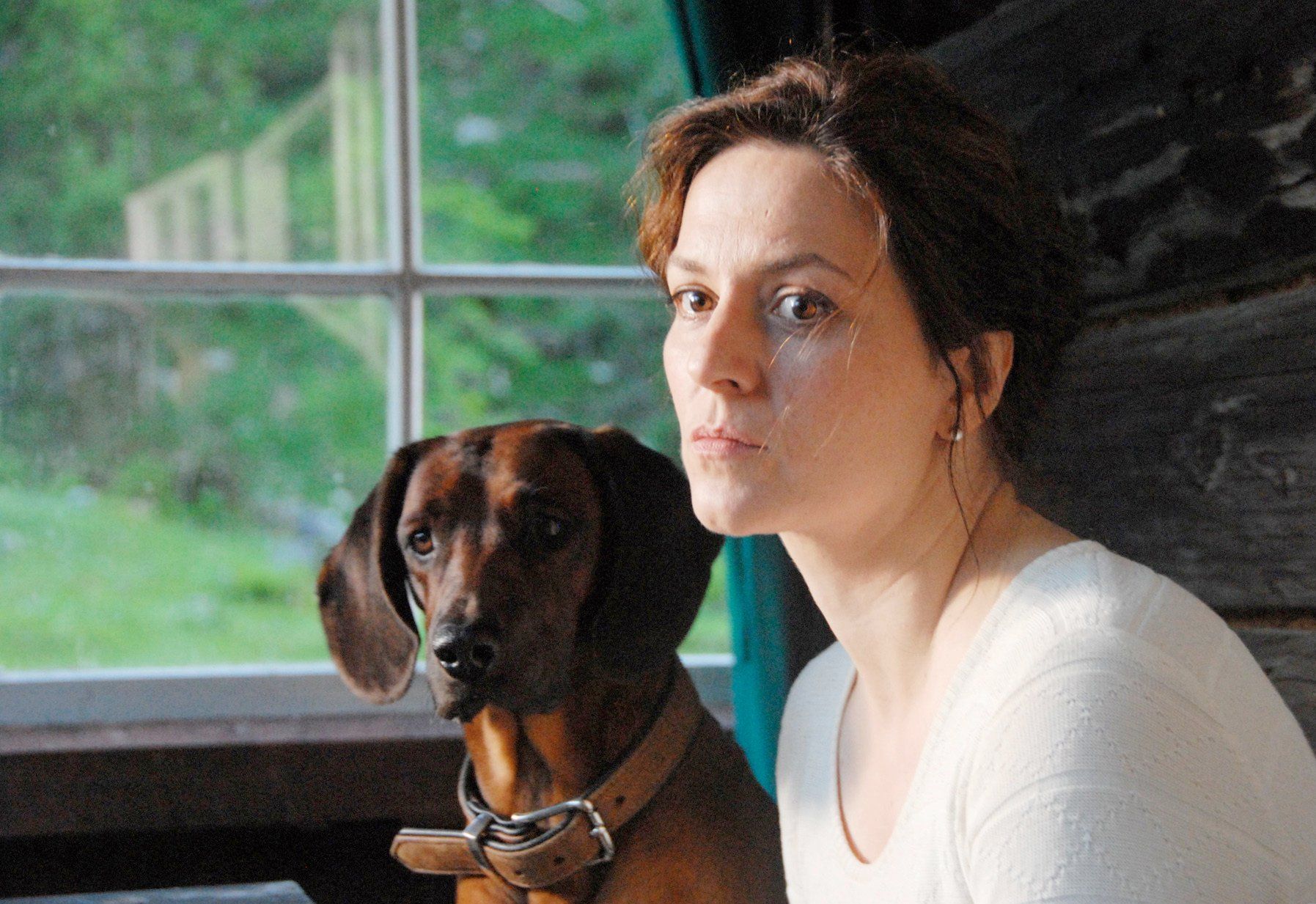
Hey there everyone! Welcome back to Movie Soapbox, the little corner of the internet that only you and I and that guy sleeping in the corner over there know about. This is the place where we find underappreciated indie films and we make sense of them. Today? We are doing a deep dive on Die Wand, a movie so committed to its own silence that it makes most art-house cinema look like a Michael Bay production by comparison.
Fair warning, and I mean this more sincerely than I mean most things: everything that happens in this film is about to be laid bare, and given that the film has approximately four plot events across its entire runtime, knowing them in advance is basically watching the whole thing. If you want to experience Die Wand cold, close this tab, go watch it, come back. I’ll be here. Otherwise, consider yourself warned, and let’s get into it.
The Making of Die Wand
Before we walk through what happens on screen, you need to understand what kind of film this almost wasn’t. A German-language production adapted from a 1963 Austrian novel by Marlen Haushofer, starring Martina Gedeck, set entirely in the Alps, narrated in the interior voice of a woman who speaks to no other living human being for the better part of two hours. You can feel, if you know how to read these things, exactly what the note from every acquisitions exec who passed on this material looked like. No antagonist. No escalating conflict. No second act reversal. No arc in the conventional sense. What you can also feel, watching the finished film, is that director Julian Roman Pölsler got this made without anyone successfully talking him out of what it actually is. That doesn’t happen as often as it should. The films that survive the development process intact tend to survive because someone attached to them had enough credibility, or enough stubbornness, or both, to absorb the pressure to normalize the thing. Die Wand has the texture of a film that absorbed that pressure and held. You can tell because nothing about it has been sanded down to make it easier to sell.
Die Wand Walkthrough
So. What happens. An unnamed woman travels with two friends, Hugo and Luise, to a hunting cabin in the Austrian Alps. The couple walk into town for the evening and never come back. The next morning she goes looking for them and walks face-first into an invisible wall bisecting the valley. The day after that, she can see a neighbor across the barrier, an old man at a water spigot, his wife near the house. The water is running. Neither person is moving. The world outside the wall is frozen. The world inside it is not. She is alone, with a dog, a cat, and eventually a cow that wanders through before the wall seals completely. She survives. Seasons pass. Years pass. She acquires more animals. She hikes higher into the mountain pasture in summer. She chronicles everything on whatever paper she can find. A stranger appears one day and slaughters her dog and her calf. She shoots him with a rifle and pushes the body off a cliff without much ceremony. Another winter arrives. In February, she runs out of paper. The film ends.
That is the film. That is all of it.
The invisible wall itself, the single most conventionally cinematic element in the entire premise, gets fully explored in the first fifteen minutes and then basically retired as a plot mechanism. She hits it. She tests it. She drives a Mercedes Benz into it at speed, which is the film’s one moment of genuine propulsive energy, and then she accepts it and moves on. If you came here for a film about investigating, mapping, and defeating a supernatural barrier, that film exists, it just isn’t this one. What this film is interested in is everything that comes after the moment of acceptance.
The novel it’s based on, Haushofer’s 1963 book of the same name, places the wall in an unmistakably post-apocalyptic context. The frozen figures on the other side of the glass aren’t just absent, they appear to have died instantly, the implication being something like a nuclear event that the wall, by whatever mechanism, protected her from. That context matters. She isn’t just isolated from other people by circumstance or choice. She is, as far as she can determine, the last living person. And the novel is interested in what that does to a person over years, how the weight of being the last witness to human existence sits on a specific kind of mind, a middle-aged woman, alone, with animals who depend on her and a landscape that does not care whether she lives or dies.
The film carries all of this, largely through Gedeck’s voiceover narration drawn from the woman’s written chronicle, and largely through what it chooses to linger on and what it refuses to explain. The stranger who appears in the mountain pasture, for instance, the man she kills, gets no origin story. He came from somewhere. He got through or around the wall somehow. He survived whatever event killed everyone else. None of this is addressed. She describes the shot with the calm specificity of someone reporting that they fixed a leaking pipe. He was large. She couldn’t have missed. End of entry.
That flatness is the whole film’s operating mode, and understanding it is the key to understanding what you just watched. Now, the question everyone arrives at eventually, because the film is clearly not primarily interested in invisible walls and alpine survival logistics, is what is this actually about. Three readings circulate, and they are not mutually exclusive.
Theories to explain Die Wand
Theory Number 1 – The first is the independence reading. The woman has no history given to us. No backstory, no former relationships, no named identity. She is a woman in her early fifties placed in a situation where every obligation to other people, every social performance, every accommodation the world requires of a woman that age, has been physically removed by an invisible barrier. What remains is what she actually is, stripped of context. The wall, on this reading, is a fantasy of release, the life she might have built if the world had simply stopped requiring things of her. The burden she feels when the cow arrives, her first thought is burden rather than survival resource, is the trained reflex of a person who has spent her life accounting for how her choices affect others. She has to relearn herself without that reflex. The film is about that relearning.
Theory Number 2 –The second reading is depression. The wall is a metaphor for a mental collapse so complete that she has simply stopped leaving. The animals are real. The cabin is real. The invisible barrier is her mind’s way of narrating a withdrawal she has no other language for. Winters in this reading aren’t just winters, they are the long immobile seasons of serious depression, the inability to move or plan or want. And the strange man she kills in the pasture is the violent intrusion of something, a confrontation with whoever or whatever drove her here in the first place, that she finally has the capacity to stop. She survives it. She doesn’t forgive it. She keeps moving.
Theory Number 3 – The third reading is the one that the film’s ending supports most cleanly, the search for equilibrium, what the source post calls the search for zen and what I’d call the obliteration of the anxious self. She arrives in the Alps still measuring time in days, still restless with the human need to solve things and explain things and push back against what is. The film’s long middle section is watching that need exhaust itself against a reality that will not respond to it. She stops tracking dates. She stops trying to understand the wall. She accepts the rhythm of seasons not as consolation but as simple fact. When the strange man comes and she kills him, she is not troubled by the killing the way a woman still embedded in social reality would be. She has moved past the framework in which that killing requires an emotional accounting. And when she runs out of paper in February, the chronicle ends not because her life ends but because she has finished needing to narrate it. She’s just there. That’s the whole film. That’s what it cost her to get there.
Moviesoapbox’s Theory to Explain Die Wand
The reading I’ll plant my flag on is the third, with the depression reading woven through it as mechanism rather than as total explanation. The wall is real within the film’s world, and I don’t think the film earns our trust only to yank the supernatural element as metaphor at the end, that would be a betrayal of the contract the first fifteen minutes establish. But the psychological texture of depression is how the film renders the interior experience of isolation over years, because that interior experience and the experience of depression are functionally indistinguishable from the inside. The woman’s journey is not recovery from depression exactly. It is the discovery of a self that persists underneath all the noise that depression, and society, and other people’s needs had been generating. Running out of paper is peace. Not happiness. Not resolution. Just the cessation of the need to explain herself, even to herself.
That is a hard thing to get onto a screen. Most films, given this premise and this budget tier, would have engineered a third act in which the wall comes down or the woman dies or someone arrives who changes the equation in a legible dramatic way. The fact that none of those things happen is the film’s whole argument, that the only ending available to this particular story is the one that has nothing left to say. A test screening audience would have gutted this film. You can feel the version of this movie that gets notes requesting more incident, a love interest, a explanation for the wall’s origin, a hopeful final image. That version doesn’t exist because someone kept it from existing. That’s the thing worth remembering the next time a studio pic flattens its ending into resolution you didn’t need and didn’t ask for.
Die Wand kept its ending. A lot of films like it don’t.