
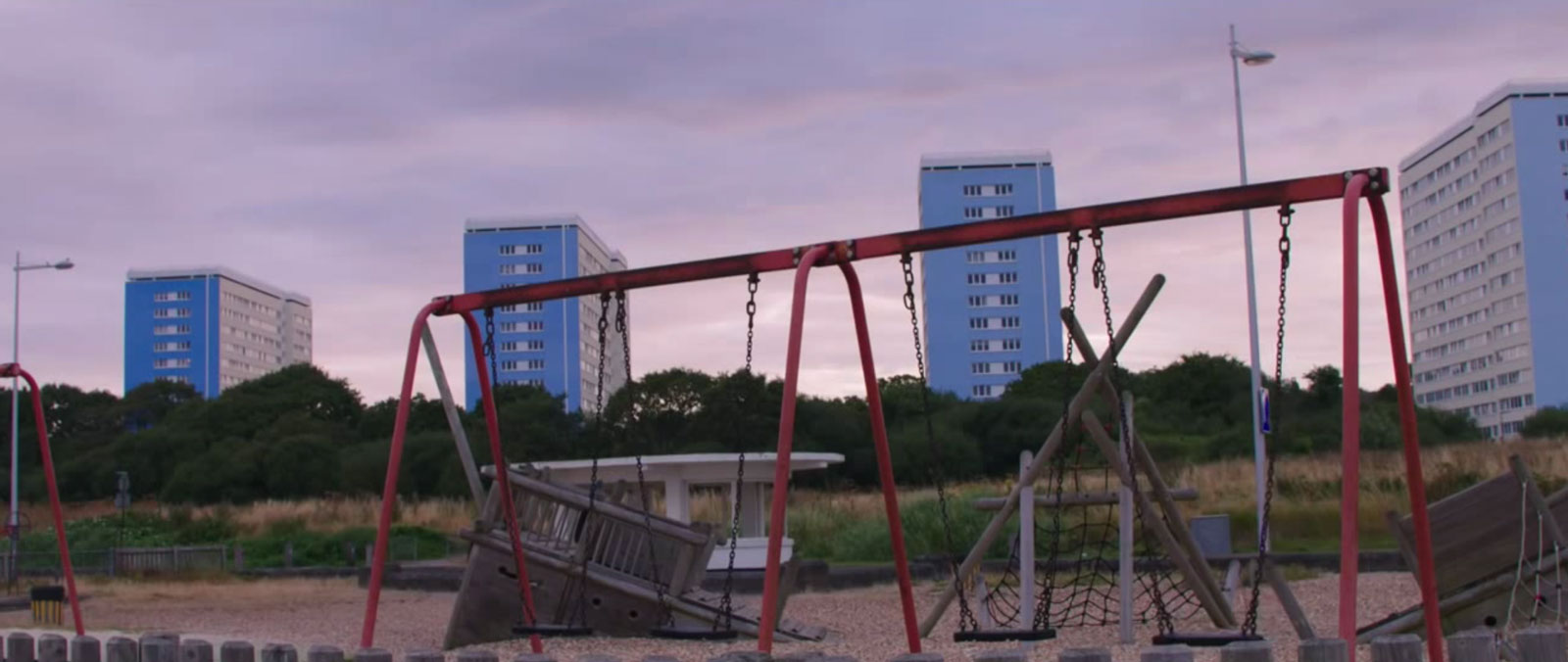
Hey there everyone! Welcome back to Movie Soapbox, the little corner of the internet that only you and I and that guy sleeping in the corner over there know about. This is the place where we find underappreciated indie films and we make sense of them. Today we are doing a deep dive on Containment, a movie so quietly, methodically unsettling that the 40% of Rotten Tomatoes audiences who bounced off it probably walked away thinking the screener was broken. It wasn’t. That’s just what a film looks like when the director actually trusted you.
Before we go any further, here’s the trailer.
Alright. If you haven’t seen Containment yet, stop here, go find it, come back. Because from this point forward we are going all the way in, every plot point, every beat, every sealed door and orange suit, and I am not going to slow down to warn you again.
Containment Movie Walkthrough
What you need to understand before the first frame is what kind of film this should have been, by every conventional metric of the budget tier it was made in. A contagion thriller with an anonymous tower block, no stars, no FX budget worth mentioning, a first-time director, shot in what was probably twelve days, give or take a weekend, on a footprint so small the entire production could fit in one location. That’s the profile of a film that gets the screws put to it in post by whatever small distributor picks it up, the ones who want a jump scare every seven minutes and a scene where somebody explains the virus out loud to another character who already knows what the virus is, just so the audience doesn’t have to think. Neil McEnery-West didn’t make that film. You can tell, watching it, that nobody got to him in time. That’s not luck. At this budget level, at this visibility level, that’s a director holding the line on every single decision, because there’s no one else in the room with enough juice to overrule him. That’s the only way this film exists in the shape it’s in.
Mark is our protagonist, and the film barely bothers to introduce him as such, which is the first signal that you’re in different hands than usual. He sleeps late. He has somewhere to be. He can’t get his door open. The power is out, the windows are sealed, and the slow-dawning wrongness of the situation is delivered through behavior rather than dialogue, through the way a man moves around a kitchen that isn’t working right, through the particular quality of silence that shouldn’t be silence. The apartment complex itself does atmospheric work here that most films would have to pay a production designer six figures to achieve. These towers read as sick. There’s a specific visual grammar to social housing built at scale, the repetition, the sameness, the feeling that the building is indifferent to whoever is inside it, and McEnery-West leans into that grammar without over-explaining it.
The neighbors arrive before Mark has his bearings. Hazel. Sally. Sergei. Enid. Nicu. They’ve punched through drywall to get to him, which tells you something about the texture of this building, that going through the wall is faster than going around it, and also something about where everyone’s heads are at. The group assembles in the way frightened people actually assemble, not as a team, not as a unit, but as a cluster of individually terrified strangers who have temporarily decided that proximity to other people is better than proximity to nothing.
Information is rationed in this film the way water gets rationed in a siege. The PA announcements tell them to stay calm. The figures in orange suits outside suggest that whatever calm is being requested, no one in an official capacity actually believes it’s coming. A man in a window across the way bangs against glass in a way that goes nowhere. A runner tackles one of the orange suits and gets shot. The escalation happens in glimpses, at a distance, which is the right choice, because the moment you get close to the machinery of a containment operation in a low-budget film, the seams show. Keep it at distance, keep it as impression, and the imagination fills in something much larger than any effects budget could deliver.
When they finally get their hands on one of the orange-suited figures, it turns out to be Sally, a woman who started the job a day ago. She knows just enough to confirm that there is a contagion, that it is airborne, that it is nearly always fatal, and that the agency she works for suppressed the initial announcement. She doesn’t know enough to explain the larger picture. That’s not a script limitation. That’s a script decision, and a good one. The film understands that the most unsettling version of this story is the one where the people executing the containment are almost as in the dark as the people being contained.
One by one the group thins out, through violence and panic and the particular entropy of a situation nobody is equipped to manage. Mark sends Nicu ahead. We hear that the containment perimeter has been pulled back. The illness has spread beyond the original zone. The film ends without explaining itself, which is the only honest way a film like this can end.
Now. The theories. Because there are a few ways to read what you’ve just watched, and I want to lay them out fairly before I tell you which one I think is right.
Containment Movie Explanation Theories
Theory One: The illness is real
Everything is real – the containment is genuine, the film is a ground-level disaster story with no heroes at the top. Under this read, the orange suits represent a government or agency response that is doing its best with a spreading airborne contagion, the pulled-back perimeter at the end confirms the illness is winning, and the horror of the film is the horror of being an irrelevant civilian in a catastrophe being managed by people who have already done the math on acceptable losses. This is the most straightforward read and it works. The film functions cleanly as a contained thriller under this interpretation.
Theory Two: The Agency is Controlling Everything
The illness is real, but the agency knew about it earlier than they’ve admitted, possibly much earlier, and the containment of the population is as much about controlling information as controlling the spread. Sally’s detail about the suppressed announcement feeds this reading. The fact that the containment perimeter is already pulling back suggests the official response has been reactive rather than proactive from the start. Under this read the film is about institutional failure in the face of a genuine crisis, which is a different kind of horror than the first theory, quieter, more corrosive.
Theory Three: The Illness Is a Myth
Here’s a twist – the illness is either fabricated entirely or so early-stage that its actual danger is unknowable, and what we are watching is a psychological study being run on the tower’s residents. This is the theory the source material floated and I think it’s the right one, for reasons the film actually goes all in on.
Start with the logistics. Those four towers, sealed overnight. Doors epoxied shut. Every window sealed. If you do the rough math on the number of units and the number of apertures you’d need to physically seal in one coordinated overnight operation, without a single resident waking up and raising an alarm, you’re looking at a military-scale deployment of personnel moving in absolute silence and perfect synchronization. That is not how a public health emergency response works. That is how a controlled experiment is staged. The resources required to execute that sealing operation, the precision of it, the scale of it, point toward an organization that was ready for this, that had planned for exactly this, which means the “emergency” framing is at minimum incomplete and possibly entirely manufactured.
Then there’s Enid. Her speech on the roof about how people used to have the character to endure hardship with dignity, about the modern animal panic she sees around her, sits in the film like a planted thesis. She’s describing the experiment’s hypothesis out loud. She’s the control variable who articulates what the study is measuring. The film doesn’t underline this, doesn’t signal you to pay attention, just lets it sit there in the conversation for you to find or not find. That’s good writing.
The illness itself is almost invisible. One or two people coughing. A handful of deaths that we can attribute to orange-suit violence or to the chaos of the situation rather than to any confirmed biological cause. For a contagion that is supposed to be nearly always fatal and airborne, the body count from the illness alone is suspiciously low compared to the body count from the response to the illness.
Moviesoapbox’s Personal Take on the Movie Containment
My read: this is a study of how a controlled population fractures under perceived threat. The illness is the pretext. The orange suits are the conditions. The sealed building is the lab. Whether the disease is real or not almost doesn’t matter because the experiment is measuring behavior under conditions of total informational deprivation, which you can induce with a real threat or a fake one. The result is the same. The film ends with the perimeter pulled back not because the illness won, but because the study parameters have changed. The sample group has served its purpose or failed to be controllable enough to be useful. Either way, they’re done with this particular apartment complex.
That’s a dark reading. But it’s the one that makes the most sense of the sealing logistics, and it’s the one that gives Enid’s rooftop speech the weight the film clearly intends it to carry.
What McEnery-West made here is a film that exists because no one with enough money to ruin it was paying close enough attention to ruin it. The budget was low enough to keep the suits disinterested and the director in control of his own material. There’s a version of this film that got picked up slightly higher on the food chain, the one where somebody insists on a scene that explains the virus, where the third act gets a resolvable conclusion because test audiences circled “confusing” on their cards, where the ending gets reshot to deliver something, anything, more legible than what’s there. That film would be unwatchable. This one is genuinely good. Sometimes the best thing that can happen to a film is that nobody important noticed it until it was already finished.
If You Liked Containment…
The Colony (2013) – Survivors sealed underground after a climate apocalypse discover another bunker has gone silent. Same trapped-and-deteriorating energy where the walls feel like they’re shrinking.
10×10 (2018) – A man locks a woman in a soundproofed room and the power dynamic inverts completely. The box is smaller, the stakes are personal, and the twist reframes who’s actually trapped.
Life (2017) – Six astronauts sealed inside the ISS with something that’s picking them off one by one. Containment in zero gravity where venting the threat means venting yourself.