
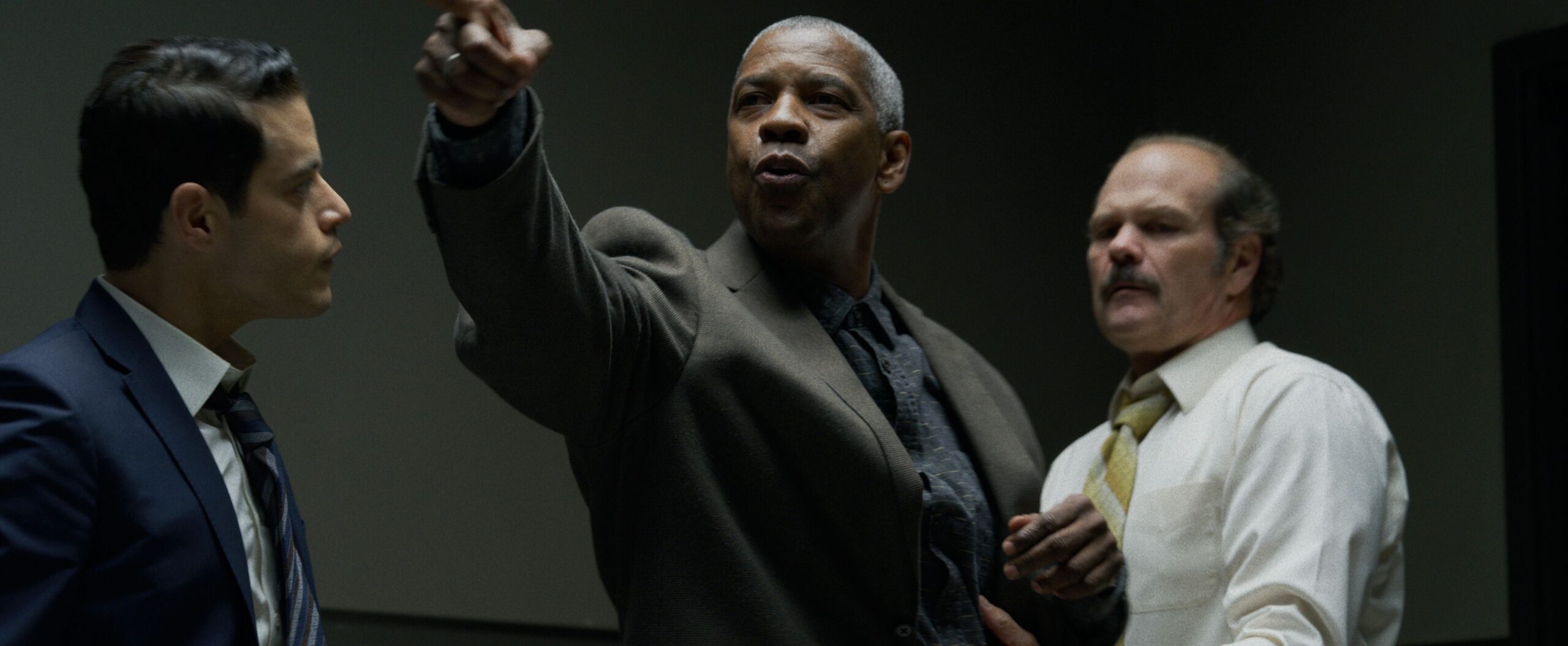
Hey there everyone! Welcome back to Movie Soapbox, the little corner of the internet that only you and I and that guy sleeping in the corner over there know about. This is the place where we find underappreciated films and make sense of them, the ones that got buried under the release-weekend noise or showed up on a streaming service with no fanfare and a thumbnail that made them look like a Lifetime original. Today we are doing a full deep dive on The Little Things, a movie so quietly, deliberately devastating that the studio almost certainly had no idea what it had greenlit, and by the time anyone upstairs figured out what John Lee Hancock was actually saying with this thing, Denzel Washington had already turned in one of the most controlled, corrosive performances of the last decade and there was nothing left to fix.
Before we go any further, here is the trailer.
Alright. If you have not seen The Little Things, close this tab, go watch it, and come back. Everything from this point forward is a full spoiler. Not the soft, careful kind with vague warnings and artful misdirection. The hard kind. The kind where I tell you exactly what is in the envelope at the end and why it is a lie. You have been warned, and I will not warn you again.
The Little Things Movie Walkthrough
Now. Let’s get into it.
The film opens on a woman being stalked along a California highway at night, somewhere in the early 1990s, a man in a car running her off the road with that particular patient, unhurried menace that tells you this is not his first time doing this. She abandons her car, which is the wrong call and the movie knows it, she flags down a truck driver, and she gets away. The stalker’s face is visible for just a moment in the dark. File that away. We are coming back to it.
From there we meet Joe “Deke” Deacon, played by Denzel Washington with the specific exhaustion of a man who has been carrying something heavy for so long he has forgotten what it felt like to put it down. Deke is a Kern County deputy now, shuffled out to the desert, and he gets sent back to Los Angeles on what is supposed to be a simple evidence pickup. He does not want to go. The movie does not make a big deal out of this, it just shows you the reluctance, and the reluctance is the whole story.
When Deke gets to LA, he follows the detectives out to a fresh murder scene almost reflexively, the way a man who has spent twenty years chasing something cannot stop chasing it even when he has been officially told to stop. He sees things. Small things. The kind of observational detail that makes Baxter, the lead investigator played by Rami Malek doing his best impression of a man who has replaced all his nerve endings with procedure and ambition, realize that this old, broken, suspended, divorced deputy who drove in from the desert to pick up some paperwork might be worth listening to.
Baxter is interesting because he represents a specific type that gets a lot of traction in crime dramas, the brilliant, methodical, morally confident investigator who uses superior intelligence and cutting-edge technique to deliver justice. The film lets you believe in him for a while. It is patient about disabusing you of that belief.
The Little Things Making Of Details
Before we go any further into what happens to these two men, pay attention to what kind of film this could have been and almost certainly was pitched as. A mid-budget prestige thriller with Denzel Washington, Rami Malek, and Jared Leto playing a creep, set in the 1990s, released on HBO Max day-and-date with theaters during a period when that strategy was a financial necessity dressed up as an audience-friendly gesture. On paper that is a safe movie. A procedural with movie-star heft and a serial killer who looks like Jared Leto in a diner, which is already halfway to a Halloween costume. The kind of movie where the suspect probably did it, the heroes are probably right, and the ending probably resolves into something that lets you go to bed with your sense of institutional order intact.
John Lee Hancock wrote the script in the 1990s, and it sat for nearly thirty years before it got made. You can tell. The script has the patience of something that was never written to be greenlit quickly, that was never shaped by a room full of development executives asking whether the ending tested well with audiences in Phoenix. When a script sits in a drawer that long and comes out intact, it usually means nobody got to it with the notes that would have made it easier to sell. The third act of this film, the part where the movie quietly reveals that it has been lying to you the same way its protagonist has been lying to himself, reads like something that survived every attempt to make it more reassuring. That survival is visible in the texture of the film. You can feel the shape of the movie it did not become.
Anyway. Back to the case.
The murders: prostitutes, stabbed, bags over their heads, staged with a consistency that points to a single killer operating over years. The refrigerator detail is the piece that cracks open the investigation. Deke notices that at one victim’s apartment, the refrigerator was broken, food was spoiled, but some items were fresh, beer and milk brought in after the fact. Someone was comfortable enough in that apartment after the killing to stock the fridge. The appliance repair call log from the victim’s building leads them to a repairman named Albert Sparma.
Sparma, as played by Jared Leto, is a genuinely unsettling piece of work, a large, limping, greasy-haired man who seems to exist for the sole purpose of making investigators feel like they have found their guy. He has a police scanner. He has boxes of clippings about serial killer investigations going back years. He knows too much about the cases. He shows up at crime scenes. He is, in the language of criminal investigation, a classic “police groupie,” obsessed with the machinery of detection, thrilled by proximity to it. He is also, and this is the thing the film wants you to sit with, almost certainly innocent.
The Little Things Walkthrough Continued
Sparma gets brought in for questioning and he does not break. He trolls them. He knows exactly how this works, he has read about it obsessively, and he enjoys watching two cops try to crack him with technique he has studied. The interrogation scene is the film at its most precise, because what looks like the behavior of a guilty man enjoying the game is equally, perfectly consistent with the behavior of a deeply strange, attention-hungry, boundary-obliterating innocent man who has finally gotten exactly the kind of attention he has always wanted from the institution he is fascinated by. The film never resolves this ambiguity in the room. It resolves it somewhere else entirely, later, quietly, in a way that most viewers miss the first time.
The FBI is coming. The case is going cold. Deke and Baxter are running out of time to close the noose on Sparma before the investigation gets federalized and taken out of their hands. And then one night Sparma calls Baxter from a payphone near his house and offers to show him where he buried the first victim, out in the desert, in a field.
Baxter goes. Deke follows but loses them in the dark.
Sparma leads Baxter to a field and tells him to start digging. Baxter digs. And digs. And digs. There is nothing in the ground. Sparma watches him dig with the expression of a man who is genuinely entertained, and Baxter, who has been running on certainty and procedure and the unshakeable conviction that he is right, finally reaches the bottom of something inside himself and comes up swinging. The shovel catches Sparma in the face. Sparma goes down. Sparma does not get up.
Deke arrives. Surveys the situation. And does something that tells you everything you need to know about who he is under the white hat: he tells Baxter that Sparma definitely did it, that the evidence will prove it, and that right now what matters is that Baxter needs to bury the body and cover the holes. He will be back.
What Deke does with those intervening hours is go back to Sparma’s apartment and go through every single item in it, bagging everything, looking for the one piece of concrete evidence that will make what just happened into justice rather than murder. He finds the hidden cache of crime clippings under the floorboards. He bags it all. He finds nothing that changes anything.
He returns to the field. He helps Baxter bury Sparma. He tells Baxter to let the case go, that it will be all the little things that get him caught. And then the film gives us the flashbacks that explain why Deke has been carrying this weight for twenty years: during his original investigation, a woman who had been terrorized by the serial killer stumbled out of the bushes at a crime scene, and Deke, already vested and jumpy and wrong about everything, shot her in the chest and killed her. A survivor. He shot a survivor. The medical examiner helped him cover it up. That cover-up is what cost him his marriage, his health, and his career.
Deke is not a man who found justice and then got broken by the system. He is a man who crossed a line, covered it up, and has been constructing a narrative of righteous pursuit ever since in order to survive looking at himself in the mirror.
Now we get to the barrette.
After the case closes and Baxter takes leave to be with his family, Deke sends him a manila envelope. Inside is a note that says “No Angels,” which is the film’s version of absolution-that-isn’t-absolution, and a red barrette. The missing barrette from the jogger victim’s crime scene. The one the killer was believed to have taken as a trophy. Deke found it in Sparma’s apartment. Sparma did it. Case closed. Baxter can breathe.
Except.
The final scene shows Deke at home, burning bags of evidence from Sparma’s apartment. And in the last bag, before it goes into the fire, he pulls out a package of red barrettes he has clearly just purchased. Still in the store packaging. And one is missing. The red one. The one he sent to Baxter.
He bought them. He fabricated the evidence. There was no barrette in Sparma’s apartment. Deke invented Sparma’s guilt the same way he invented his own innocence, by building a story that lets the people who need to keep going keep going. He has done this before. He knows how. He is very good at it.
The Little Things Movie Questions
Now, the question everyone arrives at this film wanting answered: did Sparma actually do it?
The movie answers this question, and it answers it early, and it does so visually in a way that requires you to pause and look closely. The opening sequence, the woman on the highway, the man in the car, his face briefly visible in the dark. If you freeze that frame and push the brightness, that is not Jared Leto. The build is different. The gait is different. The limping walk that Sparma has throughout the entire film is not present in a single step of the stalker in that opening sequence. The film’s writer and director went out of his way to show you the real killer, and made sure he looked nothing like the man his protagonists would spend the rest of the film destroying.
The eyewitness testimony is similarly constructed to tell you the answer. When the woman from the opening sequence sees Sparma at the police station, she does not make a clear identification. She says maybe she could take another look, knowing the police already have someone there. She was led. The identification is worthless. The screenplay is very deliberate about this.
Sparma was not the killer. Sparma was a strange, obsessive, boundary-violating man who worshipped the investigation of serial murders the way some people worship athletes or film directors, and he was in the wrong place at the wrong procedural moment, and two cops who needed him to be guilty made him guilty in their minds long before Baxter made him dead in that field.
The Little Things Movie Theories
The theories on this film generally split into three camps.
The Little Things Movie Theories the First: Sparma did it, the film is intentionally ambiguous, and the visual evidence in the opening is a deliberate misdirection or simply not meant to be read literally.
The Little Things Movie Theories the Second: Sparma is innocent, the film is a tragedy about confirmation bias and institutional corruption, and the visual evidence is the director telling you plainly what the characters cannot bring themselves to see. Third: the question of Sparma’s guilt is deliberately unanswerable, and the point of the film is that Deke and Baxter’s actions were wrong regardless, so the answer doesn’t matter.
The Little Things Movie Theories the Third: This one is the most comfortable one and therefore the most popular, because it lets you sit with the moral weight of the film without having to fully reckon with what Baxter did to an innocent man.
Moviesoapbox’s Preferred Reading of the Film The Little Things:
My read is the second one, and I do not think it is even close. The film is not ambiguous about Sparma’s guilt. It tells you he is innocent through the opening sequence, through the eyewitness contamination, through the complete absence of any physical evidence tying him to any of the murders, and through the final reveal that the one piece of evidence Deke used to assuage Baxter’s conscience was something Deke bought at a store. The film’s ambiguity is a feature of the characters’ perception, not the film’s. Hancock knows exactly what happened. He built the answer into the architecture of the film for anyone patient enough to look for it. The tragedy of The Little Things is not that we cannot know whether justice was served. The tragedy is that we can know, and what we find when we look is that it wasn’t, and that the men who failed to serve it will never fully understand what they did, because the story they have told themselves about who they are is too load-bearing to take apart.
Deke did not send Baxter that barrette to protect him. He sent it to protect the story. There is a real killer still out there, somewhere, in a California that stopped looking for him the moment two good men decided they had already found him. And the little things, the small, specific, patient, observable details that Deke was supposedly so gifted at reading, were there the whole time telling anyone who looked that they had the wrong guy.
He just stopped looking at the details when they stopped pointing where he needed them to point. That is the oldest corruption there is, and it does not require a dirty cop to pull it off. It just requires a tired one who needs something to be true badly enough to make it true. A script sat in a drawer for thirty years waiting for someone to say yes to this ending. Be glad someone did.