
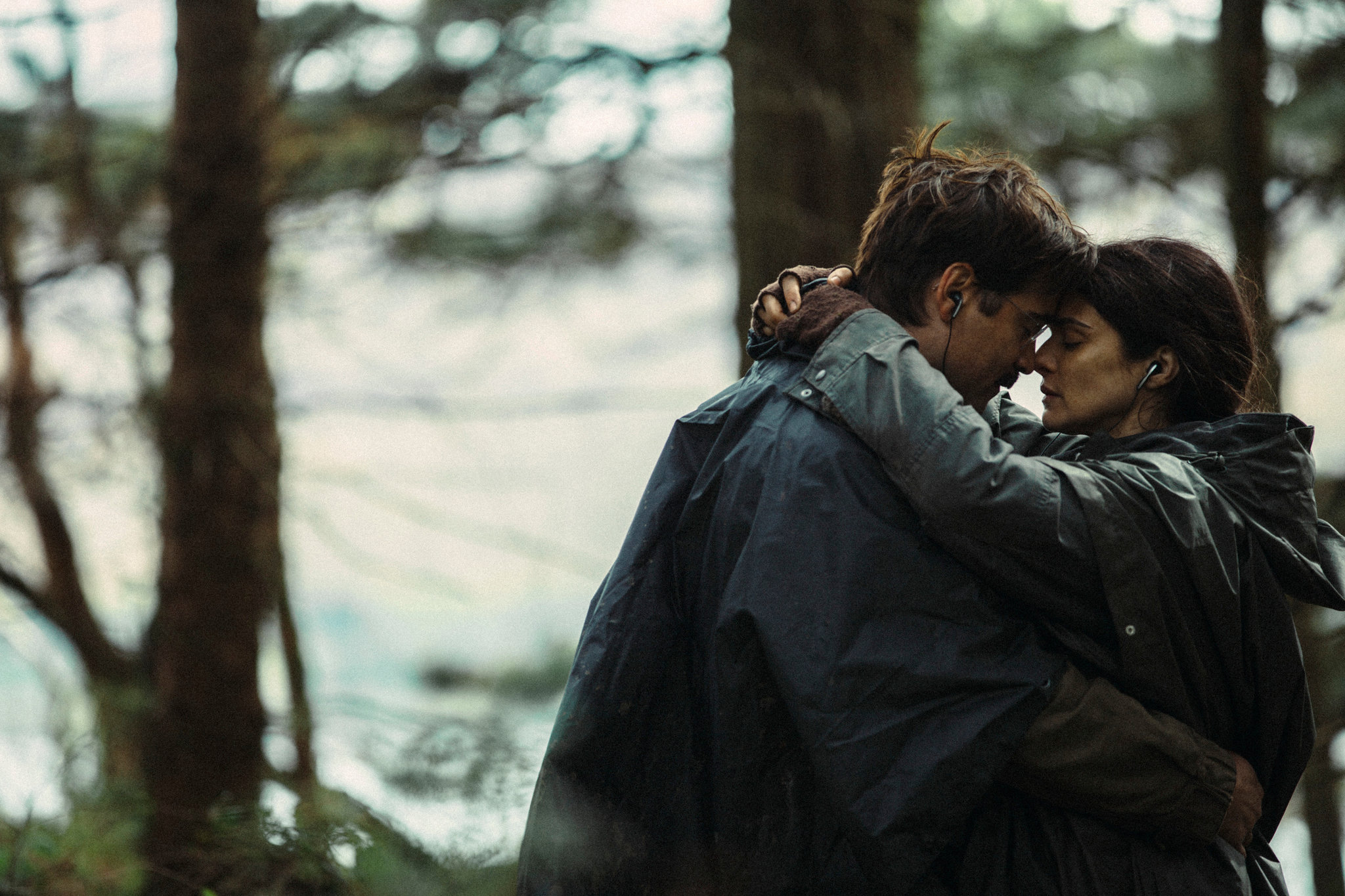
Hey there everyone! Welcome back to Movie Soapbox, the little corner of the internet that only you and I and that guy sleeping in the corner over there know about. This is the place where we find underappreciated indie films and we make sense of them. Today? We are doing a deep dive on The Lobster, a movie so quietly, relentlessly brutal that even the people who championed it through the festival circuit probably needed a few days before they could explain what they’d just watched.
Fair warning before we go any further: everything from here on out assumes you’ve already seen the film. We are going all the way in. If you haven’t watched it yet, close this tab, go watch it, come back. What follows will ruin every turn this movie takes, and more importantly, it will rob you of the specific kind of dread the ending is supposed to deliver cold, without preparation. You’ve been told.
Now. The world of The Lobster.
The Movie Lobster and the Making Of
You need to understand the operating rules of this place before the ending means anything, because Yorgos Lanthimos builds his films the way a trap is built, every mechanism matters, nothing is decorative. The society in this film has decided, with the full bureaucratic weight of law and enforcement behind it, that being single is a pathology requiring correction. Not a lifestyle, not a phase, a condition. You lose your partner, to death or divorce, and you are sent to a hotel that functions as a detention facility, a rehabilitation clinic, and a meat market all at once. You have forty-five days to find a compatible match or you are converted into an animal of your choosing and released into the woods. That is the literal, stated, non-metaphorical rule of this world.
The Movie The Lobster Walkthrough
The matching system inside the hotel runs on what the film calls Identifying Characteristics. A nosebleed. A limp. Short-sightedness. The logic, weaponized and parodied at the same time, is that compatibility requires a shared defining trait, something legible, something you can point at. It is every bad dating app algorithm taken to its terminal conclusion, the reductive idea that matching means mirroring, that love is just two spreadsheet rows with the same value in column C.
Outside the hotel, in the woods, there is a counter-society. The Loners. Escaped singles who have organized their freedom around an equally rigid set of rules: no coupling, ever, enforced with the same violence the hotel uses to enforce its opposite mandate. The hotel hunts the Loners. The Loners have their own internal police. The film gives you two totalitarianisms and places David, Colin Farrell’s soft-bodied, quietly devastated character, directly between them.
David ends up in the woods. He ends up with the Short Sighted Woman, played by Rachel Weisz. They are matched on their shared short-sightedness. It works because of that. And you already know, if you’ve been watching this movie at all, that anything that works because of a legible shared characteristic is a ticking clock.
Before we get to the bathroom and the knife, there’s something worth sitting with for a moment, something the film’s surface-level satirical read tends to obscure. Think about what tier of production this is. The Lobster got made with a cast that includes Colin Farrell, Rachel Weisz, and Olivia Colman. For a film this aggressively uncommercial, that cast isn’t a coincidence, it’s a lifeline. Films with premises this hostile to audience comfort need a certain gravity of talent attached before anybody with distribution money will take the call. You can tell from the way the film moves, the way it refuses to soften any of its edges, that Lanthimos retained real control here, the kind of control you only get when the actors are doing the heavy lifting of legitimacy and the director can stay strange. A version of this film with a lower-wattage cast gets a different script by the second draft. The third act gets rounded. Someone in a conference room insists on a more hopeful read. The knife in the bathroom becomes a near-miss the audience is allowed to feel good about. That version of this film doesn’t exist because the right people said yes early enough to protect it.
So. The Loner leader finds out about David and the Short Sighted Woman. Retribution comes, and it comes through the cruelest available mechanism: she takes the Short Sighted Woman to an optometrist not to correct her vision, but to destroy it. She is blinded. Deliberately, surgically, irreversibly blinded. And with that, the one thing that made them a legible couple under this film’s logic is gone. The Short Sighted Woman is now the Blind Woman. David is still the Short Sighted Man. By the rules of the world they are living inside, they are no longer compatible.
What the Blind Woman says in the immediate aftermath of realizing what was done to her is the sentence the entire ending hinges on. She doesn’t say she’s devastated. She doesn’t say she loves David regardless. She says, approximately: why did they do it to me, why not him? She is already, in her grief and her pain, auditing the balance sheet of the relationship in terms of the identifying characteristic. She is asking why the symmetry was broken on her side. It is a human response to an inhuman thing that was done to her, so you have to be careful not to judge it too hard. But it is also a tell. The relationship was partly built on the characteristic. She knows it. He knows it.
They end up at a diner. David asks a passing waiter for a fork and a knife, and he specifies, clearly, a steak knife, not a butter knife. The Blind Woman talks to him about how your other senses heighten when you lose your sight, she is trying to sell him on the trade. Then David goes to the bathroom, raises the knife to his eye, and the film cuts away from him. We stay on the Blind Woman at the table. She waits. She keeps waiting. The movie ends.
Colin Farrell, in an interview with Entertainment Weekly around the film’s release, laid out the three possible readings himself, which is either the most generous thing an actor can do for his audience or the most honest admission that the film doesn’t have an answer it’s hiding from you. Here they are, fairly stated.
Theories to Explain the Movie The Lobster
The Lobster Theory Option One: he does it. He gouges out his own eyes in that bathroom, walks back to the table, and the two of them figure out how to build a life in a world designed to destroy them. This is the option where love wins, technically, at a cost that makes the word “wins” do a lot of uncomfortable work. It is the fairy tale ending of a movie that has spent one hundred minutes telling you fairy tales are administration tools. You are allowed to believe this. You have to be a very specific kind of person to believe it.
The Lobster Theory Option Two: he doesn’t do it, and he runs. He looks at the knife, looks at his eye in the mirror, and the math comes out the other way. He books it. He is gone before she finishes her next sentence. This is the cynical read, the one where self-preservation beats the social pressure of the relationship contract, and David joins the long list of people in this film who perform the motions of love until the cost gets real.
The Lobster Theory Option Three: Option three is the one that makes this film worth discussing. He doesn’t do it. He goes back to the table. And he tells her that he did. He lies. He performs the blinding for an audience of one who cannot verify it. This is the option where the film’s entire apparatus of legibility, the identifying characteristics, the coupling rules, the PSAs, collapses into its final absurdity. You don’t have to actually share the characteristic. You just have to make the other person believe you do. Every relationship in this film has been a performance of compatibility, and in Option Three, David takes that logic to its endpoint and just performs it clean, with nothing underneath.
Moviesoapbox’s Preferred Lobster Movie Explanation:
Movie Mike’s read is Option Two. 100% And here’s why it’s the only one the film has actually earned.
Go back to the Heartless Woman sequence earlier in the film. David identifies that she responds to cruelty, so he performs cruelty to stay coupled. He fakes the characteristic. He builds a fraudulent match and lives inside it until it collapses under its own falseness. The film has already shown you that David is capable of performing compatibility and that it destroys him when it falls apart. Option Three asks you to believe he would do that again, with his eyes open this time, literally and figuratively, and that it would somehow land differently. The film doesn’t support that. Option One asks you to believe that this particular relationship, assembled in the woods under a totalitarian anti-coupling regime, contains something real enough to drive a man to self-mutilation. The Short Sighted Woman’s first response to being blinded tells you how much of that relationship was the characteristic and how much was something else.
David got to the mirror and understood that she doesn’t love him any more completely than he loves her. That the relationship was doing what all the relationships in this film do: using the machinery of the characteristic as a substitute for something neither of them had actually built. He put the knife down. He walked out the back. And somewhere on a highway, in the back of whatever this film’s world uses instead of an Uber, he stared at the window and tried to remember what he’d come into the woods looking for in the first place.
The Blind Woman is still at the table. She will wait a long time. The film doesn’t show you what happens to her after that because what happens to her after that is exactly what the film told you happens to single people in this world, and you already know how that goes.
Lanthimos made something real here. Strange and cold and real. Films like this one survive because the right people protected them long enough for the rest of us to find them. Most films like this one don’t get that protection. Most of them get a rewrite that explains the ending in the last scene and a distributor who adds a title card. This one made it through intact. That’s worth something. Go back and watch the bathroom scene again knowing that the cut away from David is the whole point, the film is not withholding the answer, the film is showing you that this is the only answer the mechanism produces. He sees the knife. He sees the eye. And he goes.