
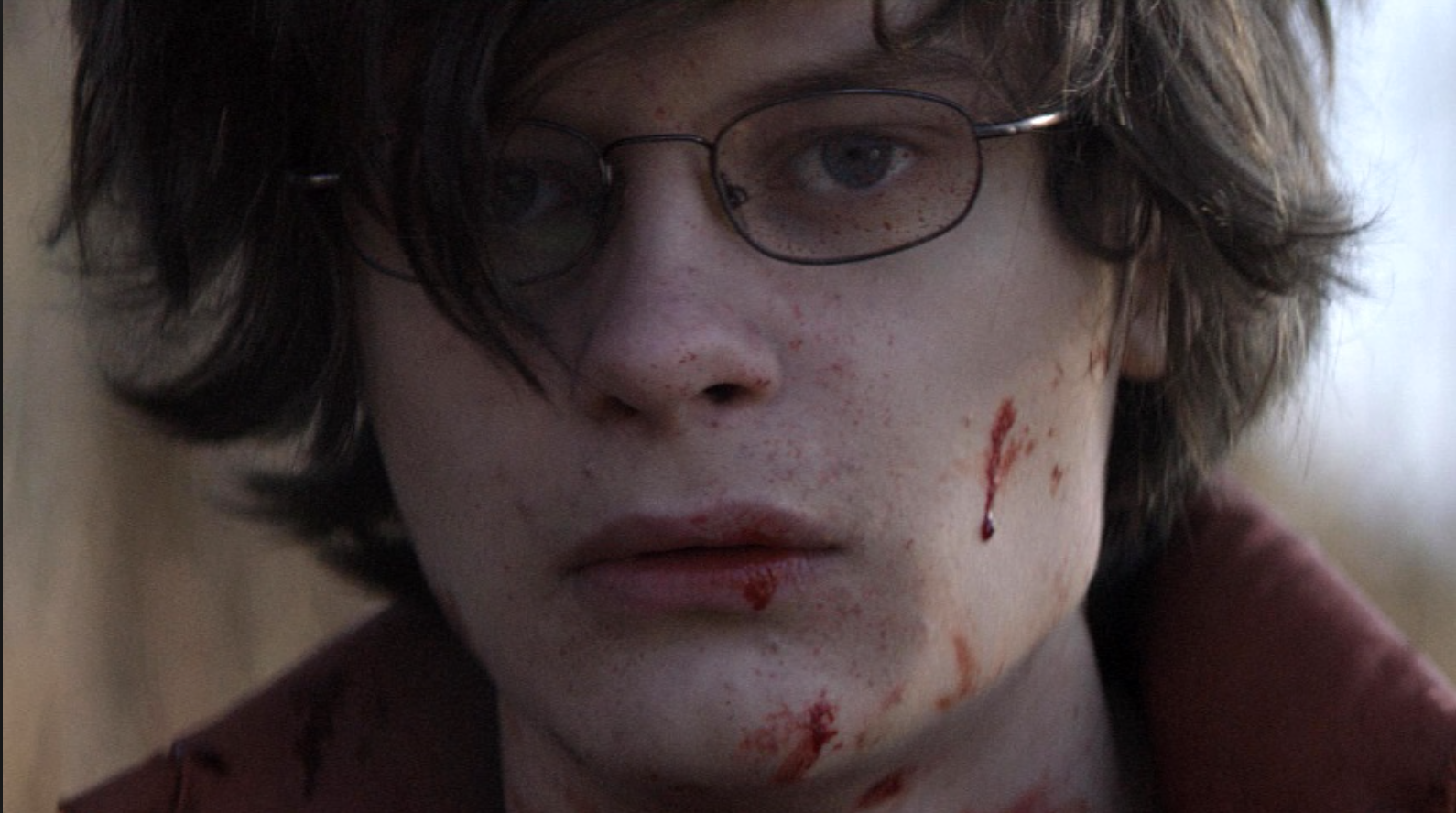
Hey there everyone! Welcome back to Movie Soapbox, the little corner of the internet that only you and I and that guy in the back who never takes his coat off know about. This is the place where we find under-appreciated indie films and we make sense of them. Today? We are doing a deep dive on Super Dark Times, a movie so quietly, methodically brutal that most of the people who greenlit it probably thought they were making a coming-of-age nostalgia piece and only figured out what it actually was somewhere around the third act.
Before we go any further, here is the trailer. Watch it. Then come back.
Alright. From here on out, everything is spoilers, all of it, the sword, the body, the ending, the final shot, all of it. If you have not watched this film yet, stop, go watch it, come back. I’ll be here. This movie deserves to be experienced clean before anyone starts explaining it to you.
Still here? Good. Let’s get into it.
Movie Super Dark Making Of Discussion
What you need to understand before a single frame of plot analysis is what kind of film Super Dark Times was fighting to remain. Kevin Phillips directing his first feature, Piotrowski and Ben Collins on the screenplay, a budget that was clearly not the kind of number that gets a studio executive to pick up the phone and start making suggestions. That budget tier, that first-feature tier, is where genuinely strange films either stay strange or get gently walked back toward something more comfortable. You can usually tell when that walk-back happened because the third act starts feeling like a different film, the edges get filed down, the ending resolves a little too cleanly for the darkness that preceded it. Super Dark Times does not do that. The third act goes harder, not softer. That is not an accident of indifference, that is a creative team that retained enough control to let a genuinely ugly thing stay ugly. At this budget level, with this distributor configuration, that kind of finish is rarer than people realize.
What Actually Happens in Super Dark Times
The film opens on blood trails across a high school cafeteria floor. You follow them, not knowing what you’re following, until you find a deer, badly wounded, dying in the middle of this institutional linoleum space that smells like every 1995 school lunch you ever tried to forget. A cop puts it down by breaking its neck. That is the movie telling you everything it is going to do to you, in the first two minutes, before a single character has spoken a word.
Then we meet Zach Taylor, Owen Campbell doing the kind of quiet, watchful performance that carries a film like this on its back without ever making a show of it. Zach is a nineties kid’s nineties kid. Walkman, video games, absolutely no one in a position of authority paying close enough attention to him. His best friend is Josh, Charlie Tahan, who has the slightly-off quality, even in the early scenes, that you keep filing away as teenage weirdness but that the film is actually cataloguing as something else entirely.
The four of them, Zach, Josh, Charlie, and Daryl, end up in the woods one afternoon. Josh has a samurai sword. Daryl has stolen weed from Josh’s older brother. The specific sequence of small stupid decisions that follows, the kind of sequence where you can see every individual step and understand every individual step and still cannot believe where it ends up, results in that sword going through Daryl’s neck. An accident. A horrible, stupid, irreversible accident.
And then Zach makes the decision that the entire film is actually about. He covers the body. Ditches the bike. Goes home. Tries to continue existing.
The Reshoot Scar That Isn’t There
What Phillips does in the middle section is something a lot of films in this territory do not trust themselves to do. He lets the guilt do its work slowly. Zach starts having visions. His cast disappears between scenes. He sees Allison, the girl both he and Josh are fixated on, in places she shouldn’t be, doing things that haven’t happened. The film keeps you in genuine uncertainty about what is a dream, what is a flashback, what is a flash-forward, and what is just Zach’s nervous system starting to come apart at the seams under the weight of what he is carrying.
A lesser cut of this film, the cut that might have emerged from another two rounds of notes from people who were nervous about audience confusion, would have clarified all of this. Would have added a cue, a sound effect, a visual filter, something to tell you: this is a dream, now we are back in reality. Phillips leaves those markers out deliberately. The confusion is structural. The confusion is the point. You are inside a mind that has lost the ability to cleanly separate what happened from what it keeps rehearsing, and no amount of clarity-signaling is going to make that feel like a film you can sit back and consume comfortably.
That is what this film survived. The instinct to make it comfortable.
Josh, John Whitcomb, and the Mechanism of What Happens Next
While Zach is quietly disintegrating, Josh is doing something different with the same event. He is finding out what it feels like to have killed someone and discovering that the feeling is not what he expected. John Whitcomb, the blue-haired druggie from school, turns up dead. Fell off a bridge. And Zach, in a phone call with Charlie, pieces together the actual sequence because Zach is the one character in this film whose brain is still running threat-detection even as everything else is failing him: Josh went back to the body, retrieved the sword, cut off fingers to confirm to himself that the killing was real, gave John weed on that bridge, and put him over the railing.
The friendship between Josh and Zach has been carrying the weight of the shared secret this entire time, and it cannot hold two people with opposite responses to the same guilt. Zach’s guilt is consuming him inward. Josh’s guilt has metabolized into something operational.
Zach figures out where Allison is. Gets to Megan’s house. Finds Megan dead and Allison tied up. What follows is a genuinely brutal fight, the kind of physical violence that indie films sometimes sanitize because they don’t want to commit to where the logic of the story actually leads. This film commits. Zach puts Josh down. Gets loaded into an ambulance looking like he went through exactly what he went through. And in the back of a police car, Josh. Done.
The Final Shot, and What It Means
Except the film does not end there. It ends on Allison. In class. Hair down, playing with it, listening. The camera cuts back and forth between her and whoever is sitting behind her, a slow-burn rhythm the film has used before when it wanted you to pay attention to a proximity, a presence, a threat that might not be a threat. The person behind her reads, if you pause it, as female, but ambiguous enough that the film makes you check.
I went and found the answer from the source. Luke Piotrowski, one of the two writers, got asked this directly and said: we all see others as supporting roles in our own story, but we never really know theirs. Allison got caught up in someone else’s story. She survived. She’s back in her own now. The scars are there, sometimes in sight, sometimes not, but they are not defining her.
That is the writer’s read, and it is a coherent read, and it is probably the correct one. Allison has been a function in Zach’s and Josh’s catastrophe for the entire runtime of this film. Two boys who both wanted her ended up destroying everything around them, and she is the one sitting in the rubble. The final shot gives her back her own interiority, her own future, a story that now belongs to her again rather than to whatever nightmare she accidentally wandered into.
The Competing Theories
Two main camps on what this film is really doing beneath the plot mechanics. First camp: it is a guilt film through and through, a study in how two people can absorb the same traumatic event and have it refract through completely different psychologies, and all the horror is internal, a manifestation of what Zach cannot process and what Josh has processed in the worst possible direction. This reading treats the violence as real but the meaning as psychological, guilt as a creature that finds its shape in the person carrying it.
Second camp: some or all of the violence in the second half is Zach’s dissociation made concrete, that the film never fully commits to the reality of what we’re seeing after Daryl dies, and the bloody finale is the guilt-creature made literal in a way the film is deliberately not resolving. This camp points to the disappearing cast and the Allison visions as evidence that the film’s reality is already compromised long before Josh starts killing people.
Both readings work against the text. Both hold up.
What Movie Mike Actually Thinks
The guilt film reading is the correct one, and I’ll tell you why the second reading, as interesting as it is to argue, ultimately collapses under the weight of what the movie is actually doing thematically. If the violence is all in Zach’s head, then Josh gets to not be a killer, and everything this film is saying about what happens to people who choose to not deal with what they did, who choose to metabolize guilt into action rather than let it eat them alive, disappears. Josh has to be real. Josh has to have done those things. Because Josh is what Zach was afraid he himself might become. The film needs both of them to be real people making real choices in response to a real event, because the tragedy is a human one, two kids whose friendship was the best thing either of them had, and it couldn’t survive what happened in those woods. That is the movie. That is all of it.
The visions are grief. The disappearing cast is the film putting you inside a dissociating nervous system. But Josh is real, and what Josh did is real, and Allison survived a real thing and is sitting in a real classroom, putting her hair up and down in the light, still here.
Super Dark Times is the film it wanted to be. Somebody let it stay that way. That almost never happens at this level, and the fact that it did is the only reason you and I are here talking about it.
🎬 If You Liked This…
- Blue Ruin — the same slow collapse of an ordinary person under the weight of something violent they can’t undo, guilt and consequence bleeding into every frame until there’s nowhere left to run
- They Look Like People — a male friendship under unbearable pressure, paranoia quietly metastasizing beneath the surface of a relationship that used to feel safe, the horror inseparable from the intimacy
- Martha Marcy May Marlene — the same suffocating dread of a past act reshaping the present, trauma as a fog that makes normal life feel like a performance nobody actually believes