
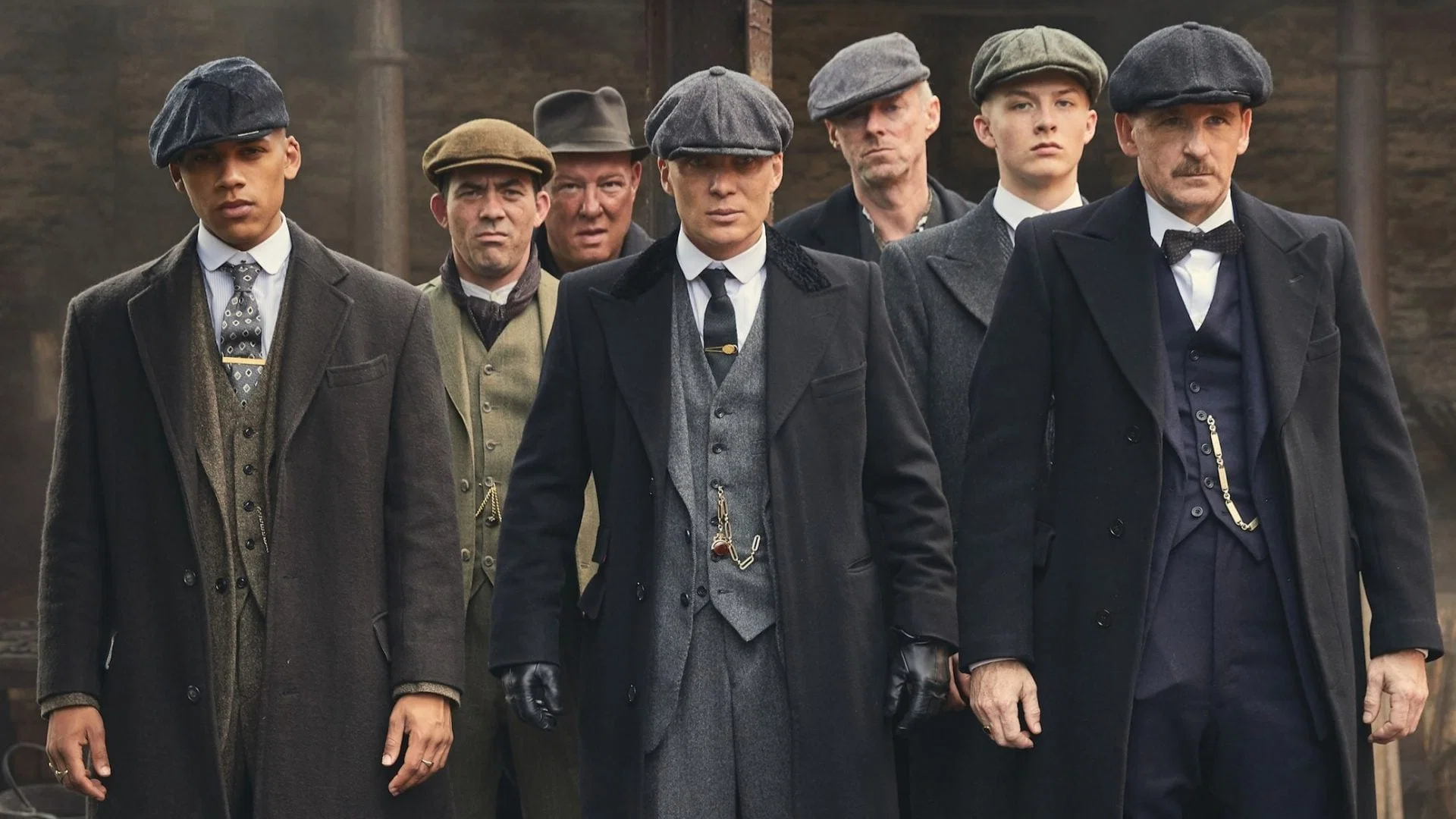
Hey there everyone! Welcome back to Movie Soapbox, the little corner of the internet that only you and I and that guy sleeping in the corner over there know about. This is the place where we find under-appreciated films, franchise endgames, and the rare beast that actually sticks the landing, and we make sense of them. Today? We are doing a full spoiler walkthrough of Peaky Blinders: The Immortal Man, a film that had absolutely no business being as controlled and as devastatingly well-balanced as it turned out to be, given everything that could have gone wrong with it, and nearly did.
Alright. If you have not seen this film and you landed here by accident, close the tab and come back when you’re done, because from this point forward there is not a single thing in this movie I am not going to describe in full daylight. You have been warned, in the voice of a man who means it.
Peaky Blinders and the Making of
So let’s start with the thing nobody in the trades wanted to say out loud when this got announced. A beloved television property, thirty-six hours of accumulated character work, six seasons of Tommy Shelby surviving everything the writers and the British establishment and the Luftwaffe could throw at him, and now you’re going to wrap the whole thing in a two-hour theatrical film. You know what that pitch meeting looks like. You know what a studio or a streaming executive does when they hear that. They immediately start counting the characters who need screen time. They start calculating which emotional beats are going to test well with audiences who haven’t watched the show in two years. They start drafting a note that says something like, “we love the Tommy material, but can we find ways to make it more accessible for new viewers?” That note, in the wrong hands, in a different room, with a different director attached, turns this into a greatest-hits reel with a car chase. The fact that Stephen Knight apparently sat in enough rooms with enough power to keep that from happening is the actual miracle this film has to survive before a single frame gets shot. What you’re watching, when you watch The Immortal Man, is a man who held the line. You can tell because the film is structurally narrow. Two characters. One inheritance. Everything else is weather.
Peaky Blinders and The Man in Hiding
When we find Tommy Shelby at the start of the film, he is not the man who rode away on that white horse at the end of Season 6. That departure was a symbolic death and rebirth, the old Tommy, the gangster-politician, the engine of the Shelby empire, burned up with the caravan. What remained was supposed to be something quieter. Something that could finally rest.
It hasn’t worked out that way.
Tommy is in hiding, but the thing he is hiding from has no machine gun, no explosive, no political dossier. He is hiding from the dead. His daughter Ruby, who died young and cursed. His brother John, who never made it out of the gang war years with all of himself intact. His mother’s shadow, still organizing the Shelby conscience from beyond. In the world of Peaky Blinders, where Romani blood and gypsy second sight have always treated the line between the living and the dead as a suggestion rather than a rule, Tommy’s ghosts aren’t metaphors. They find him. He has stopped trying to outrun them, and now he spends his time writing a book, as if putting the accumulated wreckage of his life onto paper might, through some act of narrative alchemy, purge the evil from whatever is left of his soul.
Meanwhile, 1940 has arrived with its own particular horror. The Luftwaffe is bombing Birmingham. Small Heath, the heart of Peaky Blinders territory, is catching German ordnance. The BSA factory is hit. The city Tommy spent his whole life fighting over, first to control it, then to improve it, then to escape it, is burning from the sky. And Tommy is somewhere else, trying to be no one.
Duke’s Birmingham
In Tommy’s absence, Erasmus Shelby has taken the wheel, and he is driving it hard.
Duke is Tommy’s firstborn, the illegitimate son Tommy only acknowledged late in the series, the young man he whispered something to before disappearing. Whatever Tommy said to him, it amounted to: this is yours now. Duke has taken that seriously, in exactly the wrong direction. He runs the Peaky Blinders operation with the swagger and blunt force of someone with something to prove and no particular interest in restraint.
The operation is morally indefensible even by Shelby standards. Duke is stealing morphine from the supply chains headed to the front lines. Soldiers in the field, wounded and dying, are receiving less because Duke is intercepting the stock and selling it. The people of London, already suffering through the Blitz, the rationing, the rubble, despise him for it. This isn’t the criminal enterprise of men shaped by poverty and war who did what they had to do. This is opportunism with a body count, and everyone can see it.
Ada Shelby, Tommy’s sister, the political conscience of the family, the one Tommy told to run for Parliament at the end of the series, is watching all of this with mounting fury. She has decided Duke has gone too far, and if the family won’t stop him, she will stop him through official channels. Ada begins interviewing witnesses, building a dossier, compiling testimony, preparing to hand the whole package to the police. If she succeeds, Duke hangs.
Beckett Makes His Move
Into this situation arrives John Beckett, played by Tim Roth, a man operating in the shadows between British intelligence, criminal enterprise, and Nazi Germany. Beckett approaches Duke with a proposition that sounds, to Duke’s ears, like an opportunity.
The scheme: Nazi Germany has been using Jewish concentration camp labor to manufacture hundreds of millions of counterfeit British pound notes, meticulously produced to be indistinguishable from the real thing. The plan is to flood the British economy with this fake currency, collapsing the pound, triggering financial chaos, delivering an economic knockout blow to the war effort. Britain cannot fight a war if its own money is worthless. Beckett needs someone with the infrastructure and criminal connections to launder this fortune in fake notes into the British financial system. He wants the Peaky Blinders. He wants Duke.
Duke agrees. His reasoning is almost adolescent in its nihilism. He doesn’t care about the British government, doesn’t feel any particular loyalty to the country, doesn’t see why any of it is his problem. The establishment never did anything for him. Why should he protect it?
Beckett, being a careful man, doesn’t take Duke at his word. He tests him. The test is brutal and direct: he presents a man to Duke, tells him this man is a traitor, and watches to see what Duke does. Duke kills him without much hesitation and handles the body. He passes. The partnership is sealed.
Zelda at the Door
While all of this is unfolding in London, someone finds Tommy at his retreat.
Her name is Zelda. One of twin sisters, the other of whom is dead. Specifically, the other sister is the woman who gave birth to Duke, making Zelda the surviving aunt Duke never knew he had. She arrives at Tommy’s hideaway and nearly dies there: Tommy, living like a hunted animal, almost kills her on instinct before she can speak.
What stops him is what she offers. Zelda carries the gypsy gift. She claims she communicates with her dead twin, and she uses this connection as a bridge to reach the people Tommy is haunted by. His brother. His daughter. In the world of Peaky Blinders, where the supernatural has always been treated as genuinely real rather than decorative, this lands. Tommy has been alone with these ghosts for years. Here is someone who can actually speak to them.
They become lovers. And through this intimacy, through Zelda’s access to the dead and her knowledge of Duke, the nephew she shares with Tommy from different angles, Tommy is finally moved to act. Duke is in real trouble. The kind that ends with a noose, or worse.
Tommy decides to go to London.
Ada Dies
Before Tommy arrives, the situation reaches a catastrophic turning point. Ada’s evidence-gathering has progressed far enough that Beckett knows about it. He delivers an ultimatum to Duke: she has to go. If Ada submits what she’s compiled to the police, Duke is finished. The only way out is to make sure Ada cannot deliver it.
Duke finds he cannot do it. Whatever he is, thief, collaborator, pragmatist with no evident moral ceiling, he cannot kill Ada. She is one of the original Shelbys, one of the people who survived everything. He freezes. And seeing Duke’s failure, Beckett doesn’t freeze. He shoots Ada in the head.
On his way to London, Tommy sees her. Ada, standing dead in the street, another ghost to add to his collection. The man who was trying to retreat from the dead is now carrying one more of them.
The Return to Small Heath
Tommy arrives in London and finds the old pub, the kind of place that once meant something and now is just a room full of men who resent what the Shelbys became. The reception is hostile. Someone in the crowd makes a move. Tommy, without ceremony, drops a grenade down the man’s shirt. The man runs outside and detonates. The message has been received. The pub owner, sufficiently motivated, tells Tommy where he can find Duke.
What follows is not a tender father-son reunion. Tommy and Duke fight physically, among the pigs, in the mud and the filth, the way Shelbys have always settled the things that matter most. Tommy beats his son senseless. They are covered in mud and blood and there is nothing cinematic about it. But they are both still breathing when it ends, and that means there is still something to say.
The Uneasy Alliance
Zelda is the one who makes the peace. She is the connective tissue, bringing father and son into the same room with something resembling a shared purpose, using her knowledge of both men and her access to the dead to convince Duke that partnering with his father is not submission. That it might be the only thing that saves him.
But Zelda gives Duke something else. A bullet. Specifically, a bullet with Tommy’s name on it. Her meaning is clear: work with your father, complete the mission, and then use this when you’re done. Duke accepts it. He tucks it away. The partnership is built on a foundation that includes its own termination clause.
Tommy begins building a plan. He pulls men together, assembles the pieces, starts working the angles on Beckett’s operation. This is what Tommy does. This is the thing he is incapable of stopping doing. The plan is to intercept the counterfeit currency operation, blow the whole scheme apart, keep the fake notes from ever reaching the British economy.
The Betrayal, and the Counter
The problem is that Duke has been feeding Beckett everything. Every piece of Tommy’s plan, every man, every move. Beckett knows what’s coming. By the time Tommy’s operation reaches the river, barges, men, the full counterattack, Beckett has already positioned machine guns at the chokepoints. He intends to kill everyone on the barges and be done with it.
But Tommy’s men have something else ready. They T-bone the machine gun nest with the barge itself, and the barge is loaded with explosives. The nest goes up, along with the men staffing it, and the tactical situation shifts in an instant.
The Confrontation
Beckett and Duke are together when the plan falls apart. Beckett reads the situation quickly: Duke gave him everything, and it still failed. Which means Duke set him up. Duke turned. Beckett is staring at the man who just buried him.
Before any of that can resolve, Tommy arrives. The machine gun battle that follows is the kind of operatic, everything-on-the-table violence the show always saved for its most definitive moments. Tommy destroys the counterfeit currency. Everything the Nazis built, every fake note, burns. The economic weapon is gone.
Beckett, in a fury beyond reason, shoots Tommy twice in the gut. Then he gets in a car and drives it straight at him. Tommy, shot and bleeding and standing in the path of a moving vehicle, shoots Beckett in the head. Beckett dies at the wheel. The car still comes. Duke dives and pulls his father out of the way.
The Peaky Blinder Bullet with His Name On It
Tommy is dying. Two bullets in the gut, no clean exit from the situation, and no particular desire to find one. He has been here before, or somewhere adjacent to it, but this time feels different. This time he doesn’t seem to be looking for the way out.
He convinces Duke to use the bullet.
The logic is deeply Shelby. Tommy has been living like a ghost for years, haunted by the people he’s lost, unable to rest, unable to leave. He is not going to recover from this. And if he is going to die, really die, finally, he wants it to be on his own terms. He wants it to come from someone he chose. His son. His heir. He frames it the way the Shelbys have always framed the hardest things: like a horse. When a horse is broken beyond repair, beyond suffering, beyond hope, you do the merciful thing. You end it clean.
Duke uses the bullet.
The Peaky Blinder Farewell
They carry Tommy out in a gypsy wagon. They set it on fire. It is the same image that ended his old life in Season 6. The caravan burning, the Romani heritage consumed in flame, but this time he is inside it. The funeral pyre of a man who could not be killed by his enemies, who survived tuberculosis and car bombs and six seasons of people trying to put him in the ground, who in the end chose the manner and the hand of his own death.
Explanation of the Movie’s Immortal Man Title
The Immortal Man means more than one thing, and good titles always do. Tommy was immortal in reputation, in cultural weight, in the way no one could actually kill him across thirty-six hours of television. He was immortal in his own damage, the WWI trauma, the dead he carried, the way he existed slightly outside of ordinary human time. And it was also the title of the book Tommy completed just before he died, the narrative that becomes, in the film’s logic, the show itself. The thing he wrote to purge the evil from his soul is the thing we’ve been watching all along.
The film is a succession story at its core. Duke inherits not just the operation but something harder to name: the burden of being a Shelby, the weight of the name, the knowledge of what it costs. Tommy’s death is also Tommy’s final gift. He gives Duke the cleanest version of an ending he could manage. Tommy dying on his own terms rather than Beckett’s. Rather than rotting from the inside out. Rather than being slowly erased by the ghosts he couldn’t outrun.
The white horse that ended Season 6 was a symbol of rebirth. The burning wagon that ends The Immortal Man is the completion of that arc. The rebirth led here. This was always what it was leading to. And now it’s done.
Stephen Knight held the line. In a world where every beloved IP eventually ends up in a conference room getting its third act tested with a focus group in Burbank until all the edges are sanded off, this film exists with its edges intact. Tommy Shelby died the way he lived: by choosing the terms himself, in the dark, with fire. The industry doesn’t make room for that kind of ending. Somebody fought for it. You can tell.