
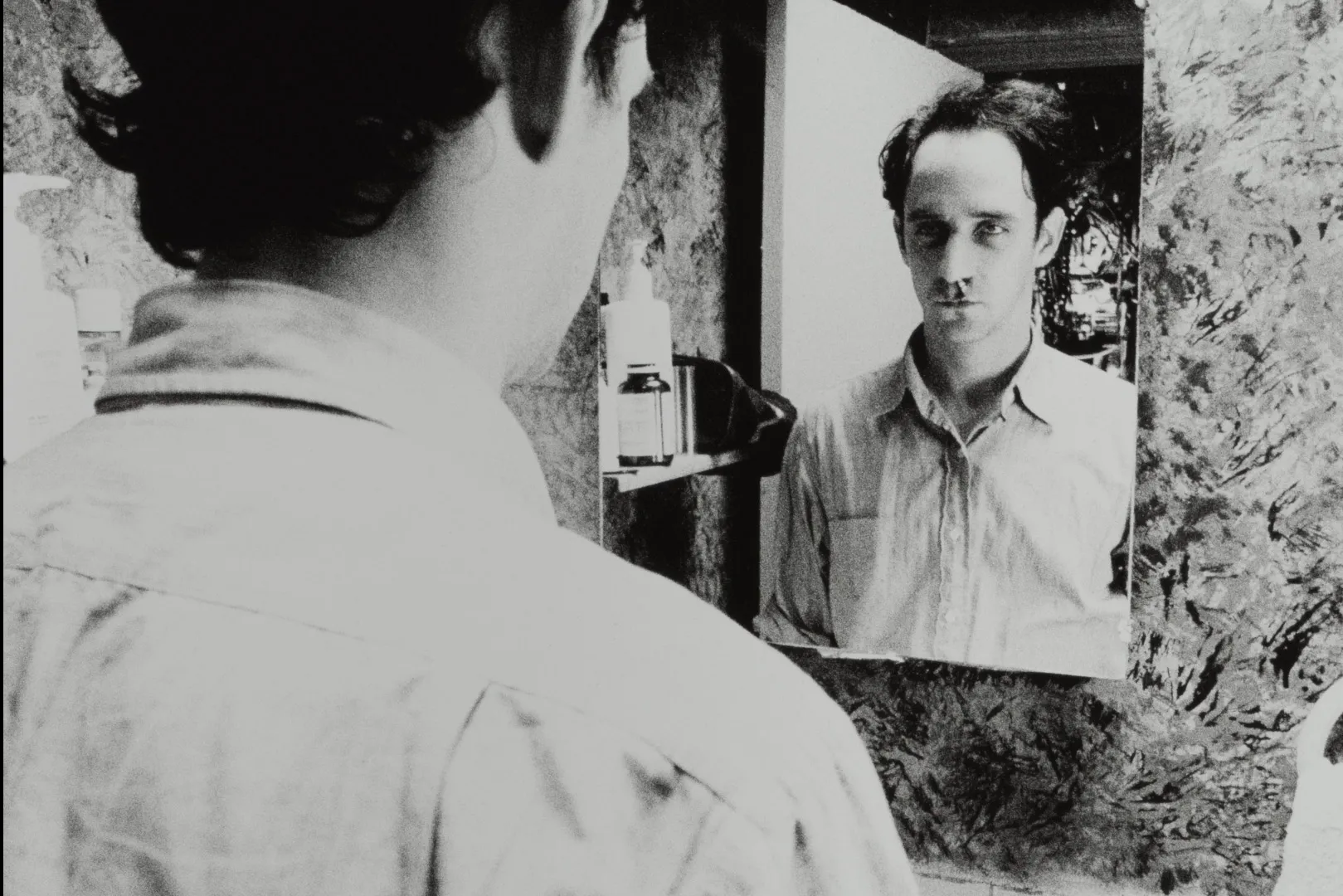
Pi Movie Explained God Madness and the 216-Digit NumberHey there everyone! Welcome back to Movie Soapbox, the little corner of the internet that only you and I and that guy sleeping in the corner over there know about. This is the place where we find underappreciated films and make sense of them, the ones that got made against the odds or in spite of the machine or because some obsessive twenty-something shot it on high-contrast 16mm for sixty thousand dollars before anyone with a greenlighting budget could tell him no. Today we are doing a deep dive on Pi, the 1998 Darren Aronofsky film so genuinely, aggressively strange that it makes you wonder how anything he made afterward ever got a studio phone call returned.
Before we get into it, here is the trailer. Watch it, or don’t, but know that it gives you about fifteen percent of what you’re actually in for.
Alright. From this point forward, we are going deep into the film’s events, its ending, and every theory worth having about what it means. If you haven’t seen Pi yet, close this tab, go watch it, come back. What happens in this film matters and you don’t want it handed to you before you’ve sat in it. You’ve been warned, and I won’t say it again.
What This Film Had to Survive to Exist
Aronofsky shot Pi for somewhere in the neighborhood of sixty thousand dollars, raised through what amounted to a personal favor network, friends and family buying hundred-dollar shares of the production like they were investing in a deli. The film stock choices, the blown-out high-contrast black and white, the relentless handheld claustrophobia, those aren’t aesthetic decisions made in a color-grading suite after a long conversation with a studio-appointed DP. Those are the decisions of a filmmaker who had no money and turned the constraint into a language. You can tell the difference, if you know what to look for, between a filmmaker who chose limitation and one who had it imposed mid-production after a budget conversation went sideways. Pi reads as chosen all the way through. That’s rarer than it sounds at Aronofsky’s budget tier, where most films that get this raw are raw because they ran out of money in week three and had to pretend the rough edges were intentional in post. This one was intentional from frame one. The Sundance Best Director prize it took home in 1998 wasn’t charity for the scrappy underdog, it was recognition that someone had actually done something with the constraints instead of apologizing for them. What’s worth noting is what came next, because Requiem for a Dream got a real budget and Aronofsky promptly used it to make something even more punishing. That’s the tell of a filmmaker who was never going to be tamed by access to craft services.
The Walkthrough: What Actually Happens in Pi
Maximillian Cohen is, from the first frame, not okay. Not in the way that movie characters are “not okay” as a setup for their redemption arc, but in the way that watching him is uncomfortable because the film refuses to soften the edges of what a mind consuming itself from the inside actually looks like. He’s a reclusive mathematician, severe OCD, migraines that put him on the floor of his bathroom running his own improvised pharmaceutical cocktails just to function, and he has been chasing a pattern in the number pi for a decade with nothing to show for it. His old math professor, Sol Robeson, is the only human being he tolerates, and even that relationship is transactional, two men who speak the language of Go and numbers and not much else.
Max’s working theory is this: mathematics is the language of nature, every system has a pattern underneath it, and if you could graph enough data points from enough systems you would eventually find the underlying order of everything. He has been applying this to the stock market, building a model that should predict price movements. His computer, Euclid, keeps overheating and crashing. And in one of those crashes, before it dies, it spits out a 216-digit number.
Around the same time, Max has started crossing paths with Lenny Meyer, a Kabbalist who is, it turns out, also looking for a 216-digit number. The same 216-digit number, or something that functions like it. The coincidence is either the universe speaking or Max’s disintegrating mind pattern-matching its way into a delusion, and the film is not going to resolve that for you cleanly, which is the point.
Then there is Marcy Dawson, who represents a financial firm that has been following Max’s research and wants what he’s found. She gives him a proprietary computer chip to help with his work. This is not generosity. People who give mathematicians experimental hardware to help with their research want the research. Max is not naive about this, he’s just too deep in the obsession to stop.
Sol tells Max something that matters: the last time Sol got close to something like this, it gave him a stroke and he walked away. The number almost killed him. Max hears this as a reason to push harder. Sol, shortly after, has another stroke and dies. Max keeps going.
Lenny eventually pulls Max out of Marcy’s orbit, brings him into a synagogue setting, and explains the full weight of what the 216 digits represent. Once a year the High Priest entered the Holy of Holies and spoke the true name of God. 216 characters long. If he was holy, he survived. If not, they dragged him out by the rope tied to his ankle. When Rome destroyed the Temple in 70 AD, the name was lost. The Kabbalists have been trying to reconstruct it ever since. They believe Max’s number is it. They believe they’re supposed to have it. Max tells them he found it, it was inside him, it was purifying him. Lenny thinks it’s killing him.
Max goes home. He finds a scar near his ear he doesn’t remember getting. He sees what appears to be his own brain sitting on the stairs, and he pokes it. He destroys his computer equipment in a frenzy. Then, in a callback to the film’s opening narration, where he describes staring into the sun as a child because his mother told him not to, he takes a power drill to the side of his own head.
The final scene: Max is in a park. The neighbor girl who has been asking him math problems throughout the film asks him one. He can’t answer. He doesn’t know. He sits there in the sun, and for the first time in the film, he looks at peace. The number is gone. The search is over. He is, finally, just a man sitting in a park.
What Needs Untangling: The 216 Number and the Kabbalah Mechanics
Kabbalah, stripped to its functional role in this film, is a tradition of seeking the hidden interior meanings of sacred texts, the secret architecture underneath the surface of the Torah. The numerological strand within Kabbalah, gematria, assigns numerical values to letters and words and looks for meaningful relationships between numbers as a way of uncovering divine structure. The specific claim the film is working with is that God’s true name, the one spoken by the High Priest in the Holy of Holies, is 216 characters long. 216 is also 6 cubed. 6 times 6 times 6. The film is not subtle about the fact that it wants you to hold that in your head alongside everything else.
The reason Sol’s machine thrashed out a 216-digit number before dying, the reason Max’s machine does the same thing, the reason Lenny’s group is looking for exactly that length, these are not separate threads that happen to converge. The film is asking whether mathematical truth and divine truth are the same truth, or whether Max is simply a broken man whose brain keeps landing on 216 because 216 is the number the obsession needs it to be.
Pi Movie Theories
Theory One: Max was never well, and none of it was real.
The most grounded reading of the film is that Max is a severely mentally ill man whose break with reality is gradual and then total, and that the Kabbalists, the corporate surveillance, the 216-digit revelation, all of it is the internal logic of a mind that has collapsed inward on itself. Unreliable narrator films live or die by how committed they are to not giving you a stable floor to stand on, and Pi earns this reading honestly. The brain on the stairs. The scar he can’t account for. The fact that his experience of the number produces no external verification the film is willing to give you. Under this read, the drilling is not enlightenment, it is a man destroying the part of his mind that was torturing him, and the peace at the end is simply the peace of a man who has finally stopped.
Theory Two: The Kabbalah framework is the real one, and Max found the name of God
If you take the film’s supernatural architecture at face value, Lenny and the synagogue represent a genuine sacred tradition with a genuine sacred objective, and Max genuinely stumbled onto the thing they’ve been looking for for two thousand years. Under this reading, the question the film poses is who deserves it. Max says it was inside him and was purifying him. The High Priest model suggests worthiness is the only credential that matters and the consequences of unworthiness are fatal. Max’s condition under this theory isn’t mental illness, it’s the human nervous system being asked to carry something it was never built for.
Theory Three: The film is about power and the control of truth
Marcy’s organization doesn’t care about God. They care about the stock market, which is to say they care about everything downstream of being able to predict systems before anyone else can. Under this read, the Kabbalists and the corporate suits are two versions of the same impulse, the desire to possess a key that gives you authority over the world. Max is just the guy who accidentally built the lock-pick. The drilling is his refusal to be owned by either of them.
Movie Mike’s Favorite Theory
All three of those theories are in the film and all three of them are doing some very real lifting. But the one that holds the whole thing together for me is the one hiding underneath all of them, which is this: the film is about the cost of demanding that the universe explain itself to you on your terms. Max’s entire system of belief is that mathematics is the language of nature and that if you just run enough data, the truth will surface. What Aronofsky shows you, with genuine pitilessness, is a man who is right about the math and destroyed by the answer. The truth surfaced. It was 216 digits long. And Max, having touched it, having carried it, found that there is no human container built for what he was asking to contain. The drilling is not madness and it’s not enlightenment. It is a man who finally understands that the search itself was the thing eating him alive, and the only way to stop the search is to remove the instrument conducting it. The peace at the end is real. It cost him everything. The film thinks that transaction is worth examining, and so do I.
What It Means That This Film Exists
A studio version of this story would have given you a cleaner answer. It would have resolved the mental illness reading or the spiritual reading, handed you one, let you leave with something to hold. Aronofsky shot it for sixty thousand dollars on borrowed film stock specifically so that nobody could make him do that. The film that came out is the film he intended, start to finish, which is something you almost never get to say. That’s the thing about constraint as creative protection: when you’ve got nothing, no one can take anything away from you. Remember that the next time a studio announces it’s developing a prestige film about genius and obsession with a hundred-million-dollar budget and a release date TBD pending test screenings. Pi happened because the suits never got the phone call.