
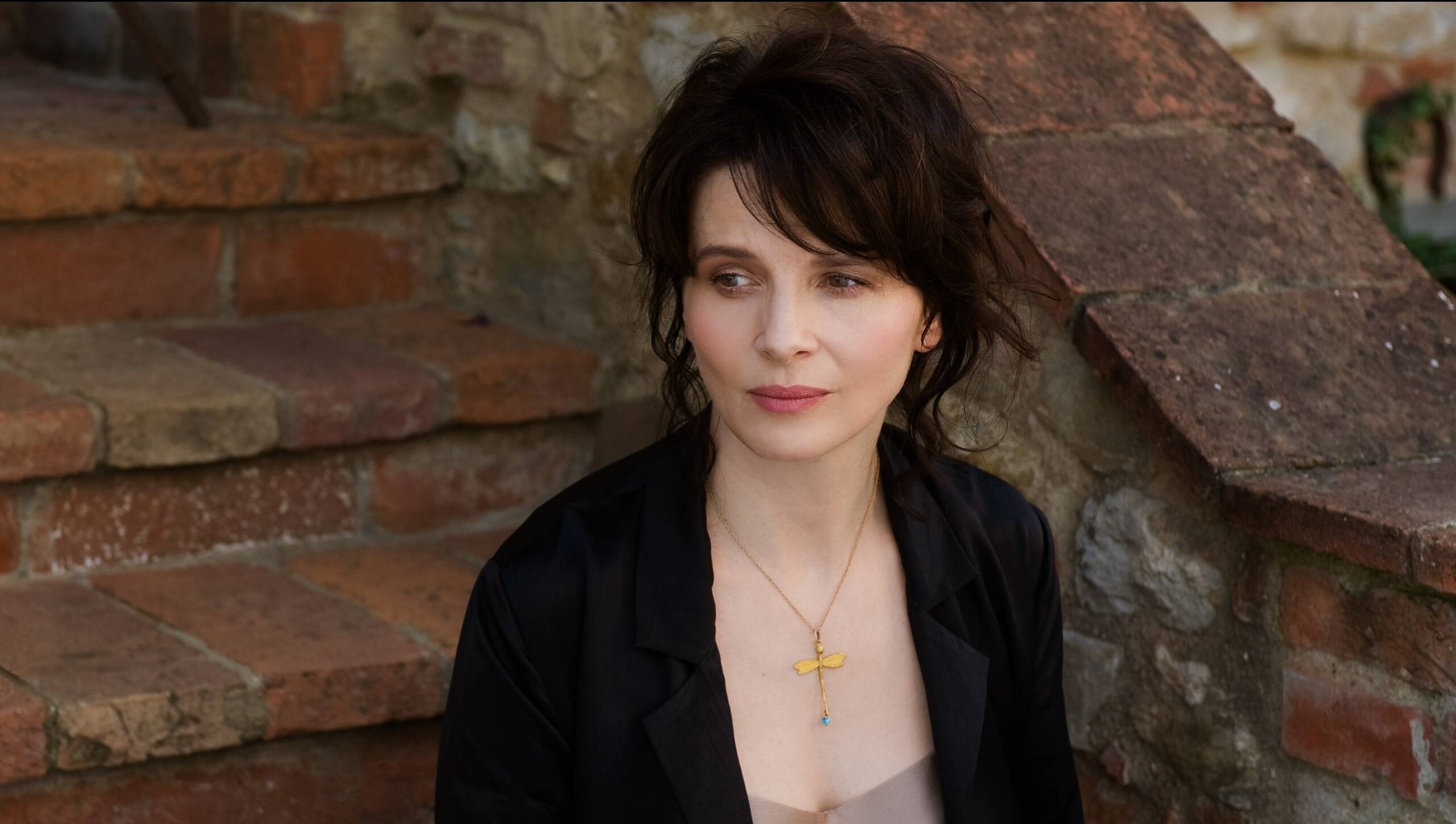
Hey there everyone! Welcome back to Movie Soapbox, the little corner of the internet that only you and I and that guy sleeping in the corner over there know about. This is the place where we find underappreciated indie films and we make sense of them. Today? We are doing a deep dive on Certified Copy, a film so quietly devastating, so committed to its own philosophical sleight of hand, that by the time you finish watching it you will have completely forgotten what question you sat down to answer.
Alright, we are going deep into this one, scene by scene, beat by beat, and nothing is sacred. If you have not seen Certified Copy yet, close this tab, go watch it, come back. I am not here to sell you the premise, I am here to do an autopsy on a film you already loved or hated or loved and hated in the same sitting. Everything from this point forward is a spoiler. You have been warned in plain language by a man who means it.
Certified Copy the Making Of
Before we get into the film itself, understand something about how a movie like this even arrives in the world. Abbas Kiarostami was an Iranian director making his first film in Europe, with Juliette Binoche attached, working in three languages, on a story where the central dramatic question is never resolved and was never meant to be. You know what that pitch document looks like on a development executive’s desk? It looks like a coaster. The only reason a film like this clears the runway is because Binoche is Binoche, because Cannes is Cannes, and because the European co-production financing structure allows a certain category of film to exist that would be strangled in its sleep inside any American studio’s development process by round three of notes. If you handed this script to a room full of American VPs, you would get it back with one note written in red at the top: but what actually happens? What actually happens is the whole point. The studio would never survive not knowing.
What The Hell Actually Happens In Certified Copy
The film opens on a lecture. James Miller, played by opera baritone William Shimell in his film debut, is presenting his book, Copie Conforme, a philosophical argument that copies carry as much value and beauty as originals, that the hierarchy we have constructed between authentic and imitation is, at root, a collective delusion we agreed to and could just as easily agree to abandon. In the front row, not really listening, is a woman the credits will call only She, played by Binoche, managing her restless son and passing her phone number to a lecturer who may or may not have noticed her.
He agrees to spend the afternoon with her before his nine o’clock train. And there it is, the deadline, the clock that will govern this entire film. Nine o’clock. Remember it.
They drive out into the Tuscan countryside together. They banter. They finish each other’s sentences. She is not impressed by his intellectual posturing, which is fascinating given that she attended his lecture and invited him out. He talks, she deflects, they laugh at jokes that are never quite explained. The tension is not the tension of two strangers warming up to each other. It runs in the wrong direction for that. It runs like the tension of two people who know each other very well pretending, for reasons of their own, that they do not.
They stop at a café. The owner, seeing them together, assumes they are married. She does not correct her. And here is where the film pivots on its axis and does not pivot back. From this moment, the woman at the café treats them as a married couple, James begins responding as a husband would, She begins arguing with him as a wife would, and the accumulated weight of fifteen years together descends onto a relationship that started, on screen, forty minutes ago.
The Story About Florence, And Why It Matters
Earlier in the film, before the café, James tells a story. Five years ago, he saw a woman in Florence, at the feet of the copy of Michelangelo’s David in the Piazza della Signoria, with her young son. The child was staring up at the statue in complete awe. And the mother, James notes, said nothing about the fact that the statue was a copy, that the original was half a mile away at the Accademia. She let the child have the experience of beauty without the asterisk.
She begins to cry. Quietly, privately, the way people cry when a story is about them. And the film lets that sit there without explanation. Because either this is a remarkable coincidence, or they have a shared history that neither party is acknowledging out loud, or they are constructing a shared mythology together in real time as an act of deliberate intimacy. Kiarostami does not break the glass to tell you which one. He leaves all three running simultaneously.
The Language Question
Pay attention to which language is being spoken at any given point in this film because it is doing real work. The film begins primarily in English. As the afternoon wears on and the couple grows more contentious, French takes over. Italian surfaces in the world around them, in the café, in the small village they wander into, a language that belongs to the place and not to either of them.
When the café owner asks She why her husband does not speak Italian or even French, and She translates the question to James, his answer is magnificent in its arrogance: tell her I speak my language and they speak theirs. Which enrages She precisely because it is such a complete summary of the problem, not just a language problem but a presence problem, a willingness-to-meet-you-where-you-are problem. And the café owner’s response lands like a small grenade: even a bad husband is better than nothing. It’d be stupid of us to ruin our lives for an ideal.
That line is doing more philosophical work than half the dialogue in the film, because it is the first honest, non-theoretical statement anyone makes about love and marriage in this entire story. Everything else is James’s book, is abstraction, is argument. That line is a woman who has lived it telling another woman who is living it what it actually costs.
The Garden of Leaflessness
There is a moment, quietly devastating, where James and She watch a young couple being photographed for what appears to be their wedding, or their engagement, and James offers this to She, unprompted, in the most James way imaginable: the only thing that will keep love in a marriage is care and awareness. Awareness that everything changes, he says. That promises cannot stop that. You do not expect a tree to promise to keep its blossoms. After spring, the blossoms become fruit. After fruit, the leaves fall.
She asks him what comes after the leaves fall. He quotes a Persian poem. The Garden of Leaflessness. And then he asks, who dares say it is not beautiful?
And whatever you believe about these two people, whether they met this morning or fifteen years ago, that is the thesis of the film right there. The dry garden is still a garden. The marriage that has become argument and silence and resentment is still the same organism that once produced blossoms. Kiarostami is not saying stay in it no matter what. He is saying do not confuse the season with the soil.
The Sculpture And The Tourist’s Advice
They wander into a small village and argue about a sculpture neither of us ever gets a clear look at. Kiarostami keeps the camera off it deliberately. He wants you thinking about the idea of the sculpture, not rendering judgment on the actual piece, because the argument is the point and the argument is always about She and James and never about the sculpture.
A male tourist pulls James aside and tells him, with the directness of a stranger who has watched the two of them for thirty seconds and understood everything: all she wants is for you to walk beside her and lay your hand on her shoulder. All your problems can be solved by a simple gesture.
They met this morning, remember. And yet strangers keep offering this couple marriage counseling with the practiced certainty of people who have seen this particular fight before.
The Hotel Room And The Nine O’Clock Train
As the film closes, She asks James if he remembers which hotel they stayed in for their honeymoon. He does not. She asks to go into room nine. And in that room, with the bells beginning to toll outside, the film holds its most direct exchange.
She tells him: if we were a little more tolerant of each other’s weaknesses, we’d be less alone. Stay. Give us that chance. And James says: I told you. I must be at the station by nine.
The bells are ringing. The room is number nine. The train is at nine. The entire film has been building toward nine o’clock, and when it arrives James is still leaving. Whether he is a man abandoning a marriage or a stranger honoring a prior commitment, the effect is the same: he is choosing the train. She is left with the room.
Certified Copy Movie Competing Theories
Two primary readings of this film have solidified in the decade-plus since it came out, and they are both coherent and both supported by the text.
Certified Copy Theory One: They are strangers who become a married couple. They meet at the lecture. They spend an afternoon together. The café owner’s mistaken assumption becomes a game they fall into, consciously or not, and as the day wears on the game stops being a game and starts being something that was always under the surface. The shared history they construct, the Florence story, the honeymoon hotel, all of it is a kind of collaborative fiction that reveals emotional truths that a real first date never could. They are not married. They are rehearsing for something, or mourning something, or both.
Certified Copy Theory Two: They are married and have been for fifteen years. The ease between them, the way she finishes his sentences, the way he responds to her provocations with the exact tiredness of a man who has had this argument in slightly different forms for a decade and a half, the way she knows which hotel room to ask for. None of this reads as improvisation. It reads as muscle memory. On this read, the film’s opening, the lecture, the card, the invitation, is not a first meeting. It is a couple attempting to find their way back to the morning they actually met, trying to copy the original by living it again.
Moviesoapbox’s Preferred Interpretation of Certified Copy
They are married. I will plant that flag and stand on it. The whole architecture of the film requires it. Strangers do not cry at stories about themselves that they have never told the person sitting next to them. Strangers do not know which room to ask for. Strangers do not have the specific, worn-down, intimate exhaustion that Binoche carries through the second half of this film, the exhaustion of someone who has wanted this particular conversation for years and is watching it arrive fifteen years too late. What Kiarostami is doing is showing you the copy first and the original second, making you experience the artifice before you experience the truth, and asking whether, once you know the relationship, it retroactively changes the beauty of the performance.
The quantum reading, that both are simultaneously true, is intellectually satisfying but I think it is also a way of refusing to be hurt by the film. The film is sadder if they are married. Let it be sad. The Garden of Leaflessness who dares say it is not beautiful.
Juliette Binoche won Best Actress at Cannes for this role in 2010 and she earned every inch of it. She is walking a line so fine that the film only works if you can never quite catch her deciding which version of the character she is playing. You cannot. That is the performance.
This is the kind of film that factory Hollywood does not make and would not survive making, a film about two people in a single afternoon that costs you something to watch and gives you something true in return. It exists because a European co-production structure gave an Iranian master enough distance from the machine to make something the machine would never have greenlit. Remember that the next time someone tells you the industry is just giving audiences what they want. What they mean is, the industry is giving audiences what tests well. This film does not test well. It is too honest for that.
Go watch it again. The second time you will know which room they are standing in.
🎬 If You Liked This…
- Clouds of Sils Maria — the same blurring of performance and reality between two people in a contained location, identity and role becoming indistinguishable until neither person can locate where the character ends and they begin
- Columbus — two people spending a day together having conversations that matter more than either of them is willing to say out loud, the same European arthouse register of connection built entirely through dialogue and the spaces between it