
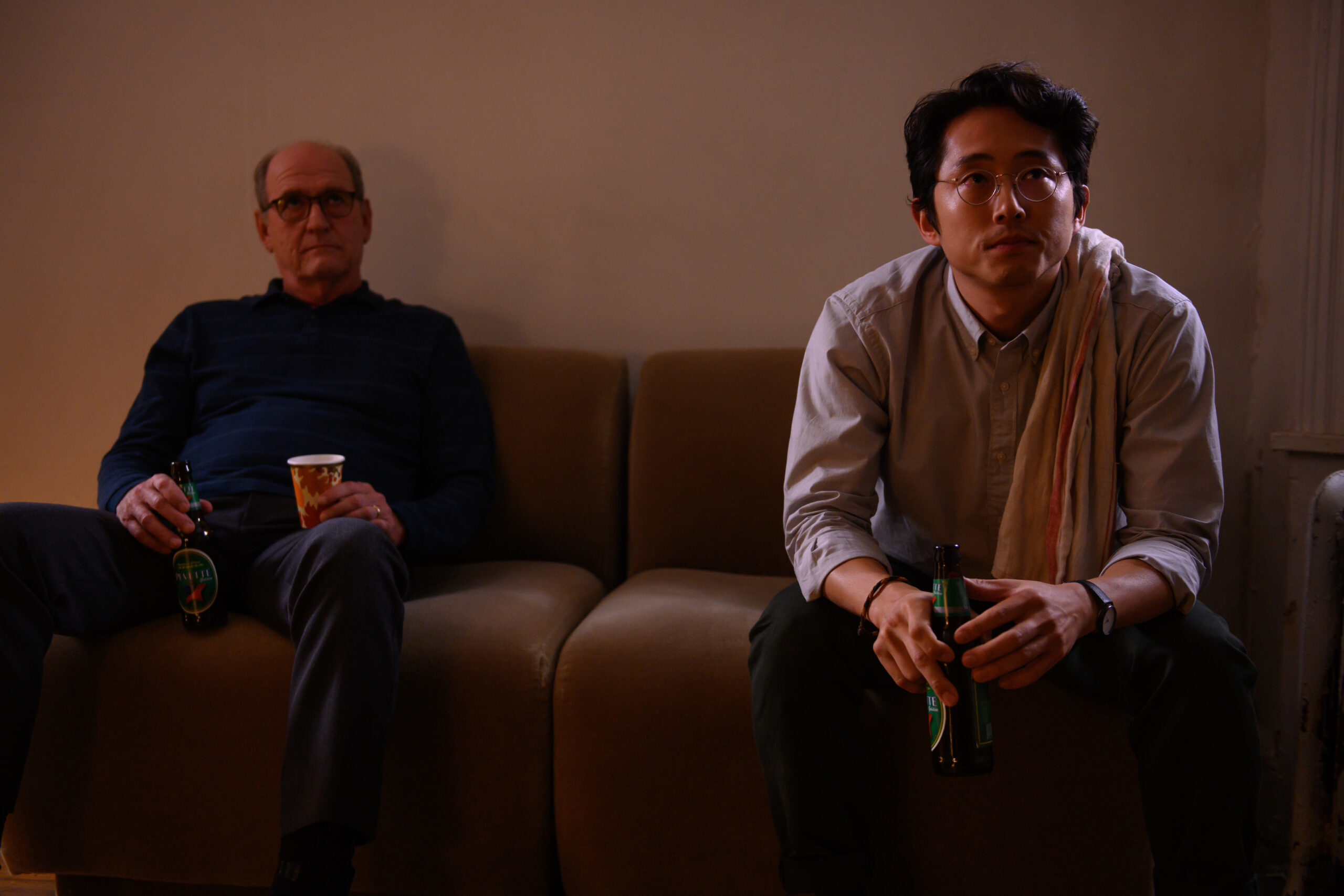
Hey there everyone! Welcome back to Movie Soapbox, the little corner of the internet that only you and I and that guy sleeping in the corner over there know about. This is the place where we find underappreciated indie films and we make sense of them. Today? We are doing a deep dive on The Humans, a movie so quietly devastating, so patient in the way it coils around your chest and squeezes, that most people who stumble onto it on a plane or a streaming queue watch the whole thing slightly leaned forward, waiting for a monster that never quite arrives, and then sit with something worse after it ends.
[TRAILER_EMBED: search_query=”The Humans official trailer”]
Alright. Before we go any further, you need to know that we are going to walk through the entire film, ending included, nothing held back. If you have not seen The Humans yet, go watch it and come back, because the thing this movie does only works if you don’t know it’s coming, and I’m about to take that away from you. You’ve been warned.
So. A stage play adapted by its own playwright, Stephen Karam, into a film. A single apartment in lower Manhattan, one Thanksgiving dinner, six people, 108 minutes. That setup gets greenlit in a particular window, a very specific window, where A24’s footprint is large enough that a distributor will take a swing on something with zero spectacle and wall-to-wall dialogue, and then the question is what kind of pressure gets applied between the script and the screen. A film like this, at this budget tier, with this cast, sits in a particular zone where the director likely retained real control, because there is genuinely nothing to recut your way into a different movie. You can’t test-screen a Thanksgiving argument into an action set piece. The shape of the material is the protection. But you can feel, even here, the places where a note might have landed, the moments where the supernatural elements are just a half-beat more explicit than the play probably demanded, just enough ambiguity-smoothing to make a one-sheet legible. That the film resists it almost entirely is the thing worth noting.
The cast is the first tell that someone fought to keep this thing intact. Richard Jenkins, who you know from The Shape of Water and about forty other things, plays Erik Blake, the father. Beanie Feldstein, who you know from Lady Bird and Booksmart, plays Brigid, one of the daughters. Steven Yeun, who by now you’ve seen in everything, plays Richard, Brigid’s boyfriend. Amy Schumer plays Aimee, Brigid’s sister, and if you went in skeptical about that casting choice you came out quieter on the subject. Jayne Houdyshell reprises her Tony-winning stage role as Deirdre, the mother, and June Squibb plays Momo, the grandmother deep in the fog of Alzheimer’s. When a project at this scale lands a cast that looks like this, it usually means the material got to them before the marketing deck did.
Now let’s talk about how this film actually works, beat by beat, because the ending only makes sense if you track the machinery underneath it from the first frame.
The movie opens on the apartment before it opens on the family, and that sequence is doing real work. The apartment in lower Manhattan, Brigid and Richard’s new place, duplex basement unit, is introduced with the same slow deliberate attention you’d give a suspect. Water damage climbing the walls. Pipes that announce themselves. Wiring that is having a conversation with itself behind the drywall. A slot of a window that looks up at sidewalk level, so what you see through it are legs, shoes, the underside of the city moving above you. The apartment is a character here in a way that goes past metaphor, it is doing what the family members are doing, which is leaking, groaning, failing to hold things together, revealing structural damage that someone has been spackling over for years.
Karam’s script notation is worth knowing about before you watch this again. He adapted a play built on overlapping dialogue, and the way he handled it is exact: a forward slash in a character’s line indicates the precise moment the next character begins to speak over them. Characters interrupt each other at mechanically correct intervals. Nobody in this family waits for a sentence to land before firing the next one, and that is not naturalism for its own sake, that is a family that has developed extraordinarily sophisticated techniques for not actually hearing each other. It plays as warm dysfunction on the surface and as something more clinical underneath.
Richard walks the family through the apartment on arrival and somewhere in here he explains a comic book called Quasar. The setup: monsters on another planet who tell horror stories to frighten each other. And what are those horror stories about? Humans. Because humans are the terrifying ones, the unpredictable ones, the creatures with the inexplicable behaviors and the capacity for a specific kind of interior damage that produces exterior chaos. This is the film’s thesis statement, delivered at the beginning, by the one character who is most outside the family system, and it lands so lightly that you might not clock it as a thesis statement at all. That’s the move.
The apartment keeps talking throughout. Coats fall off hangers. Doors drift. The lights go out. Momo’s wheelchair moves when no one is pushing it. And Erik, the father, is the one most attuned to all of it, or rather, the one most convinced that all of it means something terrible. He keeps going to the window. He keeps going quiet in the middle of other people’s sentences. He has a nightmare he can’t shake about a woman whose face is entirely covered with skin, no eyes, no mouth, no nose, just a smooth and featureless surface, and when he tells his family about it and they laugh, the laugh doesn’t reach his eyes.
Now the revelations, because this is a movie built on the structural principle that every person in this room is carrying something they have not said out loud yet, and the film is going to extract it from each of them over the course of the evening whether they meant to share it or not.
Brigid is first. She is a musician, she moved to New York for it, she is finding the door closed in every direction, grants not materializing, work not coming, the academic fallback she’d been keeping in her back pocket also not quite within reach. She is thirty-something in a city that is expensive in ways her parents don’t fully register, and she is not winning yet, and everyone in that room can see it even if they are careful about not saying so directly.
Aimee is next. She is bleeding a job she hasn’t admitted she’s already lost. She is fresh off the end of a relationship with a woman she loved. She has an intestinal condition that may require a colostomy bag. She is checking her phone constantly and sideways because that is what it looks like when a person is waiting for news they already know is bad. Amy Schumer plays this particular flavor of barely-holding quietly enough that it registers as grief and not as performance.
Deirdre doesn’t give her revelation to the family directly. She gives it to the room. She is a devout Catholic raising two daughters who have left the faith and who occasionally treat her beliefs as slightly embarrassing, as something to be smiled past, and she is experiencing that as a specific kind of abandonment that she doesn’t have language for in this context. She is not wrong that something has been lost. She is also not being given the space to say so without becoming the punchline. And Erik, who shares her faith, does not back her up, which she notices.
Erik is last and his revelation is the architecture the whole film has been building toward. He and Deirdre are in financial freefall. The lake house is gone. A smaller apartment is coming. And the reason, the actual reason, is that Erik was fired from his job at a Catholic school for having an affair with another teacher. A Catholic school employee, a man who has been performing the role of the family’s moral backbone all evening, a man who has been interpreting the groaning apartment as evidence of spiritual malevolence, has been conducting an affair. After he says it, Brigid goes to the terrace. Richard follows her. Aimee leaves to walk around the block. Deirdre takes Momo out. And Erik is left alone in the apartment, in the dark, with everything he just said hanging in the air.
This is where the ending earns everything it’s been working toward.
Erik is alone in the basement with a lamp, trying to gather his things, and the apartment comes for him in the way the apartment has been threatening to come for someone all night. The lights go out systematically. He sees a shadow at the window. The water blisters on the wall are swelling, moving toward him, the walls themselves going liquid and alive. He is absolutely certain something has come for him, something from the spiritual world he has been fearing and also betraying simultaneously, something with the face of the skinless woman from his dream. He prays. He is genuinely certain he is about to die.
And then Aimee opens the door. The light comes in. The shape at the window was the Chinese neighbor from upstairs, the same one who scared Erik earlier in the day when he was standing at that window in the light. The blistering walls are blistering walls. The groaning pipes are groaning pipes. The landlord is a bad landlord. Aimee is waiting for him, are we going or what, dad.
Now, the competing reads, because this film sustains more than one and the forum threads are not wrong to argue about it.
The first read is the literal one: nothing supernatural happened in this apartment. Everything that frightened Erik and Deirdre has a mundane explanation. The falling coats, the moving wheelchair, the lights, all of it traceable to a badly maintained building in a city full of badly maintained buildings. The horror genre furniture of the film is the subjective experience of two people whose inner lives have made them porous to dread, nothing more.
The second read is more generous to the supernatural framing: the apartment is genuinely haunted or cursed or charged with something, and the film is simply refusing to be explicit about it, in the same way the family refuses to be explicit about anything. The bumps are real. Momo’s wheelchair moves on its own for a reason. The film earns its horror genre classification because it intends that space to be genuinely threatening, not just psychologically projected.
The third read, which is where the Quasar framing points, is that the apartment is an externalization of the family system itself. The groaning and leaking and darkness are not metaphors, they are not supernatural, they are the house doing what houses do when people bring this much unacknowledged damage into them. The horror is distributed. It lives in the walls because the walls absorbed it.
Mike’s read is the first and the third simultaneously, and he doesn’t think that’s a contradiction. Erik is a man whose faith, whose professional identity, whose role as the family’s moral center, has been hollowed out by his own actions, and he is now in a dark room interpreting a blistering wall as proof that hell has come for him personally. The apartment is not haunted. Erik is haunted. The difference matters because the film is not interested in letting him off the hook with a supernatural explanation. The skinless woman in his dream has no eyes and no mouth. She can’t see him and she can’t tell anyone what she knows. He built her. She lives in him. The apartment just gave her somewhere to project.
What Karam got onto the screen, somehow, with a cast of six and one apartment and no budget for anything except actors good enough to mean every word of this, is a horror movie where the monster is a middle-aged man who has been quietly dismantling the thing he told his family he was protecting. The darkness at the end of the film is earned. It is not atmospheric. Aimee walks through it and turns the light on, because that is what the people who survive their families learn to do, they walk through the dark room and they open the door and they say are we going or what, and they do not wait for an answer.
Films like this don’t get made very often and when they do, they usually don’t look like this. The cast alone should have cost more than the film’s entire budget at any other moment in the last thirty years. That it exists, that it’s this tight, that it didn’t get a third act reshaped by someone who thought the ghost needed to be more conclusive, that is the thing worth sitting with. A24 distributed it and it vanished anyway, which is its own kind of horror story with a mundane explanation.
Watch it again – then call someone in your family. You’ll know why.
🎬 If You Liked This…
- The Party — the same single-location gathering where the social contract dissolves as the night progresses and what people have been carefully not saying to each other finally surfaces
- Silent Night — the same family gathering with something monstrous underneath the domestic surface, same refusal to let the love between people excuse what they’re doing to each other
- Fleabag — the same raw family dysfunction in confined spaces, people who love each other doing damage they cannot undo, the humor sitting directly on top of something genuinely devastating