
Hey there everyone! Welcome back to Movie Soapbox, the little corner of the internet that only you and I and that guy sleeping in the corner over there know about. This is the place where we find underappreciated indie films and we make sense of them. Today? We are doing a deep dive on Sisu, a movie so deliberately, aggressively amoral that the suits who eventually bought it for international distribution probably convinced themselves it was just a fun action movie and moved on before the implications caught up with them.
Alright, fair warning, we are going deep into this movie, scene by scene, beat by beat, including the ending, so if you haven’t seen Sisu yet and you want to go in clean, you know what to do. Everyone else, you walked into the right booth at the right time.
What Is the Movie Sisu Anyway?
Before we walk through the film itself, something needs to be named up front, something that has nothing to do with the gold or the Nazis or the mine-to-the-face moment everyone clips on social media. Films like Sisu arrive wearing the costume of a crowd-pleaser, a grindhouse throwback, a European Wick-variant with a Finnish accent, and distributors love that costume because it lets them sell the movie without having to explain what the movie actually is. You can tell when a film has been positioned by its distribution team to obscure its own thesis. The marketing leans into the insanity, the kills, the trailer cut so it plays like a comedy highlight reel, and the actual argument the filmmaker is making gets to sneak through underneath. Director Jalmari Helander has a specific and genuinely unsettling point he’s making about what the figure of the lone warrior actually represents, what he’s for, and the whole apparatus of selling this as a Saturday night action movie is, whether intentionally or not, the cover that lets that point land harder on anyone paying attention.
Sisu Movie Deep Dive Walkthrough
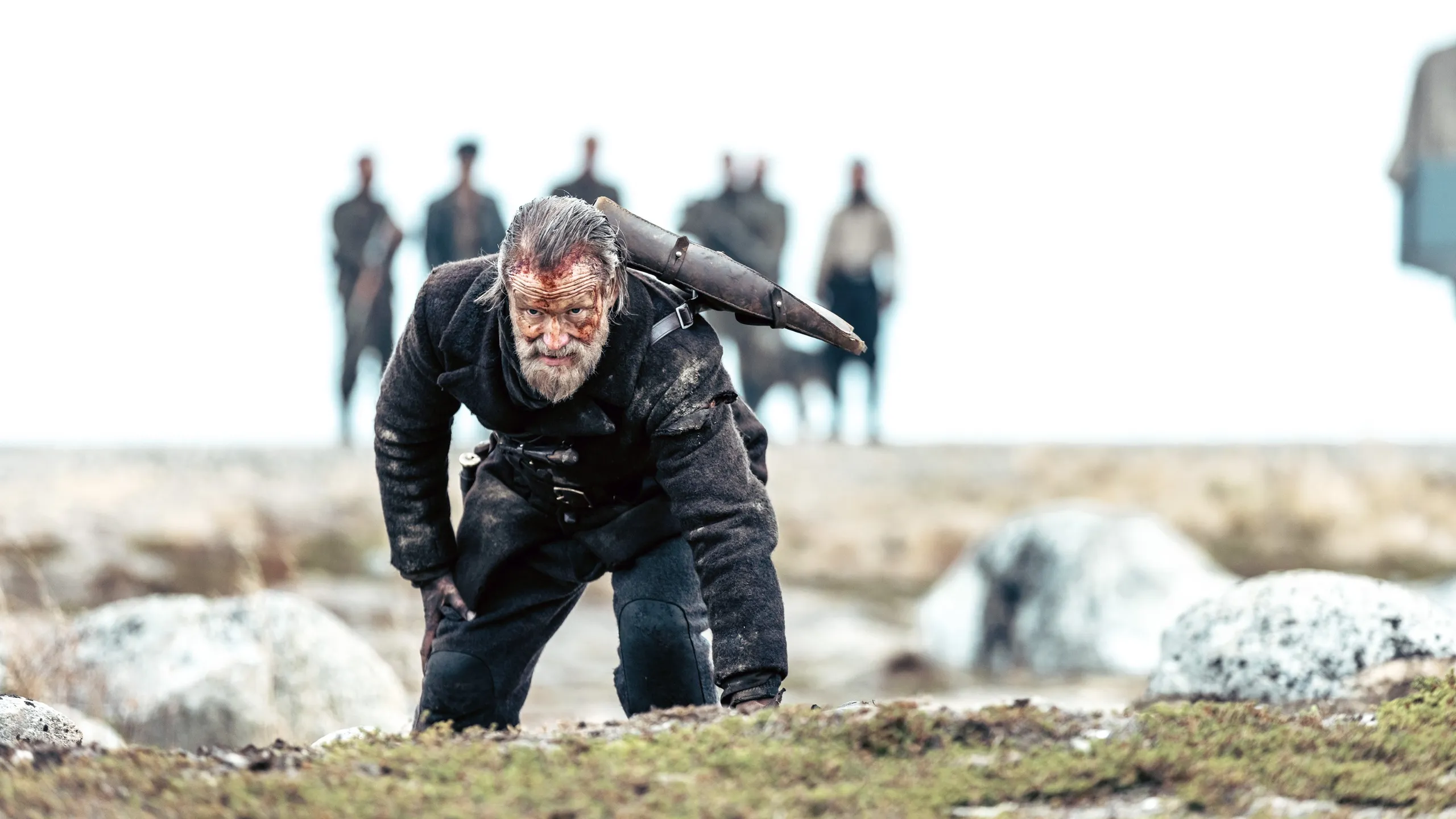
So. The film. 1944, Finnish Lapland. Aatami Korpi is walking alone through a scorched, retreating landscape, the war collapsing around him in every direction. He has a horse, a dog, and no apparent interest in anyone or anything. The first thing you need to understand about Aatami is the specific texture of his absence from the war. This isn’t a soldier who served and came home. This is a man who reportedly killed over three hundred enemy combatants, accumulated a reputation so extreme it passed into something close to mythology among the people who faced him, and then simply… stopped. Walked away. Not out of principle, not out of exhaustion in any emotional sense we’re given access to, just because he decided he was done. He’s panning for gold now. That’s the plan. The war can sort itself out.
And then he finds it. A small nugget that opens into a mother lode deposit, and you watch Aatami in this moment and there is no joy on his face, there’s a recognition, a recalibration of logistics. He has found the thing that converts his remaining time on earth into a project he can complete. He packs the gold, he starts moving toward Helsinki, and that is the whole movie. He is not a man on a mission to fight evil. He is a man trying to make a withdrawal and the Nazis are traffic.
The first group of German soldiers he walks through waves him along, and this is one of the film’s most quietly precise details because those men looked at him and decided, on some animal level, not today. The second group doesn’t have that instinct, or ignores it, and when they go through his belongings and find the gold, they make the last bad decision they will ever make. Aatami opens with a dagger through an officer’s temple, which is as close as the film ever comes to giving him a formal introduction, and from there the arithmetic of the movie locks in: find Aatami, die.
The minefield sequence is where Sisu commits fully to its own register. His horse gets blown apart, he’s on hands and knees collecting scattered gold from the dirt, and here is where the film forces you to hold two things in your head simultaneously. You’ve just watched him not flinch at the death of an animal he’s been traveling with, he checked on the horse, confirmed it was gone, and moved on in roughly the same amount of time it took you to process that he did that. Then the smoke clears and he pulls a mine out of the earth and throws it, like a fastball, directly into a Nazi soldier’s face. The audience laughs, and Helander has made sure they do, because that laugh is doing something for him later.
The underwater sequence is the film’s most cited piece of lunacy and it deserves the credit. Aatami, submerged, slits the throats of soldiers who are trying to find him in a lake, and breathes the air bubbling out of the wounds. This is not a film that is going to apologize for that image or soften it or cut away before you’ve fully understood what you’re watching. This is the point where the Die Hard comparison, the Wick comparison, all of it falls slightly short, because those films let their heroes be exhausted, let them bleed with meaning, let the body cost something. Aatami’s body does not cost. He gets hanged in one sequence, and the film does not give you a mechanism for his survival because the film has decided you no longer require one. He rocks himself to a position where he can find leverage and he keeps going. Done.
Wolf, the German commanding officer who has been pursuing him despite explicit orders from command to abandon the chase, gets dragged out of a tank near the end and beaten comprehensively, and then Aatami hands him off. To the women who had been the unit’s prisoners. Who had been through things the film depicts plainly and without exploitation. And this handoff is the film’s single most morally interesting gesture, Aatami is not delivering justice, he’s disposing of a problem in the most efficient direction available, and the women receive this not as rescue but as an opportunity they intended to create for themselves anyway. There’s a sequence involving a plane, a pickaxe, a pilot who picked the wrong week to encounter Aatami, and a German soldier who exits the aircraft through the bomb doors attached to ordnance. Then the plane goes into a swamp. Then Aatami walks out of the swamp with his pickaxe. Then he finds his dog. Then he goes to Helsinki.
The Ending of the Movie Sisu Explained
And now the ending, which is the only part of this film that requires genuine explanation because it’s doing something most people laugh at and walk away from when it’s actually the thesis statement delivered in plain language.
Aatami walks into a bank. Every civilian in the building takes one look at him and leaves, which is the film’s only moment of broad comedy and it’s earned. He walks to the counter, he pours the gold out, and he speaks. These are his first words in the entire film. What does he say? He says he would like to exchange the gold for large denomination bank notes. Why large denomination? Because they weigh less.
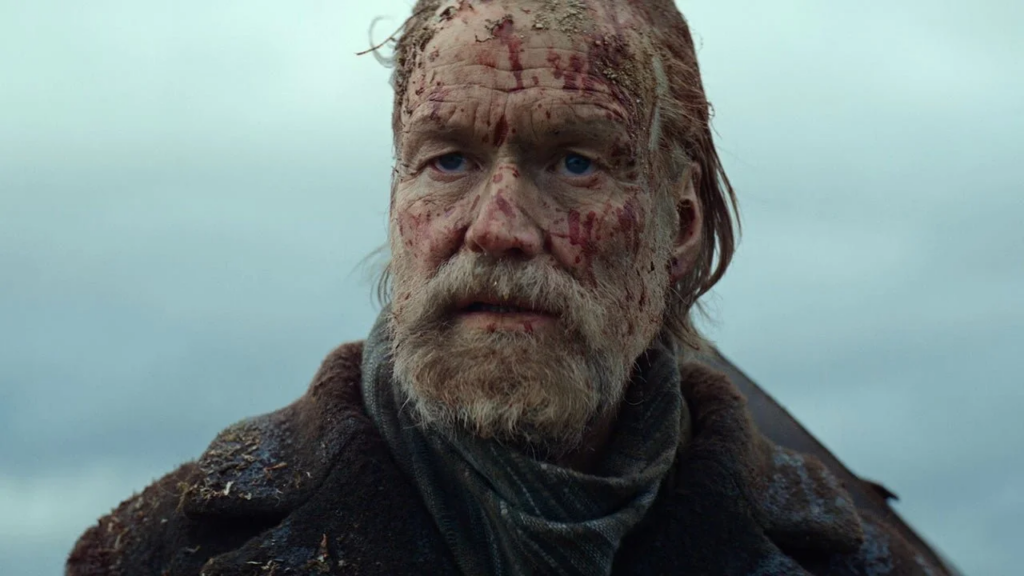
That’s the ending. That’s all the ending is. He wanted lighter currency. The Nazis were between him and lighter currency. Several dozen people are dead. He has lighter currency now.
Sisu Movie Explained Theory #1 –
The first is the simplest: this is pure exploitation cinema operating in the grindhouse tradition, the logic doesn’t need to cohere because coherence was never the contract, and you should stop looking for meaning in a movie whose only promise was maximum insanity per minute.
Sisu Movie Explained Theory #2 –
The second is the mythological read, where Aatami is explicitly positioned as a folk-hero figure in the tradition of Finnish national mythology, something close to a force of nature, and the film is playing with that archetype self-consciously, asking what it means to mythologize a killing machine as a cultural hero.
Sisu Movie Explained Theory #3 –
The third, which sits uncomfortably between the other two, is the anarchic-amoral read, the one the film’s own ending is most consistent with: Helander has made a movie about a man for whom killing has been so thoroughly normalized by warfare that the moral weight has simply evaporated, and the film refuses to restore that weight because the film thinks you should be uncomfortable that it’s gone.
The tell is the gold in the minefield. When the horse dies and Aatami starts collecting scattered nuggets from the crater, the film is showing you his hierarchy of concerns in real time, and the gold outranks grief. Not because he’s a bad person in the conventional movie villain sense, but because the film has been building a portrait of a man so thoroughly hollowed out by what he did in the war that the only thing left with traction is the gold, the one object that represents a world after all this. The Nazis didn’t become his enemy because of what they represent. They became his problem because they got between him and lighter currency. Helander knows that this is a disturbing thing to put on screen and he does it anyway, and the laugh from the mine-to-the-face is the mechanism he used to get you to enjoy the ride before he made you sit with what the ride was.
The mythological read is the most generous to the film and it’s not wrong, but I think it stops one beat short. Helander isn’t just playing with the folk-hero archetype. He’s showing you what that archetype actually requires you to stop thinking about in order to function. Every culture that produces a warrior-hero myth is making a negotiation with the same uncomfortable math, and Sisu declines to make the negotiation. Aatami kills Nazis in 1944 Finland and the film will not let that be enough. It keeps refusing to give him a moral frame, keeps pulling the camera back to the gold, keeps stranding you in the minefield crater with him while the horse is gone and the gold is what matters.
Moviesoapbox’s Preferred Read on the Movie Sisu
That’s the one I believe. Not because it makes the film easier to like, it doesn’t, but because it’s the only reading that accounts for everything, including the ending, including the bank, including the specific detail of lighter currency as the first and only thing this man chooses to say out loud in the entire runtime.
A film like this doesn’t usually get made in English, at this budget level, with this much latitude. The fact that it came out of Finland, from a director working in his own language and tradition, working from a story that has no American IP pipeline attached to it, no franchise runway built into the pitch, no test-screening notes trying to retrofit Aatami with a dead family to give you permission to root for him, is the entire reason the ending is allowed to be what it is. A Hollywood version of this movie would have given him a reason. Aatami doesn’t have a reason. He has gold. That’s the movie.
Interested in more films like Sisu? Here are three recommendations of films we have covered here at Moviesoapbox:
🎬 If You Liked This…
- Atomic Blonde — one operative, an entire city trying to kill her, the same lone-wolf ruthlessness as Sisu except it’s Cold War Berlin and she’s wearing a white suit
- Sicario — a man operating entirely outside the rules with complete conviction, same economy of violence, except Villeneuve makes you feel the moral weight Sisu deliberately leaves on the table
- The Wedding Guest — a professional who says almost nothing and does exactly what he came to do, stripped-down lone operator energy in a very different setting but the same DNA