
Hey there everyone! Welcome back to Movie Soapbox, the little corner of the internet that only you and I and that guy sleeping in the corner over there know about. This is the place where we find underappreciated indie films and we make sense of them. Today? We are doing a deep dive on Things Will Be Different, a movie so quietly ruthless in its logic, so committed to making you feel the weight of a Sisyphean loop in your actual chest, that you will finish it and immediately need someone to talk to about it, and that someone is me, right now, so sit down.
Before we go any further, know this: everything that follows is going to spoil this film completely, down to the bone. If you have not watched it yet, go watch it. Come back. I will be here, still annoyed on your behalf at how few people have seen this thing.
Michael Felker built his career as an editor, specifically as the guy in the room with Justin Benson and Aaron Moorhead, two filmmakers who have spent the last decade proving that cosmic horror and genuine human grief can live in the same frame without either one apologizing for the other. The Endless, Resolution, Synchronic, Spring — if you have seen any of those, you already know the grammar Felker was absorbing while he was in that cutting room. What you have to understand about a debut like this one is what it means, structurally, for a first-time director to come out of that particular apprenticeship. Benson and Moorhead are executive producers here, they appear in the film, their fingerprints are visible, and the industry reads that as a safety net, which means the suits who evaluated this project almost certainly thought they were buying a Benson-Moorhead product with a cheaper name on the director’s chair. The creative control a first-time director retains in that situation is not guaranteed. The fact that Things Will Be Different has a genuine, specific, uncompromised point of view — a temporal tape recorder as the central communication device, a third act that refuses to give you the catharsis you were building toward, an ending that earns its ambiguity instead of hiding behind it — tells you that Felker either had a very good contract or had people in his corner willing to fight for the cut. Films at this budget tier, with this degree of structural difficulty, do not usually come out looking like the director’s version. This one does.
Things Will Be Different Movie Walkthrough
So. The film. Here is what is actually happening, and why it is stranger and sadder than it first appears.
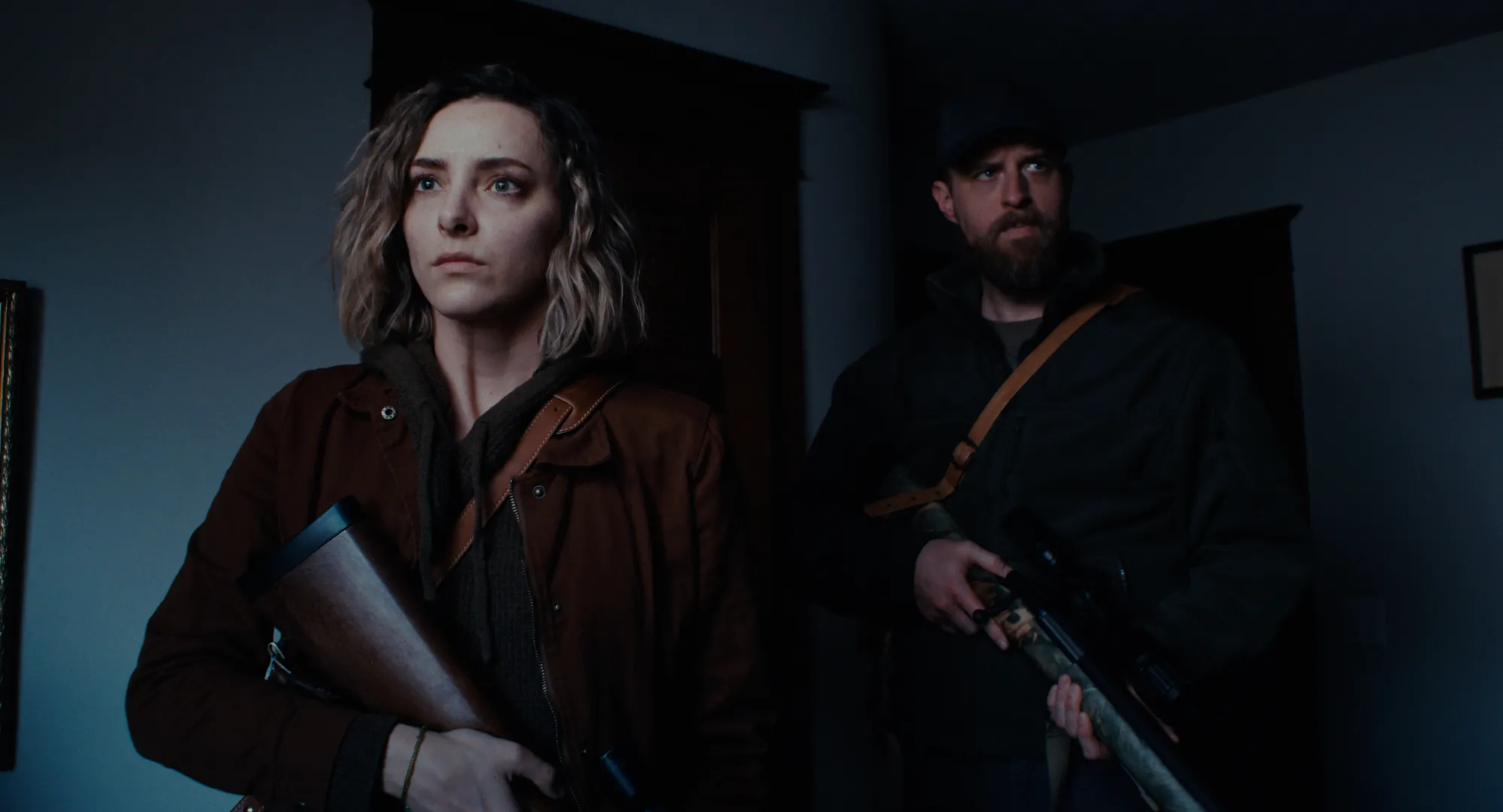
Joseph and Sidney are estranged siblings, not biological, a detail the film withholds long enough that the reveal recontextualizes everything you thought you understood about why they are so bad at being in the same room together. They have just pulled a heist, hundreds of thousands in cash, and they need to disappear. They find a farmhouse. The farmhouse is outside of time, a literal pocket in the temporal fabric, and they move in. The plan is to let things cool down, then jump back to the present and walk away clean. The plan fails immediately, because the plan was never theirs to execute.
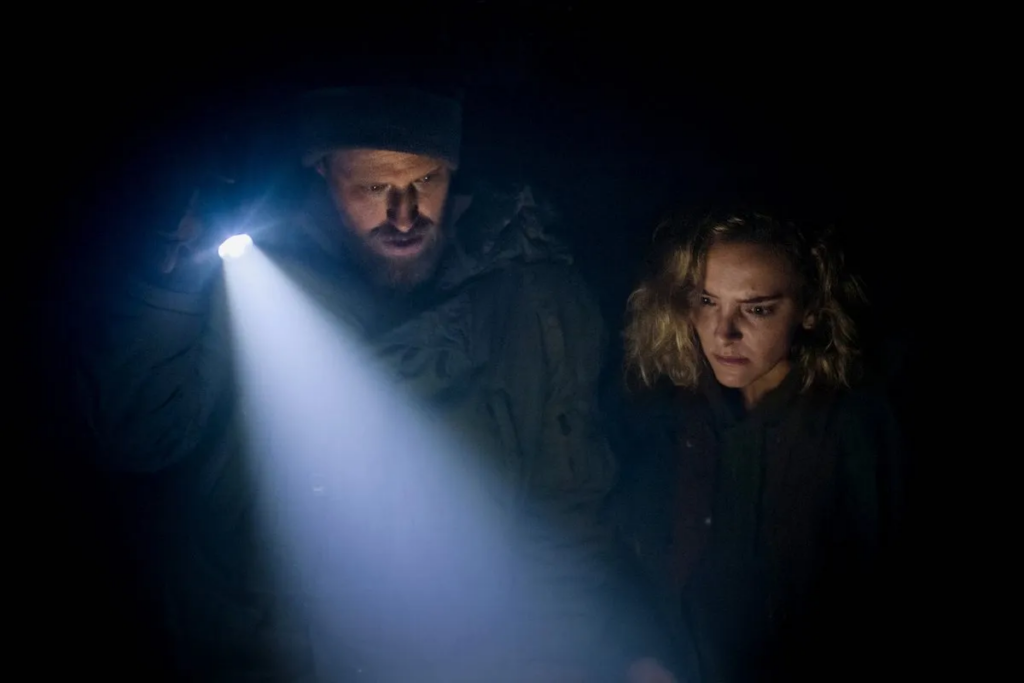
The first thing that should register as wrong is the signs. Literal, physical signs appearing inside the farmhouse, written by someone who knows the future and is trying to steer the present without being able to speak directly into it. Then the tape recorder appears, and this is the device, the single most elegant piece of science fiction craft in the film, because it does not bend the rules of this universe, it IS the rules, a machine that can exchange messages across time but cannot change what has already happened, only inform it. The siblings start receiving instructions, tasks to complete, challenges from an authority they cannot see and cannot refuse. Complete the tasks or lose your window back to your own timeline. The trap closes around them without ever announcing itself as a trap.
The watchers behind this system are called the Vise, and the name is the whole metaphor, because a vise does not crush, it applies exactly the pressure required to hold something in place while the real work gets done. The Vise are not villains in any conventional sense. They are enforcers of temporal structure, the people behind time and ahead of time simultaneously, squeezing the middle until the anomaly resolves itself or gets ground out of existence. Benson plays one of them alongside Sarah Bolger, and both are shot with that particular cold-remove that tells you these are people who have watched this exact failure play out enough times that they have stopped finding it tragic. They are not cruel. They are just done being surprised.
Now. Steph. Because this is the question that breaks people, and it should not be a hard question but the film earns the confusion by making you care about Sydney before it tells you what Sydney’s disappearance into the time loop actually costs.
Sydney has a daughter. Her name is Steph. Sydney vanishes into the temporal pocket after the heist, caught in the loop, and from Steph’s perspective on the outside, her mother simply disappears, possibly dead, definitely gone. So Steph does what any person would do who has been abandoned by the universe with no explanation and no body and no closure, she breaks. She spends what appears to be years tracking down the farmhouse, learning enough about how it works to find the entrance, and then she comes through the door with nothing left to lose and a very specific target list. She is the masked hunter stalking Joseph and Sydney through the farmhouse. The monster of the third act is a grieving daughter, and Felker holds that reveal long enough that when it lands, it reframes the entire genre posture of everything that came before it. This was never an action thriller. This was a story about a mother and a daughter who got separated by time and the geometry of bad choices, and the action thriller was the costume it wore to get past the greenlight meeting.
Joseph cannot beat Steph. He tries. He tries across iterations we only see the final version of, but the film gives you enough information to understand that the jump cut near the end is not a single failed attempt, it is a compressed montage of dozens of them, Joseph cycling through the same losing position over and over, each time vowing to change the outcome, each time finding that Steph is always faster and always angrier and always has more to fight for than he does. The Sisyphean structure of the film’s title is not metaphorical embroidery, it is the plot. Joseph is Sisyphus. The boulder is Steph. The hill is the farmhouse. And he rolls it up every time.
The only exit is the one he does not want to take. He has to ask his sister to kill him, leave the money in the farmhouse, and run. Not because killing him is a solution, but because it is the only variable left that Steph has not already optimized against. Sydney gets out. Joseph does not. The title, Things Will Be Different, is the film twisting the knife one final time, because things are not different, they are exactly as terrible as they were going to be, and the only difference is that one person survives instead of none.
As for what happens after Sydney runs: we do not know. The film refuses to tell us, which is the correct choice, and I will tell you why. Any ending that shows you Sydney and Steph reuniting in some future timeline is a film that blinks. The version where you do not know, where you have to carry the possibility that they find each other alongside the equal possibility that they never do, that is the version that actually respects what you just sat through. My read is that they find each other eventually, somewhere downstream in time, both of them permanently altered by what the farmhouse took from them. But I hold that read loosely, because Felker earned the right to leave it open.
The Things Will Be Different Theories
The competing interpretations of this film mostly cluster around the Vise and their intentions.
Things Will Be Different Theory Number One: Vise are genuinely neutral, temporal bureaucrats with no investment in whether Joseph or Sidney live or die, only in whether the loop resolves cleanly.
Things Will Be Different Theory Number Two: Another read says the Vise engineered the entire situation, that the heist, the farmhouse, the tasks, Steph’s arrival, all of it was a managed test with a predetermined acceptable outcome range.
Things Will Be Different Theory Number Three: A third read, the one that comes out of the closest viewing of the Benson-Bolger scenes, says the Vise are operating on a time horizon so long that individual human suffering is simply below the resolution of their concern. They are not managing a situation. They are managing a system. Joseph and Sidney were never people to them. They were variables.
Things Will Be Different Theory Moviesoapbox Read: I’m going with the third theory – the expansive time horizon. And I hold it with full conviction, because it is the only interpretation that makes the tape recorder make sense. The tape recorder is not a gift. It is a leash with a longer cord than the siblings realized. Every message that came through it was calibrated to produce a specific behavior, and the Vise knew from the beginning which behaviors would resolve the loop and which would extend it. Joseph’s Sisyphean repetition was not an accident in their ledger. It was an expected outcome within an acceptable tolerance range. He was never going to win. The system was not designed for him to win. It was designed for exactly one of the two siblings to exit, because one exit closes the loop and two exits create a new anomaly. They let Joseph run the loop until he arrived at the correct solution himself, because a forced solution would have left a scar in the timeline that they would have had to manage separately. It is cheaper, in temporal terms, to let the rat find the exit on its own.
That is a brutal thing to build a film around. Most films that get this far into the mechanism flinch at the last second and give you a win. Things Will Be Different does not flinch. Joseph asks his sister to kill him, and the film cuts, and you sit with it. A debut film, from an editor making his first move into the director’s chair, with Benson and Moorhead watching, and he chose the harder ending. He chose the one that does not test well and does not play in a room full of suits who want to know what the audience takeaway is. He chose it anyway.
That is what this film had to survive to exist. Not just the logistics of low-budget time travel filmmaking, not just the structural risk of a nonlinear narrative that withholds information the audience needs to orient themselves, but the basic pressure that any film faces when the ending refuses to comfort anyone. Films like this one, without a name above the title that can carry a difficult ending past the acquisition conversation, do not usually get to keep their third acts. Felker kept his. Go watch it.
🎬 If You Liked This…
- The Endless — Benson and Moorhead at their most cosmic, two brothers trapped in a location where time operates by different rules, something ancient holding the space in a loop it refuses to release
- Resolution — the direct predecessor, a cabin in the woods where something wants the story finished before anyone is allowed to leave, the same dread of a location that has its own agenda
- Something in the Dirt — two people in a location with something inexplicable happening around them, the same meta-awareness of being inside a story someone else is writing, Benson and Moorhead at their most self-referential