
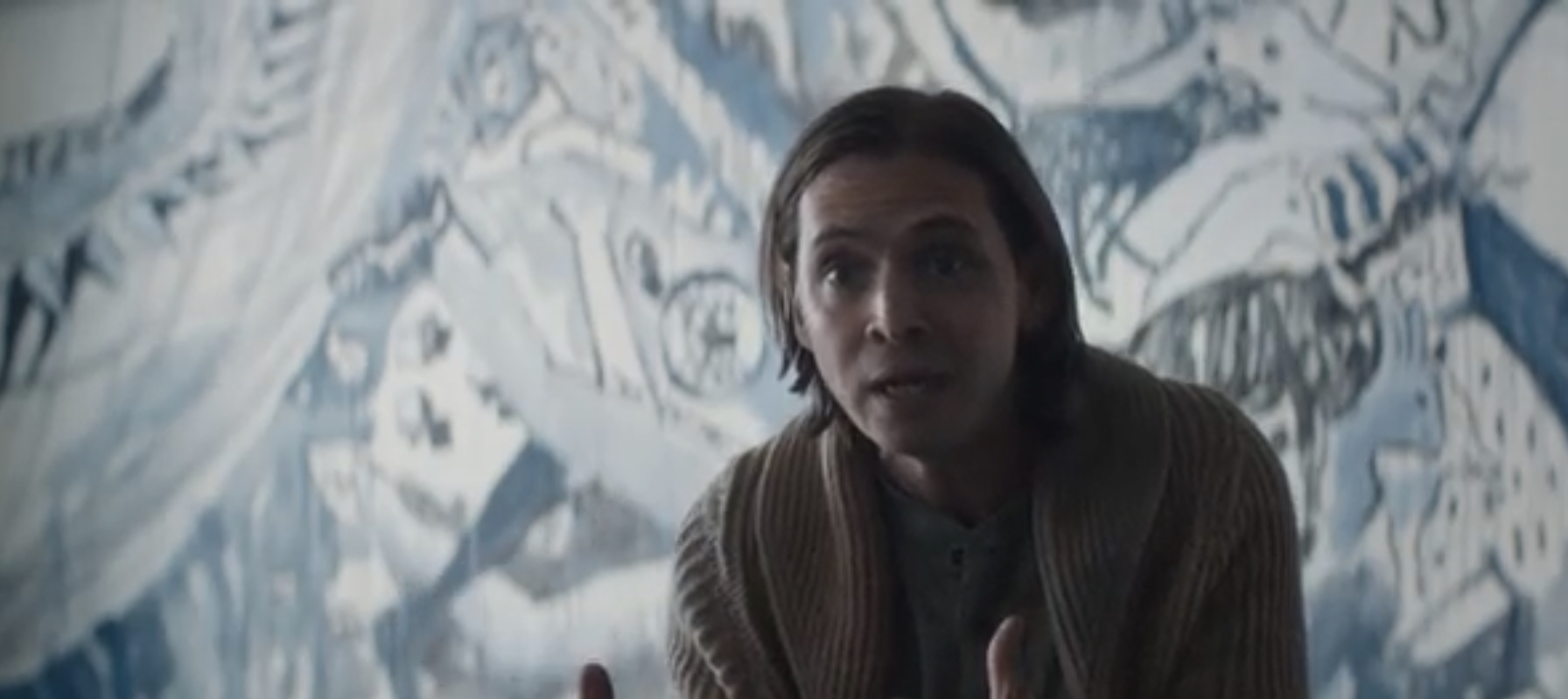
Hey there everyone! Welcome back to Movie Soapbox, the little corner of the internet that only you and I and that guy sleeping in the corner over there know about. This is the place where we find underappreciated indie films and we make sense of them. Today? We are doing a deep dive on We’ve Forgotten More Than We Ever Knew, a movie so quietly, patiently, relentlessly strange that by the time it ends you are not entirely sure the thing you just watched was a thing that could have been watched, if you follow me, and I suspect you do or you wouldn’t be here.
Let’s get you oriented with the trailer first.
From here on out, everything below this line is a spoiler, the full kind, the no-going-back kind, and if you haven’t seen the film yet, the correct move is to close this tab, go find it, come back when you’ve finished it, and then read every single word I’m about to write. You have been warned in the only way I know how to warn someone, which is clearly and without any theatrical buildup about it.
Still here? Good. Let’s get into it.
What This Film Actually Had to Survive to Exist
Before we walk through a single scene, you need to understand something about what a film like this costs, and I’m not talking about the budget number, I’m talking about the cost of getting a movie with no names, no genre hook, no IP attachment, no sequel potential, and no third-act explosion anywhere near a distributor’s desk without it coming back looking like a different movie. At the budget tier this film almost certainly occupied, you generally get one of two outcomes: either the money people leave the filmmaker alone because there isn’t enough money at stake to make meddling worth their time, or they meddle anyway because they’re scared and scared money always reaches for the scissors. The evidence on screen suggests Thomas Woodrow either got left alone or fought hard enough that it doesn’t show. The pacing is uncompromised. The ambiguity is structural, baked in from the first frame, not something that crept in because a scene got cut for time. When you see a third act this committed to not explaining itself, you’re either looking at a director who had final cut or a director who was too far outside the studio machinery for the machinery to care. Either way, the film you are watching is the film Woodrow made. That is rarer than it should be.
The Cast, The Setup, The First Lie
Three actors. No names for any of them in the script, just the terms the film uses to identify them: Man, Woman, and Man from the Pool. Man is Aaron Stanford, who if you watched 12 Monkeys on television you already understand is capable of carrying a slow, dread-building, morally compromised character through a lot of quiet scenes without losing you. Woman is Louisa Krause, and the particular skill she brings here is a kind of watching, a quality of absorption and attention that makes you believe this person has spent years learning to read a face because the face across from her is all the information she has access to. And Man from the Pool is Doug Jones, who has made a career of being the thing that doesn’t move the way a person moves, and here gets to start from absolute stillness and build outward, which is genuinely unsettling in a way that his more costumed roles don’t quite prepare you for.
The film opens on Woman’s voice, a single question: “Will you tell me something?” And I want you to sit with how carefully that is constructed, because it isn’t “tell me what happened” or “tell me the truth” or “tell me a story,” it is just “tell me something,” which is every possible request at once, a request for information, for comfort, for fiction, for company, and the film never closes off any of those readings. Some directors open on ambiguity by accident. This reads like someone who knew exactly what he was doing and was happy to let you wonder about it for ninety minutes.
What we learn fast: Man has been lying to Woman for a long time. The Silver Ridge, the other people, the beds and the water and the food that are supposedly waiting for them somewhere ahead, all of it constructed by him to keep them moving, to give them a destination when survival without a destination is a different kind of death. And when Woman finds out, the film has already told you what it is about, even if you don’t know it yet. The lie isn’t a plot point. The lie is the whole movie.
The Two Towers, and Why They Feel Wrong Before Anything Goes Wrong
And then the buildings appear. Two towers sitting in a post-apocalyptic forest with no roads leading to them, no ruins of a surrounding city, no infrastructure visible anywhere, water running, food available, a kitchen, working faucets, a pool, and the film doesn’t bother explaining any of it because explaining it would be the wrong move. You feel the wrongness before you can articulate it. Woodrow is using the buildings the way a good writer uses a sentence that’s grammatically correct but semantically off, everything checks out on the surface, and something is absolutely wrong underneath.
Man and Woman settle in. They learn to use forks again. Man heals Woman’s ankle using technology that dates the film’s setting somewhere comfortably past our own, far enough that certain things are possible that aren’t possible now, close enough that the towers feel like something we might recognize if we squinted. And then Man finds the pool. And at the bottom of it is a very tall, very still, very alive man. And Man tells Woman nothing about it. He cordons off the second building. He keeps the secret. And that is the second lie, stacked on top of the first, and the film wants you to feel the weight of that stack, because that is the architecture it’s building around you.
Woman Finds Him Anyway
She sees the sandbags. She walks between the buildings. She finds Man from the Pool herself, and what she does next is the most revealing thing in the film about who she is and what she needs: she poses him, she cleans him, she dresses him, and she talks to him. She tells him everything. The stories Man told her. The things she’s thinking. The things she can’t say to the person she’s actually with. And when she asks Man directly what is in the other building, he says he didn’t see anything. He looks her in the face and chooses the lie a third time.
Meanwhile they’re drifting. Man retreats into recordings and electrical work, fixing the power, running his own private operation. Woman retreats into painting, covering the walls of a room with people and buildings and civilization, everything that memory keeps offering her in fragments. And when Man sees the paintings, he comes apart, because he is certain those memories are false, that the world she is painting never existed or no longer exists in any meaningful way, and that holding onto it is a kind of self-inflicted damage. He says the wrong thing, he knows it immediately after, he tries to fix it, and by then the distance is too far to cross by apologizing.
Man from the Pool Starts Moving
And this is where the film shifts registers on you. Slowly, and then all at once, Man from the Pool begins to move. Not twitching, not stirring, moving, with intention, and the movement correlates with the distance between Man and Woman closing off completely. The music in the building is doing something to their sense of time. The walls are not behaving correctly. Something is wrong and the film lets you feel that wrongness accumulate without naming it, which is the right call and also the harder call and also the call that a distributor who’d run three more test screenings would have talked Woodrow out of making.
Man from the Pool dresses in black and takes Woman somewhere inside the building that shouldn’t exist by the building’s floor plan, a hidden space, and they dance. And it is one of the most genuinely frightening sequences in any film at this budget level in recent memory, not because of what is shown but because of what the dancing represents, which is Woman choosing, actively choosing, the alternative. Man locks himself in his room with the tapes. Woman puts him there. She locks the door on him and she goes. And the line she says when she gets to Man from the Pool is the key that unlocks the whole picture: “I just don’t want to ever hear his lying voice anymore.” And that willful, deliberate act of turning away is exactly what makes Man from the Pool begin moving in earnest.
Man breaks a mirror shard into his arm getting through walls that aren’t solid when viewed through reflections, which is a sentence that makes no sense in a realistic frame and perfect sense in every other frame. He finds them. She screams. Man from the Pool falls back into the pool. Man and Woman turn the power off, pack what they have, and leave. The end, except obviously not the end of what you’re thinking about.
What Actually Happened, and Why That Question Has Four Good Answers
The literal version of this film cannot be the real version of this film, and the film knows that and relies on you knowing it too. A catatonic man at the bottom of a pool with no food and no care surviving long enough to be found requires a framework the film never provides. Two fully operational towers sitting in a forest with no road, no surrounding ruin, no supply chain, no explanation, require the same framework. So you are watching something other than what you appear to be watching, and the question is… what?
The Theories to Explain We’ve Forgotten More Than We Ever Knew
Theory One: Take It Literally Anyway. Future technology explains the medical anomaly. Future construction methods explain the buildings. In that reading, Man from the Pool is just one more catastrophic threat in a world full of catastrophic threats, they survived it the same way they survived the other ones, and they walked away. This is the least interesting reading and it has the virtue of internal consistency and the disadvantage of leaving you with almost nothing to think about afterward. It’s available. I don’t recommend it.
Theory Two: It Is a Story Being Told. The opening question, “Will you tell me something,” lands differently if the entire film is the something. Man, sitting at a campfire, tells Woman a story, and Woman’s mind does what minds do, fills in the gaps, populates the spaces with specific details, turns the Two Towers constellation they can both see in the sky into a location, turns a morality lesson into a place they visit. In this reading the film is a story about storytelling, about how we use narrative to say the things we can’t say directly. It’s a strong reading and it accounts for a lot of the film’s stranger textures. The constellation detail is not accidental, Woodrow put it there for a reason.
Theory Three: The Morality Play, First Version. Nothing here is real in the way a physical location is real. The towers are a symbolic space. Man from the Pool is the externalized version of everything that is easier to talk to than the person you actually love, your library card, your streaming subscription, your phone, the thing you use to diffuse the day’s stress because the day’s stress is easier to diffuse sideways than to hand directly to your partner. Man builds a silo. Woman builds a silo. And instead of showing each other what’s in them, they pour the contents into a man who can’t talk back and can’t judge them and can’t be hurt by any of it. The film is a warning about that. About how the alternative to the hard work of actual intimacy always looks more comfortable right up until it starts moving on its own and pulling you toward a room that shouldn’t exist.
Theory Four: The Morality Play, Woodrow’s Version. This is Theory Three with one crucial turn. Woodrow himself, when asked, gave his read, and his read is not about the danger of avoidance, it is about the danger of the imagined alternative. We can always construct a better version of our circumstances, our partners, our lives, and in constructing it we are quietly, constantly, negating what we actually have, which is almost always more complicated and more real and more worth having than anything we can merely imagine. Man from the Pool is not a warning about escapism. He is the better version, the idealized other, the thing you go looking for when you decide the person across from you is not enough. And he is, ultimately, a thing that falls back into the water when you scream loud enough to hear yourself.
Moviesoapbox’s Preferred Theory
For the movie We’ve Forgotten More Than We Ever Knew I am totally in alignment with theory four. Woodrow’s read, and I don’t back down from it just because he’s the one who made the thing. He earned the right to be right about this one. The film’s architecture supports it at every level, Man from the Pool doesn’t move until Woman chooses him, doesn’t become dangerous until she turns away from the person she actually has, doesn’t fall until she rejects him with the same force she used to chase him. The whole mechanism is a closed loop about the way desire works, how the imagined thing only has the power you give it, how withdrawing that power is the only thing that actually kills it. And the reason this reading lands harder than the morality-play-about-communication version is that it is more specific and more uncomfortable. Avoidance is a general failure. This is about a specific choice, the choice to believe that elsewhere is better, the choice to go looking, the choice to lock the door behind you.
They leave the towers behind. They keep walking. And somewhere ahead there is probably still a Silver Ridge that doesn’t exist, and Man knows it, and they walk toward it anyway, because the lie that keeps you moving is sometimes the only honest thing you have.
A three-person dystopian relationship film with no studio fingerprints on it and no concessions to the audience’s need for resolution got made, got finished, and got seen by enough people that you found your way here trying to understand it. That doesn’t happen often. Pay attention to the ones that do.