
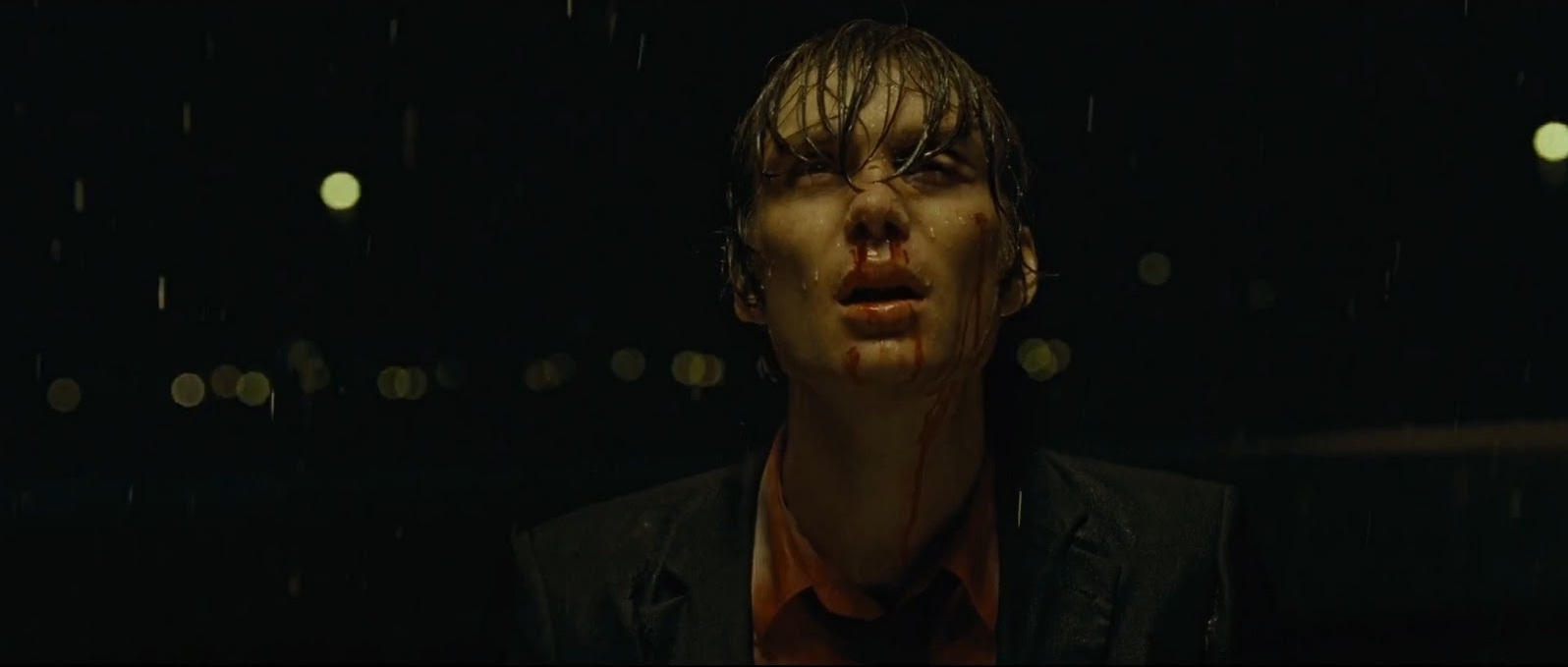
Hey there everyone! Welcome back to Movie Soapbox, the little corner of the internet that only you and I and that guy in the back who hasn’t ordered anything in forty minutes know about. This is the place where we find the films that somehow slipped through every algorithm and every recommendation engine and every “you might also like” sidebar, and we make sense of them. Today we are doing a deep dive on Red Lights, a 2012 film so ruthlessly committed to its own misdirection that it fooled most of the audience, fooled most of the critics, and then got quietly buried so fast you’d think the studio was embarrassed it worked.
Before we go any further, here is the trailer. And yes, I mean it when I say watch the film first. The trailer already gives away more than it should. That’s a whole separate conversation.
Full spoilers from this point forward. Everything. The ending, the twist, the coin, all of it. If you haven’t seen the film yet, close this tab, find it on Tubi or Peacock right now, and come back when you’re done. You will not regret it. I will still be here, equally irritated about the same things.
The Making of the Movie Red Lights
Rodrigo Cortés wrote and directed this film off the back of Buried, which is a movie that is ninety-four minutes of Ryan Reynolds in a wooden box and somehow works. That’s not a filmmaker who got handed a development deal and a writers’ room. That is a filmmaker who figured out how to do more with less and got rewarded with a slightly bigger box to work in. Red Lights has Cillian Murphy, Sigourney Weaver, and Robert De Niro in it. That cast, at that budget tier, in 2012, on a spec script about paranormal debunkers, means Cortés was operating with about as much creative runway as the cast could buy him. You can feel it in the film’s confidence, the way it refuses to explain itself to you, the way it trusts its own structure. That is a director who knew that the next round of notes might sand this thing flat, and shot his movie before anyone could second-guess it. The result is the best film about faith and fraud that you almost certainly never saw.
The Movie Red Lights Detailed Walkthrough
The setup is almost insultingly clean. Dr. Margaret Matheson, played by Weaver, runs a small university unit that investigates paranormal claims. Her methodology is simple: find the mechanism. Every levitating guru has a trampoline somewhere. Every cold-reading psychic has a researcher in the balcony feeding information through an earpiece. Every haunted house has a kid in the walls. Matheson and her assistant Dr. Tom Buckley, played by Murphy, go into these situations not as believers or debunkers in the theatrical sense, but as engineers looking for the load-bearing lie. They find it every time. The film spends its entire first act showing you this, case after case, each one satisfyingly solved, each one adding another brick to the wall of “paranormal phenomena has a mundane mechanical explanation.” You are being trained. Cortés is conditioning you. By the time the movie introduces Simon Silver, the legendary psychic who has returned from a decade of self-imposed exile, you are fully enrolled in Matheson and Buckley’s worldview. You are on the debunking team. You are already writing Silver’s explanation in your head before he does a single thing.
Silver is played by De Niro in full-presence mode, the version of De Niro that shows up when a project actually interests him, and the performance is built on deliberate ambiguity. He is blind, officially, and has been for years. He fills arenas. His followers have the specific fervor of people who need something to be real. And his number one critic, a scientist who spent years methodically dismantling Silver’s claims, died of a heart attack at one of Silver’s performances. The implication hangs over the film like smoke. Did Silver do it. Can Silver do it. Is any of this real.
Matheson refuses to engage with Silver directly. She tells Buckley why, though she doesn’t spell it out for him or for us. Her son has been in a coma for years. She has kept him alive and kept herself going on a specific kind of hope, the hope that there is something on the other side of death worth waiting for. She cannot afford to go looking for the mechanism in Silver, because if Silver is real, then maybe the great beyond is real, and if the great beyond is real, then maybe she can let her son go. And if Silver is a fraud, which every instinct she has tells her he is, then there is nothing on the other side, and she is keeping her son suspended between two kinds of nothing for her own comfort. Weaver carries this entire architecture in the pauses between lines. Then she dies. Cardiac event. History repeating.
Buckley comes apart and doubles down simultaneously. He gets a student, Ben, onto Silver’s team as a plant. He enlists Sally, played by Elizabeth Olsen in the kind of grounded supporting performance she was doing before the franchise machine got her, to help run the operation. And eventually they find the trick. Silver is not blind. Has never been blind. The blindness is the mechanism, the load-bearing lie, the thing that makes every other effect possible because it makes him seem limited in a way he is not. Buckley is certain. He goes to the performance hall to confront Silver and end this.
And then the ceiling comes down.
Lights explode. Scaffolding collapses. Objects move. The performance hall comes apart in ways that have no obvious mechanical explanation. Buckley flips his coin to Silver on the stage, Silver catches it, and the audience in the hall and the audience at home both register the same thing at the same moment: Silver absolutely can see. The trick is confirmed. And then Silver, who should be cornered, who should be furious or afraid, leans in and asks Buckley how he did it. How did Buckley destroy the performance hall. What is Buckley.
The film has been lying to you about which character to watch.
Go back. The bird that flew into Buckley’s window. The destruction in his apartment. The strange electromagnetic interference that followed him through Silver’s investigation. The film let you read all of it as Silver’s influence, Silver’s warning, Silver’s power reaching out to protect itself. The film was describing Buckley the entire time. Buckley is the paranormal subject. Buckley came to Matheson years ago not to become a debunker but because he needed someone to help him understand what he was. He has been doing this work, learning every mechanism, cataloguing every fraud, because he needed to know if what he could do was unique or if there were others. Silver recognized it in him immediately. Silver has been watching Buckley the whole film the way a fraud watches a genuine article, with the specific envy of a man who has built a career pretending to be something that, it turns out, actually exists.
Buckley goes back to the hospital. He pulls the plug on Matheson’s son. Then he pulls the ceiling down on Silver in the middle of a press conference, publicly, finally, with no ambiguity about what he is or what he can do.
What is the Movie Red Lights Really Saying?
Now. What does this mean. Because the film is not actually a paranormal thriller with a twist. It is using the paranormal thriller architecture to ask a question it never quite states directly: what does it cost to live without the possibility of the transcendent. Matheson spent the whole film keeping her son alive because she could not bring herself to believe in anything beyond death, could not give herself permission to let go into an unknown she had spent her career proving was empty. Buckley’s existence is, at minimum, evidence that the universe contains things that do not fit the mechanism-finding framework. When he pulls the plug on the son, he is not killing. He is, in the film’s logic, releasing. He is the proof Matheson could never find for herself, arriving one scene too late.
Theories to Explain the Movie Red Lights
The First Theory to Explain the Movie Red Lights: The first is that Buckley is exactly what the film says he is, a genuine paranormal subject, the real version of everything Silver was faking, and the ending is a story about a debunker who discovers the thing he was debunking is real and that he is it. The second is that Buckley has constructed an elaborate delusion, that his “powers” are a dissociative response to his own fear and grief, and that his destruction of Silver and his decision to end Matheson’s son’s life are the actions of a man who has broken, not a man who has been revealed. The third, and the one the film seems least interested in but which the script technically leaves open, is that Buckley and Silver are both frauds of different kinds, Silver a conscious one and Buckley an unconscious one, and the whole ending is two con artists recognizing each other across a stage.
The Second Theory to Explain the Movie Red Lights: The second read falls apart for me on the evidence of the film itself. Cortés is too specific about the physical effects, too careful about the distinction between what Silver’s crew causes and what happens in Buckley’s vicinity without any support infrastructure, for the delusion reading to hold up cleanly.
The First Theory to Explain the Movie Red Lights: The third read requires you to disbelieve the film’s own visual language, which is a move you can make but not one the film invites. Buckley is real. Silver always knew it. The debunking operation was Buckley trying to figure out whether to believe in himself, using the tools Matheson gave him, and the tragedy is that Matheson died without getting to see the answer. The film’s question, the one underneath everything, is not “is the paranormal real” but “what happens to a person who needs the answer and cannot survive long enough to receive it.” Matheson needed proof and ran out of time. Buckley found it and has to carry it alone.
That is a harder film than the one the marketing promised, and a better one. It did not survive intact by accident. Cortés shot it fast, shot it specific, and cast it well enough that the studio could not easily reach in and flatten what made it strange. Films like this usually do not make it through.