
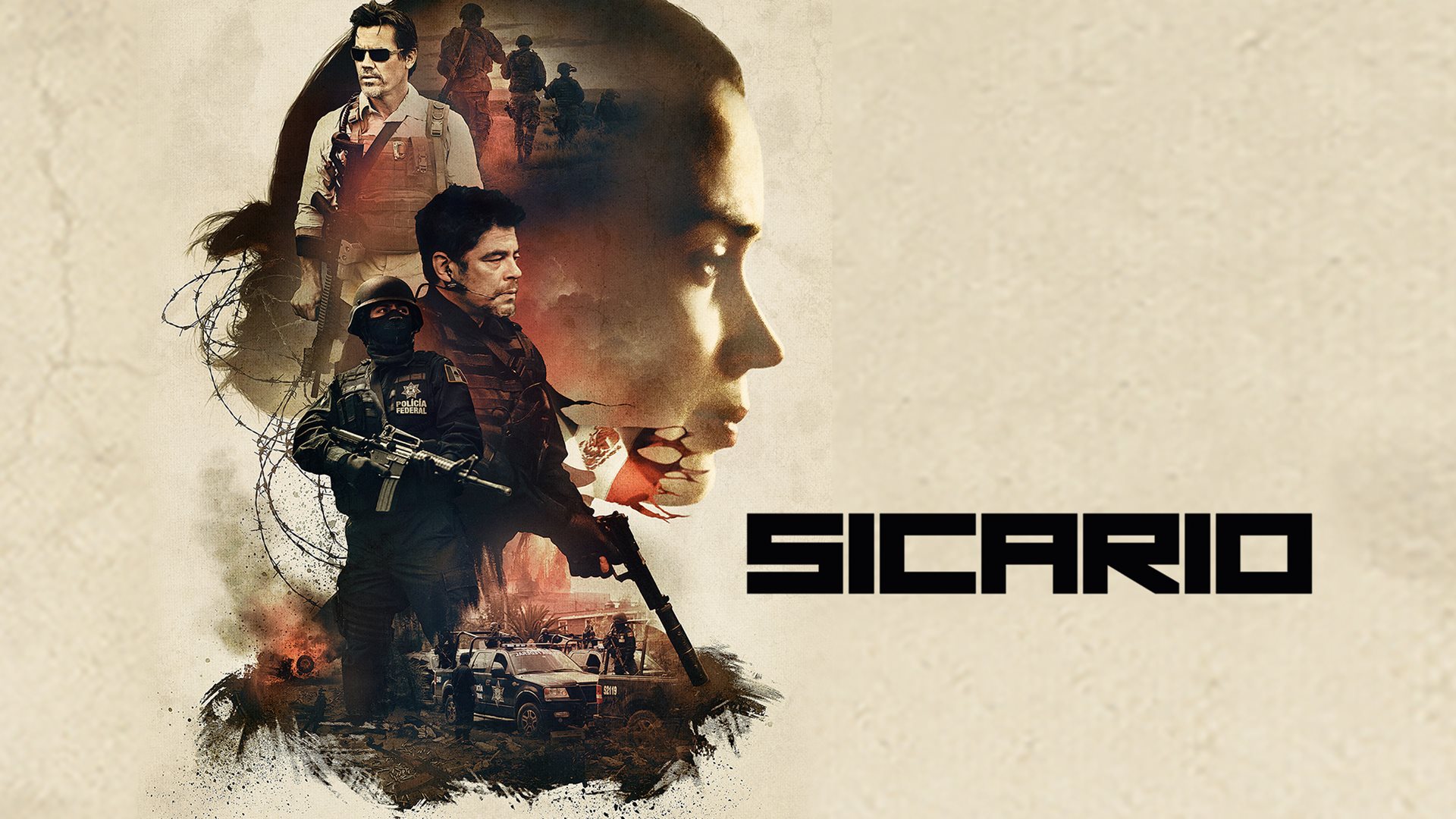
Hey there everyone! Welcome back to Movie Soapbox, the little corner of the internet that only you and I and that guy sleeping in the corner over there know about. This is the place where we find underappreciated films and we make sense of them, the ones that did something real and almost got away with it. Today? We are doing a deep dive on Sicario, a movie so quietly, methodically brutal that the studio suits who put their names on it probably needed a few months to figure out what they had actually approved.
Before we go anywhere, watch the trailer. If you have seen this film, watch it again anyway. You will notice things you didn’t notice the first time.
Alright. From this point forward I am going deep into this film, scene by scene, beat by beat. If you have not seen Sicario and you care about experiencing it cold, which you should, close this tab, go watch it, and come back. I am not going to be gentle about what happens. You were told.
The Making Of Denis Villeneuve’s Film Sicario
Before we get into the walkthrough, let me tell you something about what kind of film this actually was when it landed at a studio level, because it matters for understanding why it feels the way it feels. A film like Sicario, with a female protagonist who is systematically stripped of every scrap of agency she thinks she has, a third act that refuses to give her any of it back, and a moral argument that amounts to “the people protecting you are indistinguishable from the people hunting you,” does not sail through development. That is not a greenlight pitch. That is a script that gets handed back with notes asking whether Kate can have a win in the third act, whether Alejandro can be more clearly coded as one of the good ones, whether the ending can land on something that feels like progress. The fact that this film exists in the form it exists, with that ending intact, with Benicio del Toro playing a man whose entire internal logic is built around a murdered child and who the movie never once asks you to forgive, tells you that someone in that development process either had enormous leverage or got very lucky, probably both. You can feel the places where that fight happened. The film’s restraint is not accidental, it is a scar from a very specific kind of pressure.
Sicario Movie Deep Dive Walkthrough
Sicario opens on a house raid in Arizona that is supposed to be a routine kidnapping response and is instead a charnel house, bodies wrapped in plastic and stuffed behind drywall like insulation, dozens of them, and then a shed that booby-traps two officers the moment anyone gets close. Denis Villeneuve holds on this long enough that you understand this is not a prologue. This is the operating temperature of the world you are entering. There is no before-time in this film where things were fine. You are dropped into the middle of an ongoing catastrophe and Kate Macer, Emily Blunt, is your only fixed point.
Kate is good at her job. That is the first thing the film establishes and the last thing it lets her keep. She is an FBI agent who runs kidnapping response, she is effective, she is principled, and she volunteers immediately when Josh Brolin’s Matt Graver appears and offers her a slot on a task force that he describes in terms vague enough to mean almost anything. She says yes because she wants to do more. She says yes because she watched a shed blow two of her people apart and she wants the source of that. She says yes, and the film spends the next two hours showing you exactly what that yes costs.
Matt is one of the great pieces of misdirection in recent American cinema. Brolin plays him in flip flops and board shorts, grinning, loose, seemingly unbothered by everything, and you spend about forty minutes waiting for the film to reveal what he’s hiding before you realize the film is telling you something more unsettling: he isn’t hiding anything. He is exactly what he appears to be, a man so thoroughly acclimated to operating in the space between law and atrocity that he has ceased to experience the distance between them. He is not a villain in the way the film is setting you up to expect a villain. He is a man who has made his peace with the machinery and is now the machinery.
And then there is Alejandro.
Benicio del Toro’s Alejandro is introduced as a “sicario,” the Spanish word for hitman, and the film lets that word sit on him like a coat for most of its runtime. He is quiet. He is precise. He is protective of Kate in a way that reads as menacing because in this context protective and menacing come from the same source. The film withholds his backstory with genuine discipline, parceling it out in fragments that don’t resolve until late, and when they do resolve you understand that Alejandro is not a mystery the film is asking you to solve. He is a before-and-after. There was a man, and then a cartel boss ordered that man’s daughter dissolved in acid, and what is left is not grief exactly, it is the operational residue of grief, a precision instrument built out of the wreckage of a person who used to have reasons to live that weren’t this.
Kate reminds him of his daughter. The film never plays this for sentiment. It just lets it sit underneath every scene they share and does the work quietly.
The highway sequence is where the film first forces Kate and the audience to feel the actual weight of what is happening. The convoy is moving back across the border, gridlocked in traffic, and the cartel shooters appear in traffic around them, and the sequence that follows is choreographed with such controlled brutality that when Kate kills the last gunman and then immediately begins swearing at herself, softly, almost to herself, the reaction feels completely earned. She is in Mexico. She was there without legal standing. She killed a man. She does not know what that death accomplished or what chain of events it belonged to. She is, for the first time, inside the machine she volunteered to be part of, and it does not feel like what she was told it would feel like.
This is the engine of the film. Every scene is another gear catching, pulling Kate deeper, stripping away another assumption about what she is doing and why, until the final act when she discovers that the entire operation has been structured around using her FBI credentials as legal cover for a cartel assassination that the CIA was never authorized to carry out. She was paperwork. She was a signature on a form that let other people do things that would otherwise be undoable. The entire task force, from her perspective as a rule-follower, was a mechanism for laundering an extrajudicial killing through the procedural appearance of a legitimate operation.
The Mechanics of Sicario Untangled
Let me untangle the actual mechanics of what is happening in the back half of this film, because the plot is doing real work that is easy to miss if you are tracking it emotionally rather than structurally. The CIA, through Matt, is running Alejandro as an asset. Alejandro’s actual objective is not to disrupt the cartel broadly, it is to weaken the Sonora cartel specifically so that a rival cartel, one that the CIA apparently prefers because it operates more quietly and is easier to surveil, can consolidate control of the border drug trade. The goal is not to end the drug war. The goal is to manage it, to install a more predictable version of it. Kate’s presence on the task force gave the operation legal standing it would not otherwise have had. When she discovers this, she is told, by Alejandro, quietly, with a gun pressed against her under a table in a diner, to sign the forms confirming the operation was conducted lawfully. She signs. She has no real choice. The film does not pretend she does.
The Ending of Sicario Discussed
The final act cuts away from Kate entirely and follows Alejandro as he crosses into Mexico alone, finds the cartel boss’s compound, kills the guards, sits down at the dinner table with the man’s family, and then shoots the man’s wife and children before shooting the man himself. The film does not look away. It also does not ask you to cheer. Villeneuve holds the camera on del Toro’s face and gives you nothing to read there, no satisfaction, no horror, no relief, just the face of a man completing something he decided to complete years ago in the aftermath of something the film already told you about. Justice is the wrong word for what this is. Completion is closer. The film knows the difference.
Kate’s final scene with Alejandro, the gun she raises at him in her apartment after she has figured out what she was used for, lands exactly the way Alejandro told her it would at the beginning. “Nothing will make sense to your American ears,” he said, “and you will doubt everything we do, but in the end you will understand.” She understands. She puts the gun down. She does not forgive him. She just understands, finally, completely, the dimensions of the thing she walked into, and the film ends on her watching children play soccer in the distance while gunfire echoes somewhere she cannot see.
Now, the competing reads on what this film is actually arguing, because there are a few serious ones.
The Theories to Explain Sicario Inside and Out
Theory Number 1 for Sicario: The first read is the institutional critique. On this reading, Sicario is a precise diagnosis of how the American war on drugs actually operates, which is to say: not as a war against drugs, but as a management strategy for a problem that serves too many political and economic interests to be solved. The CIA is not depicted as uniquely corrupt, it is depicted as operating according to a rational institutional logic that has simply accepted that the drug trade exists and will continue to exist and that the best available option is to make it predictable. Kate represents the citizen who believes the stated rationale for the war. The film is showing you what the machinery looks like from inside it, once you get past the stated rationale.
Theory Number 2 for Sicario: The second read, which the source film’s own marketing leaned into, is the more personal and psychological one, Kate as audience surrogate, the film as a controlled experience of moral disorientation designed to put you inside the feeling of institutional betrayal rather than just describe it to you. On this reading the film is less interested in the drug war as a subject and more interested in the sensation of losing your ethical footing, the moment when you realize the map you were given does not match the territory you are standing in.
Theory Number 3 for Sicario: The third read, which I think is the one serious critics underplayed, is the one about Alejandro specifically. This is a film about what grief does to a person when there is no legitimate structure for the revenge it demands. Alejandro did not become what he became because he is a bad man. The film is meticulous about this. He became what he became because he lost everything to a system of violence that operates outside any framework of justice he could access, and then another system of violence, the American one, found him useful and handed him a mission that let his unresolvable grief function as a precision instrument. The horror of Alejandro is not that he exists. The horror is that the machine that made him is still running, will keep running, and is making more of him right now.
Moviesoapbox’s Read on the Movie Sicario: all three of these are true and the film holds them simultaneously, which is the thing about it that the factory system almost certainly would have forced it to choose between. A studio note on the third act of this film would have asked for clarity, would have asked the film to commit to one of these readings so the audience knows how to feel when the credits roll. The fact that you leave Sicario not knowing how to feel is the film doing exactly what it intended to do. That is a directorial choice that required someone to fight for it, and it is why this film is still being written about a decade later while the franchise product that opened the same month is a footnote.
A film this specific about institutional rot, this unwilling to offer its audience a clean moral landing, with a female protagonist who loses and is never restored, got made because the talent attached to it was too heavy to bury and because Villeneuve was far enough along in building a track record that the suits had to let him work. Take the director down a tier, take del Toro off the cast, and this is the film that gets a different ending, the one where Kate blows the whole thing up, goes to the press, and the closing title card tells you about fictional legislation that was passed as a result. That film exists in a version of this timeline. We just didn’t get it. We got this one instead, and we should probably be grateful for that every single time we watch it.
Sicario is the kind of film the machine produces only by accident, when someone slips something true past the committee. Watch it. Then watch it again knowing everything you know. It is a different film the second time, and that is not a compliment you can pay to very many things.
We’ll see you next time at Movie Soapbox, the little corner of the internet where we keep the lights on for films like this one. Take care of yourselves out there.
🎬 If You Liked This…
- Atomic Blonde — another operative discovering the rules she thought she was operating under were never real, the same moral compromise of working inside a system that doesn’t care whether you survive it
- The Wedding Guest — a professional doing a job with no moral framework attached to it, same economy of violence and same refusal to explain itself or apologize for what it asks you to watch
- Nocturnal Animals — the same Villeneuve aesthetic of beauty covering something irreversible and ugly, an ending that closes quietly on a character who has just understood exactly what they allowed to happen