
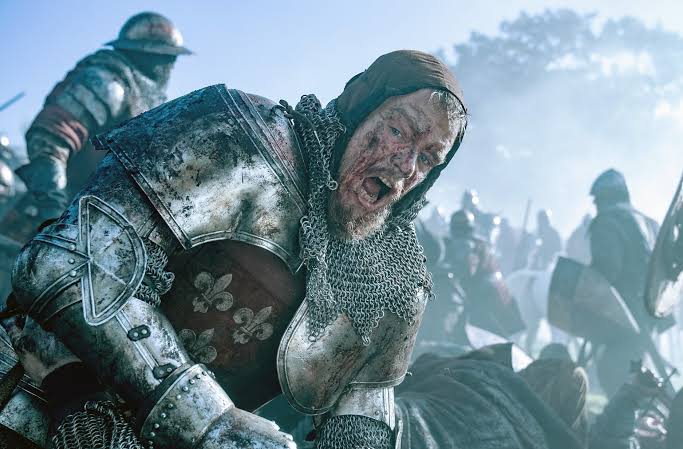
Hey there everyone! Welcome back to Movie Soapbox, the little corner of the internet that only you and I and that guy sleeping in the corner over there know about. This is the place where we find underappreciated, misunderstood, or just flat-out broken films and we make sense of them, or at least make sense of what went wrong. Today? We are doing a deep dive on The Last Duel, a movie so historically ambitious and so structurally self-defeating that even the man who made Blade Runner couldn’t quite rescue it from itself.
Before we get into it, the trailer, because you should at least see what we’re dealing with.
Alright. Full spoilers from here. Everything. The rape, the duel, the ending, all of it. If you haven’t seen the film and you want to go in clean, close this tab and come back when you’re done. You’ve been warned, and I’m not going to warn you again.
What this film had to survive to exist. Ridley Scott got Disney to greenlight a hard-R, nearly two-and-a-half-hour medieval rape drama with no franchise hook, no cinematic universe peg, and a screenplay credit split between Matt Damon, Ben Affleck, and Nicole Holofcener. You can tell, just from that three-writer credit, exactly where the seams are, because a film that emerges from that kind of collaborative authorship has a gravitational pull problem in its structure, each writer’s section orbiting its own center of mass instead of the story’s. The Rashomon conceit was the pitch that got this thing greenlit, almost certainly, because it sounds like a prestige idea on paper, but prestige ideas are easy to sell and hard to execute when the committee assembles to note-protect their own thirds. What you are watching when you watch The Last Duel is not one film. You are watching three writers who each got to protect their own act, and a director who was trying to hold it together with cinematography and sheer force of will. That’s not a theory. That’s what a three-act-split screenplay credit looks like from the inside of the machine.
So. The Last Duel. Based on the book by Eric Jager, which, honestly, you should just read instead, set in 14th-century France, and telling the story of one of the last legally sanctioned trial-by-combat duels in French history. Jean de Carrouges, played by Matt Damon, is a knight and squire who challenges his former friend Jacques Le Gris, played by Adam Driver, to a fight to the death. The reason is that Jean’s wife, Marguerite, played by Jodie Comer, has accused Le Gris of raping her while Jean was away in Paris collecting payment for military service to the king. And the film, in its infinite structural wisdom, decides the best way to tell this story is to show you the same sequence of events three times, once from Jean’s perspective, once from Le Gris’s, once from Marguerite’s.
And we are going to go through every reason this doesn’t work the way it should, because some of them are production problems, some of them are script problems, and at least one of them is a genuine intellectual problem baked into the premise itself.
A Movie Soapbox Rant
The Accent Problem. You are watching a film set in 14th-century France, with a cast that includes Jodie Comer, who can do accents in her sleep, and Matt Damon and Ben Affleck, who cannot, and the filmmakers’ solution was to let everyone just sort of find their own relationship to the problem and hope nobody notices. You notice. You notice immediately. Comer is floating somewhere in capable period-adjacent territory, Driver is doing a thing, and Damon and Affleck are doing Boston by way of vaguely medieval, and the net effect is less immersive historical drama and more a very expensive Renaissance fair with excellent production design. The consistent choice, even a wrong consistent choice, would have been better than this fragmented non-choice. Even full Boston accents across the board would have at least registered as a decision.
The Ben Affleck Problem. Affleck is playing Pierre d’Alençon, the King’s dissolute nephew, the man who elevated Le Gris and has the moral compass of a man who has never once been told no in his life. He’s got blond hair, a blond goatee, and a court full of women who exist to decorate his scenes. The character is written as a comic villain, practically twirling, and Affleck commits to it, which is kind of admirable and also completely tonally incoherent with everything Comer is doing in the same film. One department of this movie is playing tragedy. Another department is playing Mel Brooks. The edit can’t reconcile it and doesn’t try.
The Prosthetics Problem. Matt Damon’s scar is a practical effect that never convinces, not for a frame, and his period hair situation is the kind of choice that makes you wonder if anyone with final say on the look actually watched the dailies. These are small things, but small things accumulate, and when the film is already asking you to do significant heavy lifting emotionally, every frame that breaks the spell costs something you don’t get back.
The Court Scene Problem. The film stages the formal proceeding before the king as something resembling a modern courtroom drama, with Marguerite present, questioned directly, and treated as a speaking subject with standing in the proceeding. This is not what happened. The actual legal process was far more byzantine and specifically designed to make women’s testimony marginal and mediated. Jean filed an appeal. A formal challenge ceremony was held. Pledges assembled as witnesses. The King sent it to Parliament. Depositions were taken. The actual trial by combat was preceded by submitted written testimonies from the two men, not an open hearing. Marguerite’s statements were recorded and validated by Parliament separately, away from the main proceeding. The royal register for the day of the hearing doesn’t even confirm she was present for it. The film collapses all of this into a scene that works for audiences who want to see Marguerite’s truth spoken aloud in a room with power, and that desire is understandable, it’s just not what 1386 France looked like, and the gap between the emotional logic and the historical reality is part of why the film feels slippery to people who know even a little about the period.
The Pregnancy Belief Problem. The film correctly identifies the medieval legal and pseudo-scientific belief that a woman could not become pregnant from rape because conception required the woman to experience pleasure. And it correctly identifies that this made the rape charge legally complicated, because Marguerite being pregnant would theoretically have been evidence against her. But the film implies a kind of moral equivalence between Le Gris’s assault and Jean’s joyless, transactional marital sex, suggesting that Marguerite has never experienced genuine pleasure with either man, and that both relationships are forms of violation. There’s a reading of the film where this is intentional and pointed, a quiet argument that women in this period were in a permanent state of coerced existence regardless of marital status. If that was the thesis, it needed to be the thesis, not a subtext. Instead it sits in the film uncomfortably, neither committed to nor resolved.
The Repetition Problem, Parts One Through Three. The Rashomon structure works when each perspective genuinely reframes what you thought you understood. The first pass here, Jean’s, gives you a portrait of a man who is professionally aggrieved, primed for explosion, and genuinely believes in his own righteousness. The second pass, Le Gris’s, gives you a man of intellectual pretension who has convinced himself that the assault was not an assault. The third pass, Marguerite’s, is supposed to be the corrective and the anchor, the truth. But the structural problem is that by the third pass, you have already sat through the core events twice, and the incremental new information Marguerite’s pass provides is not sufficient to justify the running time. The editing in the first pass is choppy enough that the whole enterprise starts to feel punishing before you’re even halfway through. And the third act, the duel itself, which is genuinely good, which is kinetic and brutal and close to historically accurate in its detail, Jean’s leg wound, the blood loss, the way Le Gris finally slips and gives Jean the opening, all of it earned, that payoff has to survive an enormous amount of structural attrition to reach you.
The Factual Uncertainty Problem. One thing the film doesn’t engage with at all, and the source book does engage with seriously, is the genuine historical ambiguity about whether Le Gris actually did it. The logistics of Le Gris covering the necessary distance, committing the assault, and returning without documented witness or traced horse changes creates a real evidentiary problem. Le Gris’s own defense included the accusation that Jean had previously tried to get his first wife to falsely claim Le Gris had slept with her, which she refused to do. The two men had been close enough that Le Gris was godfather to Jean’s first son, which under the legal conventions of the period made them blood, and which is why Jean’s charges included incest. The film isn’t interested in this ambiguity. It has already decided. The third-act framing makes Marguerite the final word, and the film treats any doubt as complicity with the villain. That’s a choice, and you can defend it, but it forecloses a story that the book treats as genuinely open, and that foreclosure flattens something that could have been considerably more troubling and more honest.
The #MeToo Framing Problem. The film wants to be a 14th-century analog for believing women, and the emotional instinct behind that is not wrong. Jodie Comer is doing everything the film needs her to do and more, and she is genuinely wasted in a structure that keeps pulling focus to the two men’s perspectives before it lets her speak. But the problem with superimposing a contemporary justice framework onto a system that was, by design, completely indifferent to women’s standing as autonomous legal subjects is that it produces a film that can’t fully reckon with either framework. The 1386 system isn’t a broken version of a good system. It’s a different system, one that didn’t have a concept of Marguerite’s rights to be violated. And the film can’t quite hold both of those things at once, the genuine bravery of Marguerite’s act within its own historical context, and the absolute structural indifference of that context to anything she said or felt. So it reaches for the emotional grammar of the present and applies it to the past, and the seam shows.
What the film actually got right. The duel is exceptional. The cinematography throughout is exceptional. The production design is detailed and committed in ways that big historical productions usually aren’t. Driver’s cape work is, yes, a real thing, and it is both ridiculous and somehow completely watchable. And Comer, given any oxygen at all, delivers a performance that makes you acutely aware of how much better this film could have been with her at its structural center from frame one, not as the corrective third act, but as the governing intelligence of the whole thing. The film she could have been in is visible around the edges of the film that was made. That’s the reshoot scar this one carries, not a literal reshoot, but the scar of a structure that was assembled around the wrong center of gravity and couldn’t be rebuilt once the money was committed.
Ridley Scott blamed millennials and cell phones for why this film didn’t find an audience. And look, I understand the impulse to externalize when something you worked hard on doesn’t land. But the film’s problems are internal, structural, and collaborative in a way that has nothing to do with the audience’s attention span. A film this expensive, this well-shot, this historically ambitious, with this cast, should have been able to cut through. The reason it didn’t is that it couldn’t decide what it was for, and audiences, whatever their relationship to their phones, can feel that.
The book is still there. The history is still there. The actual ambiguity of whether Le Gris was guilty, the actual mechanics of how a trial by combat legally assembled itself in late medieval France, the actual texture of Marguerite’s position, none of that went anywhere. If this film sent you to the library, then it did one thing genuinely well. I mean… that’s something? But as a movie, it is a beautiful, expensive machine that couldn’t find its own engine. And that’s a damn shame, because somewhere inside it is a film that would have deserved the running time.