
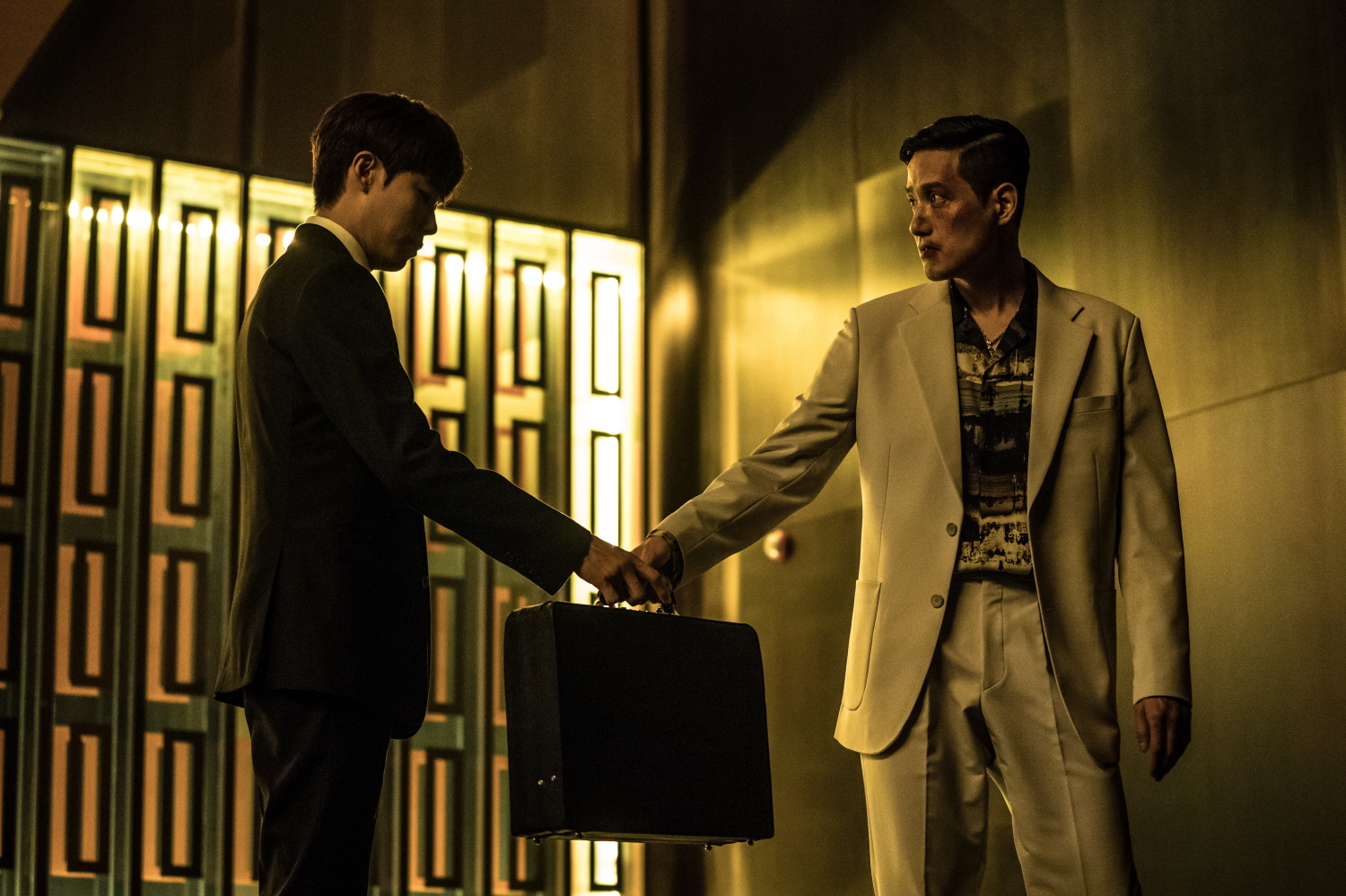
Hey there everyone! Welcome back to Movie Soapbox, the little corner of the internet that only you and I and that guy sleeping in the corner over there know about. This is the place where we find underappreciated indie films and we make sense of them. Today? We are doing a deep dive on The Believer, a 2018 South Korean crime thriller so ruthlessly patient in how it builds its central con that by the time it pulls the rug out, you’re already three steps behind and you didn’t even feel the floor move.
Before we go any further, understand that we are going to walk through this entire film with full spoilers, every reveal, every identity, every body on the floor. If you have not seen The Believer yet, close this tab, go watch it, come back. I’ll be here. Because what I’m about to describe is going to mean nothing to you if you haven’t watched this thing play out, and it means everything once you have.
The Believer Movie Deep Dive Walkthrough
So. A cop named Won-ho has been chasing a ghost. Mr. Lee, the invisible kingpin running one of the largest drug operations in Asia, a man so effectively absent from his own legend that imposters have been filling the vacuum for years, nine of them by the time our story starts, each one stepping into the myth and each one getting quietly erased by the real thing. Won-ho’s entire career, his relationships, a woman he treated like family, all of it consumed by this hunt for a man no one has ever actually seen.
The film opens with a bomb. A meeting of high-level cartel figures gets obliterated, and in the wreckage three things survive: a woman named Oh Yeon-ok, a young man named Rak whose mother died in the blast, and a dog that Rak calls Jindo Dog. Oh Yeon-ok doesn’t last long, Mr. Lee gets to her through her own medication delivery, which is the kind of operational detail that tells you exactly what kind of patient, infrastructure-level thinking this man operates with. Rak, grieving and furious, agrees to help Won-ho. The dog tags along.
What follows is a layered con running in multiple directions at once. Won-ho and Rak get access to a fake Mr. Lee named Ha-rim, study him, then impersonate him to extract drug manufacturing materials from a chemist named Park Sun-Chang. Won-ho takes the role of Ha-rim with enough precision that he nearly dies when Park Sun-Chang forces him to sample the product, his support team pulling him back from a cardiac event by the narrowest margin. The materials go to Rak’s contacts, two mute drug-making savants who are essentially the Walter White and Jesse Pinkman of this operation, quiet, brilliant, completely untethered from the moral weight of what they produce. The operation is moving. And then a new name surfaces: Director Brian.
Brian is another layer in the onion. Won-ho’s team starts to believe Brian is Mr. Lee. The police close around Brian, arrest him, and collectively decide the hunt is over. Brian is the guy. Case closed. Except Won-ho knows it isn’t. Rak, meanwhile, kidnaps Brian and burns him, the same way Brian had burned Rak’s dog, which is the first time we start to understand the depth of what Rak is actually carrying around.
And that’s where something important sits in the mechanics of this film, something the screenplay is doing that doesn’t get said out loud. When a film structured around a mythical, never-seen figure gives its audience a warm, sympathetic surrogate to follow through the investigation, and that surrogate turns out to have been the figure all along, you’re looking at a script that was built backwards from its ending. The character relationships, the grief Rak performs, the way he “helps” Won-ho, all of it reads differently once you know. A film like this, at this budget tier, with this level of structural ambition, usually only survives intact when the director has enough creative control to protect the architecture of the reveal from the natural institutional pressure to clarify things earlier, to make the audience more comfortable, to add a scene that explains what’s happening. The fact that The Believer doesn’t have that scene, the fact that it trusts its own sleight of hand all the way to a single unexplained flash of light in a window, tells you something about how this film got made and who fought to keep it honest.
Now, the dog. Won-ho tracks Rak north by a GPS chip he had hidden on the animal, and when he finds him, sitting in a remote house with the mute chemists, something finally clicks. The dog never responded to “Jindo Dog.” But it responds immediately to “Lieca.” Mr. Lee named his signature drug after his dog. The product and the man share the same source. Won-ho has had the answer on a leash the entire film.
What happens in that house is the central question the movie refuses to answer directly. Won-ho and Rak, or Won-ho and Mr. Lee depending on how clearly you’re seeing now, sit at a table with their guns in front of them and they talk, and they drink coffee, and then there is one flash of light in the window and the film ends. One flash. One shot fired. No body shown. No survivor confirmed.
The Believer Movie Theories to Explain the Film
The competing readings, and there are more than people usually count, break down like this:
Won-ho shoots Rak. He came to finish the hunt. He’s spent years, lost people, nearly died himself. He tracked Rak with a GPS chip because he was always going to end it, not arrest it. The coffee and the conversation are courtesy before execution.
Rak shoots Won-ho. Rak has been killing imposter Mr. Lees for years. Won-ho showing up is just another version of the same problem, someone who knows too much and has gotten too close. Rak is a survivor, adaptive and ruthless, and a single exhausted cop across a table doesn’t change that calculation.
Won-ho shoots himself. The years of the hunt have hollowed him out. He found his answer and the answer is that the answer cost everything. The question he asks Rak, whether Lee has ever been happy in his life, is a question Won-ho is really asking himself. The gun was always going to point the wrong direction.
Rak shoots himself. The moral weight of what Rak has done, the partnership with Won-ho, helping dismantle the very operation he built, watching a man grieve things Rak’s business caused, it accumulates. Some reads of the film see Rak as a man who has been engineering his own ending, using Won-ho to close a chapter he no longer wants to live inside.
They shoot each other simultaneously. One flash, two triggers, both dead. The symmetry of the film’s central partnership arriving at a mutual destruction. It’s the most structurally elegant reading and also the most unlikely in practice, but this is a film that earns its implausibilities.
And then there’s the wild card: Dong-Young, one of the mute chemists, is in that house. The flash doesn’t have to belong to either of the two men at the table. Once you open that door, the theory space expands considerably and stops being productive.
Moviesoapbox’s Read on the Movie The Believer
Movie Mike’s read: Won-ho doesn’t shoot. Won-ho never picks up the gun. Watch his face in the last moments the camera gives you, and you can see a man who has arrived at the end of a long road and found that the road was the point, not the destination. He asks Rak whether he has ever been happy. That question belongs to Won-ho. He is doing the accounting of his own life, not threatening the man across from him. Rak, who has survived everything by being faster and colder and more decisive than the people around him, understands this, and understands that Won-ho found him, and understands that more people will come, and acts accordingly. Mr. Lee kills Won-ho. The flash is Rak’s. The hunt ends the only way the hunt was ever going to end, with the ghost proving he’s real by being the last one standing.
What makes this film matter, and why it belongs in the same conversation as No Country for Old Men, is that it understands the pursuit is a kind of self-destruction. Won-ho is Llewelyn Moss and Sheriff Bell simultaneously, chasing something that will either kill him or reveal that the chase itself was the wound. The drug, the legend, the dog, the name: Lieca. All of it was right there, tethered to him, the whole time.
Films that trust their audiences this completely don’t get made inside committee systems. They get made despite them, or around them, or in languages and markets far enough from the center of the machine that the machine doesn’t notice until it’s too late to flatten the ending. That single unexplained flash in a window is the sound of a filmmaker getting away with something. Damn right we should be talking about it.