
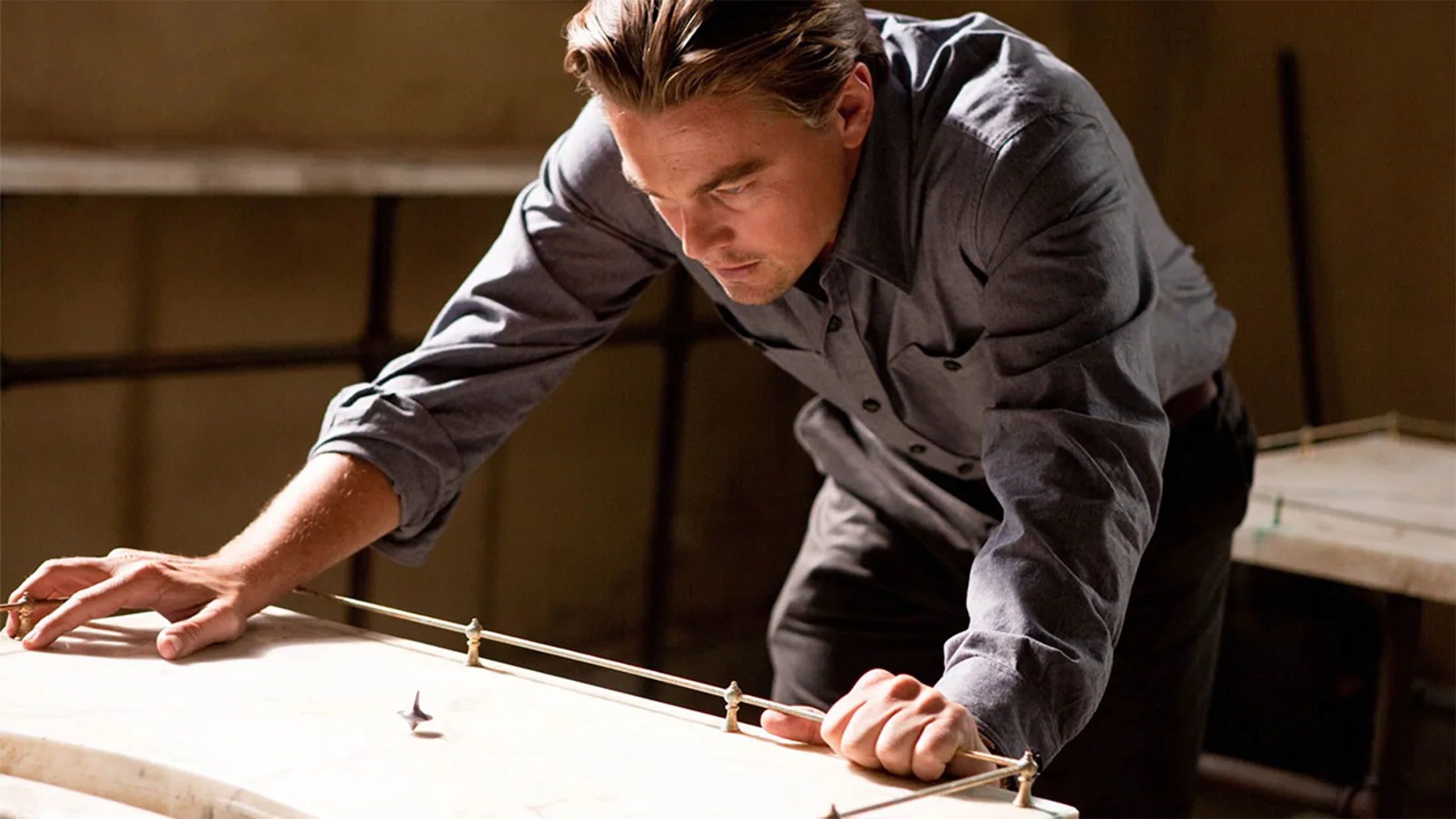
Hey there everyone! Welcome back to Movie Soapbox, the little corner of the internet that only you and I and that guy sleeping in the corner over there know about. This is the place where we find under-appreciated, under-examined films and we make sense of them, really make sense of them, the way nobody at the multiplex is going to bother to do for you. Today? We are doing a deep dive on Inception, a movie so structurally layered and deliberately unresolved that Christopher Nolan has spent fifteen years watching film journalists trip over themselves trying to explain it, and mostly failing.
Fair warning: everything from this point forward is a spoiler. Not a little spoiler. Not the vague kind where you can still enjoy the movie if you haven’t seen it. The full thing. The ending. The top. Mal. All of it. If you haven’t watched Inception yet, close this tab, fix that problem, and come back. I’ll be here. The rest of you, let’s get into it.
Before we go layer by layer through the ten questions that actually matter, consider for a second what kind of movie this was allowed to be. A two-and-a-half hour, $160 million studio picture with no sequel hook, a protagonist whose emotional stakes hinge on a theoretical philosophy of perception versus reality, and an ending the studio literally could not force Nolan to resolve because he’d earned enough leverage off The Dark Knight to walk in and say no. You can tell when a director has had to fight to keep an ambiguous ending, because the studio fingerprints are everywhere else and then suddenly, at the precise moment the suits would have demanded clarity, the film just cuts. That’s not the edit of a man who lost the argument. That’s the edit of a man who won it, barely, and knew better than to gloat. Most films at this budget level get that ending sanded down to a clean resolution in post. This one didn’t. Remember that every time the questions below feel frustratingly open, because the openness was preserved against considerable institutional pressure to close it.
Question 1: What are the actual rules of the dream?
The movie gives you the skeleton in pieces, never all at once, which is itself a piece of architecture worth noticing. The rules, assembled:
- Dying in a dream is a kick, it punches you up one layer.
- Dying in a deep dream under heavy sedation sends you to Limbo instead of up, because the sedative cuts off the normal escape route.
- Going too many layers too deep, sedated or not, can also strand you in Limbo.
- Dying in Limbo wakes you up completely, back to the surface.
These rules fold back on themselves the moment the location of the dreamer gets complicated, which is going to matter in about four questions from now.
Question 2: What exactly is Limbo?
The film calls it “unstructured dream space,” which sounds clinical and understated for what it actually is, which is a kind of psychological sediment layer at the bottom of everything, raw and shapeless until someone fills it. The only reason Cobb and Ariadne arrive in a city at all is that Cobb was there before, with Mal, and they built in it for what felt like decades. The crumbling architecture they see collapsing into the ocean is the residue of that. Someone else’s life, left to rot at the bottom of the mind. Nolan gives you that detail and then moves past it in about forty seconds, which is either elegant economy or an act of genuine cruelty depending on how long you’ve been sitting with it.
Question 3: Who is dreaming each layer?
This is the one that makes Ariadne ask out loud what you’re already thinking. Here’s the map:
- Level One: Reality. No dreamer.
- Level Two: The film’s “reality” layer. Cobb’s dream.
- Level Three: The van chase. Yusuf’s dream.
- Level Four: The hotel. Arthur’s dream.
- Level Five: The snow fortress. Fischer’s dream, which is the point, that’s the inception target.
- Level Six: Cobb’s Limbo. Ariadne is the most plausible architect here, though the film leaves it genuinely open.
- Level Seven: Saito’s Limbo. Saito, effectively, though “dreamer” becomes a loose concept once you’re this far down.
The Ariadne-versus-Cobb question at Level Six is one the film is comfortable not resolving. Others argue neither Limbo level has a true dreamer, that Limbo is shared unconscious space that belongs to no one. That’s defensible. The film will not settle it for you.
Question 4: How do Ariadne and Cobb actually get to Limbo?
Back to the snow fortress. They’re on the floor, mission falling apart, and Ariadne maps out the salvage: go down another layer, find Fischer, kick back up with everyone. There’s a dream machine on the floor. They dreamed down into Limbo, they didn’t die into it. That’s the distinction that matters here.
Cobb getting to Saito afterward is thornier. Three options exist. One: Cobb shot himself. But we just watched Ariadne jump out of Limbo and land back in the van chase layer, and Cobb is in Limbo, not in a dream layer above it, so shooting himself should do nothing useful. That option collapses under its own logic. Two: Cobb dreamed himself down yet another layer. There’s no visible dream machine, which is the problem, but absence of a visible prop is a weak objection in a movie this deliberately elliptical. Three: Cobb walked to Saito on foot. The film actually undercuts this one itself, because we see Cobb washed up on the beach of Saito’s section of Limbo at the very start of the movie, before we know what we’re looking at. Someone moved him there, or he moved himself there somehow. The walk-about option doesn’t account for that.
Option two, dreaming down again, is the one that holds up. It’s the answer that leaves the fewest loose threads, even if the film denies you the visual confirmation.
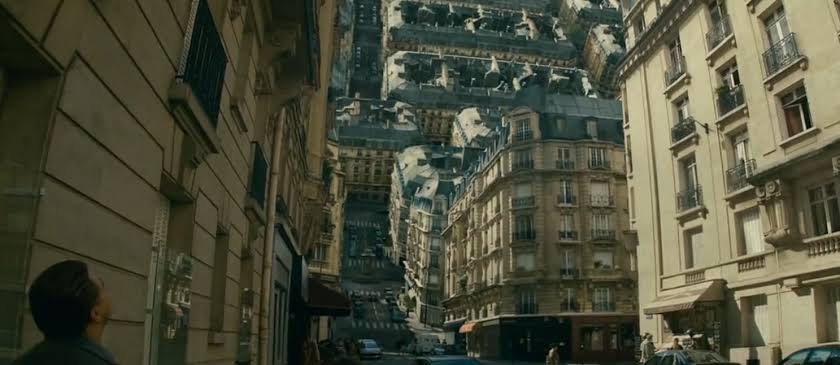
Question 5: What happens when the main dreamer wakes up?
Not what you’d expect. The dream doesn’t snap shut. It unravels, gets unstable, goes physics-optional. You see this early in the film when Cobb puts a bullet in himself to jump up a layer and Arthur has to sprint to Saito to top up his sedative to keep the layer from collapsing entirely. The dream becomes unpredictable without its dreamer holding it together, but it doesn’t simply end.
The second half of this question is more theoretical, because the film never shows you the mark waking up before the team is done. Best guess: the team would be left standing in an architected space that’s been evacuated of the mark’s projections. Empty streets. A city with nobody in it. The exact shape of a job gone wrong.
Question 6: How do the totems actually work?
Mal invented them. That alone should make you nervous. A totem is a small, specific object that behaves in a way only its owner fully knows, weight, balance, spin, wobble. In someone else’s dream, the dreamer can’t replicate that precise behavior because they don’t know it. So if your totem behaves correctly, you’re not in someone else’s dream.
The part people consistently get wrong: totems do not tell you whether you’re in your own dream. That gap is not a plot hole. It’s the entire mechanism of the film’s ending.
The totems identified in the film:
- Mal: spinning top
- Cobb: Mal’s spinning top (which he took after she died, which is its own problem)
- Arthur: loaded dice
- Ariadne: chess bishop
- Eames: poker chips
Question 7: What woke Cobb and Saito up from Limbo?
Go back to the rules in Question 1. Death in Limbo sends you to the surface. They didn’t have a dream machine rigged to a timer down there. There was no external kick coming. The only mechanism left is the gun. Cobb killed Saito and then himself, or Saito returned the favor, and they both punched out of Limbo and back to reality. The train tracks in the original inception sequence earlier in the film are the visual rhyme the movie plants so you understand the logic when you need it later. Lay down in front of the oncoming thing. That’s the exit.
Question 8: Why is Saito so much older than Cobb when Cobb finds him?
Three plausible answers, and the film endorses none of them explicitly.
First: time in Limbo compounds with each layer you descend, so Saito aged at an accelerated rate relative to Cobb because of how long it took Cobb to reach him, and the compounding time dilation made the gap enormous. Second: Saito forgot he was dreaming. Once you lose the knowledge that you’re in Limbo, your mind accepts the passage of time as real and your body follows. Cobb held on to the truth of where he was and didn’t age accordingly. Third: everything we’re seeing in the film is filtered through Cobb’s perception, and his mental image of himself is younger than he is, so the gap we’re seeing is partly a gap between Cobb’s self-image and Saito’s unmediated decay.
All three hold up. Pick the one that fits the version of the film you believe you’re watching.
Question 9: How did Mal and Cobb end up in Limbo the first time?
Cobb tells Ariadne directly, though briefly. They pushed. They kept experimenting with depth and sedation levels, kept seeing what the machine could do, and eventually went so far down that they lost the thread back up. The film implies it was incremental, not one catastrophic decision but a series of small ones, each one reasonable-looking from inside the previous layer, until the distance back to the surface was too great to navigate consciously. By the time they understood where they were, they’d been there long enough that Mal stopped believing there was anywhere else.
Question 10: If the whole film is a dream, why does the top stop spinning twice?
This is the question the ending is built on, and it’s the one that either breaks the movie or makes it, depending on where you land.
The argument for the whole film being a dream rests on a specific reading of how totems work, the reading from Question 6. The top only tells Cobb he’s not in someone else’s dream. If the film’s “reality” layer is Cobb’s own dream, the top cannot catch it, because it can’t catch his own dream. And when the top stops in those two moments, the explanation under this theory is the same explanation Mal gives Cobb when he asks why he can’t control her in the dream: because he doesn’t know he’s dreaming. His subconscious makes the top stop because that’s what he believes the top should do in reality. He built the rule himself. His dream just follows it.
The film frames the ending so that both readings survive contact with the evidence. The top wobbles before the cut. That wobble is Nolan’s one concession to the audience, a flicker that keeps the “it’s real” reading alive. But the wobble was always going to be there whether Cobb was dreaming or not, because Cobb believes it should wobble before it stops, and Cobb’s dream will give him exactly what Cobb believes.
The theory that the whole film is a dream is not tidy. It’s not meant to be. It’s the theory that requires you to hold the most discomfort for the longest time without resolving it. Which is, not coincidentally, exactly what the film is asking you to practice.
Most studios would have made Nolan show you the top fall over. He didn’t show you. That’s the whole film, really, fourteen years later, still spinning in your head, and the suits never got their clean answer, and somehow it became one of the highest-grossing original screenplays in Hollywood history anyway. Some things survive in spite of the machine. Inception is one of them.
Thanks for spending some time here at Movie Soapbox. We’ll see you on the next one.