
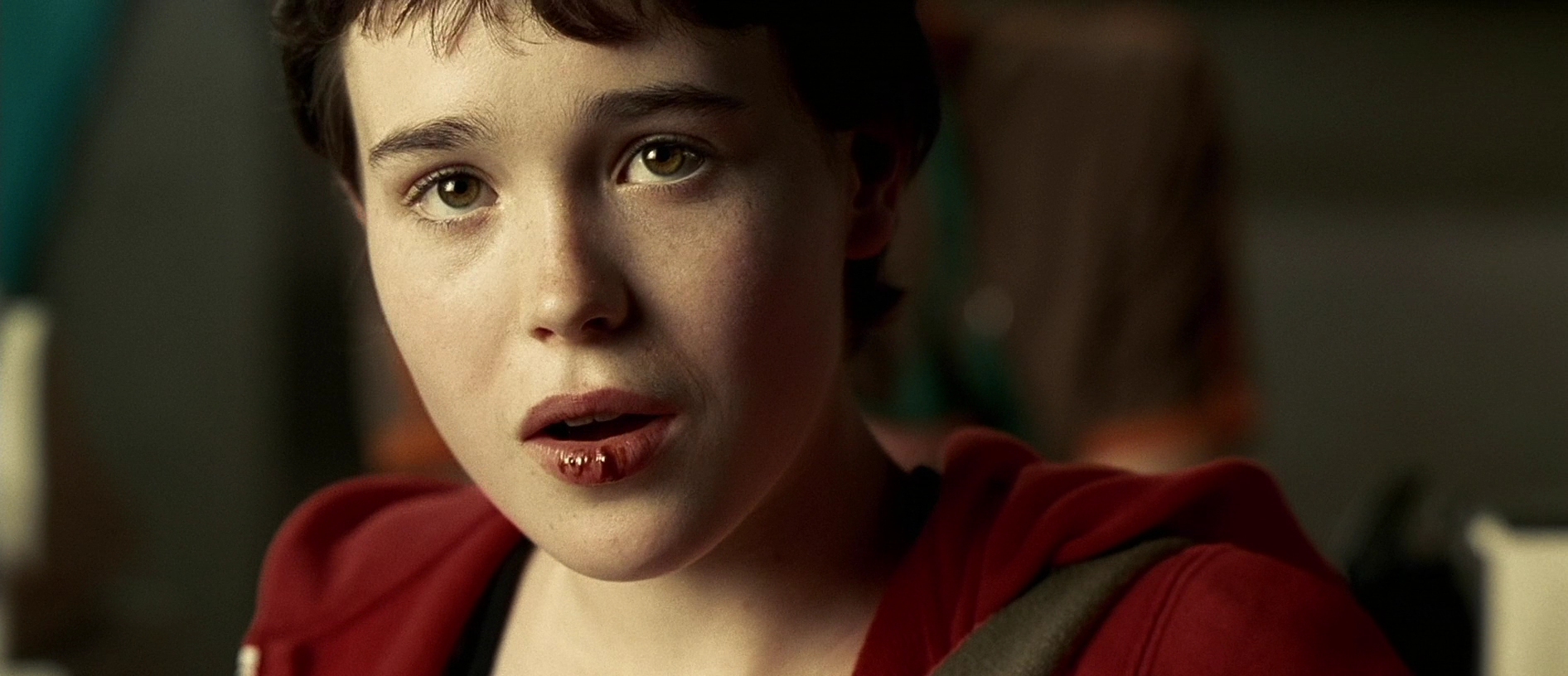
Hey there everyone! Welcome back to Movie Soapbox, the little corner of the internet that only you and I and that guy sleeping in the corner over there know about. This is the place where we find underappreciated indie films and we make sense of them. Today? We are doing a deep dive on Hard Candy, a movie so relentlessly, suffocatingly precise in what it is doing to you that even now, nearly twenty years later, the people who greenlit it probably still aren’t entirely sure how they let it happen.
Alright. If you have not seen Hard Candy, I am going to need you to stop right here, go watch it, and come back. What follows is a full walkthrough of everything this film does, scene by scene, beat by beat, and I am not going to protect you from any of it. You have been warned, and that warning is in Mike’s voice, which means: I am not putting a little yellow box on it and I am not asking nicely twice. Go watch the movie. Come back. We’ll be here.
Still with me? Good. Let’s get into it.
The Hard Candy Movie Setup, and What It’s Doing
The film opens online, in a chat window, and the dialogue is already doing something that most thrillers never bother to do, which is establishing power dynamics in the subtext of small talk. Hayley Stark, played by Ellen Page at an age where casting her felt almost like a provocation by the filmmakers, is chatting with Jeff Kohlver, played by Patrick Wilson. Jeff is a photographer in his thirties. Hayley is, by every surface indicator, a fourteen-year-old girl who is way too comfortable in this conversation. They meet in person at a coffee shop. Hayley flirts. Jeff is clearly practiced at receiving this kind of attention from girls who look like Hayley. And then they go back to his house, and here is where the movie shows you its hand, not slowly, not coyly, but with the speed of a trap closing.
Hayley drugs Jeff’s drink. Jeff passes out. And when he wakes up, he is zip-tied to a chair in his own living room, and the fourteen-year-old girl is the one holding the camera.
The Insider Tell: What This Film Had to Survive
A film like Hard Candy arrives at a budget around the two-million-dollar mark, shot in eighteen days, with essentially two actors and one location, and when you see those numbers you need to understand what they mean in practice. At that budget tier, the director, David Slade in this case, is operating with near-total creative autonomy, because nobody with real studio leverage has enough money in the game to justify the phone calls it would take to sand this thing down. The script, by Brian Nelson, is the kind of material that gets passed around development offices for years, gets praised loudly in the room, and then quietly never moves, because the moment anyone with greenlight authority actually has to commit to it on paper, the liability calculus gets very uncomfortable very fast. What saves a film like this is exactly what almost kills it: the subject matter is so specific, so uncompromising, so resistant to the kind of third-act pivot that would let an audience off the hook, that by the time a distributor is looking at a finished cut with Page and Wilson delivering performances at that level, the argument for softening it has already lost. You can tell a film survived its development intact when the ending refuses to give you the release you were trained by a thousand other films to expect. Hard Candy refuses. That refusal is the whole point.
The Middle: One Room, Two People, No Exit
What the film does over its second act is essentially a two-hander stage play filmed with the intimacy of surveillance footage. Jeff cycles through every manipulation available to a man in his position: denial, charm, appeals to Hayley’s better nature, attempts to reframe himself as the victim, and Hayley counters every single one with a kind of methodical, almost clinical patience that is more disturbing than rage would be. Page is not playing a girl who is angry. She is playing a girl who has done her research. She knows what Jeff is before she ever walked into that coffee shop. The question the film is laying in front of you, and refusing to answer cleanly, is how she knows, and what knowing cost her to get here.
There is a sequence involving a surgical procedure that the film implies but does not show, and the way Slade handles that elision is a masterclass in letting an audience’s imagination do the worst work. You don’t need to see it. You see Jeff’s face. That is enough. That is more than enough.
Untangling What Actually Happened
People who come out of Hard Candy confused are usually confused about one of three things, so let’s handle them directly.
First: did Hayley actually perform the procedure she describes? The film is deliberately ambiguous on this point. The evidence within the story cuts both ways. What is not ambiguous is Jeff’s psychological experience of believing she did, and the film is smart enough to understand that the belief is the mechanism, not the physical reality.
Second: what is Hayley’s actual connection to Donna Mauer, the girl whose photograph Jeff has hidden? The film implies, strongly, that Hayley had a personal relationship with Donna, that Donna’s fate is the engine behind everything Hayley does in that house. The film never states this as explicit backstory because it doesn’t need to. You feel the weight of it in every scene without being handed the biography.
Third: is Hayley supposed to be read as a hero? This is the wrong question, and the film knows it is the wrong question, which is why it never answers it. What Hayley is doing is wrong by almost every legal and ethical framework that exists. What Jeff did was also wrong, in ways that the law had apparently failed to address. The film puts those two things in a room together and locks the door. Your discomfort at the end is the intended result.
The Hard Candy The Competing Reads
There are roughly three camps on what Hard Candy is actually doing thematically.
The first read is the straightforward revenge-fantasy interpretation: a predator gets what he deserves, delivered by someone he thought he could victimize, and the film is a cathartic inversion of the standard horror dynamic where young women are prey. On this reading, Hayley is the genre corrective, the final girl who showed up before the violence started and brought tools.
The second read is darker and more uncomfortable: the film is a critique of vigilante justice, and Hayley’s absolute certainty in Jeff’s guilt, her methodical dismantling of him, is itself a portrait of fanaticism. On this reading, the film is not endorsing what Hayley does. It is asking you to notice that you wanted her to do it anyway, and to sit with what that says about you.
The third read, the one that gets less attention, is structural: Hard Candy is fundamentally a film about the performance of victimhood and the performance of innocence, and both of its central characters are performing constantly. Jeff performs normalcy and charm. Hayley performs vulnerability right up until the moment she stops needing to. The film is interested in the gap between what people present and what they have actually done, and it refuses to let either character, or the audience, stand on clean ground.
The Moviesoapbox’s Preferred Hard Candy Read
The second read is the one that matters, and here is why: a film that was only interested in the revenge-fantasy payoff would not have built Hayley the way this film built her. Page is playing someone who is not healthy. She is precise, she is prepared, she is righteous in a way that has curdled into something frightening, and the film never once steps back from that. If this were purely a cathartic exercise, the ending would land differently. The ending lands the way it does, flat and cold and final, because the film has been quietly insisting the whole time that what you are watching is a tragedy in two directions. Jeff is a predator who gets caught. Hayley is a girl who turned herself into a weapon to catch him, and the film does not tell you what that cost her, because it already showed you, in every scene where she was almost too good at this.
That second read is the one Slade and Nelson were building. I am certain of it. The discomfort you feel at the end is not a bug. It is the whole architecture.
The suits who passed on this script for years, the ones who wanted a cleaner victim and a cleaner resolution and a third act that let everyone go home feeling justified, they are the reason films like this almost never get made. Hard Candy exists because someone kept the budget low enough that the notes couldn’t reach it. Twenty years later, it still hasn’t been smoothed out. That is the rarest thing in this business. Go watch it, if you haven’t, and when the ending hits you the wrong way, understand that hitting you the wrong way was the job.