
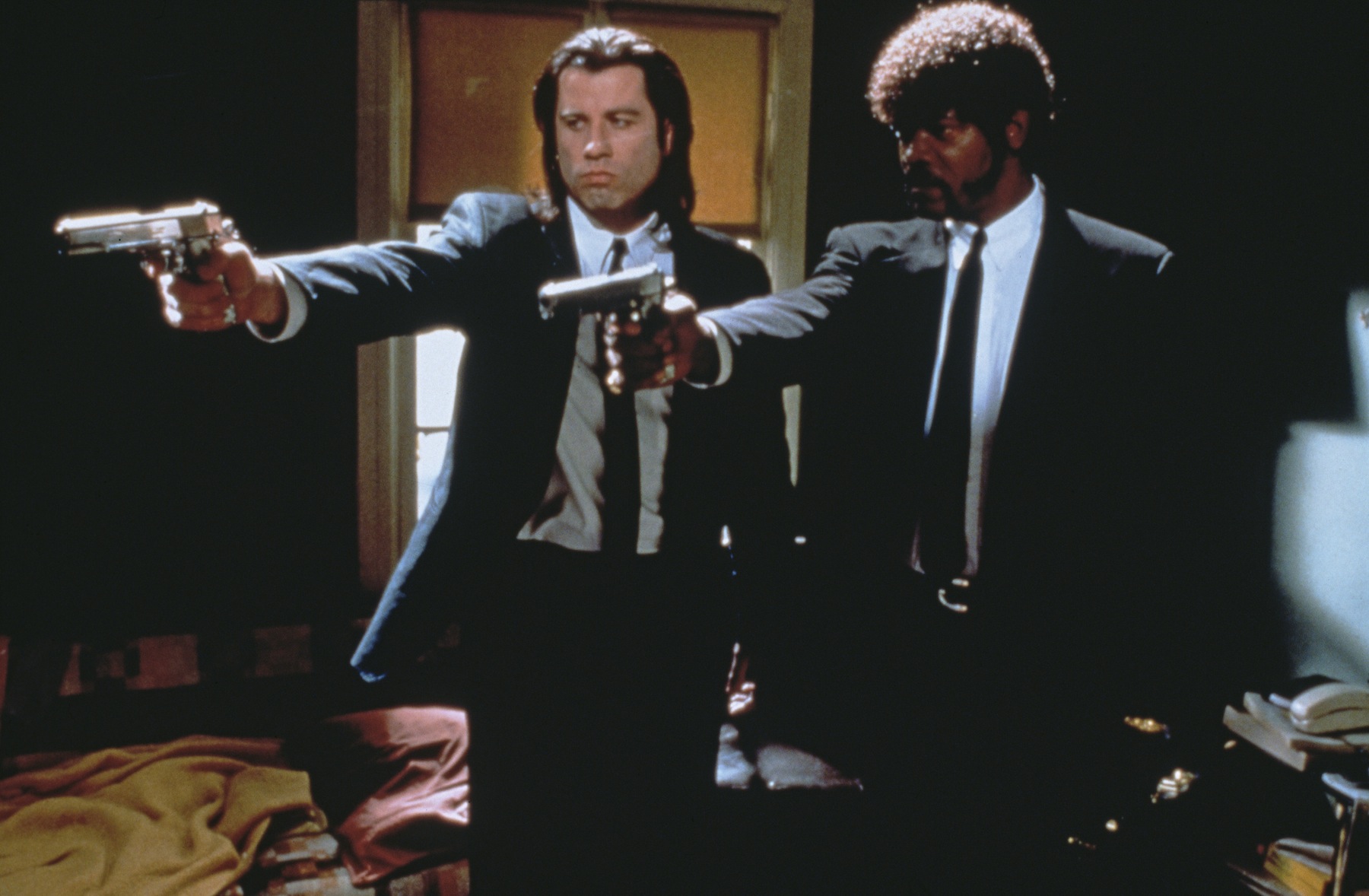
Hey there everyone! Welcome back to Movie Soapbox, the little corner of the internet that only you and I and that guy sleeping in the corner over there know about. This is the place where we find the films that actually got something true onto the screen, and we make sense of them. Today we are doing something a little different. No single film. No one director. Today we are talking about the ten movies where the writing, the actual sentence-by-sentence word-choosing writing, is so good that it basically does the studio’s job for it. These are the best dialogue movies ever made, and the fact that most of them exist at all is a minor miracle given how hard the machine works to sand that kind of thing down.
And before we get into the list itself, here is the thing you need to hold in your head the entire time you read this. Great screenplay dialogue is the first thing a development exec wants to “punch up.” That phrase, punch up, should make your skin crawl if you know what it means in practice, because what it means is: twelve people in a room, none of whom have ever been broke or heartbroken or funny in real life, deciding that the line is too quiet, too specific, too weird, too slow, and replacing it with something an airport gift shop would put on a mug. Every single film on this list survived at least one version of that room. Some of them have the scars to prove it. The ones at the top of the list mostly don’t, and that is exactly why they are at the top.
#10 — Before Sunset (2004)
Richard Linklater, Ethan Hawke, and Julie Delpy wrote this thing by emailing draft fragments back and forth to each other for two years before they shot it, which is either the most romantic origin story in modern American cinema or a production model so chaotic it should never have produced anything watchable, and somehow it produced both of those things simultaneously. The setup is this: Jesse and Celine, nine years after the first film, reconnect at a Paris bookshop, and then walk and talk for about eighty minutes until the film ends and you feel like someone removed a small organ you didn’t know you had.
Jesse: “In the months leading up to my wedding, I was thinking about you all the time. I mean, even on my way there; I’m in the car, a buddy of mine is driving me downtown and I’m staring out the window, and I think I see you, not far from the church, right? Folding up an umbrella and walking into a deli on the corner of 13th and Broadway. And I thought I was going crazy, but now I think it probably was you.”
Celine: “I lived on 11th and Broadway.”
Jesse: “You see?”
You want to know what a film looks like when it is almost entirely safe from committee interference? It looks like this. Three collaborators with final-draft creative control, no marketable set pieces to protect, no franchise runway to preserve. The suits who might have wrecked it had no obvious commercial lever to pull, so they left it alone. That is not a creative strategy most filmmakers get to rely on. It worked here because Linklater had enough credibility and low enough budget requirements that the question of what the broad audience wants basically never entered the room. Most directors working in that mid-budget space don’t get that deal. Most of them get noted to death before frame one.
#9 — Match Point (2005)
Woody Allen in a late-career stretch where London had given him something American studios would no longer give him, which is a set of circumstances strange enough to produce stranger material. The film follows Chris Wilton, a former tennis pro working his way up through British society via marriage and suppressed panic, until the suppressed panic becomes something considerably worse. The script is quiet where you expect it to be loud and matter-of-fact where you expect remorse, and that flatness is where all the dread lives.
Estate Agent: “That’s your sofa, which also doubles up as a bed, which is great, you know, cause you can be watching some telly and you ain’t got to hassle having to get outta the bedroom, you can just open it up, get your kip…”
Chris: “This is two hundred and twenty five a week?”
Estate Agent: “Well it’s London, mate. Bang, mate. You know? You don’t like it, move to Leeds…”
Chris: “I’ll take it.”
That exchange, a throwaway scene in the first act about a mediocre flat, tells you everything about Chris’s relationship to compromise before the plot makes it explicit. That is what good dialogue does. It works on two tracks at once. The surface track is just two people talking about a wok. The other track is a character study in six lines.
#8 — Glengarry Glen Ross (1992)
David Mamet adapted his own stage play for the screen, which meant nobody got to improve his sentences, which is probably why the sentences are still that good thirty years later. The film is mostly men in rooms abusing each other in highly specific ways, and the specificity is everything. These are not generic movie insults. These are the insults of men who have been in the same losing situation long enough to have weaponized every detail of it.
Blake: “That watch costs more than your car. I made $970,000 last year. How much’d you make? You see pal, that’s who I am, and you’re nothing.”
Alec Baldwin delivers that speech and walks out of the film forever, and the rest of the movie lives in the damage radius. That is efficient writing. One scene, one character who never returns, and the entire moral atmosphere of everything that follows is already established. A studio note on a script like this would almost certainly have asked for Blake to come back at the end for resolution. He doesn’t. The film is better for it.
#7 — Dead Poets Society (1989)
Tom Schulman won the Oscar for this screenplay and then more or less vanished from the A-list, which is a pattern that shows up often enough in Hollywood to stop being a coincidence. The film is anchored entirely on Robin Williams as John Keating, an English teacher at a New England prep school who makes the catastrophic professional mistake of believing his students are worth talking to like adults, and the institution’s response to that mistake is the whole story.
Keating: “Did they wait until it was too late to make from their lives even one iota of what they were capable? Because, you see gentlemen, these boys are now fertilizing daffodils… Carpe, carpe diem, seize the day boys, make your lives extraordinary.”
That speech gets quoted constantly, often by people who have forgotten that the film ends in institutional punishment for everyone who listened to it. The dialogue is inspirational. The film’s argument about what happens to inspiration when it meets systems designed to contain it is considerably darker, and that tension is baked into every scene.
#6 — True Grit (2010)
The Coen Brothers adapted Charles Portis’s novel with a fidelity that reads almost like affection, because that’s what it was. A significant percentage of the best dialogue in this film is lifted directly from Portis’s pages, which tells you something important: the Coens recognized they were adapting a writer who was already operating at their level and had the discipline not to improve on him. That is a rarer skill in a writer-director than it sounds.
LaBoeuf: “You give out very little sugar with your pronouncements. While I sat there watchin’ I gave some thought to stealin’ a kiss… though you are very young, and sick… and unattractive to boot. But now I have a mind to give you five or six good licks with my belt.”
Mattie Ross: “One would be just as unpleasant as the other.”
Mattie Ross is fourteen years old and she wins every conversation she has in this film, including several with grown men who are armed. The screenplay never softens that. She is competent and relentless and the film treats that as a given rather than a revelation, which is the correct and unusual choice.
#5 — Fargo (1996)
The Coens again, this time with an original screenplay, and the dialogue works entirely differently here because the accent and the setting are doing structural work that the words alone couldn’t do. The genius of the Fargo script is that the most dangerous characters in it speak the same flat Midwestern courtesy as everyone else, which means you cannot hear the threat in the language. You can only see it in the consequences.
Mr. Mohra: “So, ya know, he’s drinkin’, so I don’t think a whole great deal of it, but Mrs. Mohra heard about the homicides down here last week and she thought I should call it in, so… I called it in. End o’ story.”
Officer Olson: “What’d this guy look like, anyway?”
Mr. Mohra: “Oh, he was a little guy… Kinda funny lookin’.”
Officer Olson: “Uh-huh. In what way?”
Mr. Mohra: “Oh, just in a general kinda way.”
That exchange, a throwaway scene with a minor character in a bar, is funnier and more precise about how ordinary people process extraordinary violence than most films manage in their entire third act. The Coens write supporting characters who feel like they have been living in the same town for forty years before the plot arrived. That costs something. It costs the writers caring enough to do it.
#4 — The Social Network (2010)
Aaron Sorkin’s scripts run three to four times the length of a standard screenplay because he writes the way people speak when they are operating at the absolute peak of their verbal intelligence and also trying to destroy each other. His scripts are not realistic. Real people do not talk like this. What they are is emotionally true at a speed the audience cannot keep up with consciously, which is how you get scenes that feel like fights even when nobody raises their voice.
Zuckerberg: “As for any charges stemming from the breach of security, I believe I deserve some recognition from this board.”
Chairwoman: “I’m sorry?”
Zuckerberg: “Yes?”
Chairwoman: “I don’t understand.”
Zuckerberg: “Which part?”
What Sorkin understood about this material, and what David Fincher understood about how to shoot it, is that Zuckerberg’s defining characteristic is the inability to register other people’s discomfort as information worth processing. Every scene is built around that void, and the dialogue keeps finding new ways to demonstrate it without ever stating it. A lesser screenwriter would have given him a monologue explaining himself. Sorkin gave him a four-line exchange that does the same job invisibly.
#3 — Reality Bites (1994)
Helen Childress wrote this script in her early twenties, and it was her debut feature credit, and the film defined a generational attitude so precisely that it became a kind of shorthand for an entire decade’s ambient irony. Then Childress essentially disappeared from feature screenwriting, which is the kind of outcome the industry produces constantly and never seems to find troubling. One remarkable script from a young writer, a film that makes money and wins cultural currency, and then nothing. The development system does not always know how to hold onto the people who give it its best material.
Lelaina: “I’d like to somehow make a difference in people’s lives.”
Troy: “And I… I would like to buy them all a Coke.”
Lelaina: “And you wonder why we never got involved?”
That exchange is a complete character study in three lines. Troy’s deflection is funny and self-aware and also exactly the behavior pattern that will cost him everything in the film. That is the specific kind of efficiency that separates a great dialogue writer from a competent one.
#2 — American Beauty (1999)
Alan Ball wrote this as a stage play first, which is the origin story you’d expect once you watch it, because the dialogue has the precision of something that has been heard out loud in a room and cut down to only what survives that test. The film won five Oscars including Best Original Screenplay, which in practice meant the Academy recognized it as exceptional, and a significant portion of the audience has spent the twenty-five years since that ceremony arguing that it doesn’t deserve that recognition, which is a reliable sign that something true landed.
Lester: “It’s OK, I wouldn’t remember me either.”
And later:
Lester: “Her husband. We’ve met before, but something tells me you’re going to remember me this time.”
Both of those lines are doing the same thing: Lester narrating his own humiliation, first as self-deprecation, then as something colder. The character’s entire arc is in the distance between those two deliveries. That is a writing choice, not a performance choice, and the film would not work without it.
#1 — Pulp Fiction (1994)
Quentin Tarantino wrote this script with Roger Avary and then made a film so verbally dense that the violence, when it comes, lands harder because you weren’t tensed up waiting for it. You were listening. That is a structural trick most action filmmakers cannot pull off because they don’t trust the audience to sit still for conversation, and Tarantino built his entire career on the bet that they would. He was right. The film made $214 million on a $8 million budget, which is the number studios wave around when they want to justify greenlighting something unconventional, and then proceed to develop the unconventional thing into something conventional anyway. Pulp Fiction remains the exception because Miramax in 1994 was not yet the machine it became, and because Tarantino had final cut and the recklessness to use it.
The Wolf: “You’ve got a corpse in a car, minus a head, in a garage. Take me to it.”
The Wolf appears in the film for maybe fifteen minutes and solves the entire problem the plot has constructed over the previous hour. He speaks entirely in logistics, no emotion, no reassurance, just the mechanism of the solution stated plainly. He is the most competent character in a film full of people making catastrophic decisions, and he expresses that competence entirely through how he talks. You never see him panic. You never see him impressed. He just says what needs to happen next, and it happens.
That is what great dialogue writing does, at its best. It tells you everything about a person from the way they move through language. It does not announce itself as clever. It just arrives, specific and inevitable, like it could not have been any other way, which is the hardest thing in the world to fake and the easiest thing in the world for a committee of executives to accidentally destroy.
These ten films survived. Go find the ones that didn’t.