
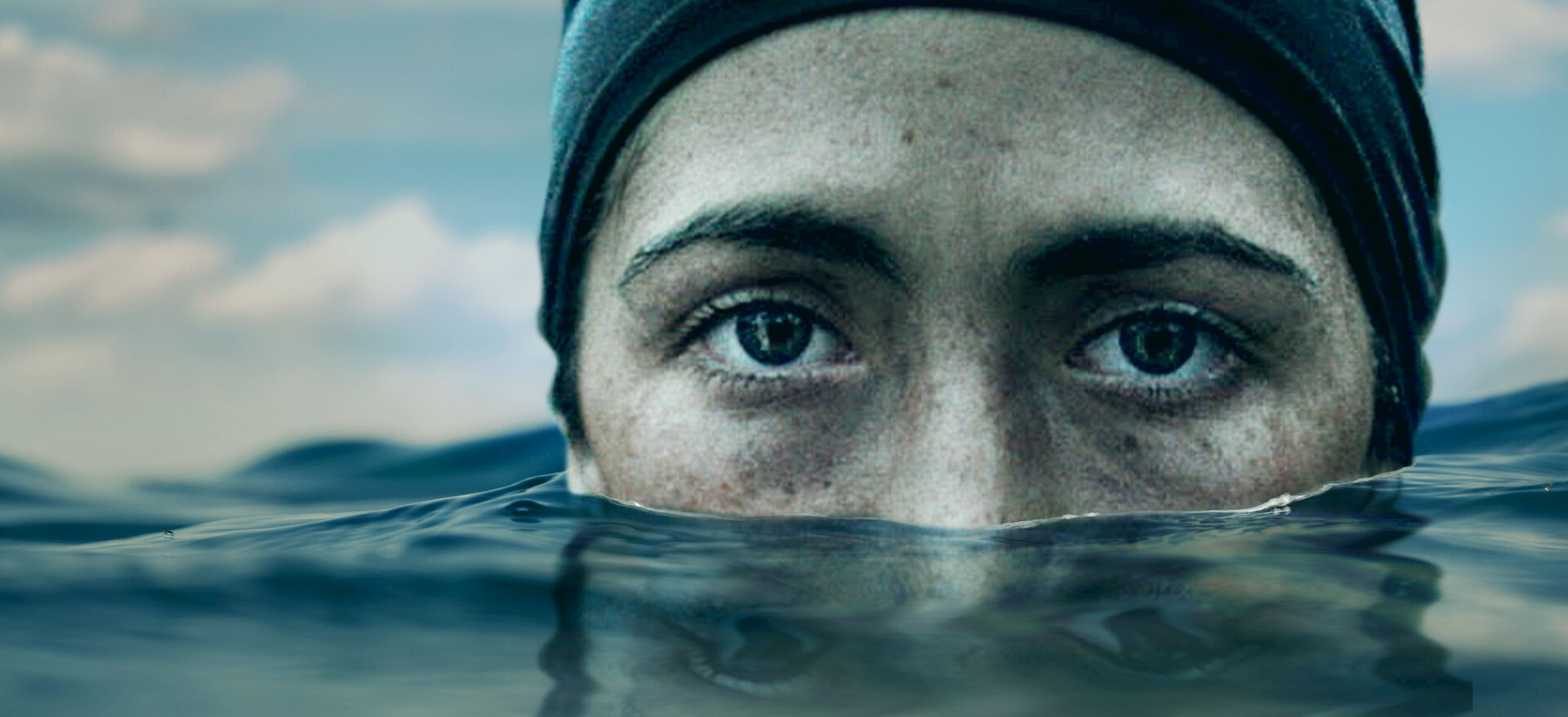
Hey there everyone! Welcome back to Movie Soapbox, the little corner of the internet that only you and I and that guy sleeping in the corner over there know about. This is the place where we find underappreciated indie films and we make sense of them. Today? We are doing a deep dive on The Novice, a movie so quietly, methodically brutal that by the time it ends you feel like you just survived the same season Alex Dall did, except she earned her scars and you just sat on a couch.
Here is the trailer. Watch it, then come back, because the rest of this is going to assume you’ve seen the film.
Alright. From here forward, everything is a spoiler, all of it, including the ending, the seat race, the self-harm, everything. If you haven’t watched it yet and you want to go in clean, close this tab, go to Netflix, and come back when you’re done. I’ll be here.
The Novice Movie Detailed Walkthrough
Alex Dall holds a Presidential Scholarship coming into college, full ride, the whole thing. Before she ever sets foot on a rowing dock, we get the origin story in a flashback that tells you everything you need to know about this woman: back in high school, some guy was assumed to be the valedictorian, assumed without a competition or a race or a vote, just assumed, and that assumption was enough to ignite something in Dall that did not go out. She didn’t just want to beat him. She needed to dismantle the presumption itself. She knocked him off the stage. She wasn’t even the valedictorian when it was over, she took the second seat, but that was never the point. The point was the demolition. She comes to college and picks her weakest area of study as her major, not because it gives her the best shot at a career, not because she’s passionate about it, but because it is the hardest wall she can find to put her head through. Then she’s walking across campus one afternoon and she sees the scullers on the water and something locks in behind her eyes, and that’s it. That’s the whole setup. You already know how this ends. The question is just how much it costs her.
She takes every test multiple times. She doesn’t sleep. She rows until her hands bleed and then she rows some more. The film doesn’t glamorize this, which is one of the things that separates it from a hundred lesser sports movies that would’ve made the training montage feel like inspiration porn. Writer-director Lauren Hadaway shoots the obsession as a physical texture, you can feel the fluorescent lights, the cold water, the 5am alarm, the way exhaustion starts to look like focus from the outside and like drowning from the inside. Every friendship Dall has gets burned down, not in dramatic confrontations, just quietly starved of oxygen. Her love interest gets a version of Dall that only shows up when Dall needs something. Her teammates get a version of Dall that would throw any one of them overboard if it moved her split time by a tenth of a second.
And here is where the film starts doing something that a lot of films in this space don’t have the nerve to do. It doesn’t let you off the hook with Dall. You want to root for the obsessive underdog, that’s the contract the sports movie genre offers you, and Hadaway tears the contract up around the forty-minute mark and hands you the pieces. Dall doesn’t want to win because winning means something to her teammates or her coach or her school. She wants to win because the alternative is existing inside a hierarchy she didn’t personally dismantle, and that is something she cannot physically tolerate.
The Making of the Movie The Novice
A film like this, at this budget level, with a first-time feature director and an actress the industry hadn’t handed a franchise to yet, does not get made without somebody believing in it hard enough to absorb the risk of it being uncommercial, because it is deliberately, proudly uncommercial. There are no rousing third-act speeches. The coach is not secretly an ally. The team does not come around. The structure of the thing reads like a director who got final cut and used it, because the shape of this story, the refusal to pivot toward catharsis, the choice to let Dall win the lake race alone in a lightning storm and feel absolutely nothing in the aftermath, that is not a shape any set of notes from a development room produces. Development rooms produce the version where Dall learns something on the water, where there’s a moment of grace before the final race. You can feel the ghost of that version hovering over this one, the version that didn’t get made, and the gap between those two films is where the real craft lives. The fact that this came out of a first feature is the thing that should make you pay attention to what Hadaway does next.
The Seat Race of The Novice and that Ending
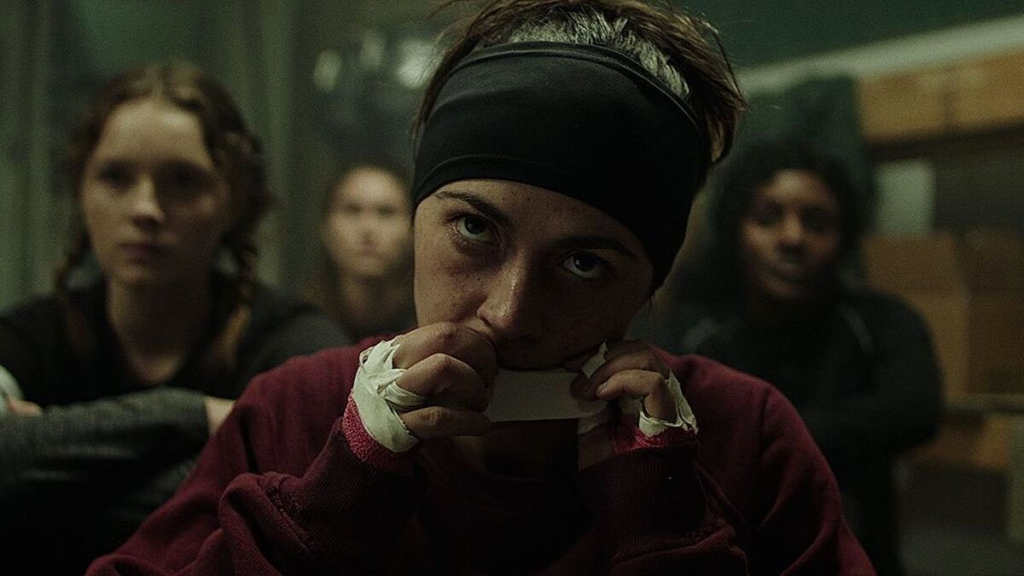
Now let’s talk about the seat race, because this is where the mechanics of the film’s cruelest joke land. In sculling, a seat race is the specific mechanism for choosing between two rowers competing for one spot. You put both of them in the same four-person boat, measure the time, then swap them out, measure again. The difference in performance is, theoretically, the difference in their value to the crew. It is a controlled experiment. It is exactly the kind of measurable, objective, verifiable competition that Dall has organized her entire existence around. She should win this. She has the times. She has the work hours. She has the obsession. But a seat race measures more than output, it measures what a rower does to a boat, and a boat is four people, and Dall’s teammates have already made their decision about what Dall does to the people around her. Her only friend on the team cuts a backroom deal with the seniors, they sandbag the race, they give the seat to Brill. And Brill looks Dall in the face and says it plainly: no one on this team respects you, and I won that seat race. She’s not wrong. That’s the thing. She’s completely correct.
The moment when Brill points out that Dall already has a scholarship, that she doesn’t even need the varsity seat, Dall has nothing to say. Not because she’s been caught in a lie, but because the question assumes that needing something was ever the operating principle. Dall doesn’t row because she needs to. She rows because there is a measurable ranking system in front of her and she cannot stop until she has destroyed everyone else on it, regardless of what it costs anyone, including Brill, who Dall knows will have to leave school if she loses the scholarship attached to that varsity seat. Dall knows this. She proceeds anyway. That is the pivot point. That is where the film asks you to make a choice about who you are watching.
The Movie The Novice’s Theories
The competing reads on this film basically organize around one question: is the ending a victory, a defeat, or a diagnosis?
The Novice Movie Theory Number 1 –
The first read is that the lake race is Dall’s one pure win, the only competition she ever entered that was truly hers, no team to carry, no social order to navigate, just her and the water and the storm, and she takes it, which means the film ends on a note of bleak, costly triumph. She erases her name from the roster because she’s done with the game, not because the game broke her.
The Novice Movie Theory Number 2 –
The second read is that winning the lake race is meaningless, she survives a storm that drives every other racer off the water, she doesn’t beat anyone, she outlasts an act of nature, and the film uses that empty victory to show you exactly what all of it was always worth. The scholarship Dall has been clawing to protect through rowing was never at risk. She rowed herself to pieces for a seat she didn’t need to keep a scholarship she already had. The erasure from the roster and the revealed cutting aren’t punctuation on a win, they’re the bill arriving.
The Novice Movie Theory Number 3 –
The third read, which gets less attention but is the one I think the film is quietly most interested in, is that Dall is not going to change. The erasing of her name from the roster is not a surrender and it is not an epiphany, it is just the next rotation. She found rowing the same way she found her major, because it was hard and she could make it a competition. She has now extracted what she came for, or the closest thing to it, and she will find the next wall. The self-harm she reveals is not a cry for help the film frames as a turning point. It’s documentation. Dall showing the audience the receipt.
Moviesoapbox’s Preferred Read on the Movie The Novice –
I believe the third read. Dall does not learn a thing over the course of this film and Hadaway doesn’t ask her to, which is the entire argument the film is making. The sports movie contract promises you the arc, the growth, the moment the competitor becomes a person again. Hadaway voided that contract before she wrote page one. What you’re watching is not a story about someone who almost destroyed herself but pulled back. It’s a portrait of a particular kind of engine, the kind that doesn’t have a governor on it, and the film’s final image is that engine turning over and looking for the next track. She doesn’t quit rowing because she’s healed. She quits because she’s done with rowing. There’s a difference, and that difference is the whole movie.
What Hadaway built here is the kind of film that the industry produces maybe once a cycle when someone with this specific a vision gets just enough money and just enough autonomy before the notes meetings start, and you should watch it while it’s still on Netflix and you can watch it for free, because films like this have a way of quietly disappearing from streaming and then showing up years later as the thing everyone says they wish they’d seen.
Find the ones that survived the machine. Watch them. That’s what we do here.