
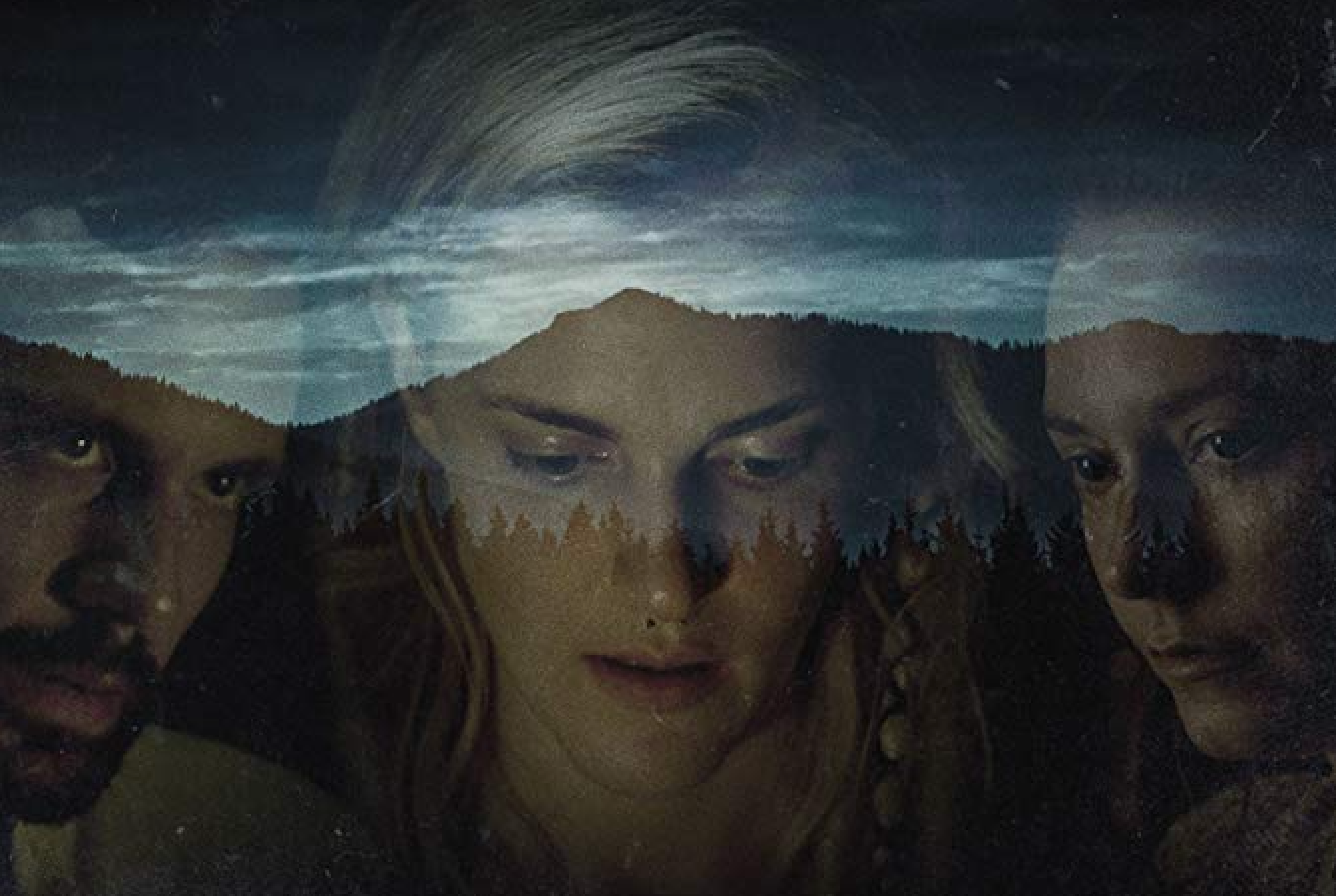
Hey there everyone! Welcome back to Movie Soapbox, the little corner of the internet that only you and I and that guy sleeping in the corner over there know about. This is the place where we find underappreciated indie films and we make sense of them. Today? We are doing a deep dive on Still, a movie so quietly ruthless in what it’s actually saying about human nature that the whole fountain-of-youth premise almost works as a distraction from the real gut-punch underneath it.
Before we go any further, a warning in plain language: everything that follows is a full spoiler walkthrough of this film, beat by beat, secret and all. If you haven’t seen Still yet, close this tab, find a copy, watch it, and come back. The movie earns your patience. The conversation we’re about to have will mean a lot more once you’ve sat with it. Still there? Good. Let’s get into it.
Still Movie Walkthrough
The film opens on two male hikers wandering onto a remote property in the middle of nowhere, and getting run off it at gunpoint by a man named Adam, played by Nick Blood, who delivers the threat with the calm of someone who has done exactly this before and will do it again without losing any sleep. Then the title card hits, and behind it, the film plays vintage photographs of moonshine distilleries over the credits, and if you are paying attention at all, the entire premise of what you’re about to watch just handed itself to you on a plate. Ancient stills. A movie called Still. The mechanism is right there in the opening sequence, no misdirection attempted, just confidence that even if you clock it, the film has enough going on to hold you anyway.
Cut to Lily, played by Madeline Brewer, a terminally ill cancer patient who has walked into the woods to die on her own terms, which is already a premise that earns the film a little respect before it’s done anything else with it. She stumbles onto the property. The couple who live there, Adam and Ella, played by Lydia Wilson, make a choice that surprises you given the opening scene: instead of running her off, they take her in.
Here is where a studio note would have arrived, in the form of a twenty-page coverage document from a VP who has never been hiking in his life, suggesting that Lily’s terminal illness be “clarified” through a scene where she calls someone on the phone and explains her diagnosis out loud. That note did not happen to this film. Takashi Doscher trusted you to follow along without a diagram, which is a thing that costs a director nothing except the willingness to stand his ground, and which the budget tier of this production accidentally protected him on. When you are making a film this small, there are no twelve-person story meetings. There is the script, the location, and the cast. That is also sometimes how a film stays honest.
The water from the nearby cave heals the wounds on Lily’s hands. Ella decides to show her where it comes from. Adam intercepts them, they argue, and in a moment of escalating panic and territorial fury, Adam shoots Lily. Because of course he does. Because everything we have already seen tells us that Adam and Ella have killed before to protect this place, and an outsider getting close to the source of their immortality trips every wire they have spent years building.
The film then jumps backward, and this is where Still does its most interesting structural work. We see Ella and Adam years earlier, fleeing through the woods from her father, a man named Daniel Shelby, described as fiercely religious and almost certainly abusive. They stumble onto the property to find it deserted. There’s a deed. Ella claims the land as hers and tells Adam he can go. He stays anyway. Shelby’s men catch up to them, Adam kills two of them, Shelby shoots Adam in return, and Ella shoots her own father with his gun while his back is turned. She doesn’t believe the water can save Adam from a gunshot wound because she doesn’t yet believe in the water fully enough.
Jump forward. Lily is dying from the gunshot. Adam and Ella move her to a trailhead, set up camp, and Adam leaves. When Lily recovers enough to be mobile, she and Ella go into town, have a pint at a pub, meet two men there, and for a brief window the film almost lets itself exhale. Then Ella collapses, bleeding from her nose, her face visibly aging in real time as the hospital staff, with no framework whatsoever for what is happening to her body, do their best and fail completely. Adam arrives with a bottle of the water, administers it, and takes her home.
Adam puts Ella to bed and leaves a note saying she was right. The land was hers. He should have left when she first told him to. He walks out. In the morning, Ella wakes to find Lily and the two men from the bar in her kitchen, drinking the moonshine, hitting each other in the face, already in the grip of the same territorial madness she and Adam spent decades inside. She looks at this scene, picks up a bottle of the water, and leaves. She finds Adam on a cliff overlooking the countryside. They hold each other. They let the water spill out and drain away. The film ends on two people choosing to stop, which is the only genuinely surprising thing it could have done.
What You Need to Know to Follow the Timeline
The film’s structure is non-linear, but the logic underneath it is consistent once you have the full picture. Ella and Adam arrived on the land as young adults fleeing Shelby, probably sometime in the mid-twentieth century given the production design of the flashback sequences. They discovered the cave water, drank it, and have been living on that property in effective physical stasis ever since, killing or driving off anyone who comes too close, for decades. The hikers in the opening scene are not a one-time occurrence. They are a routine. The rifle is always loaded because the rifle has always needed to be loaded. When Adam shoots Lily, it is reflex built over a lifetime of doing exactly that, and the film is not asking you to forgive him for it, only to understand the mechanism.
Ella’s collapse in the hospital is the film’s clearest statement of what the water actually does and what it costs. It does not make you immortal in any absolute sense. It keeps you tethered. Leave the proximity of the source long enough, submit your body to enough stress in the wrong environment, and the decades you have been holding at bay come back for you all at once. The doctors cannot treat her because there is no medical category for a woman whose body is attempting to age fifty years in a single afternoon.
Adam’s note is not an apology for the violence. It is something smaller and more honest than that: an acknowledgment that he made a choice a long time ago to stay somewhere he had been told to leave, and that everything that followed, every body, every covered grave, every decade of isolation, followed from that one decision.
Still Movie Competing Explanations
The Reddit thread conversation around Still tends to split into several camps, and all of them are on target… so let’s discuss them.
Still Movie Theory Number 1
The first read is the religious allegory, and the film practically hands you a map for it. Adam and Ella in a garden they will eventually be expelled from. A father figure named Shelby who functions as a wrathful god-type, pursuing them for the act of leaving his control. The fountain of youth as forbidden knowledge, the thing you were never supposed to have, that poisons everything it touches not because the water itself is evil but because of what human beings do the moment they believe they have found a way to cheat death. Lily as a kind of Eve figure who accelerates the final reckoning by arriving in the garden and making Ella see it clearly for the first time in years. The names are not accidental. Doscher is doing something specific there.
Still Movie Theory Number 2
The second read is the more secular and, honestly, darker one: this is a film about what privatized medicine actually looks like when you follow the logic all the way to the end. Ella and Adam have a treatment for cancer. They know they have a treatment for cancer because Lily’s tumors are responding to the water. They are never going to tell anyone. They are going to kill anyone who comes close enough to find out. And the film does not treat this as a monster story because it understands that the distance between Ella and Adam’s behavior and the behavior of any pharmaceutical company running out the clock on a patent is not as wide as we would like it to be. The mechanism is identical, the scale is different, and the film is asking you to sit with that comparison and feel uncomfortable about it.
Still Movie Theory Number 3
A third, quieter read is about sunk cost. These two people have been here so long, have done so many things to stay here, that leaving has become unthinkable, not because the water is worth it but because the alternative is confronting everything they gave up to keep it. The ending, where they let the water spill away, is not a spiritual epiphany. It is two people deciding that the price of continuing to be who they have become is finally higher than the price of dying like everyone else.
Moviesoapbox’s Take on the Movie Still
The sunk cost read is the one that stays with me, but I think it only works fully in combination with the privatized medicine reading underneath it, because those two things are what gives the ending any weight at all. A purely spiritual reading of that final scene, two people choosing mortality over sin, lets the film off the hook too easily, turns it into a fable with a lesson attached, and Still is not interested in letting you leave feeling resolved. What Ella and Adam are giving up at the end of this film is not just immortality. It is the justification for everything they did to protect it. The moment they let the water go, every body becomes just a body, every choice becomes just a choice, with no cosmic framework to absorb the weight of it. That is not a redemption arc. That is two people deciding to stop adding to the count, which is a much harder and lonelier thing to respect.
Lily taking the rifle at the end and turning it on the men who followed her to the cabin tells you everything you need to know about what the water actually does to people, and it happens fast enough that you almost miss it. She had it for twenty minutes and she is already the thing Ella and Adam spent decades becoming. The film does not editorialize about this. It just shows you the mechanism and lets you do the math.
The Little Movie That Could
A film this small, this formally committed to withholding, with a cast this size, gets made because someone with a genuine idea and a real location talked a handful of talented people into giving up a few weeks of their lives for it. Madeline Brewer and Lydia Wilson are not here because of a payday. They are here because the script gave them something real to do, and because at this budget level, the director’s vision is either the whole film or the film does not exist at all. There are no reshoots. There is no test screening feedback incorporated into the third act. There is no safety net. You watch Still and you are watching exactly the film Takashi Doscher intended to make, for better and for worse, which is a sentence you cannot honestly say about most of what opened in wide release the same year.
That is the only reason films like this exist, and it is a damn fragile reason. We will see you next time here at Movie Soapbox, the little corner of the internet where we take these things seriously because someone worked hard enough to deserve it.