
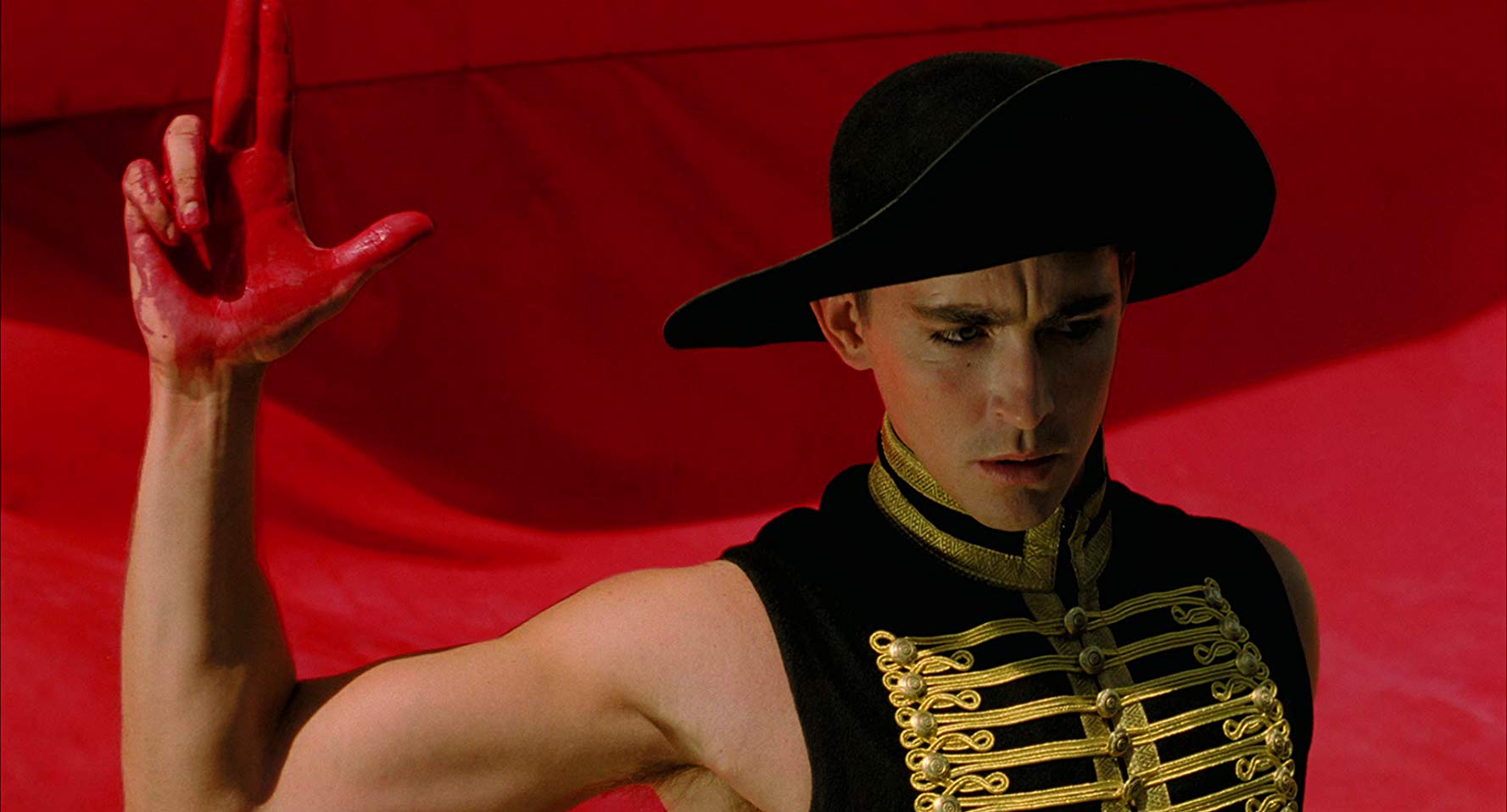
Hey there everyone! Welcome back to Movie Soapbox, the little corner of the internet that only you and I and that guy sleeping in the corner over there know about. This is the place where we find underappreciated indie films and we make sense of them. Today? We are doing a deep dive on The Fall, a movie so visually overwhelming and quietly devastating that even the people who stumbled onto it by accident on a streaming service at two in the morning are still thinking about it three years later.
Before we go any further, here is the trailer, because if you have somehow not seen this film yet, you owe it to yourself to at least understand what we are dealing with.
Alright. If you have not watched The Fall yet, stop reading right now, go watch it, come back. Everything from this point forward is a full spoiler, every plot turn, every reveal, every gut-punch. You have been warned, and I mean it the way a guy means it who watched someone ruin this movie for a friend at a dinner party and has never forgiven himself for not speaking up sooner.
Still here? Good. Let’s get into it.
The Fall Movie Deep Dive Walkthrough
The movie opens in 1915 Los Angeles, and Tarsem Singh drops you into it without much ceremony. Roy Walker, played by Lee Pace giving a performance that should have made him a household name and didn’t, which is a whole other conversation, is in a hospital bed after a stunt goes wrong on a film set. He possibly can’t walk. He definitely can’t work. The woman he loved has left him for the lead actor he was doing the stunt for, which is the kind of specific, petty, grinding humiliation that committee-written scripts always sand down into something more cinematically tidy. Tarsem left it jagged. Good. It needed to stay jagged. Into his orbit comes Alexandria, played by Catinca Untaru, a five-year-old Romanian girl with a broken arm and a broken English vocabulary and absolutely zero defenses against the world, which is the whole point of her and we will get there. Roy starts telling her a story. A fantasy epic. Five heroes united against a villain named Governor Odious. And what looks at first like a sick man being kind to a child reveals itself, slowly, as something much darker and stranger and more desperate than that.
Here is what you need to understand about how a film like this actually gets made, because it matters to everything you are about to read. The Fall was financed outside the studio system, by Tarsem himself, drawing on money he had accumulated directing some of the most expensive and visually elaborate music videos and commercials of the nineties. He shot it over four years across twenty-four countries. No studio greenlight. No development process. No VP of creative affairs sending a note on page seventy-two about whether Governor Odious is sufficiently motivated. When you watch this film, you are watching what happens when a director with a specific and fully formed vision has no one to answer to and enough money and enough time to execute that vision without compromise. The film you are watching is the film he intended. Every single frame. That is a condition so rare in commercial filmmaking that most working directors have never experienced it once, and Tarsem built his entire creative life around making it structurally possible. You can feel the absence of interference in the texture of the thing, in the way it refuses to explain itself, in the way it trusts silence. That unhurried, uncompromised confidence does not come from a development process. It comes from writing the check yourself.
Now. Roy’s plan. It is essential and it is genuinely dark and the movie does not soften it. Roy is going to kill himself. His legs may never work again. His career is over. The woman is gone. The lawsuit with the studio is grinding forward and going nowhere. He has decided. The mechanism he lands on is morphine, and the courier he chooses, without ever telling her what it is for, is Alexandria. He convinces her to steal morphine from the hospital pharmacy. Alexandria, being five, misreads the note and brings him three pills instead of the bottle. The pills he then acquires from another patient turn out to be placebos. His suicide attempt fails by accident, by a series of small comic misunderstandings that the film does not play for laughs, and that is the correct choice, because a man being saved from death by a child who misread his handwriting is not funny. It is the kind of thing that makes you put the remote down and just sit with it for a second.
But Alexandria, still with no idea what any of this morphine is actually for, wanting Roy to be happy, wanting him to finish the story, goes back to the pharmacy and climbs to the top shelf to get the bottle herself. And she falls. Surgery. A cracked skull. Roy’s weapon against himself has put a child in an operating room, and this is the moment the film turns on.
The fantasy story running parallel to all of this is not a fixed object. This is the most important structural thing to understand about The Fall and it is easy to miss on first watch. We are not seeing Roy’s story as Roy tells it. We are seeing Alexandria’s imagination of Roy’s story as she hears it. The distinction is everything. The masked hero morphs, over the course of the telling, from an anonymous swashbuckler into Roy himself, and then into a version of Roy that Alexandria has cast as her own dead father. The characters bleed. The rules shift. The geography of the fantasy world changes based on what Alexandria knows and what she needs. She is not a passive audience. She is a co-author, constantly and unconsciously rewriting the thing she is being given, and Roy has no idea this is happening until it is too late to stop it.
Which brings us to the exchange at the center of the film, the one that every discussion of The Fall eventually arrives at. Roy, post-failed-suicide, post-Alexandria’s-surgery, has decided the story needs to end the way he originally planned his life to end. He starts killing the heroes. One by one. Governor Odious is going to win. And Alexandria pushes back.
She says: don’t kill him. He has his daughter.
Roy says: he’s not her father.
Alexandria says: I don’t want you to die. Don’t kill him.
Roy says: it’s my story.
Alexandria says: it’s mine too.
That pronoun slip, that “mine too,” is the engine of the entire film. She has understood, at some level a five-year-old shouldn’t be able to access, that the death of the story and the death of the storyteller are the same event. She is not just defending a fictional character. She is making a claim on Roy’s life, a claim she has earned by being the only person in his world who has given a damn about him without any angle to it. The debate between the creator and the audience, between the artist’s autonomy and the audience’s investment, has been running since the first person told the first story to another person around a fire. Tarsem puts it in the mouth of a child who barely speaks English, and it lands harder than a thousand academic essays on the subject.
Roy relents. Odious dies on his own sword. The masked man and his daughter survive. The story ends with something that is almost grace, not the kind of grace that wraps everything up cleanly, but the kind that is just enough to keep a person alive until the next day.
Back in the real world, Roy and Alexandria watch a film that was made partly from the stunt that broke him. His contribution has been cut. The audience around them laughs. No one is the wiser. Roy sees this, and it registers, and the film is wise enough to let it register without editorializing about it. The artist’s pain consumed and discarded by a capricious audience, the cost invisible to everyone in the room except the man who paid it. Tarsem has been making music videos his entire career. He knows what this feels like.
Alexandria heals. Roy heals, eventually returns to stunt work. The film closes on a montage of real early cinema stunt footage, dangerous and physical and astonishing, and Alexandria imagines each of the stuntmen to be Roy. It is a generous ending, unearned in the Hollywood sense, earned completely in the human sense.
Theories to Explain the Movie The Fall
Now let’s talk about what this film is actually about, because there are at least three legitimate reads and all three of them are correct simultaneously, which is the mark of something that was built to last.
The Religious Reading of The Fall
You do not name your film The Fall without meaning every syllable of it. The Fall as a title carries the weight of Genesis with it, Adam and Eve and the garden and the separation from God that follows the acquisition of knowledge, specifically the knowledge of good and evil, the knowledge that you are naked and insufficient and that the world can hurt you. Roy has acquired this knowledge the hard way. He knows what his body can no longer do. He knows what the woman chose. He knows what the studio thinks he is worth. He has fallen, in every sense the title implies.
Alexandria moves through his world like a grace note. She steals communion wafers early in the film and shares them with Roy, and he asks her, half-joking, are you trying to save my soul. She has no idea what he means. That is the point. The intervention doesn’t know it’s an intervention. She inserts herself into his story as his daughter, not because she has calculated that this is the emotionally effective move, but because she loves him with the uncomplicated directness that only a child who has not yet learned that love costs something can manage. She falls, she survives surgery, she heals. You can read that arc as a death and resurrection undertaken on Roy’s behalf, and the film supports that reading without forcing it on you.
The Creative Reading of The Fall
Strip away the spiritual framework and the same film reads as a sustained meditation on what artists owe their audiences and what audiences owe their artists. Roy is the director. Alexandria is the viewer. The story Roy tells is the film Tarsem is making. The constant morphing of the fantasy, the way Alexandria’s imagination overrides Roy’s narration and replaces his version with her own, is a precise and accurate description of what happens every time a film leaves the hands of the person who made it and enters the imagination of the person watching it. The creator loses control at the moment of release. The audience completes the work. Roy’s outrage at this, his insistence that it is his story, is every auteur who ever fought a test screening note. Alexandria’s counter-claim is every person who ever loved a film more than the director intended them to.
The Intimacy Reading of The Fall
There is a third version of this film, quieter than the other two, about the near-impossibility of genuine human connection and the strange, indirect routes we sometimes have to take to achieve it. Every hero in Roy’s fantasy wears a mask. That is not subtle. We all wear masks. Roy’s mask is charm and storytelling and the whole wounded-romantic-figure performance he runs on Alexandria from their first scene together. Alexandria has no mask, because she is five years old and hasn’t learned to build one yet. The story becomes the space where both of them can say true things they could not say directly. Alexandria cannot directly address her father’s death. Roy cannot directly address his desire to die. Inside the story, filtered through characters and metaphor, they can approach these things and handle them and survive the handling. That is not a small thing. That is the reason human beings have been telling each other stories since before we had writing to record them.
All three of these readings are true. Pick the one that fits the place you are in when you watch it, and it will find you there.
Moviesoapbox’s Own Reading of the Movie The Fall
My read, the one I’ll plant a flag on: this film is about the war for Roy’s soul, and Alexandria wins it, and the reason she wins it is that she wants nothing from Roy except the story and his continued presence in the world to keep telling it. She has no agenda beyond that. She is not trying to fix him or save him or change him. She just wants him to keep going. And in the end, that turns out to be exactly enough. A paralyzed stuntman in a 1915 Los Angeles hospital is saved by a Romanian girl who wanted to know how the story ended. That is the whole movie. Everything else is ornament, gorgeous, overwhelming, unforgettable ornament, but ornament.
What The Fall had to survive to exist was not a hostile studio, it was the entire commercial film industry’s implicit insistence that films like this don’t get made. Tarsem had to opt out of the system entirely, spend his own money, take four years, refuse every shortcut, to deliver something this uncompromised. The films that go through the normal process, the ones with twelve VPs and a test screening in Burbank and a third act that got rewritten because a focus group in Glendale found the ending too ambiguous, those films do not look like this. They cannot. The system will not allow it. Tarsem simply declined to ask permission, and this is what that decision looks like when it works.
Go watch it again. It will be a different film the second time. That is not an accident of your memory. That is the whole design.
🎬 If You Liked This…
- Mr. Nobody — the same fracturing of reality into multiple simultaneous narratives, a mind constructing elaborate alternative versions of existence rather than face the unbearable truth of the one it actually inhabits
- Linoleum — the same revelation that the story you’ve been watching exists inside one person’s deteriorating grip on reality, the fantasy and the real having been the same thing all along