
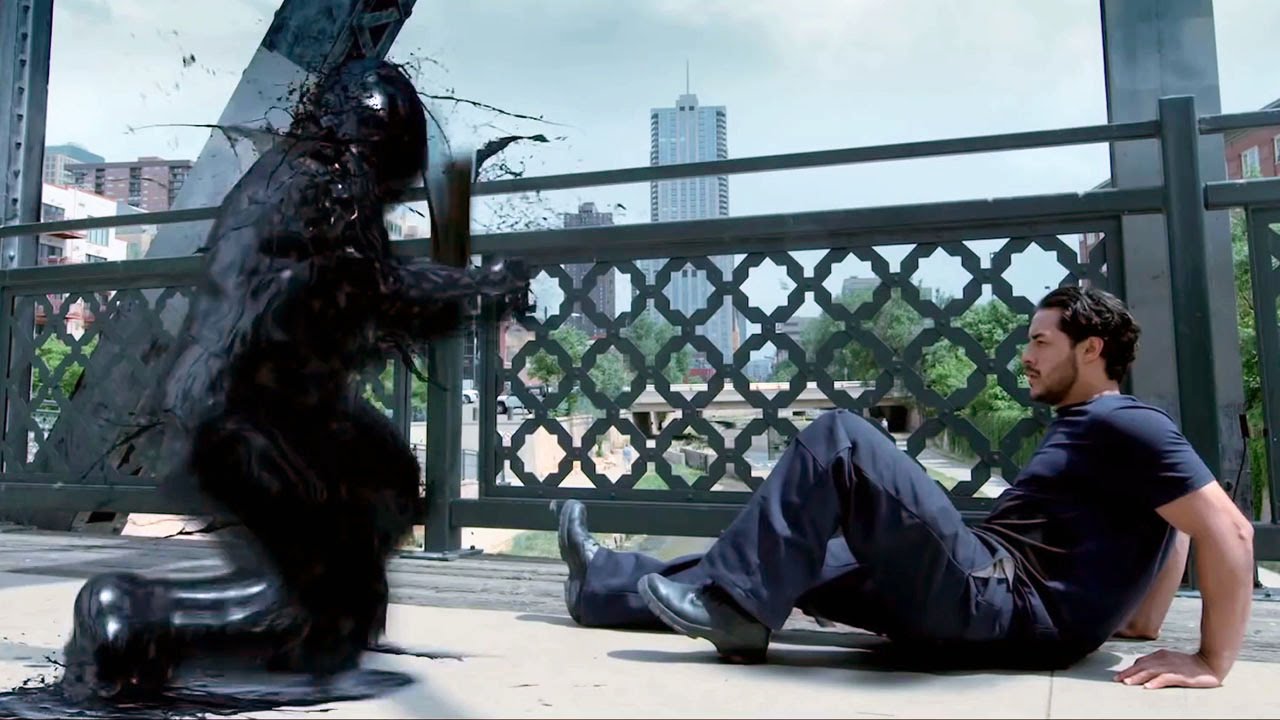
Hey there everyone! Welcome back to Movie Soapbox, the little corner of the internet that only you and I and that guy sleeping in the corner over there know about. This is the place where we find underappreciated indie films and we make sense of them. Today? We are doing a deep dive on The Frame, a movie so cosmically strange and quietly devastating that even the people who love it can’t fully explain what they just watched, and that is exactly the point.
Watch the trailer first. It will not help you. That is also the point.
Alright. If you have not seen The Frame yet, stop reading right now. This movie deserves to land on you clean, without any of what follows contaminating the experience. Go find it. Come back when you’re done. Everything after this sentence is a full spoiler walkthrough of a film that earns every revelation it has, and you do not want those taken from you. Still here? Good. Let’s get into it.
What This Film Had to Survive Just to Exist
Before we walk through what happens in The Frame, you need to understand what kind of film this is in industry terms, because that context changes everything about how you read it. Jamin and Kiowa Winans made this thing at the micro-budget tier, which means there was no development executive alive who got to put his fingerprints on the third act. There was no test screening full of people in Burbank who checked a box that said “too confusing” and triggered a mandated re-edit. When you watch a film at this budget level with this level of structural ambition, and it holds together the way The Frame holds together, you are watching something that survived on the creator’s sheer refusal to explain himself. At a studio, the typewriter room gets cut. A VP calls it “alienating” in a note on page two of a coverage report and that’s it, gone. The whole metaphysical spine of the movie, gone. The fact that the typewriter room exists in the final cut, that it is allowed to just be what it is without a character standing next to it saying “so this is where the script gets written,” that is a direct consequence of nobody having the budget leverage to demand it be cut. Poverty as creative freedom. It happens more than the industry wants to admit.
The Walkthrough: What Actually Happens in The Frame
The movie opens on two simultaneous realities, and it gives you just enough rope to hang yourself with before it tells you what the rope is for.
Thread A follows Alex, a gang member who runs high-value cargo heists and is trying to find a way out. He visits his sick father. He gets his father’s old violin. He watches TV.
Thread B follows Sam, a paramedic with a complicated past, a strained relationship with her mother, a therapist who may or may not have her best interests at heart, and she also watches TV.
What they each watch on TV is each other. Alex watches a show called Urban Hope, which is Sam’s show. Sam watches a show called Thieves and Saints, which is Alex’s show. And then, slowly, and this is where the film puts the knife in, they begin to notice each other watching.
Alex tears his television apart looking for surveillance equipment. Sam contacts the production company. They find ways to communicate through the screens, and once they do, the information flows both ways. Sam warns Alex about an impending arrest because she has seen the next episode. Alex tells Sam things about herself that she hasn’t told anyone. They try to meet at the Millennium Bridge and sit next to each other in the same physical location in their respective Denvers, separated by whatever it is that separates them.
The black oil is everywhere. It appears near Alex’s father’s house. It rises in spires around the city. When characters die or dissolve, they go to black oil. The city itself is being absorbed.
The therapist tracking Sam is not what he appears. He knows too much and wants too much, and when Sam finds the production company’s office, he tries to stop her getting inside. Inside is a room full of light bulbs and a typewriter generating the script of Thieves and Saints in real time. Sam watches Alex die on a screen in that room. She takes the screenplay, scratches out his death, writes that the bleeding stops. The typewriter fights her. She keeps changing it. She grabs the script, runs, sets it on fire outside, and gets hit by a car.
Meanwhile, Alex survives the final heist, the city empties around him, he finds his way to the production company headquarters and fights the script’s attempts to force his movements. He ends up back in his apartment, unable to leave, and then he plays his violin while watching Sam on television as a car bears down on her. His playing flips the car over her head.
The voiceover near the end says: the man realizes he is not a man but a thing written by a malevolent god. The only choice truly his own would be to take his own life. But the devil was no puppet, and if the writer would trap him in this house, the devil would tear the house down.
Roll credits. You are left alone with that.
The Mechanics, Untangled
The single most disorienting move the film makes, and the one that matters most for every theory below, is the name-slip. Sam calls Alex by the name David Carrenza, which is the actual actor’s real name. And Alex finds out that the fictional Sam is actually Tiffany Mualem, the actress’s real name. The film is not being cute here. It is telling you something structural. These characters are not just aware that they exist in fiction. They are becoming aware of the specific human beings whose bodies are being used to perform that fiction. That is a different and much more vertiginous kind of meta-awareness than most films attempt.
The black oil is not random imagery. Watch where it appears. It clusters around the edges of the narrative, around deaths, around places the script is losing its grip. It is what happens to the story when the story starts to run out of story. The production company at the center of both realities is the source of everything, and the therapist who works to keep Sam away from it is, in some readings, an agent of the writer, a mechanism for keeping characters from looking behind the curtain.
The Five Theories
Theory One: The Literal Reading. Two shows cross-wired somehow, characters actually communicating across some electromagnetic accident. This is the reading you have to dispose of first, because it is the only one that makes the film smaller than it is. A literal version of this story has no metaphysical weight. It is just a strange technical malfunction with feelings. The film is doing something else. Move on.
Theory Two: The Creator’s Internal Landscape. What if this is nothing more or less than the inside of Jamin Winans’ head? Two screenplays on his desk. Two characters he loves in two different worlds. And the question he is working through, in real time, dramatized, is what happens when a writer cares so much about the people he has invented that he can’t stop thinking about what they do when the cameras are off. This is not a paranoid reading, it is a generous one. The film is deeply personal in its texture, and there is a version of it that is simply a filmmaker telling you what it feels like to live with characters you made up and can’t let go.
Theory Three: Good and Evil, the Black Oil Reading. The black oil as sin. The dissolution of characters into ink as proof of our fundamental corruption. The taint spreading. This is a seductive reading because the imagery supports it, and the film has genuine spiritual weight in its bones. But it falls apart on one crucial question: how many actual humans exist in this movie. Count them. The answer is zero. Alex and Sam are not souls at risk of damnation. They are fictions. And fictions don’t have souls to corrupt. They can tell you true things about souls, but they don’t own any themselves. The black oil is about something, but it is not about sin in the way this theory requires.
Theory Four: Rosencrantz and Guildenstern, the Autonomous Character Reading. Two minor characters, or rather two characters from two separate productions, who become aware that they exist within a story and begin to resist the story’s control over them. This is the richest structural reading and the one the film most explicitly supports. The typewriter room is the holy of holies in this version. When Sam finds it and begins rewriting Alex’s fate, she is doing exactly what Rosencrantz and Guildenstern cannot do, she is stepping outside the narrative mechanism and becoming, briefly, an author herself. The question the film is genuinely wrestling with is whether characters have autonomous moral weight, whether the things they choose inside the story are real choices or just the writer’s choices wearing a character’s face. Alex’s violin at the end, forcing the car to flip, is him acting on the world through art rather than through the script. That matters.
Theory Five: Chaos Versus Miracle, the Thematic Core. Strip away every layer of meta-narrative and what you find underneath is a film about two people who have both been beaten up by the randomness of the world, and who have to decide whether that randomness means nothing or everything. Sam’s line at the bridge is the whole movie in two sentences: you either have to believe everything is chaos or everything is a miracle. The weirdness of the structure, the black oil, the typewriter, all of it may be scaffolding around that single human argument. The connection between Alex and Sam, across whatever separates them, is the miracle the film is positing. That people find each other. That someone watches your show and knows when you’re in danger. That intervention is possible even across impossible distances.
Movie Mike’s Call
Theory Four is the skeleton and Theory Five is the flesh, and you cannot have one without the other, and the film knows this. The Rosencrantz framing explains the structure of what you’re watching, the way the movie is built, the mechanics of the typewriter room and the name-slips and the therapist-as-narrative-enforcement. But it would be a cold and academic exercise if the chaos-versus-miracle argument weren’t running underneath it giving the whole thing a pulse. The Winans built a film about fictional characters becoming real enough to save each other, and they built it at a budget level where they were allowed to actually finish that thought. The reason it lands is that both things are true simultaneously. These are characters becoming aware of their own constructedness, AND they are people who need each other. Both. The same film. That is what the box looked like before it broke.
You’re not going to find this one on a studio slate. You never were. Factory Hollywood doesn’t greenlight a film where the third-act climax is a woman at a typewriter scratching out a death and a man playing a violin to flip a car. There’s no franchise hook. There’s no IP. There’s just two writers in a room who believed in their characters enough to let them fight back. That’s the whole story. That’s why it’s still here.
We’ll see you next time at Movie Soapbox. Stay in the corner with us.