
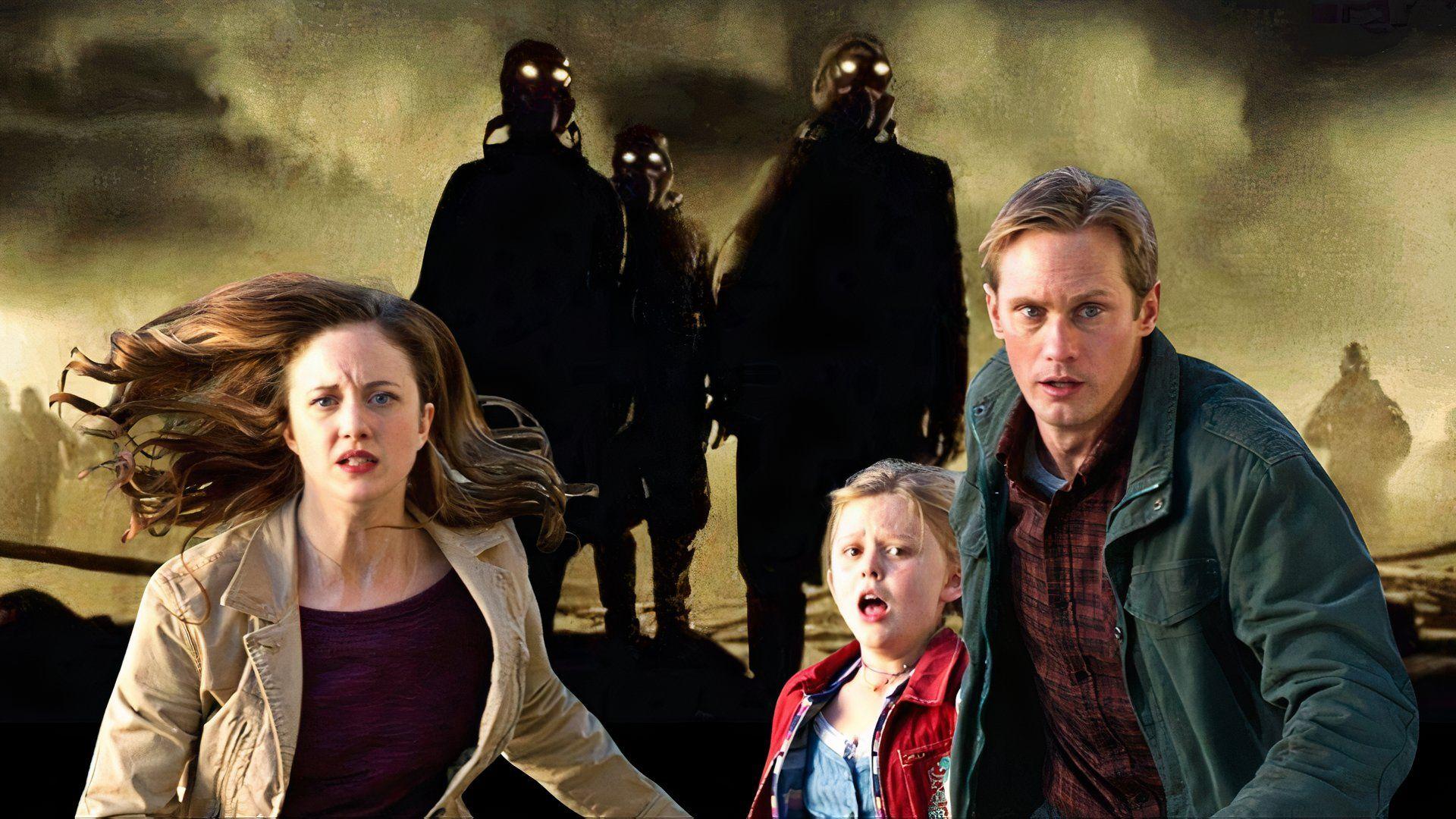
Hey there everyone! Welcome back to Movie Soapbox, the little corner of the internet that only you and I and that guy sleeping in the corner over there know about. This is the place where we find underappreciated indie films and we make sense of them. Today? We are doing a deep dive on Hidden, a 2015 closed-box thriller so ruthlessly constructed that by the time it pulls the rug out from under you, you will realize you were never standing on solid ground to begin with. The Duffer Brothers made this before Stranger Things made them untouchable, and that matters, because you can feel the hunger in every frame of it.
Fair warning, and I mean this sincerely: everything that follows is a full, merciless spoiler walkthrough of this film. The entire structural trick of Hidden depends on you not knowing what’s coming, and if you have any intention of watching it first, close this tab right now and come back after. I will be here. I am always here. For those of you who’ve already seen it, or who just want the whole thing laid out in the open, stay with me, because there is a lot worth pulling apart.
The Making of the Duffer Brother’s Movie Hidden
Before we walk through the film beat by beat, let me tell you something about what you’re actually looking at when you watch Hidden. This is a sub-two-million-dollar feature from two brothers who clearly had one good idea and the discipline to execute it cleanly, without the seventeen committee-approved safety nets that would have turned this into a generic infection thriller with a sequel hook. You can tell by the shape of the third act, the way it commits fully to its own logic without flinching, that nobody with greenlight authority over a real budget ever got their hands on this script late enough to matter. A film like this, with this twist, at a studio where twelve VPs need to sign off on the ending? That third act gets softened, qualified, walked back into something the test audience in Burbank could process without shifting in their seats. It didn’t get softened. That’s the whole ballgame right there.
Movie Hidden Detailed Walkthrough
The film opens on a suburban street in Kingsville, a city that is, as we will come to understand, under military quarantine due to a hyper-virulent outbreak of something the film is very careful not to over-explain. Ray, played by Alexander Skarsgård, Claire, played by Andrea Riseborough, and their daughter Zoe, played by Emily Alyn Lind, are a family watching their neighbors come completely unglued, running for it, doing the thing you do when the situation has already passed the point of rational response. The military is strafing the city. They are killing everyone. Claire remembers a fallout shelter beneath a nearby school, and that is where the family goes. That is where they are going to live, or try to, for the next three hundred days.
The shelter sequences are where the film earns its closed-box credentials. The three of them have developed a set of survival rules, and two of those rules carry the weight of everything that comes after: always remain calm, and never leave the shelter. At the time these feel like reasonable psychological survival tactics for a family in a confined space under extreme stress. The film lets you read them that way. It is patient about this. Three hundred days of rations are almost gone, a rat has been systematically eating through their canned goods, and outside, the things they call the Breathers are hunting them.
The Breathers are the antagonists as we understand them through most of the film, figures glimpsed through the periscope, heard moving above, hunting for survivors. The word itself is doing a lot of work, the same way all the best genre vocabulary does, it tells you just enough and misleads you with the rest. You hear “Breathers” and you construct a mental image of something monstrous, something viral, something wrong. The film builds this impression carefully, and it is not an accident that every time we see the Breathers they are obscured, goggled, helmeted, anonymous.
The rat-killing goes badly. Ray starts a fire in the shelter, they put it out fast, but the smoke venting to the surface is a signal flare to anyone hunting them. Ray and Claire go topside to cover their tracks, Zoe sees a Breather through the periscope and panics and follows them up, and now the family is exposed, surrounded, and out of options. Claire and Zoe escape through a vent they found while chasing the rat. Ray doesn’t fit. Ray stays behind to hold off the Breathers while his wife and daughter run.
Claire and Zoe make it back to the highway. A CDC helicopter nets them. And right here is where the film sets the trap, because this is the exact moment where every infection-outbreak genre instinct you have fires at once. The CDC is here. The family survived. They are immune. There will be a tearful reunion and blood draws and talk of a serum and Ray will already be on that helicopter waiting for them. You know this because you have seen thirty films that end exactly this way. The genre has trained you. The Duffer Brothers know it has trained you, and they built the entire back half of this movie on the assumption that you are running on that training.
Ray is on the helicopter. He is also killing the soldiers around Claire and Zoe when they are netted. He has black veins crawling up his face and neck, the visible signature of the infection. And Claire and Zoe, watching Ray do this, immediately start fighting to get away from him. Not from the soldiers. From Ray. Their husband and father, who they have been protecting in this shelter for three hundred days, who they love without question.
The rules snap into focus all at once. Always remain calm. Never leave the shelter. These were never about claustrophobia. Never about the psychological pressure of confinement. They were behavioral control rules for people fighting an infection that does something to impulse control, to aggression, to the capacity for violence. The family isn’t hiding from the infected. The family is infected. The Breathers are soldiers in night-vision goggles and re-breather masks hunting down the infected and eliminating them. Every assumption the film handed you in the first act has been quietly, methodically inverted.
Ray goes down under multiple gunshots. Claire finishes the remaining soldiers, injured. Zoe, in the chaos and rage of watching her father shot, nearly kills her mother before Claire invokes the rule: stay in control. It lands differently the second time you hear it. The helicopter returns, they run for it, and the following day Zoe’s friend Joe finds them and brings them into the sewers, where the infected have built their own society and are, in the film’s final gesture, surviving on their own terms.
The last line of the film is Claire correcting the count. They’ve been down there 302 days, Zoe says. Claire says, not days. Earlier in the film Ray tells Zoe that each day they survive isn’t a day, it’s a miracle. Claire is finishing his thought. It is a small thing and it is also the only grace note the film allows itself, this quiet insistence that what they survived counts as something more than a number. Given everything that just happened, given Ray, it lands exactly as heavy as it should.
What is the Duffer Brother’s Movie Hidden Trying to Say?
Theory Number 1 – There are two camps on what this film is finally about. The first reading is purely genre-mechanical: it’s a well-executed twist thriller, the inversion works, the craft is clean, full stop.
Theory Number 2 – The second reading, the one that gets more interesting the longer you sit with it, is that Hidden is a film about who gets to define monstrousness. The infected built a society. They made rules to stay human. They protected each other for three hundred days in a box. The soldiers hunting them are the ones with the institutional authority and the weapons and the helicopters. The film does not editorialize about this. It just shows you both sides of the net and lets you decide who the monsters are.
Moviesoapbox’s Preferred Read on the Movie Hidden
I think the second reading is the right one, and I think the Duffer Brothers knew exactly what they were doing with it. The whole architecture of the film, the point-of-view discipline, the way it withholds the soldiers’ faces until the reveal, the fact that it ends in the sewers with the infected living their own lives rather than cured or dead, it all points to a film that is genuinely interested in the question of who gets to survive and on whose terms. That’s a lot of thematic weight for something that cost less than most studio films spend on catering, and the fact that it’s carrying that weight without collapsing under it is what makes this worth your time.
The Duffer Brothers went on to make one of the most expensive television productions in history. Hidden is what they made when nobody was watching and everything was on the line. Watch it in that order if you can. It’ll tell you something about what discipline under constraint actually looks like, before the money arrived and the committee notes started landing in the inbox.